Practice using geographic and historical thinking to understand Africa's physical features, resources, early kingdoms, trade networks, and the effects of colonization.
Read each problem carefully. Use complete sentences when explaining your thinking. Show your work or evidence in the space provided.
Exploring the continent's regions, natural resources, trade, and historical change
Social Studies - Grade 6-8
- 1
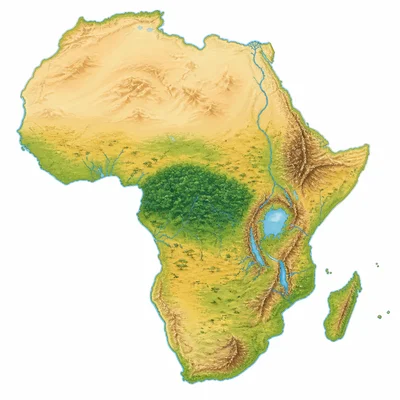
Africa is the second-largest continent by land area and population. Name two major physical features of Africa and explain how one of them can affect where people live.
- 2
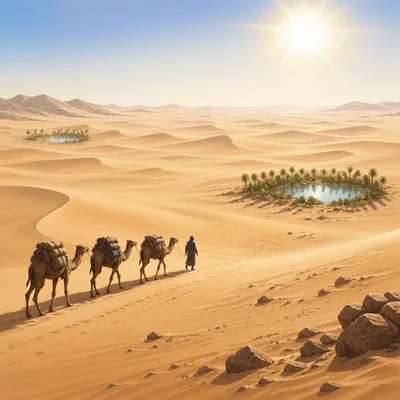
The Sahara Desert covers much of North Africa. Explain one challenge the Sahara creates for transportation or settlement.
- 3
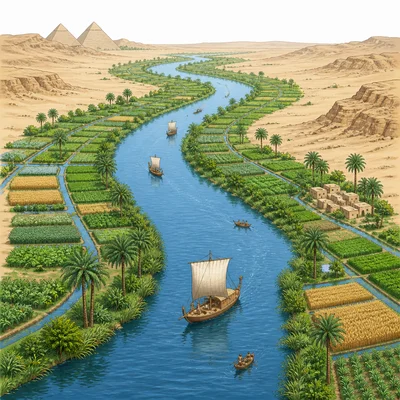
The Nile River flows through northeastern Africa. Why was the Nile important to ancient Egyptian civilization?
- 4
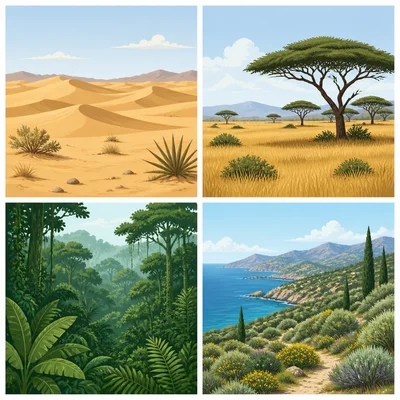
Africa has several climate regions, including desert, savanna, rainforest, and Mediterranean climate. Choose two climate regions and describe how they are different.
- 5
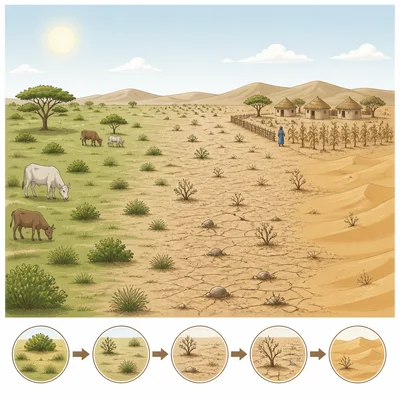
The Sahel is a semi-arid region south of the Sahara. Explain why desertification is a concern in the Sahel.
- 6
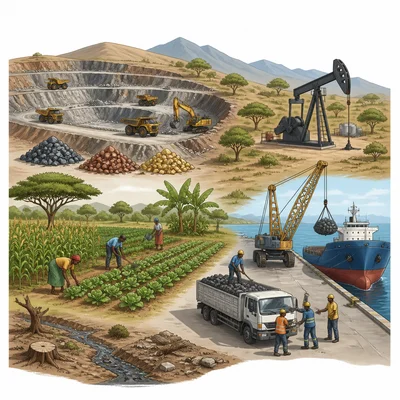
Africa has many valuable natural resources, such as oil, gold, diamonds, copper, cobalt, and fertile land. Explain one way natural resources can help a country's economy and one challenge they can create.
- 7
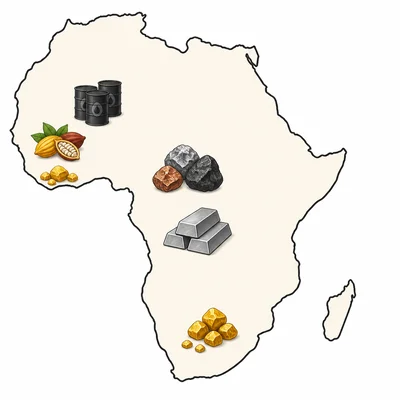
Read this resource list: Nigeria - oil; Democratic Republic of the Congo - cobalt and copper; South Africa - gold and platinum; Ghana - cocoa and gold. What pattern do you notice about Africa's resources?
- 8
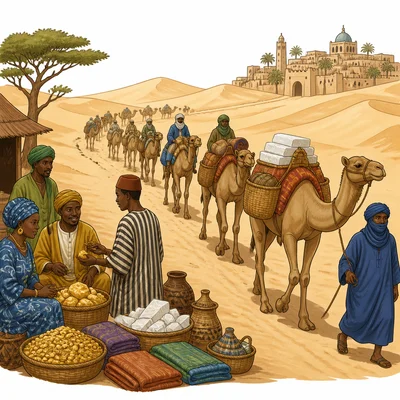
Trans-Saharan trade routes connected West Africa with North Africa and the Mediterranean world. Identify two goods often traded on these routes and explain why the routes were important.
- 9
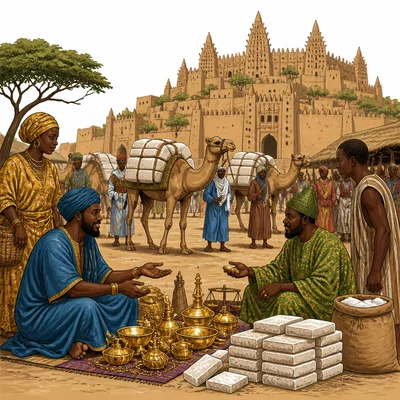
The kingdoms of Ghana, Mali, and Songhai grew in West Africa. What role did trade play in the growth of these kingdoms?
- 10
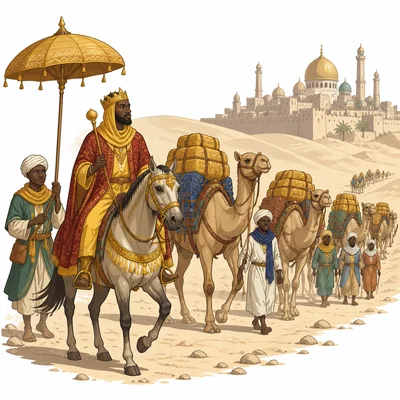
Mansa Musa was a ruler of the Mali Empire in the 1300s. Explain why his pilgrimage to Mecca made Mali more famous.
- 11
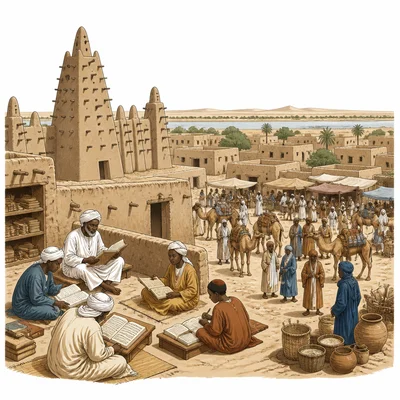
Timbuktu became an important city in the Mali Empire. Describe two reasons Timbuktu was important.
- 12
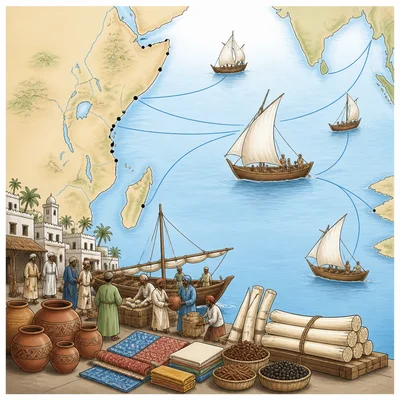
The Swahili Coast developed along the eastern coast of Africa. Explain how the Indian Ocean helped connect East Africa with other regions.
- 13
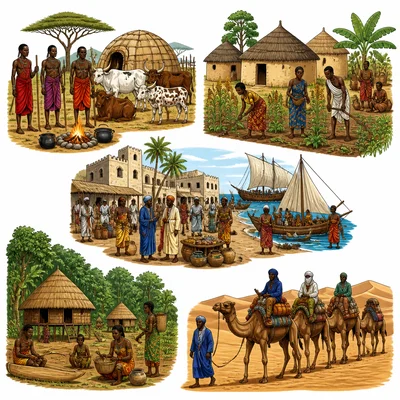
Before European colonization, Africa had many societies with different languages, governments, religions, and economies. Why is it inaccurate to describe precolonial Africa as one single culture?
- 14
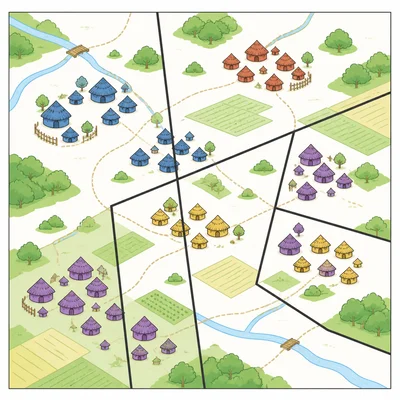
During the late 1800s, European powers divided much of Africa into colonies. Explain one way colonial borders created problems for African societies.
- 15
Many African countries gained independence in the mid-1900s. Identify one challenge newly independent countries often faced and one opportunity independence created.