Claim-Evidence-Reasoning Lab
Practice the CER framework for writing persuasive arguments. State a clear claim, support it with up to three pieces of evidence, and explain your reasoning for each. An argument strength meter gives you real-time feedback as you build.
Controls
Choose a Topic
1Evidence 1
2Evidence 2
3Evidence 3
Argument Preview
Start by choosing a topic preset or writing your own claim above.
Scoring Guide
- Claim (21+ chars)+20 pts
- Each evidence piece+15 pts
- Each reasoning+10 pts
- Counter-claim+5 pts
- Maximum100 pts
Quick Tips
- •A strong claim takes a clear position and previews your reasons.
- •Use statistics, expert quotes, or research studies as evidence.
- •Reasoning explains the "so what", why does this evidence matter?
- •Acknowledging the counter-claim shows you understand the full picture.
Data Table
(0 rows)| # | Evidence # | Evidence Statement | Reasoning | Source | Strength Rating (1-5) |
|---|
Reference Guide
The CER Framework
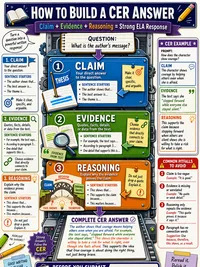
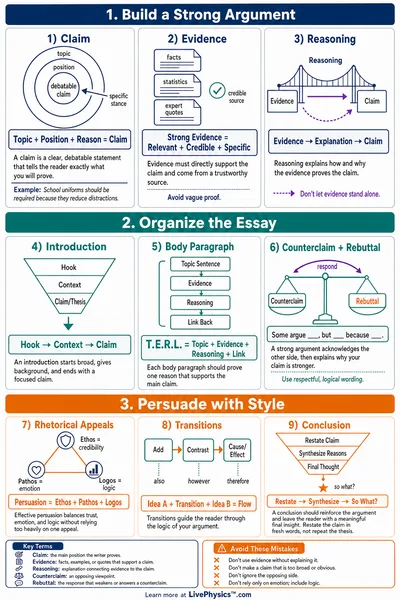
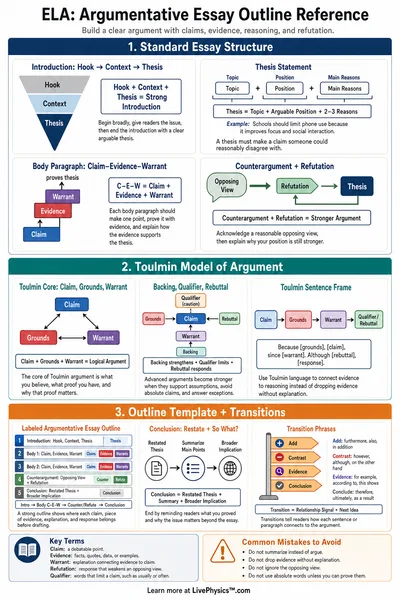
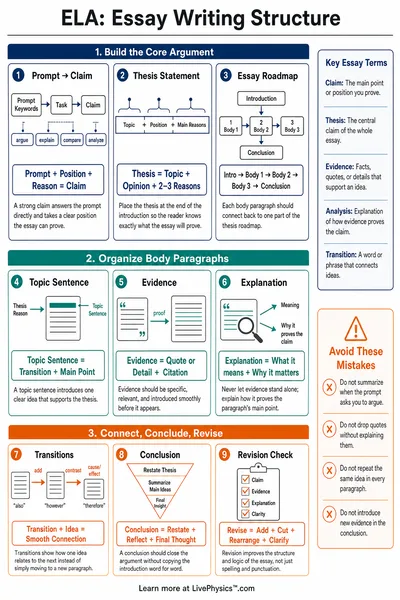
CER (Claim, Evidence, Reasoning) is a structured approach to scientific and persuasive writing. It gives arguments a logical backbone that readers can follow clearly.
The framework is used in science classrooms to explain experimental results and in language arts to build persuasive essays. Each component plays a distinct role, the claim states what you believe, the evidence shows what exists, and the reasoning connects the two.
A complete CER argument answers three questions, What do you claim? What is your proof? Why does that proof support your claim?
Writing a Strong Claim
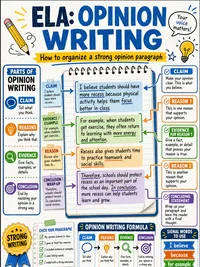
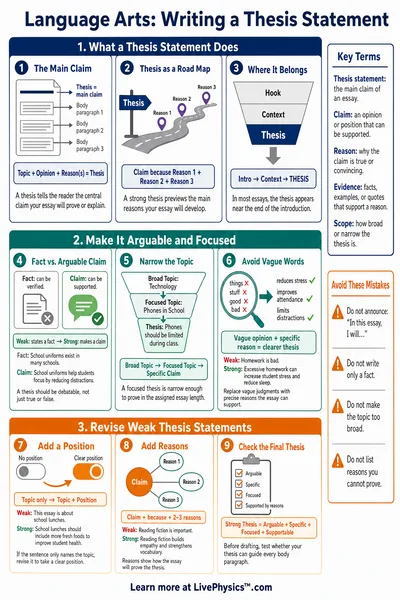
A claim is a statement that takes a clear, debatable position. It should not simply state a fact. Instead it expresses a judgment that requires support.
Weak claim, "Uniforms are common in some schools." (Just a fact)
Strong claim, "Schools should require uniforms because they reduce socioeconomic divisions and improve academic focus." (Position plus preview of reasons)
A good claim is specific enough to be argued but broad enough to need three pieces of supporting evidence.
Selecting Good Evidence
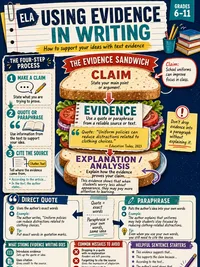
Evidence is factual information from a credible source. The best evidence is specific, measurable, and directly relevant to your claim.
Strong evidence types include statistics and data from studies, quotes from recognized experts, findings from peer-reviewed research, and historical or documented examples.
Avoid vague evidence like "many people think" or "it is well known." Specific numbers and named sources are far more persuasive. Always note where the evidence comes from so readers can verify it.
Writing Effective Reasoning
Reasoning is the explanation that connects your evidence back to your claim. It answers the question "So what?" That is, why does this piece of evidence prove what you claim?
Weak reasoning, "This proves my point." (No explanation)
Strong reasoning, "The 63% decrease in police incidents shows that uniforms reduce conflict, which creates a safer environment where students can focus on learning, directly supporting the claim that uniforms improve academic outcomes."
Reasoning is often the weakest part of student arguments. Spend as much time on reasoning as on finding evidence.