How Do Astronomers Find Planets Around Other Stars?
Tiny signals reveal distant worlds
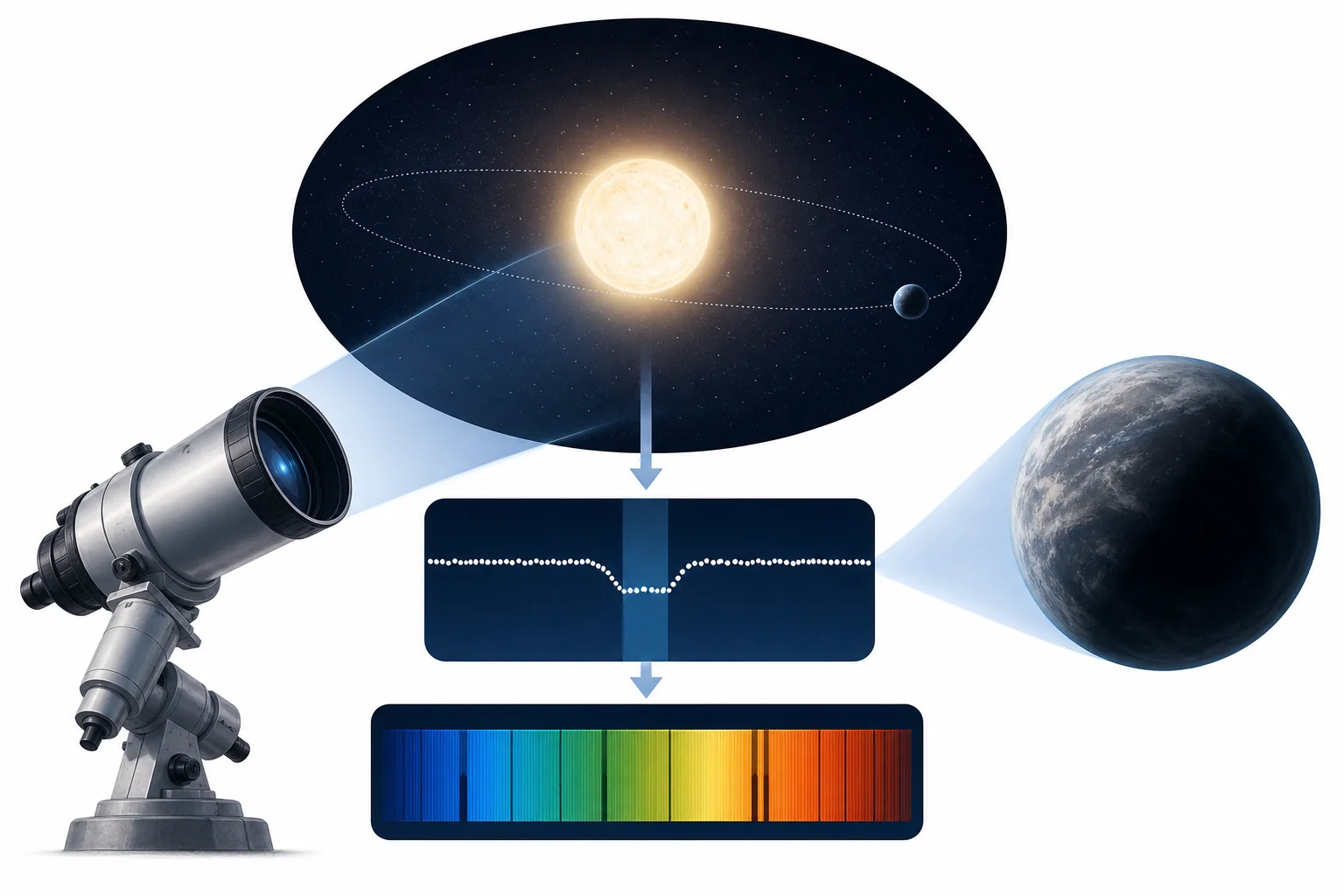
Astronomers find planets by watching stars for tiny changes in light or motion. A planet can block a little starlight, tug its star back and forth, or sometimes be photographed directly. These methods work best for large planets close to their stars because they make bigger signals.
Planets around other stars are called exoplanets. They are hard to see because stars are far brighter than planets and much farther away than anything in our solar system. Astronomers usually do not start by taking a picture of the planet. They measure the star instead. A star can dim when a planet passes in front of it. A star can also wobble as an orbiting planet pulls on it by gravity. In a few cases, careful instruments can block the star’s light and image the planet directly. Each method has limits. A small planet far from its star makes a weak signal that may take years to repeat. A large planet close to its star makes a stronger and faster signal. That is why many early discoveries were giant planets in tight orbits. The search is really a problem of evidence, measurement, and pattern finding.
Transit method
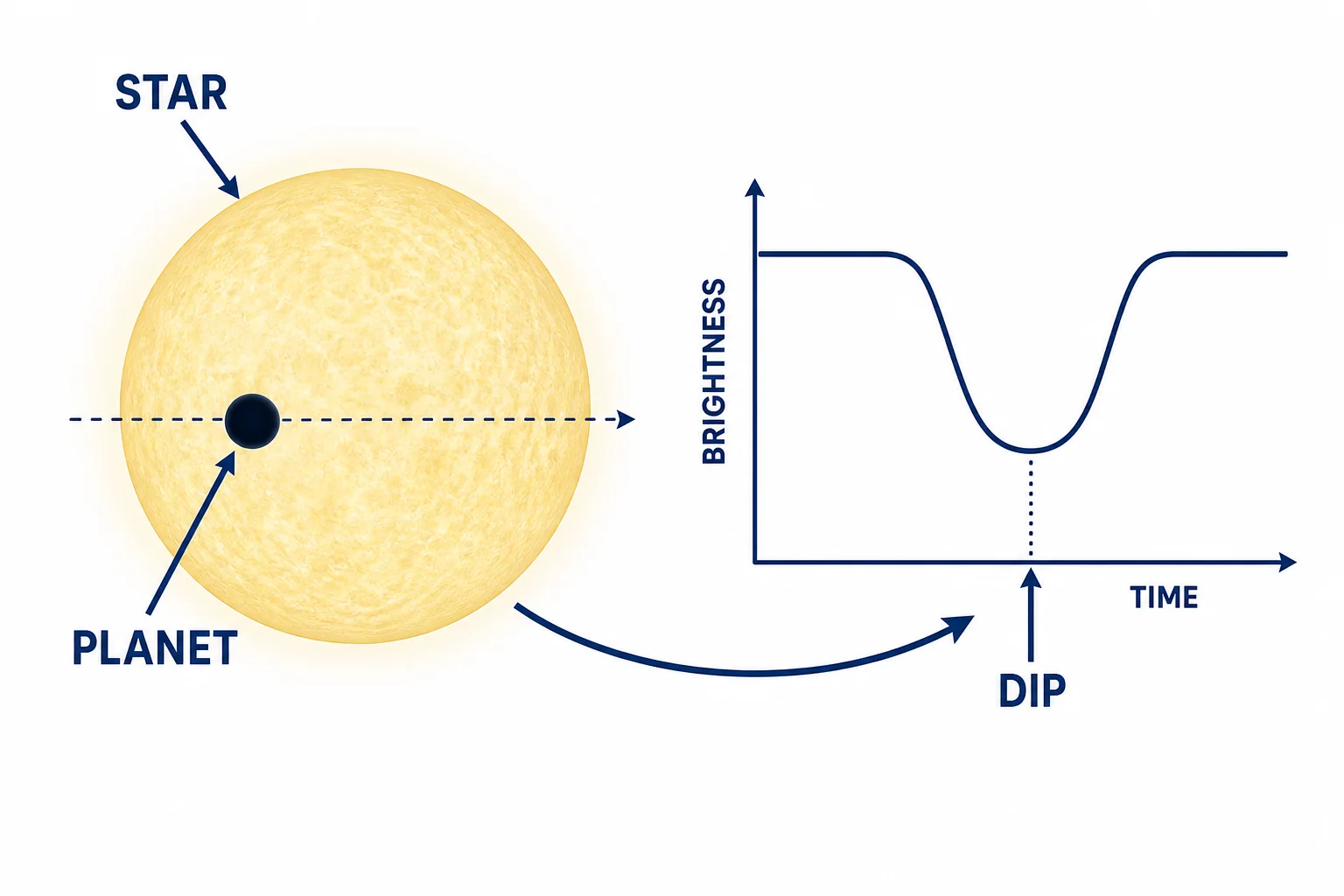
A transit reveals a planet when the orbit lines up with our view.
Radial velocity
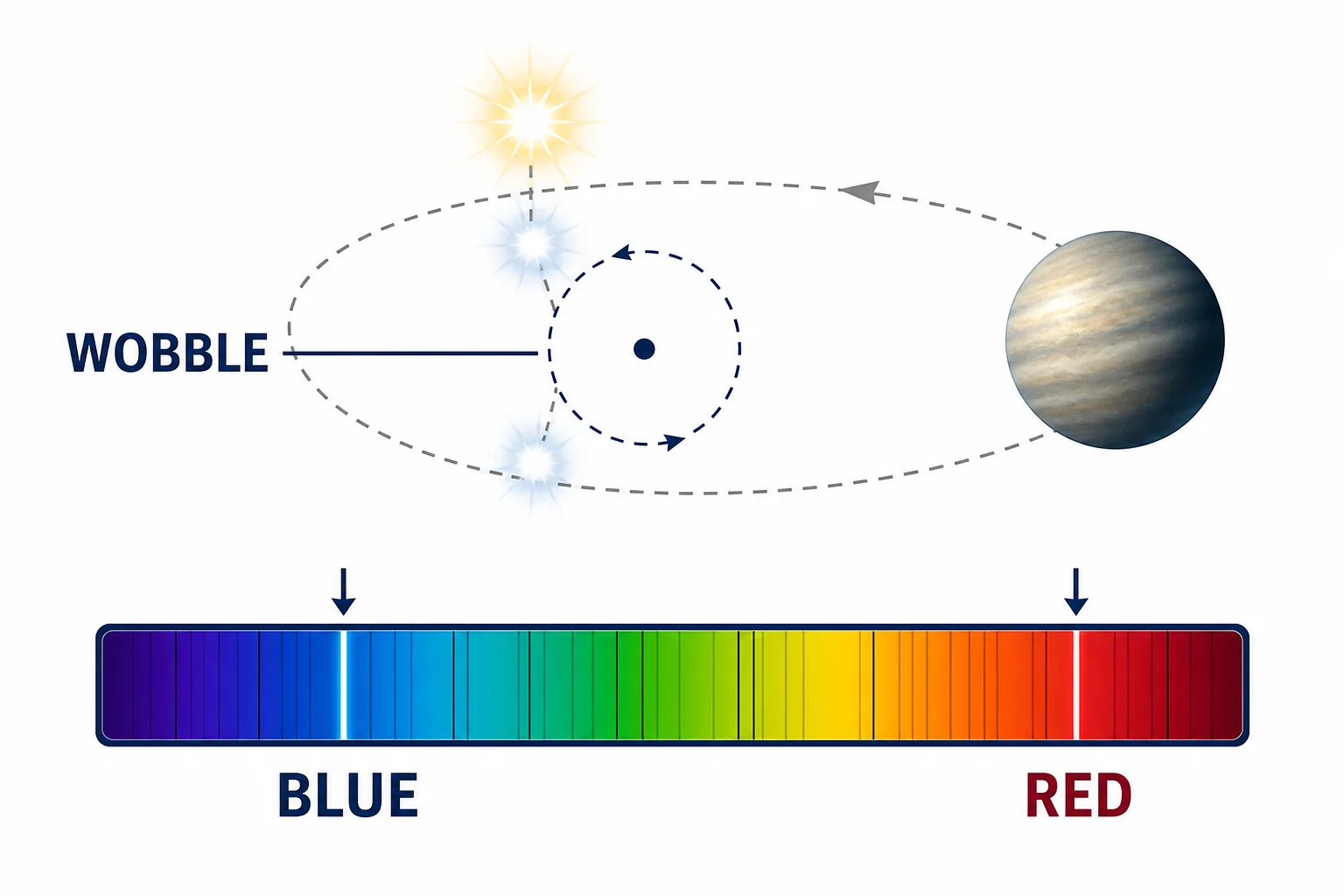
A planet can be found by the motion it causes in its star.
Direct imaging
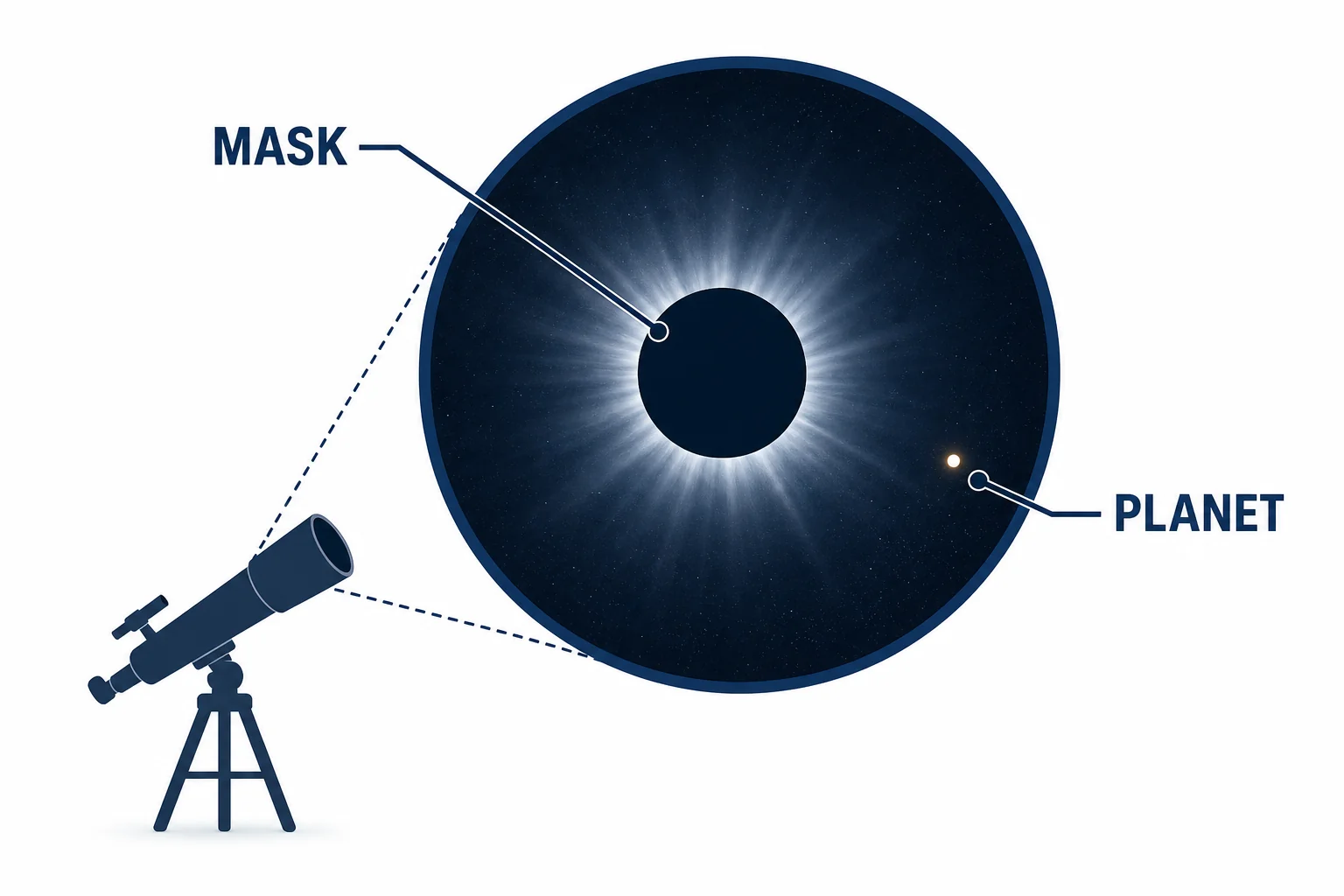
Direct images are rare because planets are faint beside their stars.
Why big close planets are easier
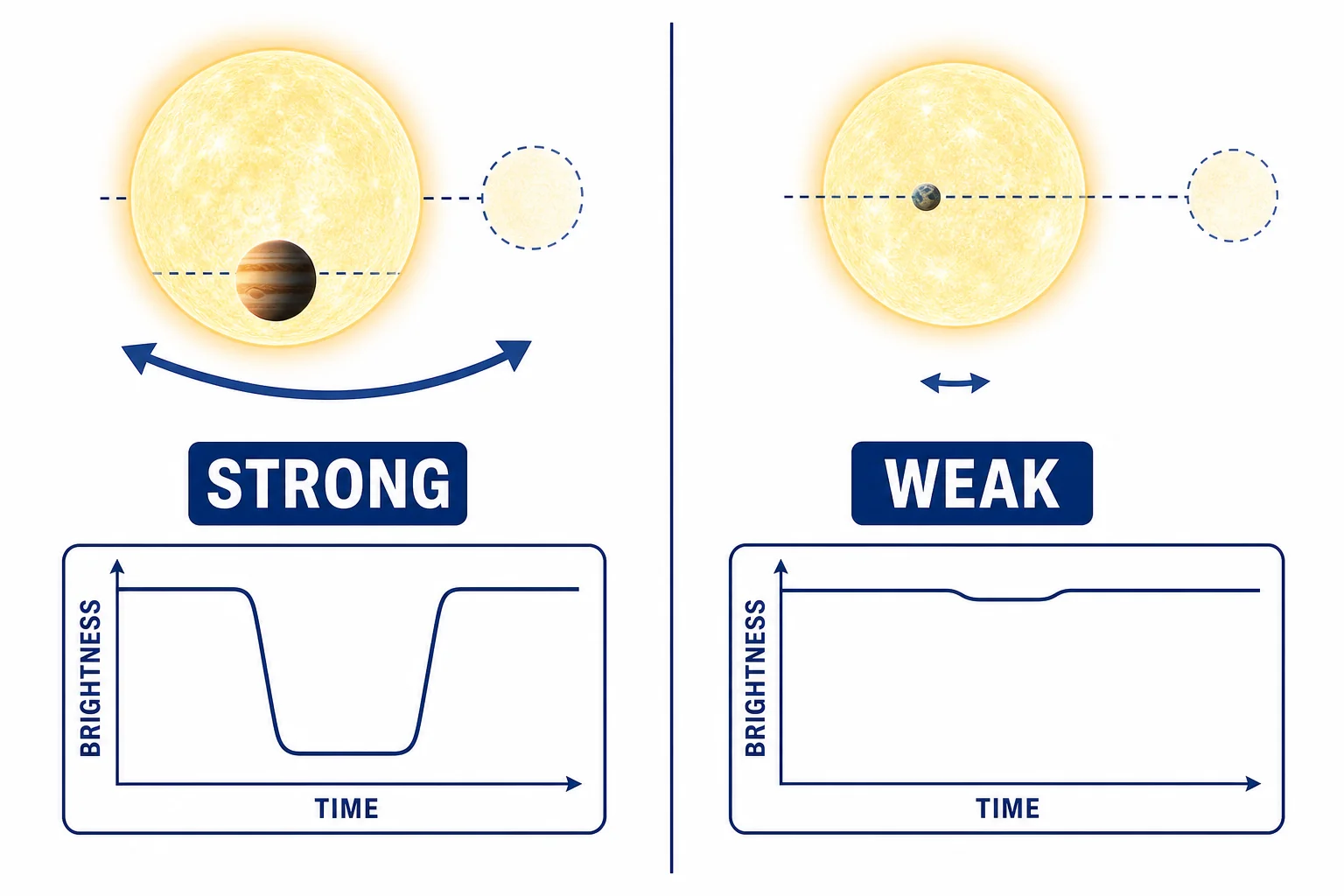
Many discoveries reflect what our instruments can detect most easily.
Building evidence
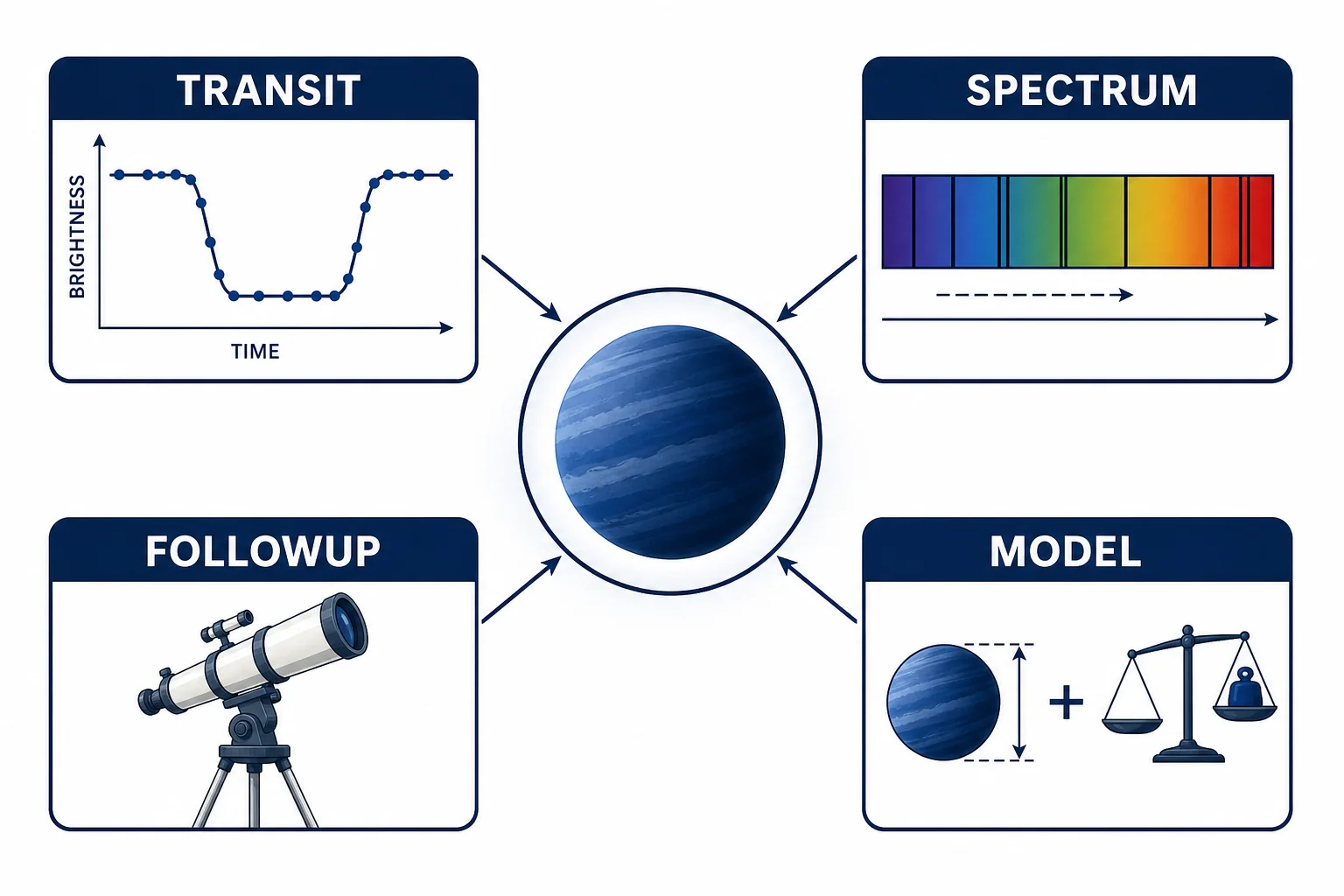
Exoplanets are confirmed by patterns that survive many checks.
Vocabulary
- Exoplanet
- A planet that orbits a star outside our solar system.
- Transit
- A crossing in front of a star that blocks a small amount of the star’s light.
- Radial velocity
- The motion of a star toward or away from Earth, measured through shifts in its light.
- Doppler effect
- A change in measured wavelength caused by motion toward or away from an observer.
- Direct imaging
- A method that tries to observe light from the planet itself instead of only measuring its effect on the star.
- Detection bias
- A pattern in the data caused by what a method can find most easily, not necessarily by what is most common.
In the Classroom
Make a transit light curve
25 minutes | Grades 9-12
Students move different sized planet cutouts across a flashlight or lamp and measure brightness with a phone light sensor or classroom probe. They graph brightness over time and compare how planet size changes dip depth.
Model a star wobble
20 minutes | Grades 9-12
Students use two connected balls or washers on a string to model a star and planet orbiting a shared center of mass. They compare how changing the planet mass or distance changes the star’s motion.
Sort detection bias cards
30 minutes | Grades 9-12
Students sort planet cards by size, mass, and orbital period, then predict which ones each method would find first. The class compares the predicted discoveries with the idea of detection bias.
Key Takeaways
- • Astronomers usually detect exoplanets by measuring their stars, not by seeing the planets directly.
- • The transit method finds repeating dips in starlight caused by a planet crossing in front of a star.
- • The radial velocity method finds the star’s wobble caused by the planet’s gravity.
- • Direct imaging can reveal some large, young planets that are far enough from their stars to separate from the glare.
- • Big close planets are easier to find, so scientists must account for detection bias when studying planet populations.