How Do Telescopes Show Us the Past?
Light turns distance into lookback time
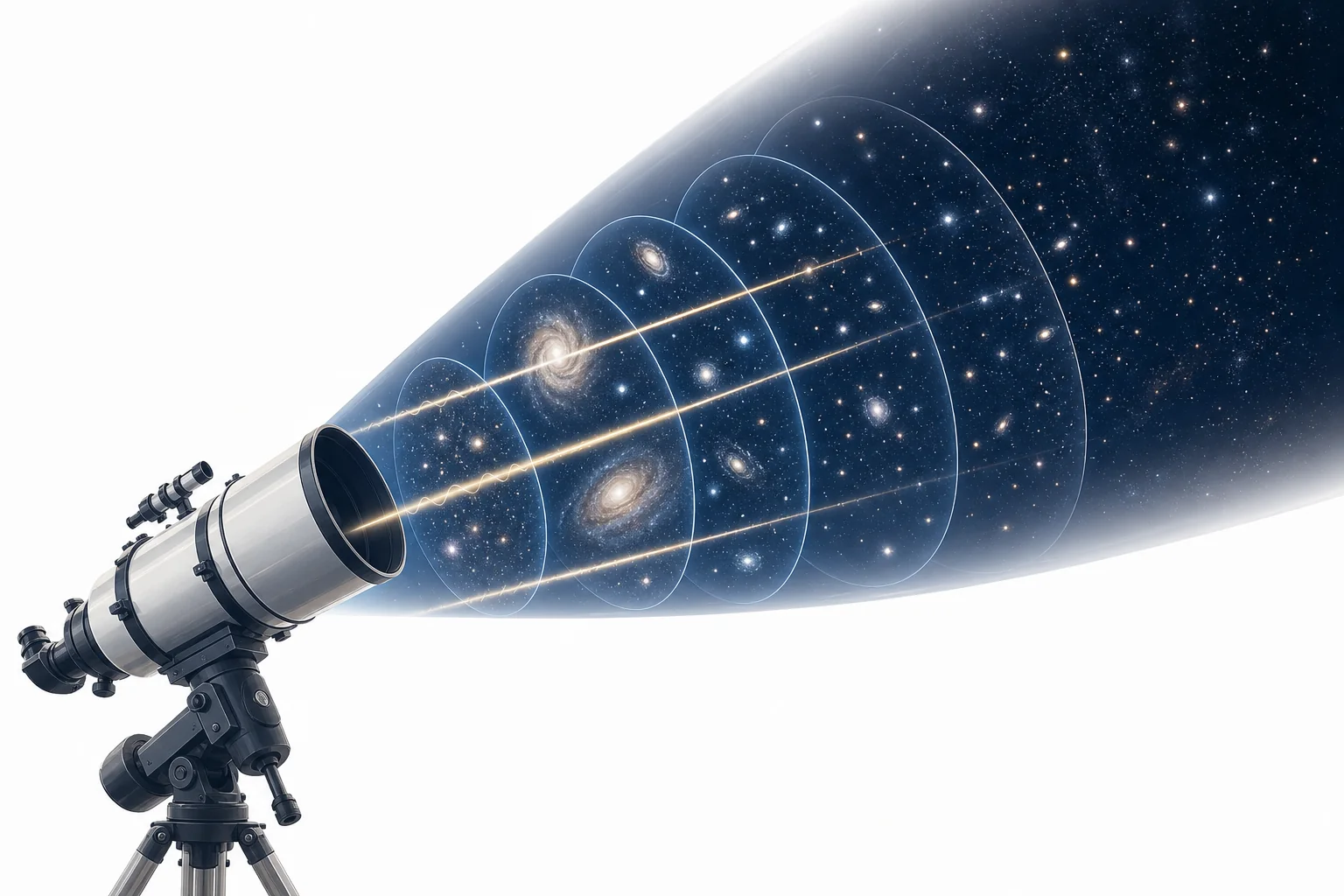
Telescopes show us the past because light takes time to travel. When we look at the Moon, we see it about 1.3 seconds ago, and when we look at far galaxies, we see light that left billions of years ago. A telescope is not a time machine you can steer, but it lets us study old light from distant places.
A telescope does not pull objects closer in the way a backpack gets closer when you walk toward it. It collects light. That detail changes everything. Light moves very fast, about $3.00 \times 10^8$ meters per second, but space is so large that even light needs time to cross it. Sunlight takes about 8 minutes to reach Earth. Light from the nearest stars takes years. Light from some galaxies seen by the James Webb Space Telescope started its trip more than 13 billion years ago. That means a telescope image can show a galaxy as it looked when the universe was young. The farther away the object is, the older the light usually is. This idea connects distance, speed, and time in a real astronomy setting. Middle-school students can use it to make sense of scale across the solar system, the Milky Way, and the early universe.
Light has a travel time
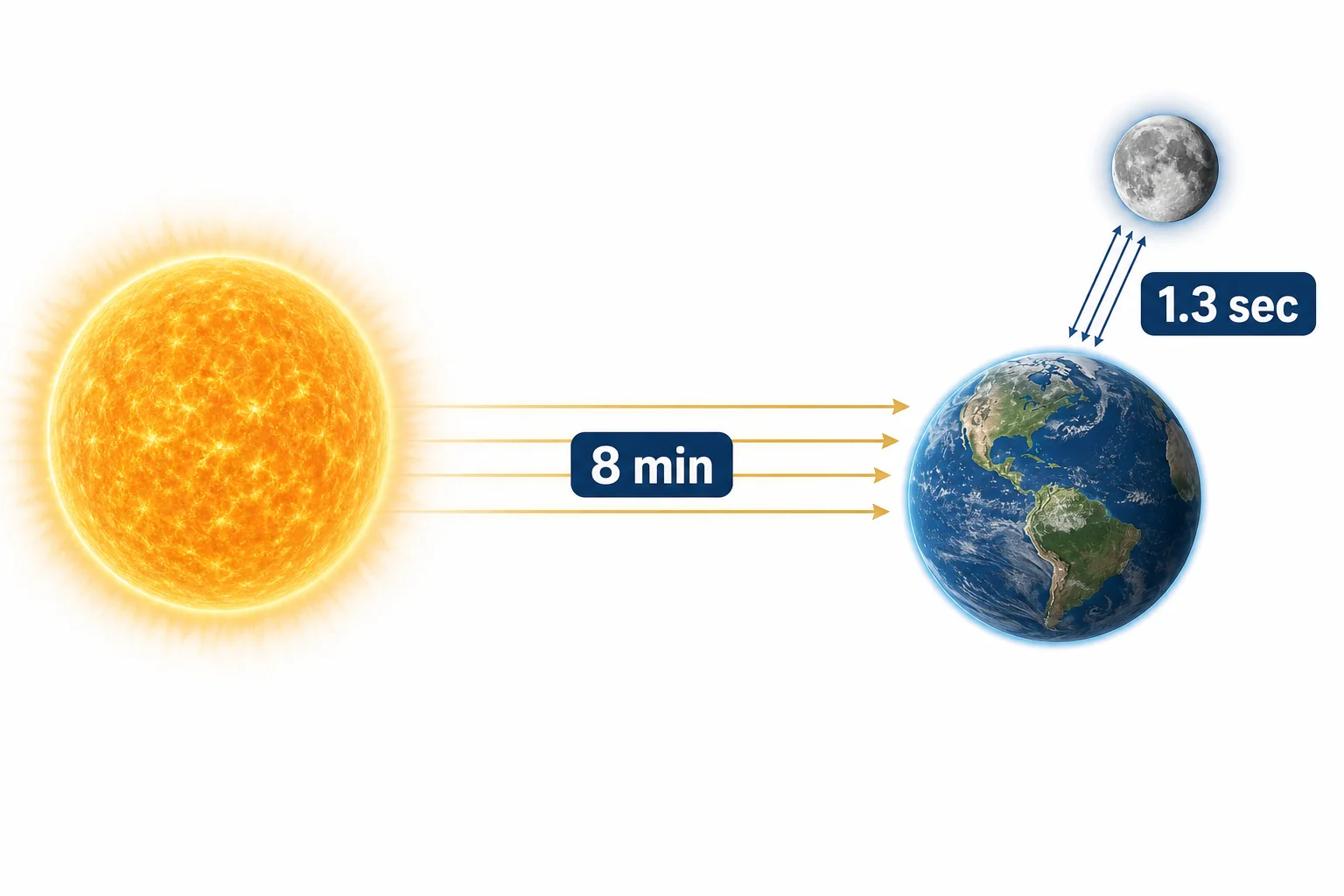
Seeing something in space always means seeing light that has already traveled.
Distance becomes lookback time
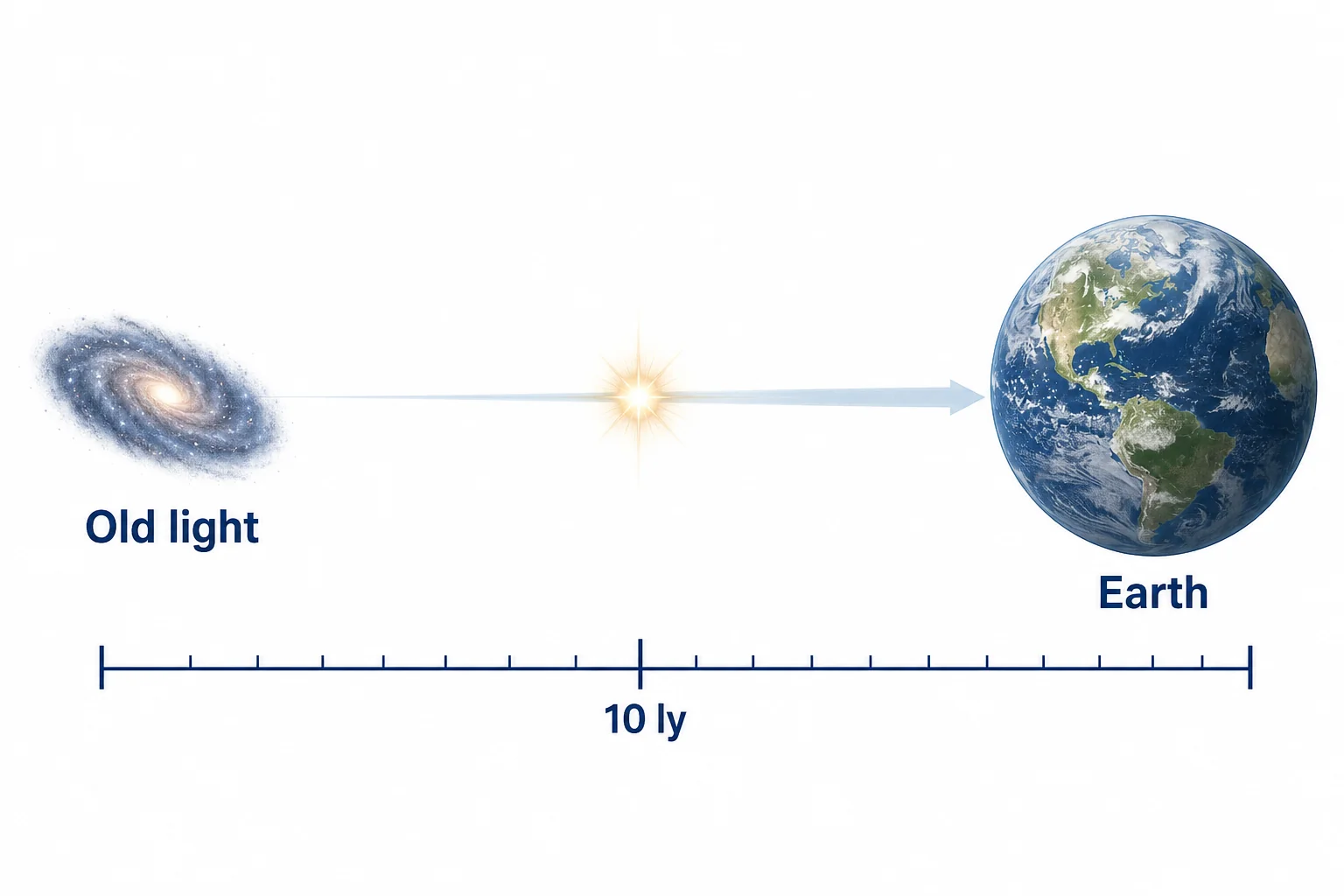
A light-year connects speed, distance, and time.
Telescopes collect old light
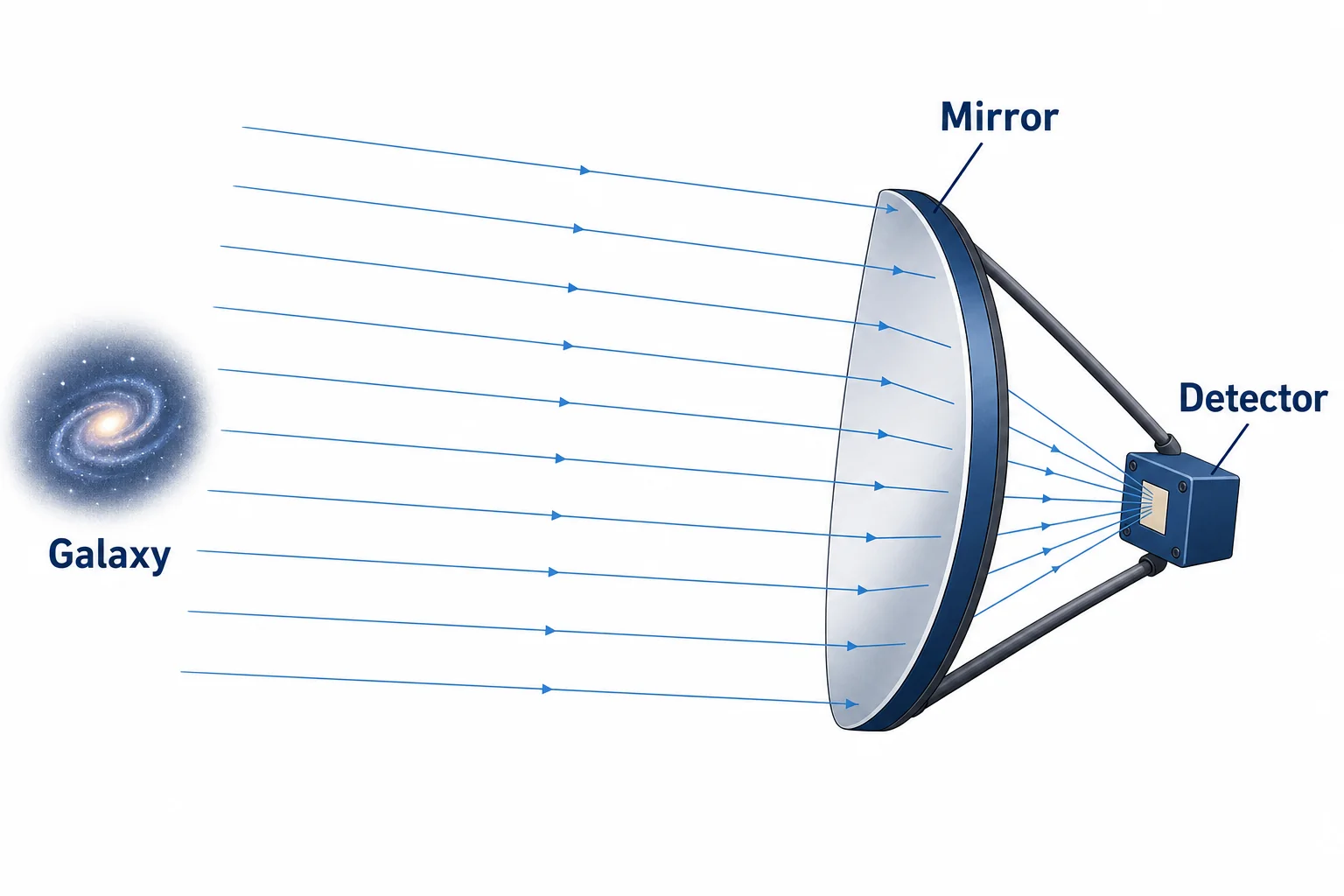
Better telescopes help us detect fainter and farther light.
JWST and the early universe
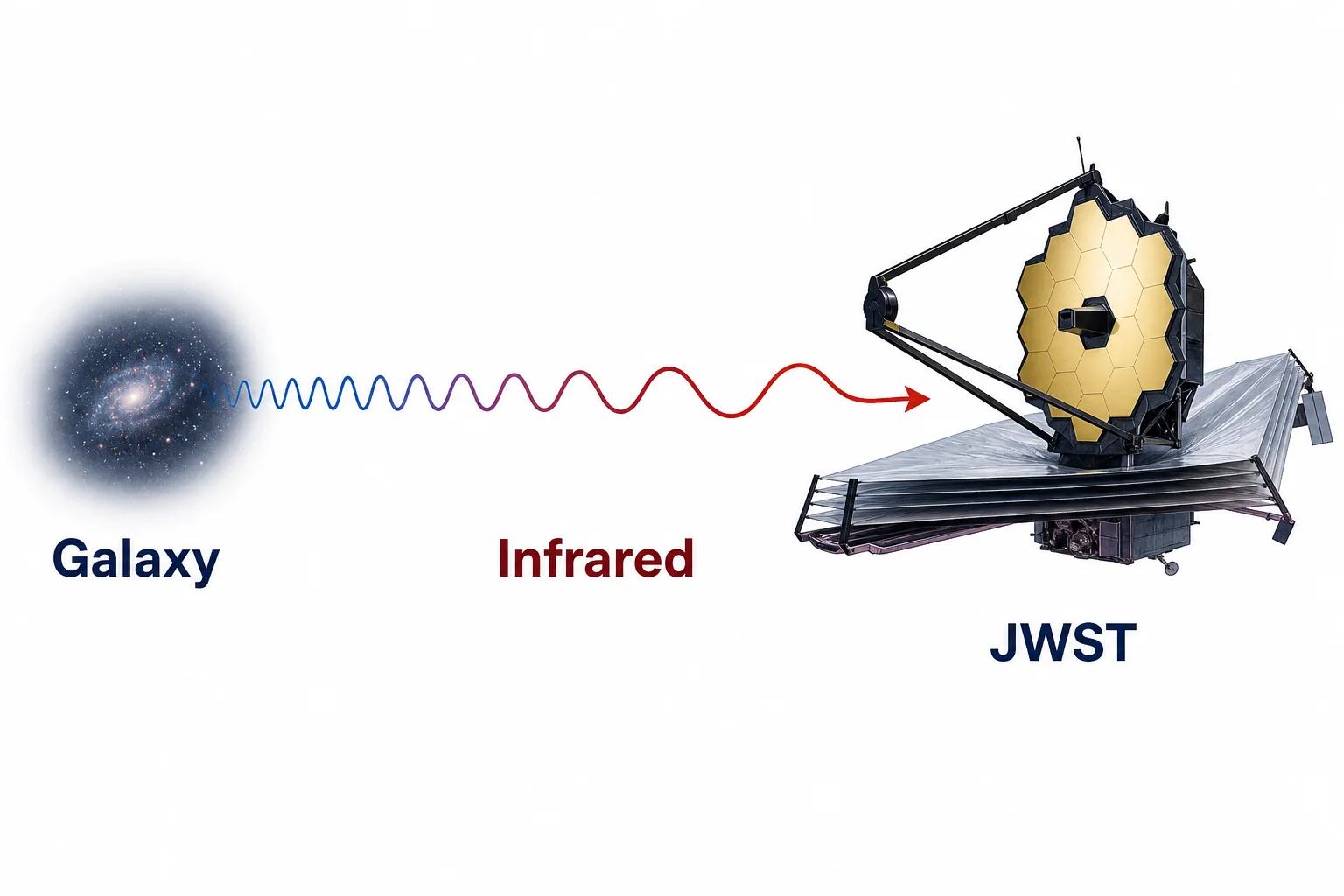
JWST studies ancient light that has been stretched by the expanding universe.
Limits of the cosmic view
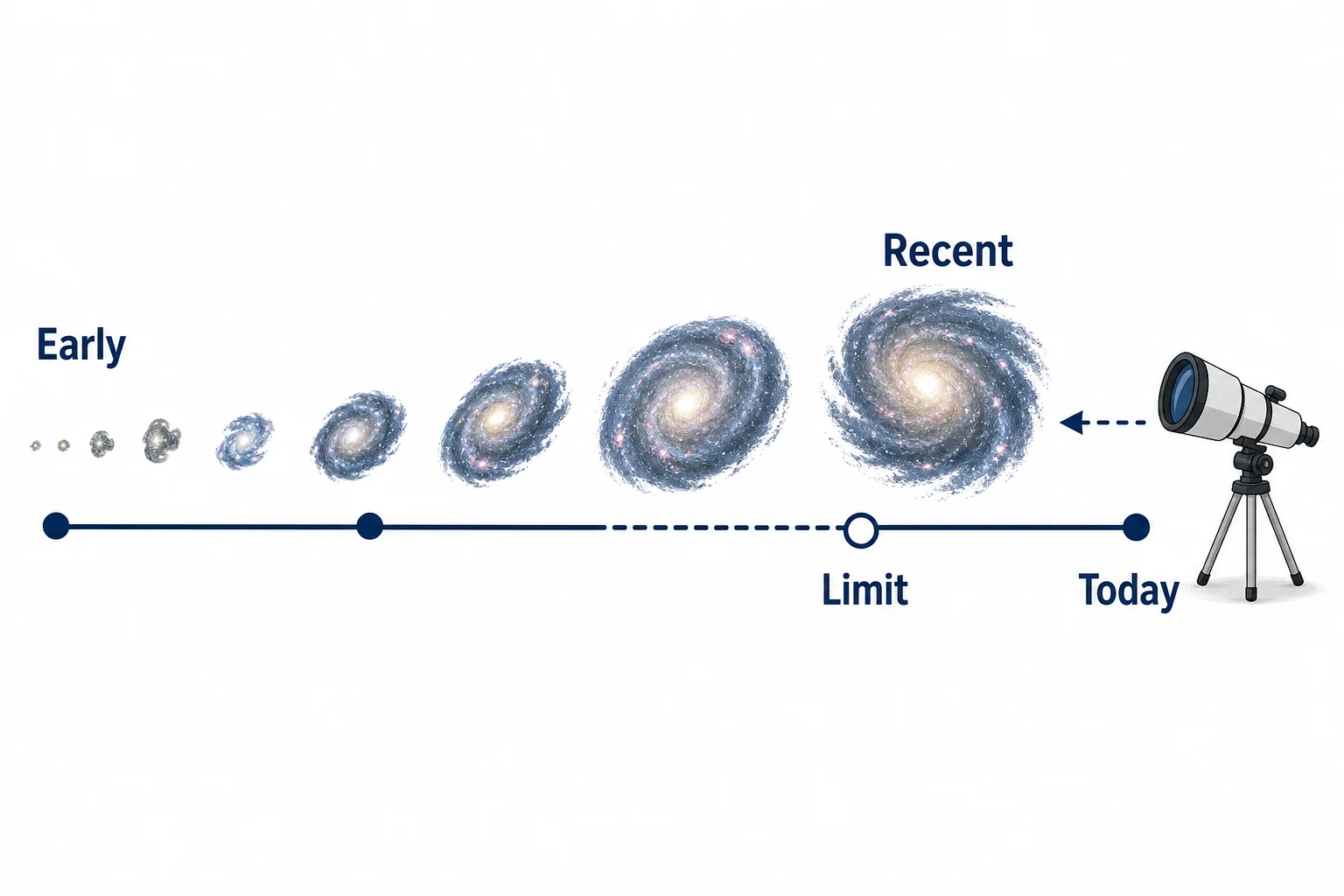
Astronomers compare light from many distances to study change over time.
Vocabulary
- Light travel time
- The time it takes light to move from one place to another.
- Light-year
- The distance light travels in one year, about 9.46 trillion kilometers.
- Lookback time
- How far into the past we are seeing an object, based on how long its light took to reach us.
- Infrared light
- Light with wavelengths longer than visible red light. Humans cannot see it with their eyes.
- Galaxy
- A huge system of stars, gas, dust, and dark matter held together by gravity.
- Cosmic microwave background
- Ancient light from the early universe that now reaches us as microwave radiation.
In the Classroom
Make a light travel time scale
25 minutes | Grades 6-8
Students choose objects such as the Moon, Sun, nearby stars, and distant galaxies. They build a table that connects distance with the time light needs to reach Earth.
Model old light with messages
20 minutes | Grades 6-8
Students stand at different distances from a receiver and send index card messages one at a time. The class compares when each message was written with when it was received, then links the model to telescope images.
Sort a universe timeline
30 minutes | Grades 6-8
Students sort cards showing the Moon, Sun, nearby stars, the Milky Way, and distant galaxies by light travel time. They explain which objects show a more recent view and which show an older view.
Key Takeaways
- • Light moves fast, but it still takes time to cross space.
- • A telescope shows an object as it was when its light began traveling.
- • A light-year is a distance, not a year of time.
- • Distant galaxies can show us the universe billions of years in the past.
- • JWST studies ancient infrared light from some of the earliest galaxies we can observe.