Why Do We Get Fevers?
How the body turns up its temperature
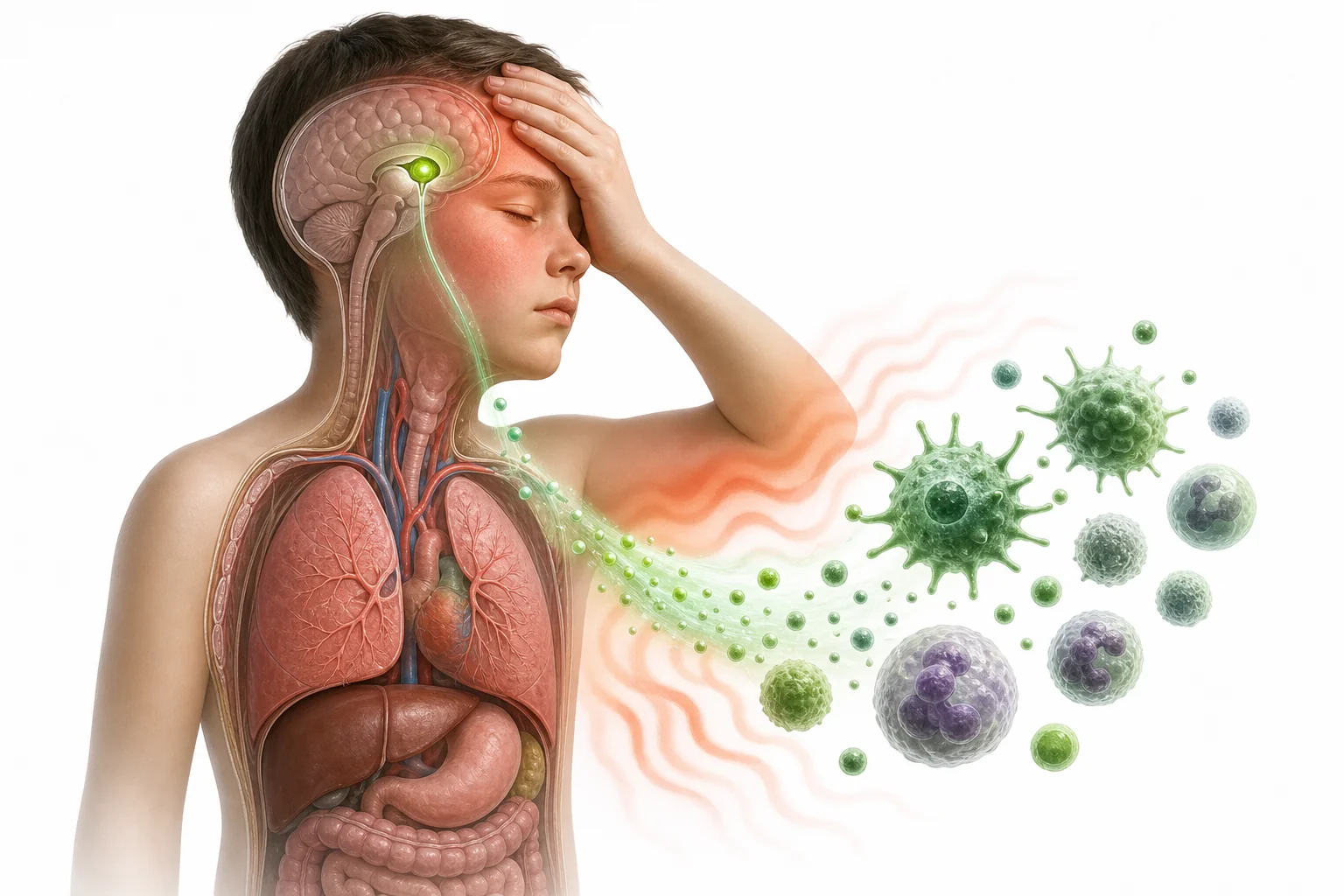
A fever happens when your brain raises your body's target temperature. This can make it harder for some germs to grow and can help immune cells work. Fever is a sign that the body is responding, but very high or long fevers need medical help.
A fever can feel like something has gone wrong, but it is usually part of a controlled response. Your body is not simply overheating. Instead, the brain changes the temperature it is trying to maintain. The change starts when immune cells sense a possible infection. They release chemical messages that travel through the blood and signal the brain. A small region called the hypothalamus acts like a body thermostat. When it raises the target temperature, you may shiver, feel cold, and seek blankets even though your temperature is climbing. This response uses energy, but it can slow some pathogens and support immune defenses. Fever is one example of homeostasis in action. Body systems work together, including the immune, nervous, circulatory, and muscular systems. In middle school biology, fever helps explain how cells, tissues, and organs coordinate to keep an organism alive.
Fever starts with detection
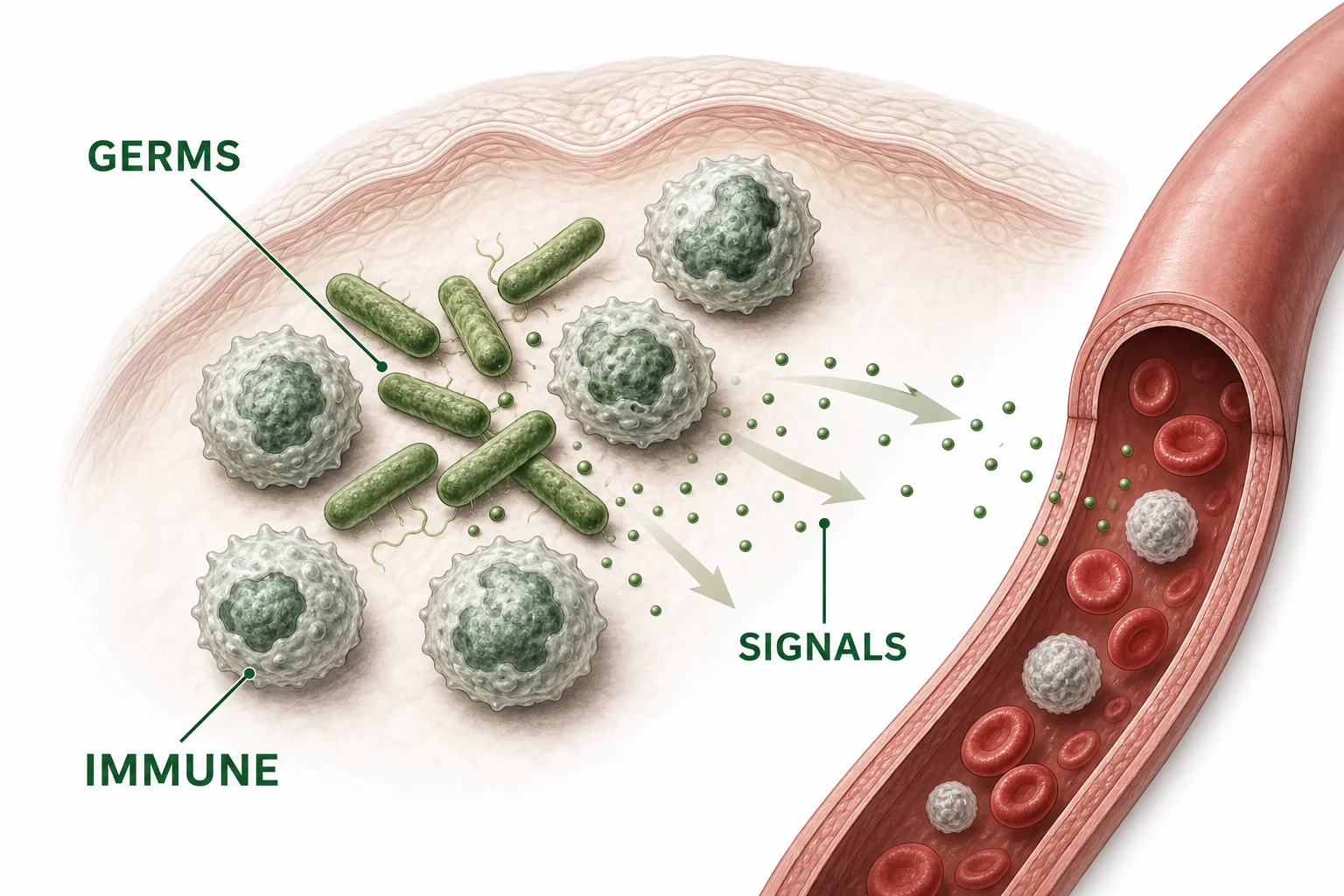
A local infection can send a body-wide signal.
The brain resets the target
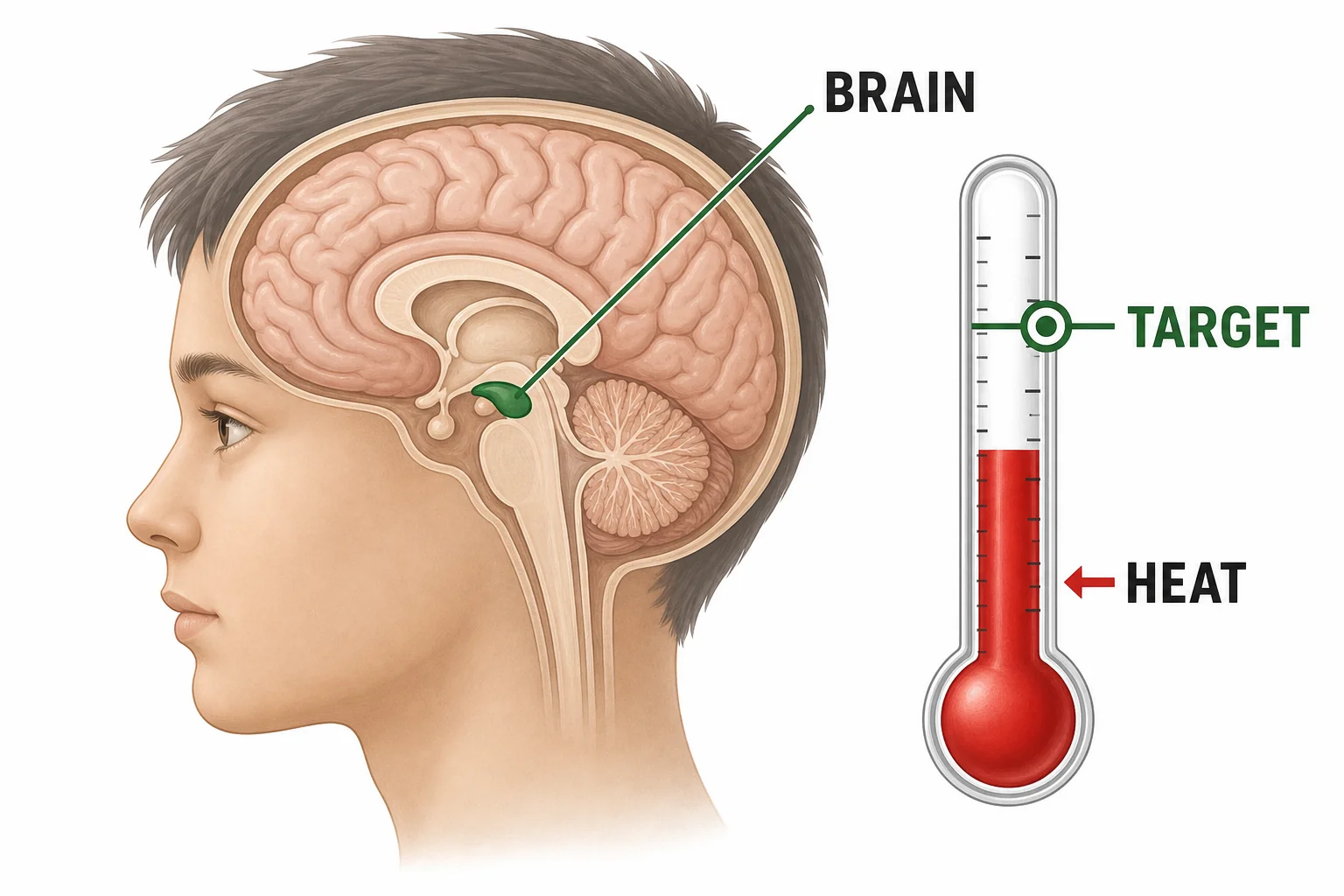
A fever is a raised temperature target, not just extra heat.
Shivering makes heat
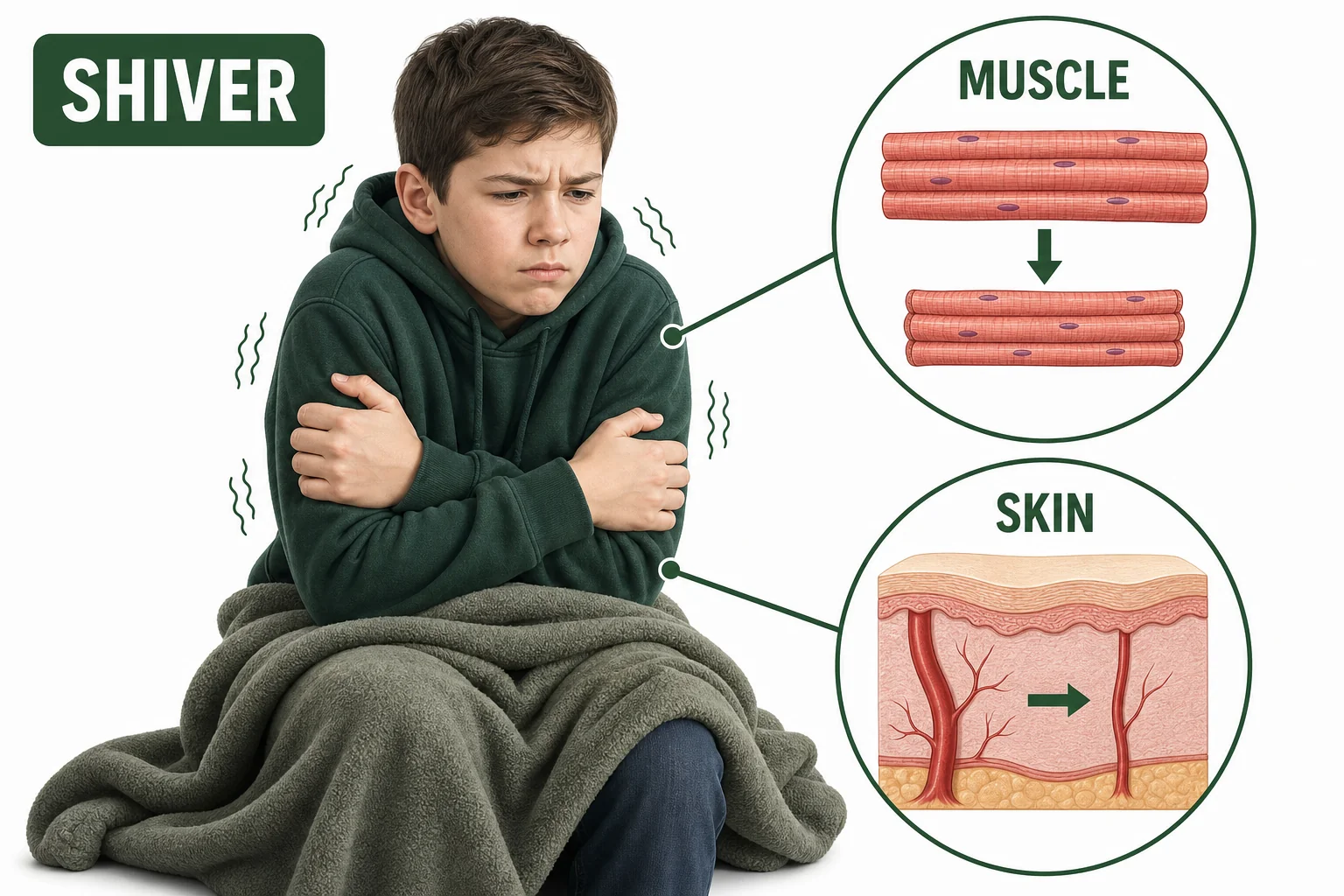
Chills can mean the body is trying to get warmer.
Heat can slow pathogens
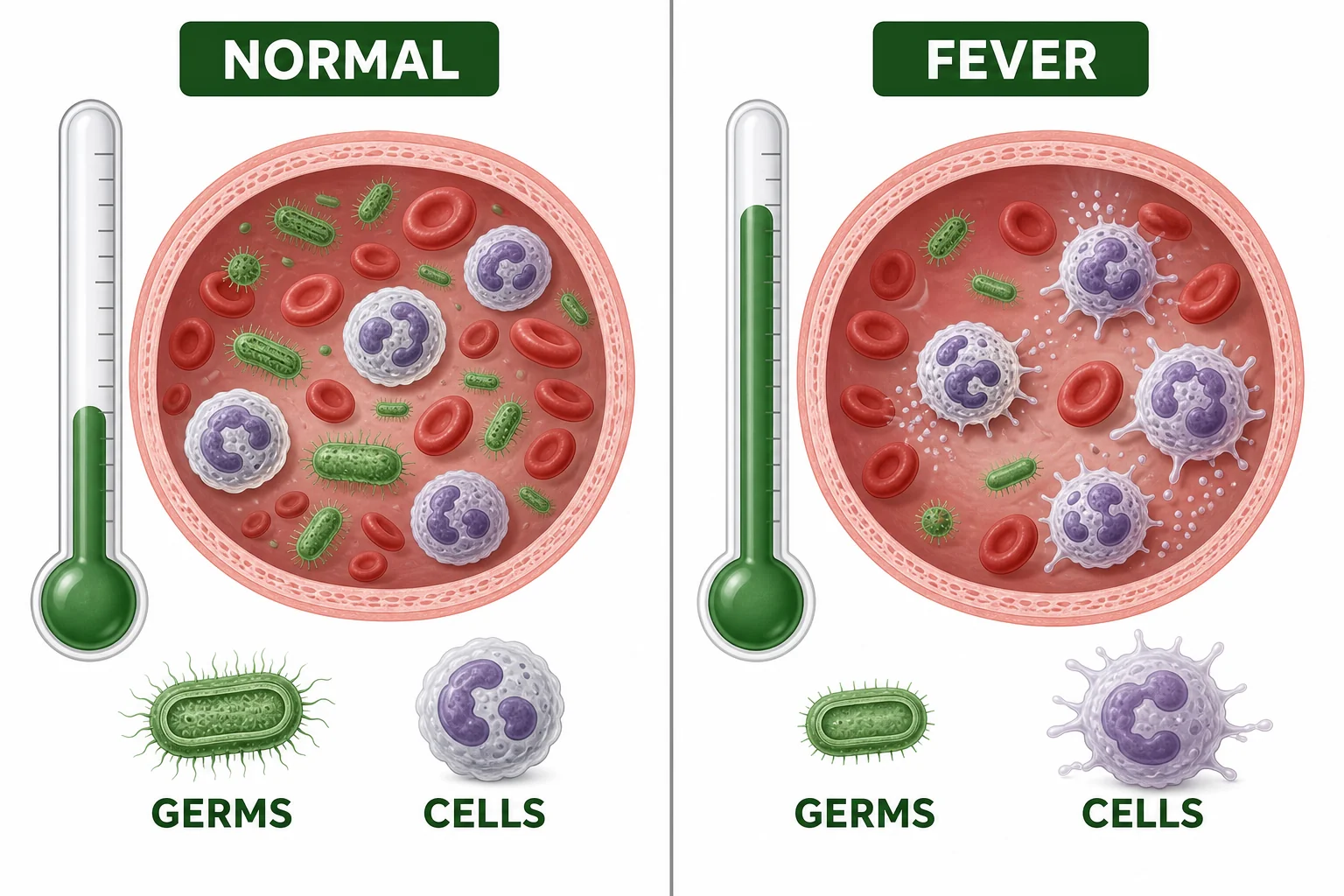
A moderate fever can make the body less friendly to some pathogens.
The fever breaks
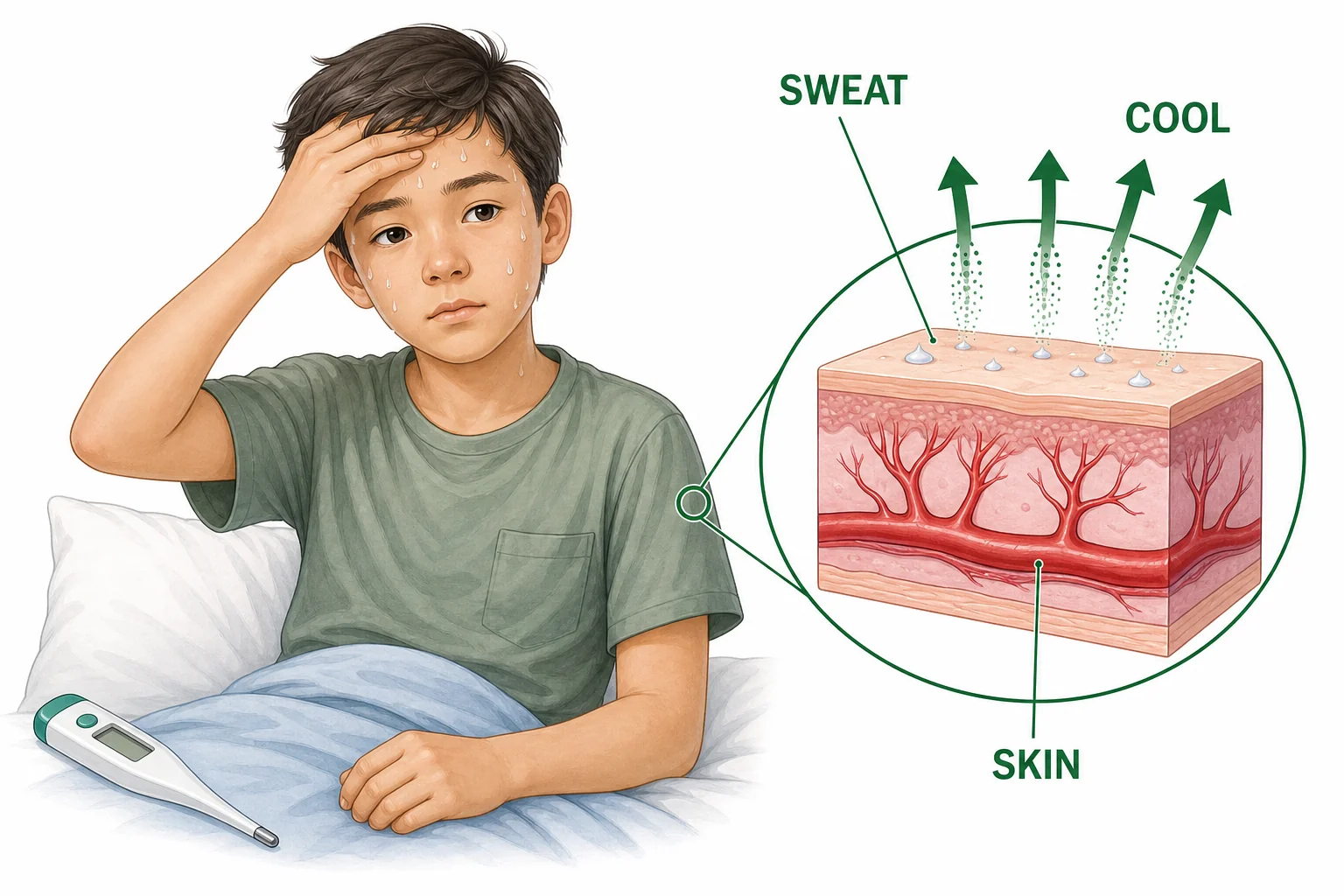
Sweating often means the target temperature has dropped.
Vocabulary
- Fever
- A temporary rise in body temperature controlled by the brain, often during infection.
- Pathogen
- A virus, bacterium, fungus, or parasite that can cause disease.
- Pyrogen
- A substance that can trigger the brain to raise the body's temperature target.
- Hypothalamus
- A small brain region that helps regulate body temperature, hunger, thirst, and other body conditions.
- Homeostasis
- The process of keeping internal body conditions within a range that cells can survive.
In the Classroom
Model the thermostat reset
20 minutes | Grades 6-8
Students use a simple thermostat diagram to show normal temperature, fever target temperature, and recovery. They add arrows for shivering, narrowed blood vessels, sweating, and widened blood vessels.
Signal pathway card sort
25 minutes | Grades 6-8
Give students cards for pathogen, immune cell, pyrogen, blood, hypothalamus, muscles, and sweat glands. Students arrange the cards into a cause-and-effect chain and explain how multiple body systems interact.
Fever tradeoff discussion
15 minutes | Grades 6-8
Students compare benefits and costs of fever using a two-column chart. They should include pathogen growth, immune cell activity, energy use, and safety limits.
Key Takeaways
- • Fever is usually a controlled response to infection.
- • Immune signals can cause the hypothalamus to raise the body's temperature target.
- • Chills and shivering help the body warm up to the new target.
- • Moderate fever can slow some pathogens and support immune cells.
- • Very high or long-lasting fevers need help from a medical professional.