Sign in to save

Bookmark this page so you can find it later.

Sign in to save

Bookmark this page so you can find it later.

Biology middle-school May 24, 2026

Why Do We Get Goosebumps?

Tiny muscles show an old body reflex
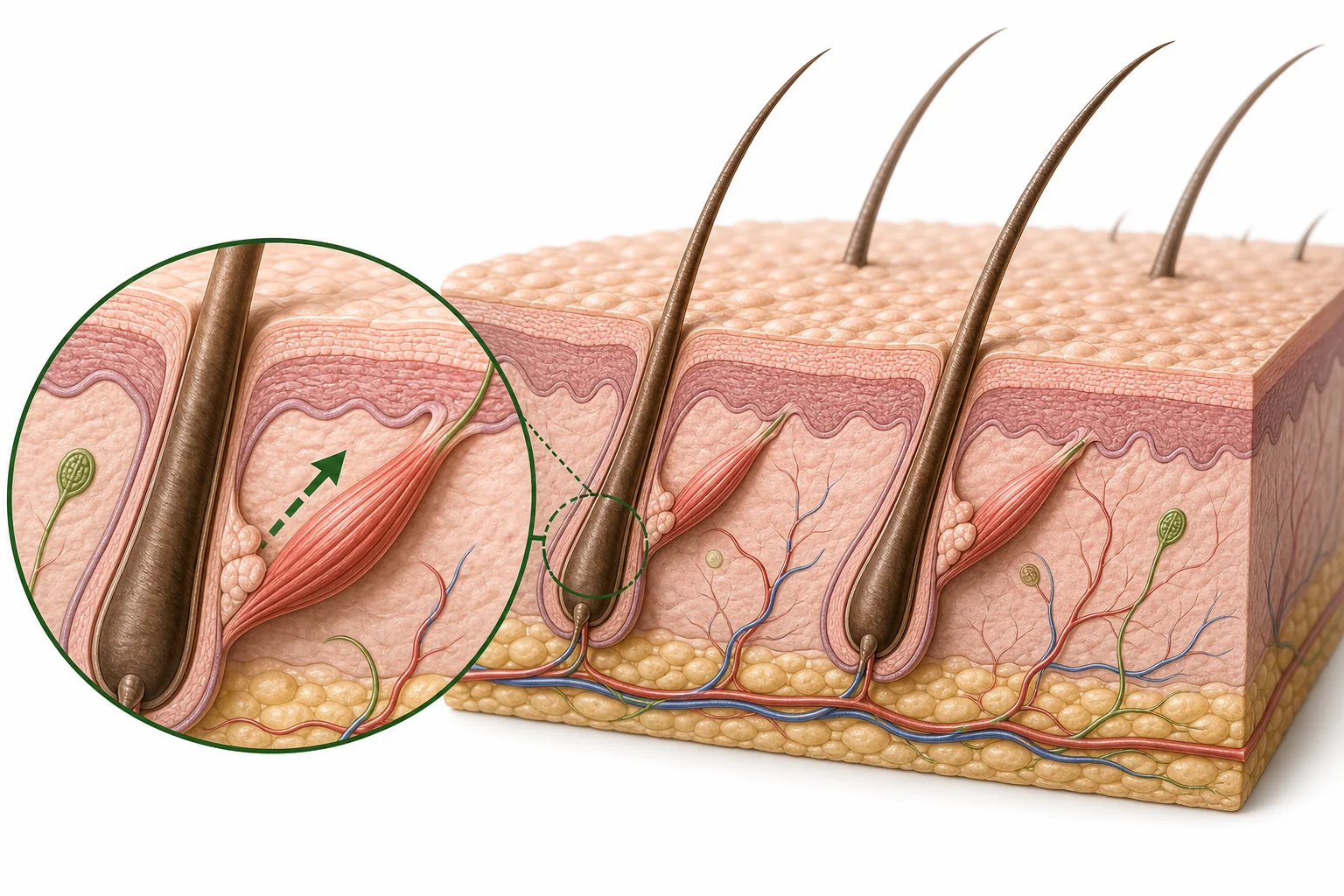
Close view of human skin with raised hairs and bumps, showing the skin surface, hair shafts, and tiny muscles under the skin.

Goosebumps happen when tiny muscles under your skin pull your hairs upright. Your body can do this when you feel cold, scared, surprised, or moved by strong emotion. The reflex mattered more for furry ancestors because raised hair helped trap warm air and made the body look bigger.

Big Idea. NGSS MS-LS1-3 connects goosebumps to how body systems interact to help an organism respond to its environment.

Goosebumps are small bumps that rise around hair follicles on your skin. They can show up when you step into cold air, hear a powerful song, or feel sudden fear. The bumps are not random. They are caused by a reflex that links nerves, muscles, skin, and body temperature. Each hair on most of your skin has a tiny muscle attached to it. When that muscle tightens, the hair tilts upward and the skin puckers around it. In humans, this response does not warm us very much. Our body hair is too thin for that. In many mammals, raised fur traps a layer of air near the skin, which slows heat loss. Goosebumps are one small clue that humans share body plans with furrier ancestors. They also show how the nervous system can act fast without a person choosing to move.

What rises under the skin
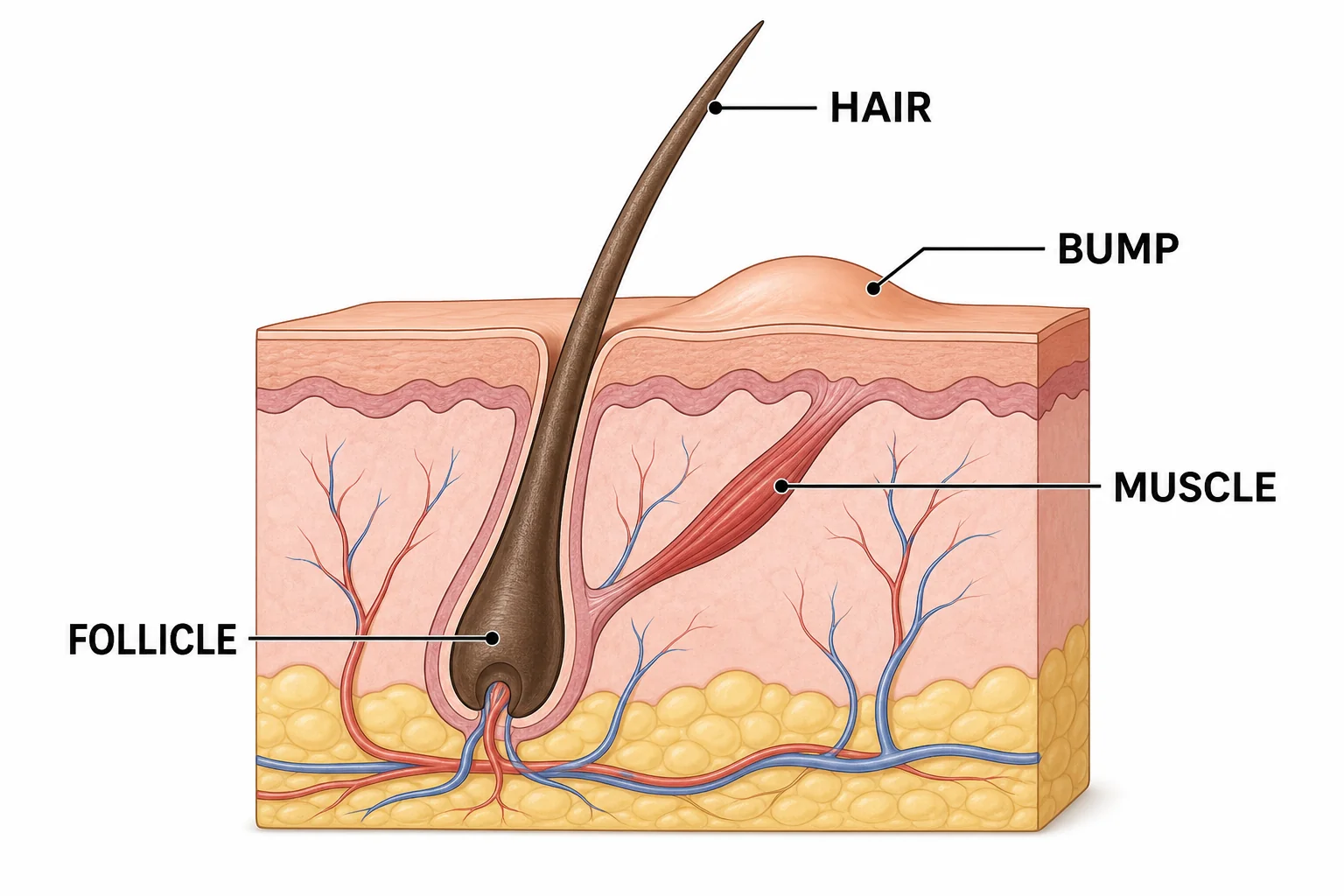
Cross section of skin showing a hair follicle, raised hair, arrector pili muscle, and the bump at the skin surface.
A tiny muscle pulls the hair upright.
A goosebump starts in the skin, not on top of it. Each hair grows from a tube-shaped pocket called a follicle. A small smooth muscle connects the follicle to nearby skin tissue. This muscle is called the arrector pili muscle. When it contracts, it pulls the hair more upright. The skin around the hair also lifts, so you see a small bump. You do not decide to flex these muscles the way you decide to raise your hand. They are smooth muscles, which means they work automatically. The same skin area also has blood vessels, nerves, sweat glands, and touch sensors. A goosebump is a visible sign that these parts are working together. The bump is tiny, but the system behind it includes signals from the nervous system and a physical pull inside the skin.

Goosebumps are caused by tiny smooth muscles attached to hairs.

The automatic signal
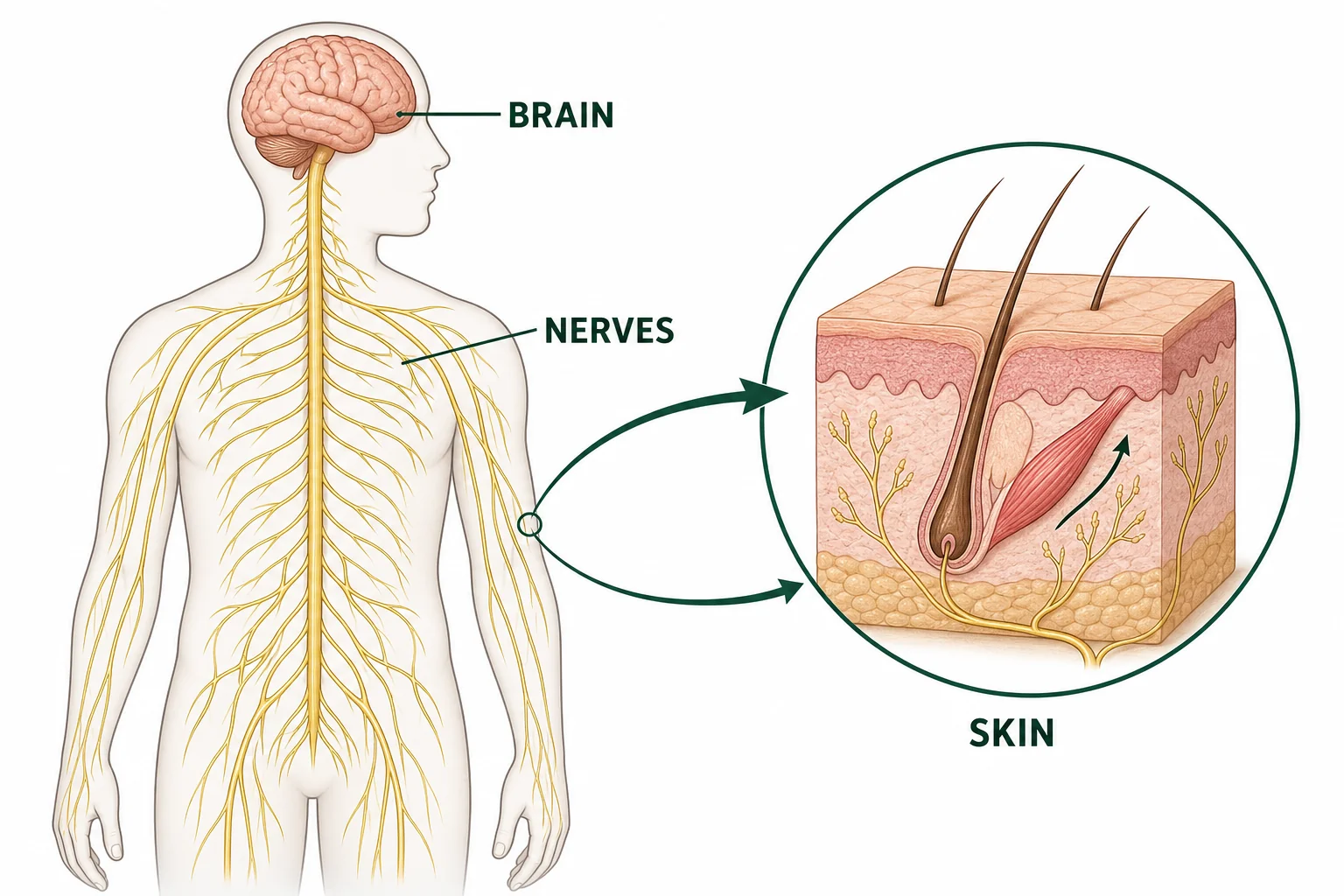
Diagram showing a brain and spinal cord sending nerve signals to skin, where small muscles lift hairs.
Automatic nerves trigger the skin response.
Goosebumps are controlled by the autonomic nervous system. This part of the nervous system runs many jobs without conscious effort. It helps change heart rate, blood vessel width, sweating, digestion, and pupil size. When your brain senses cold or a strong emotion, it can send signals through nerves to the skin. Those signals tell the arrector pili muscles to contract. The response is fast because it does not require a long plan or a learned movement. It is more like a built-in setting. The same automatic system can make your heart beat faster when you are startled. It can also narrow blood vessels in the skin when you are cold. Goosebumps often happen along with these other changes. Together, they show that a body response can involve several organs and tissues at once.

The reflex is automatic, so it can happen before you think about it.

Cold and body heat
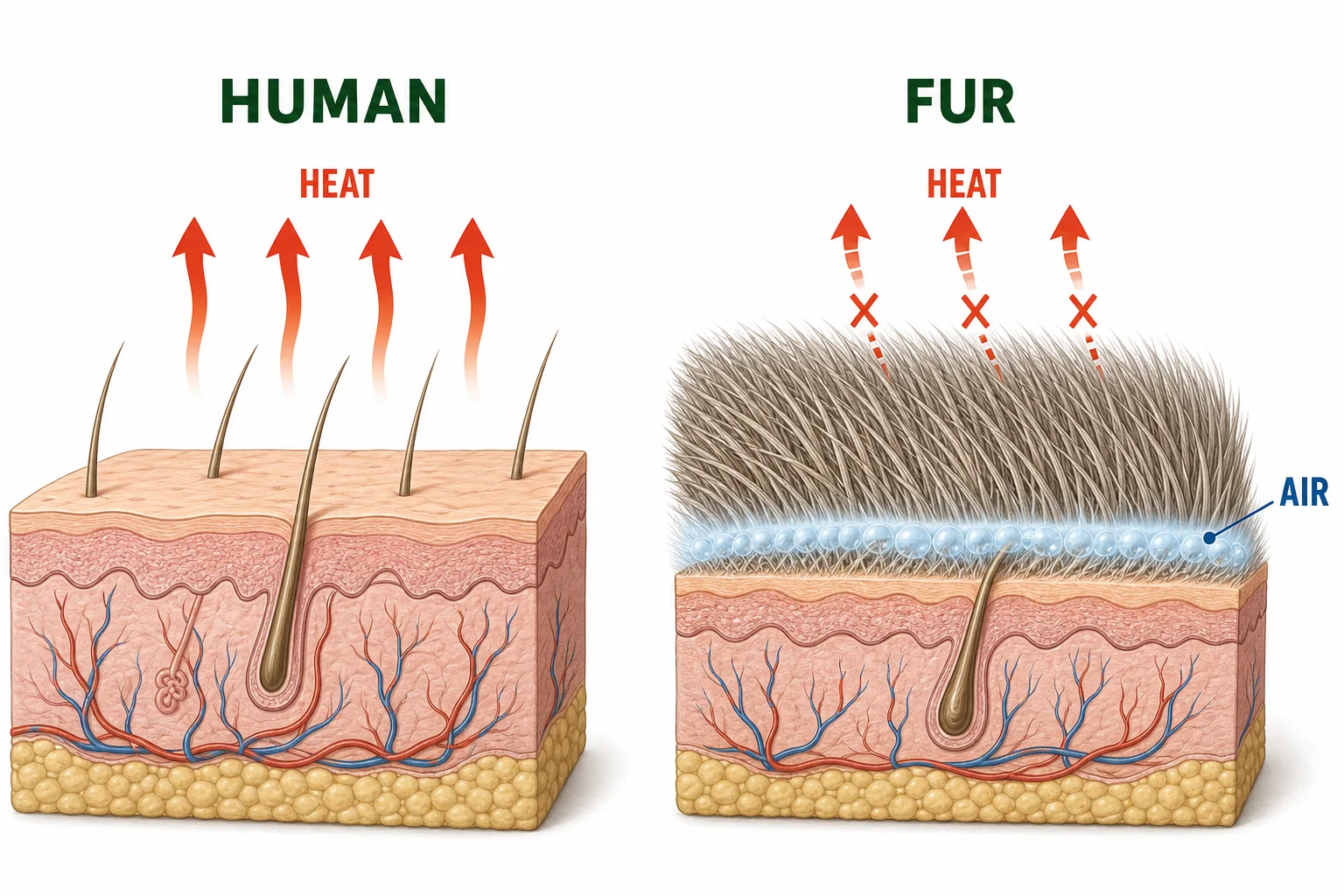
Comparison of flat human hairs losing heat and raised animal fur trapping a layer of air near the skin.
Raised fur traps air better than human body hair.
Cold is one common trigger for goosebumps. Your body works best when its internal temperature stays in a narrow range. If cold air touches your skin, temperature sensors send information to the brain. The brain can start several responses. Muscles may shiver to make heat. Blood vessels near the skin may narrow to reduce heat loss. Arrector pili muscles may also pull hairs upright. In a furry animal, raised fur traps still air near the skin. Air is a poor heat conductor, so that trapped layer slows heat transfer away from the body. Humans have much less body hair, so the same response does not help much. A jacket works better because it traps a thicker layer of air. Goosebumps still appear because the old reflex remains in our skin and nerves.

Goosebumps are a weak warming response in humans but a useful one in furry mammals.

Fear and strong feelings
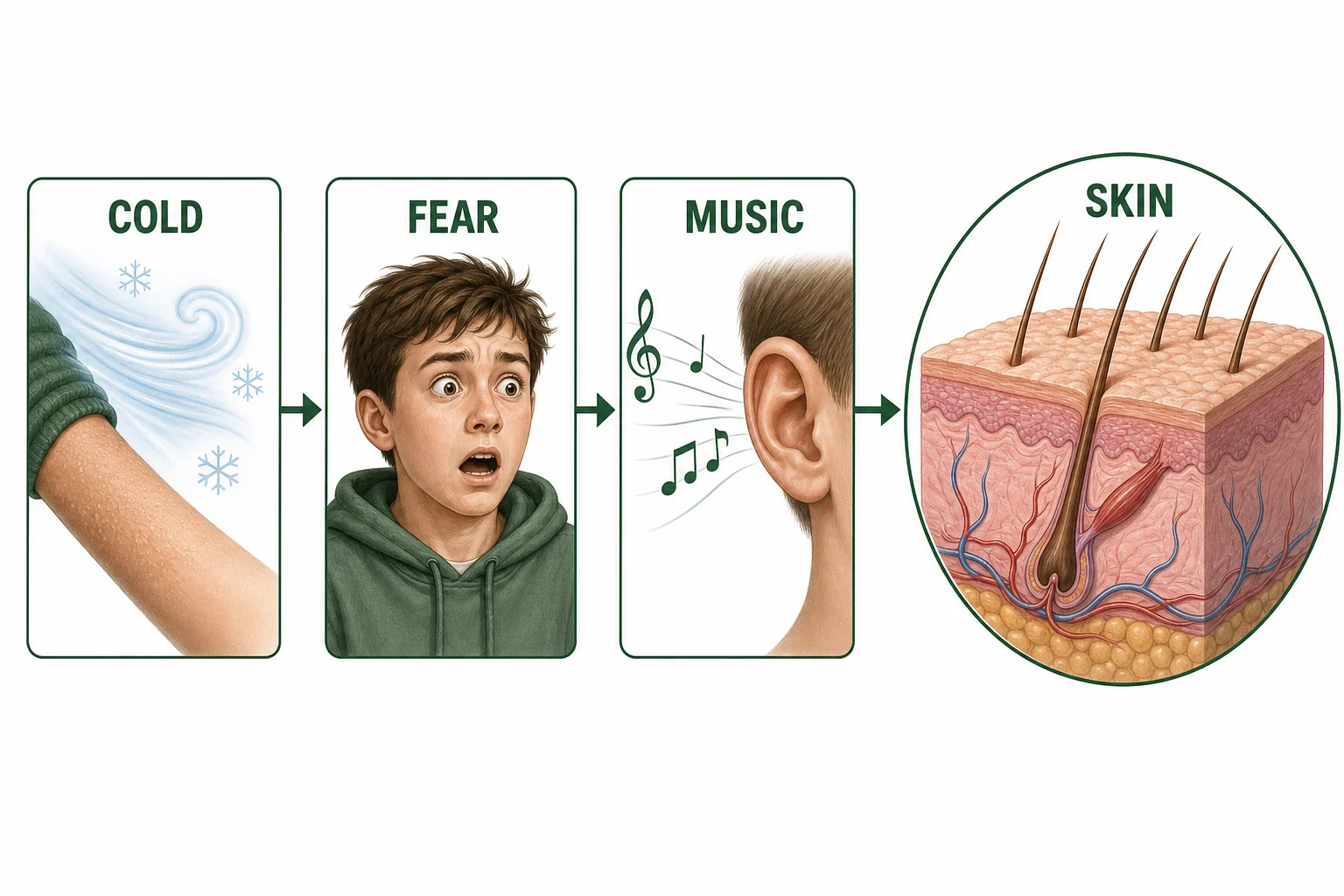
Three trigger scenes showing cold air, a startled person, and music leading to the same skin response with raised hairs.
Different triggers can lead to the same bumps.
Goosebumps can also appear when a person feels fear, awe, surprise, or strong emotion. This happens because the same automatic system that responds to cold also responds to stress and excitement. In many mammals, raised fur can make the animal look larger. A cat with puffed-up fur is a clear example. Larger appearance may help scare away a threat. Humans do not have enough fur for this to change our size much, but the reflex pathway can still turn on. Music, memories, and stories can also trigger goosebumps. In those cases, the brain is reacting to meaning, emotion, and attention. The skin response is real even though the trigger is not cold. This is a good example of how brain activity can affect organs far from the brain, including the skin.

Cold and emotions can use the same automatic skin pathway.

A vestigial clue
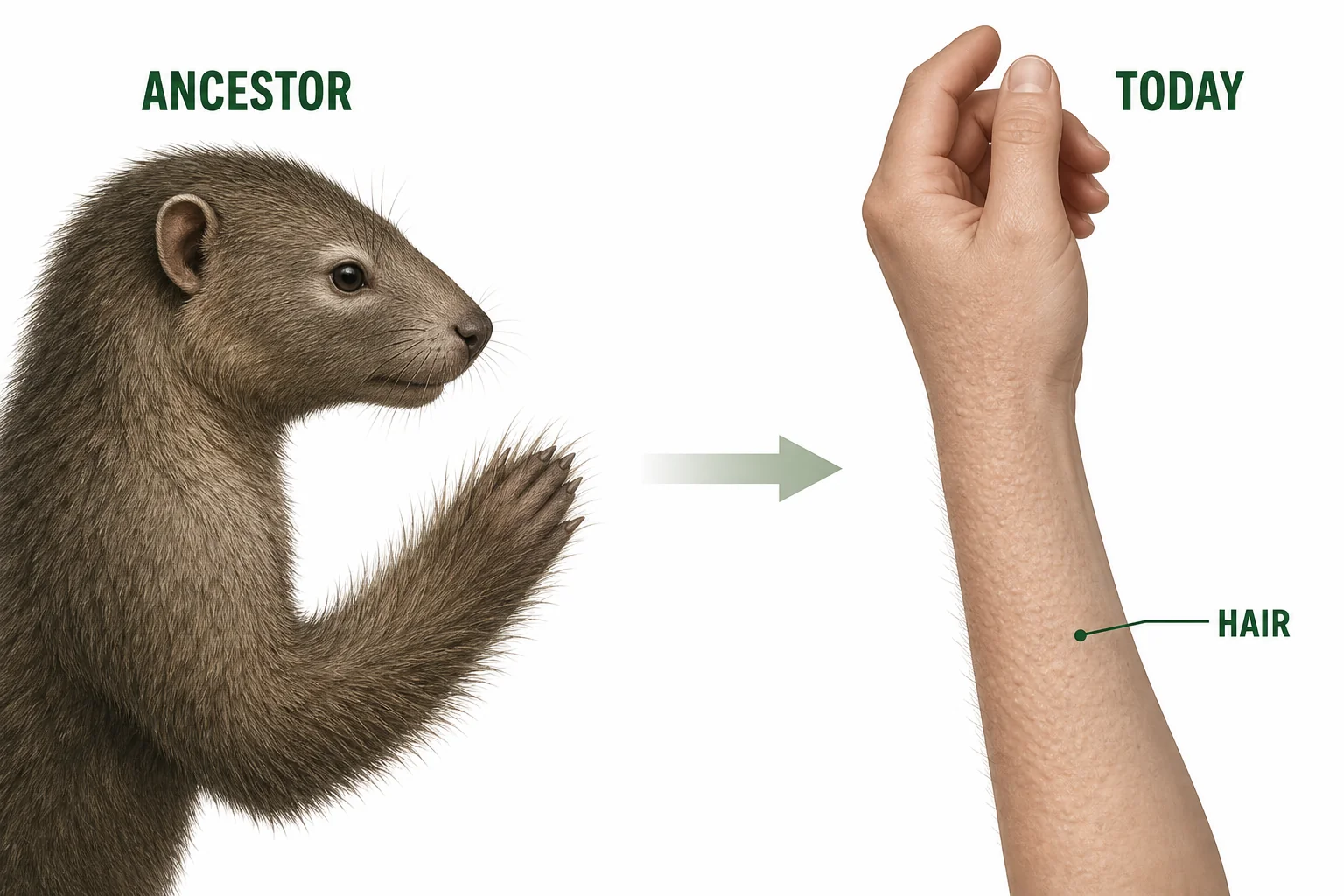
Evolution-themed diagram showing a furry ancestor with raised fur and a modern human arm with small goosebumps.
An old response remains in modern skin.
Scientists often describe human goosebumps as a vestigial response. A vestigial trait is a body feature or behavior that had a larger job in ancestors but has a smaller job today. This does not mean it is useless in every way. It means the original function is reduced. The arrector pili muscles still work. The nerves still send signals. The hairs still move. The difference is that human body hair is too sparse to trap much warm air or change our shape. Evolution does not remove every leftover structure. If a trait is not very harmful, it may remain for a long time. Goosebumps are a simple way to connect anatomy, physiology, and evolution. They show how a body part can keep its mechanism while its usefulness changes across generations.

Goosebumps are a leftover reflex from furrier ancestors.

Vocabulary

Arrector pili muscle
A tiny smooth muscle attached to a hair follicle that pulls the hair upright when it contracts.
Hair follicle
A small pocket in the skin where a hair grows.
Autonomic nervous system
The part of the nervous system that controls automatic body actions such as heart rate, sweating, and goosebumps.
Thermoregulation
The process of keeping body temperature within a safe range.
Vestigial
Describes a trait that had a larger function in ancestors but has a reduced function now.

In the Classroom

Model a hair follicle

20 minutes | Grades 6-8

Students build a simple model with paper skin, yarn hair, and a rubber band muscle. They pull the rubber band to show how a small muscle can lift a hair and pucker the skin.

Compare insulation

35 minutes | Grades 6-8

Students compare how uncovered, cloth-covered, and fluffy-covered cups of warm water cool over time. They connect trapped air in the coverings to why raised fur can slow heat loss.

Body systems response map

25 minutes | Grades 6-8

Students make a cause-and-effect map for a cold-room scenario. The map should include skin sensors, brain signals, nerves, muscles, blood vessels, and the visible goosebumps.

Key Takeaways

  • Goosebumps form when tiny muscles pull hairs upright.
  • The autonomic nervous system controls the reflex automatically.
  • Cold can trigger goosebumps as part of a body temperature response.
  • Strong emotions can also trigger the same skin pathway.
  • In humans, goosebumps are a vestigial response from furrier ancestors.