Why Do We Sweat?
How skin helps the body cool down
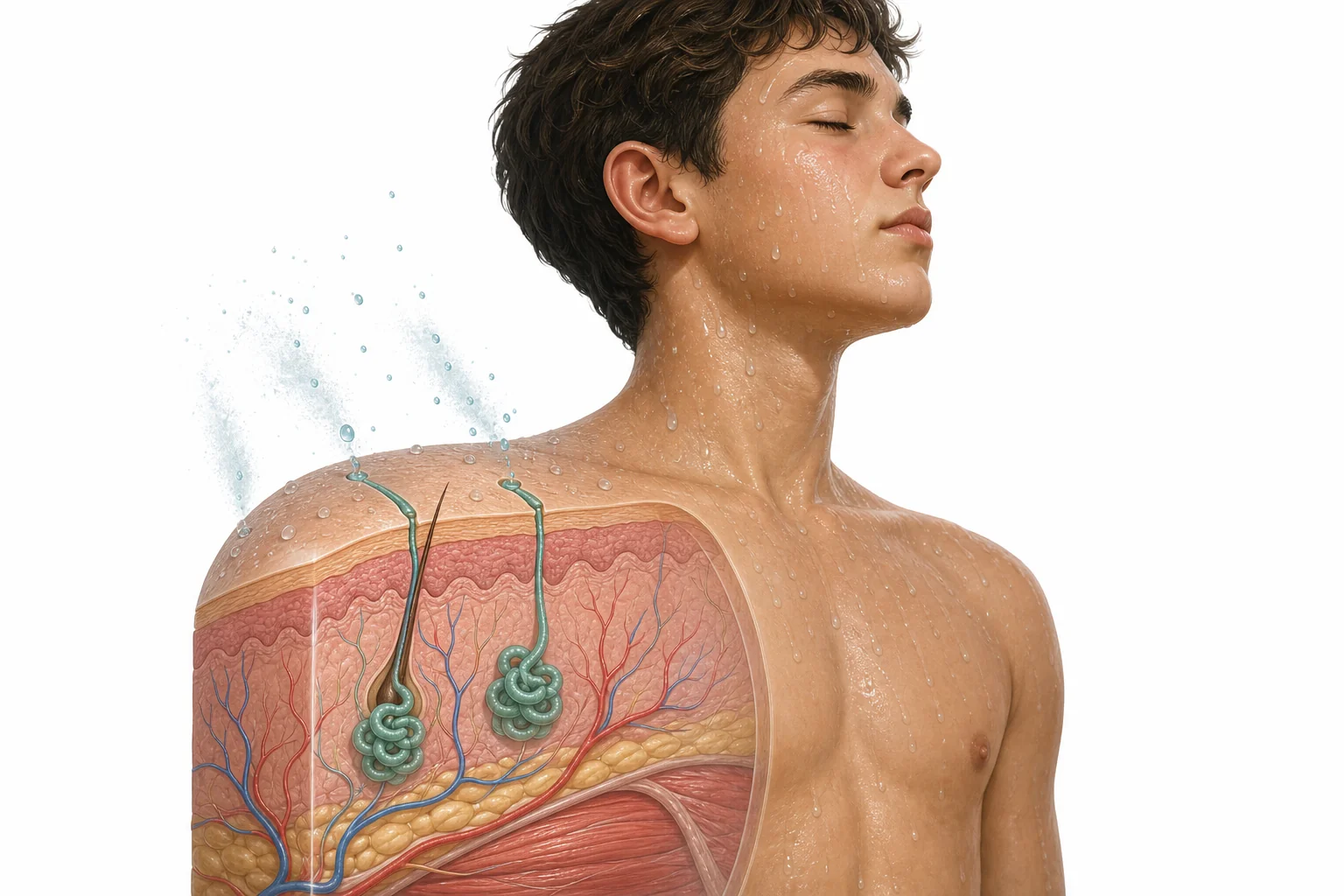
Sweat cools your body when it gets too warm. Tiny openings in your skin let watery sweat out onto the surface. As the water dries, it carries heat away from your skin.
Your body works best when its inside temperature stays near the right level. Running, playing in the sun, wearing warm clothes, or having a fever can make your body heat up. Sweating is one way your body responds. Sweat starts in tiny sweat glands under your skin. The liquid travels to the surface through small openings called pores. Then the watery sweat can dry into the air. That drying takes heat away from your skin. This helps cool the blood moving near the skin, which helps cool the rest of the body. Sweating is part of homeostasis. That means the body makes small changes to keep conditions steady inside. Your body does not wait for you to decide to sweat. Nerves send signals, sweat glands respond, and your skin becomes part of a cooling system.
Your body has a set point
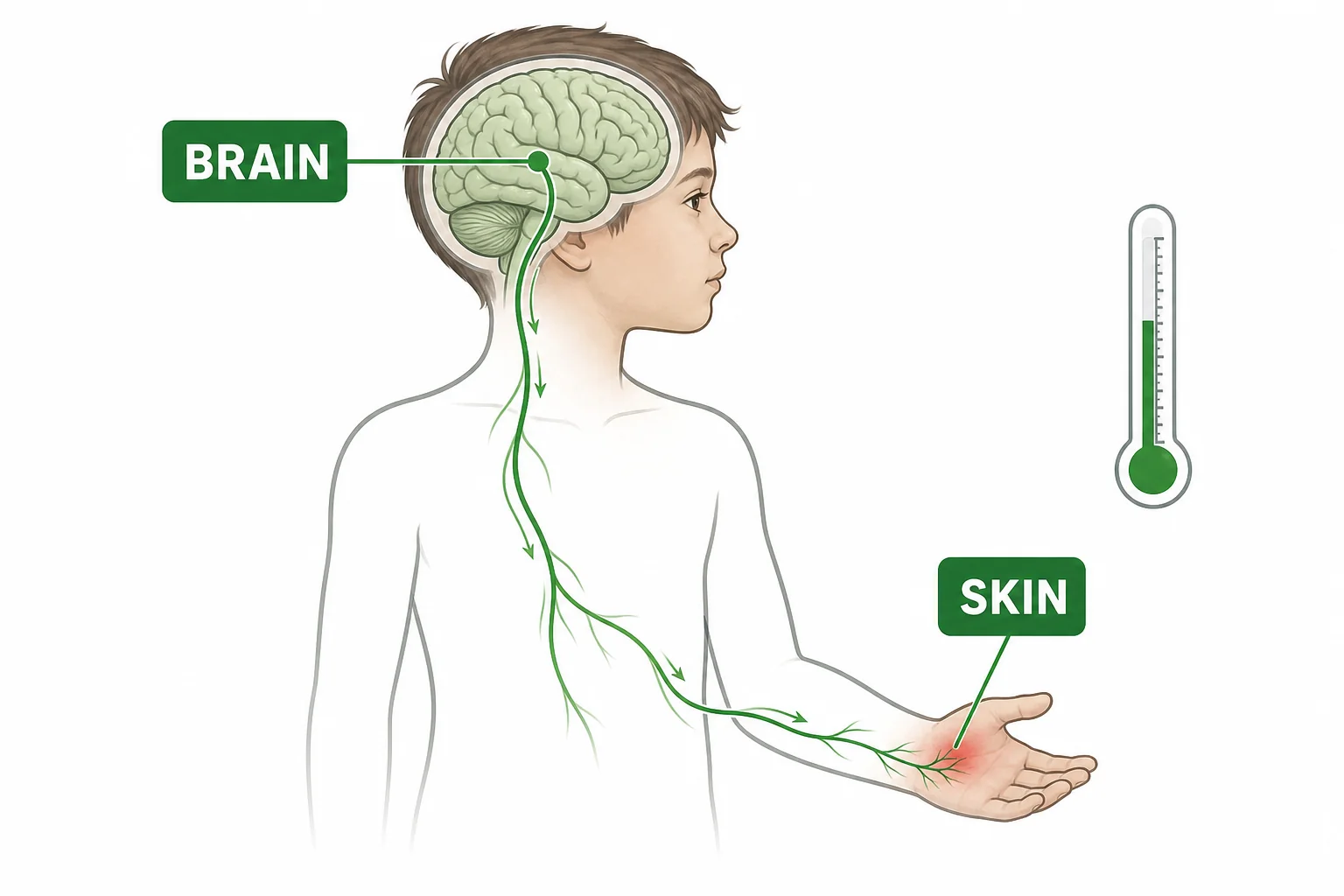
Sweating begins when the body senses that it is too warm.
Sweat starts under the skin
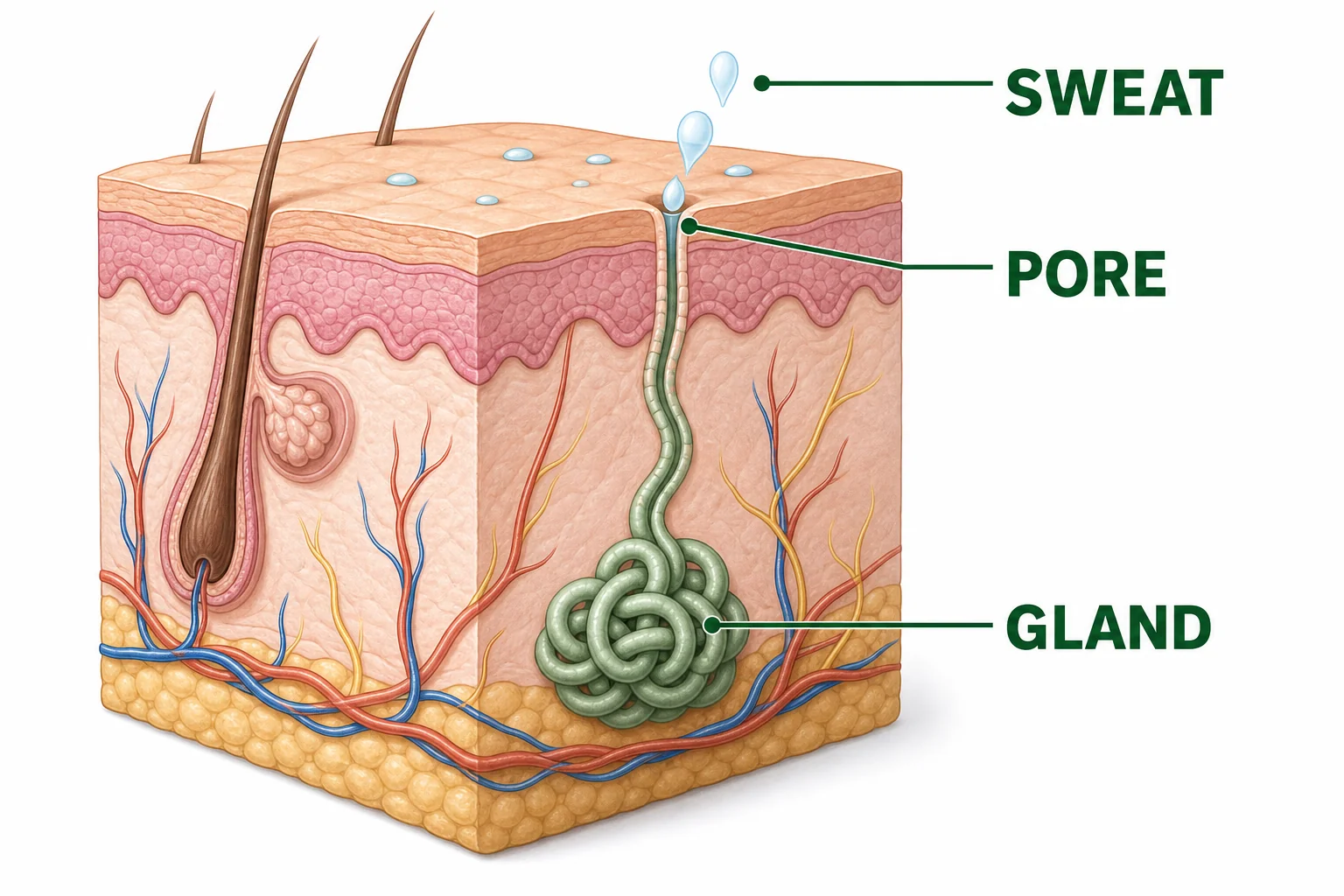
Sweat glands are body structures that help solve a heat problem.
Drying sweat removes heat
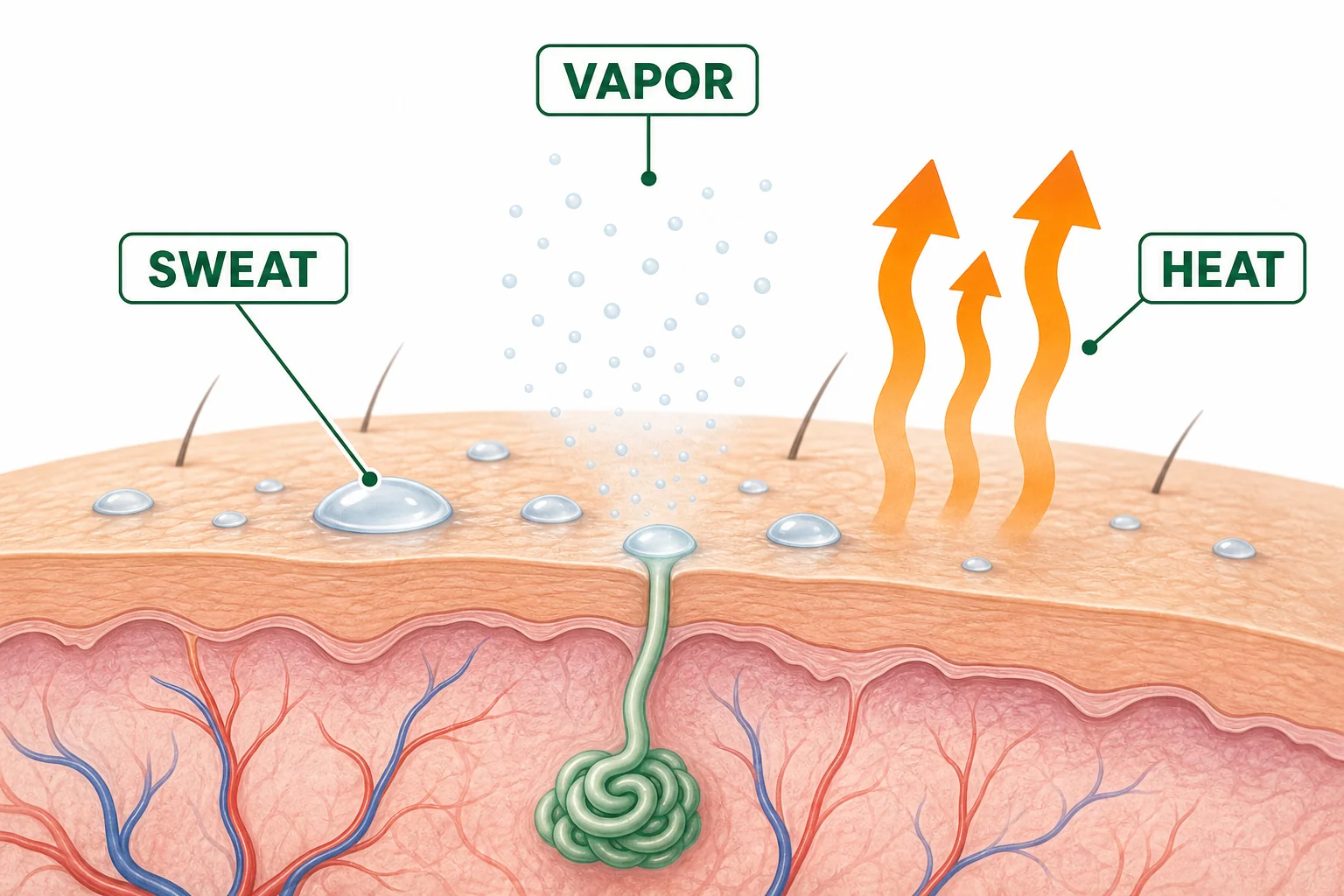
Sweat cools the body when it dries into the air.
Sweating is part of homeostasis
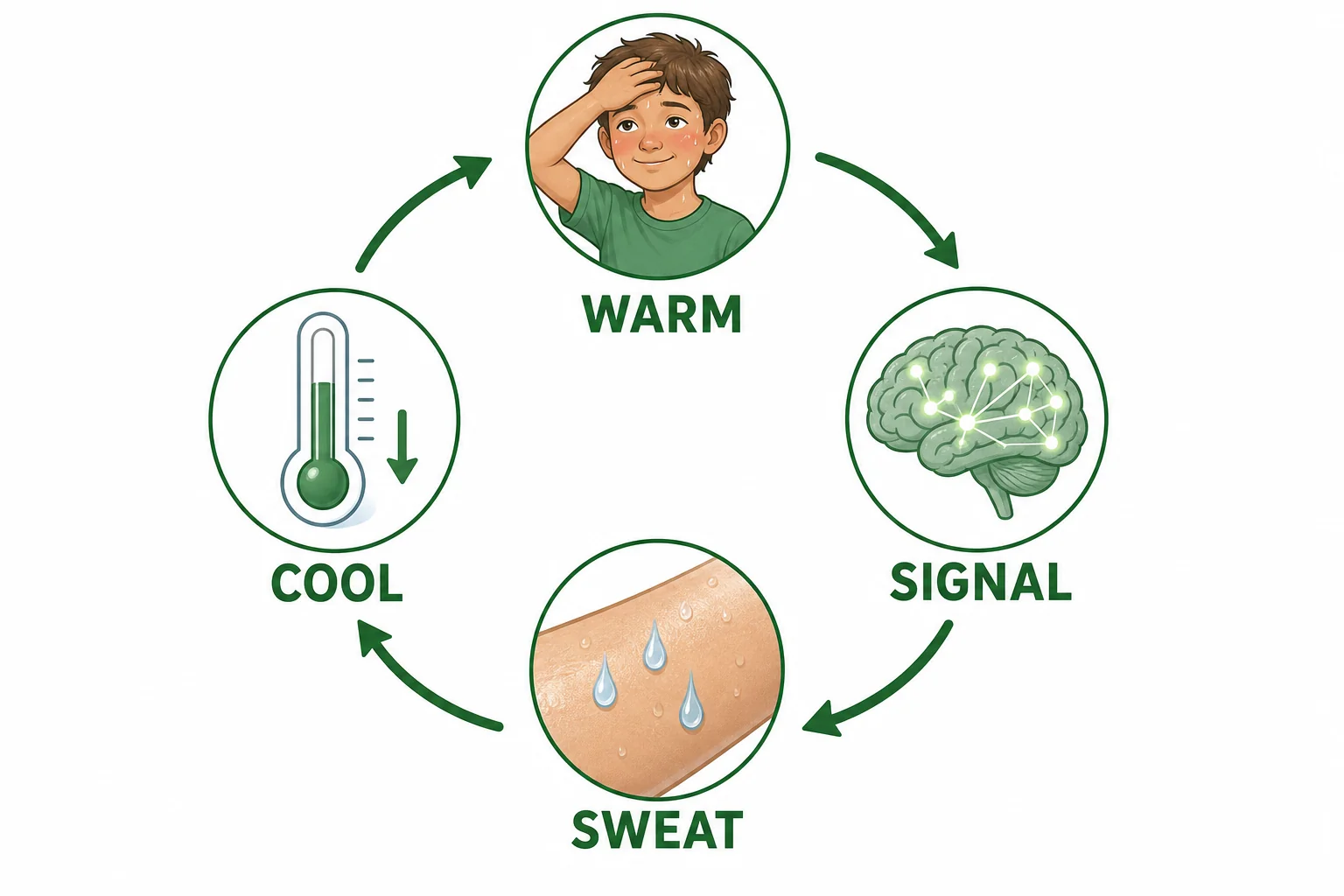
Homeostasis means the body responds to changes to stay in a healthy range.
Water helps the cooling system
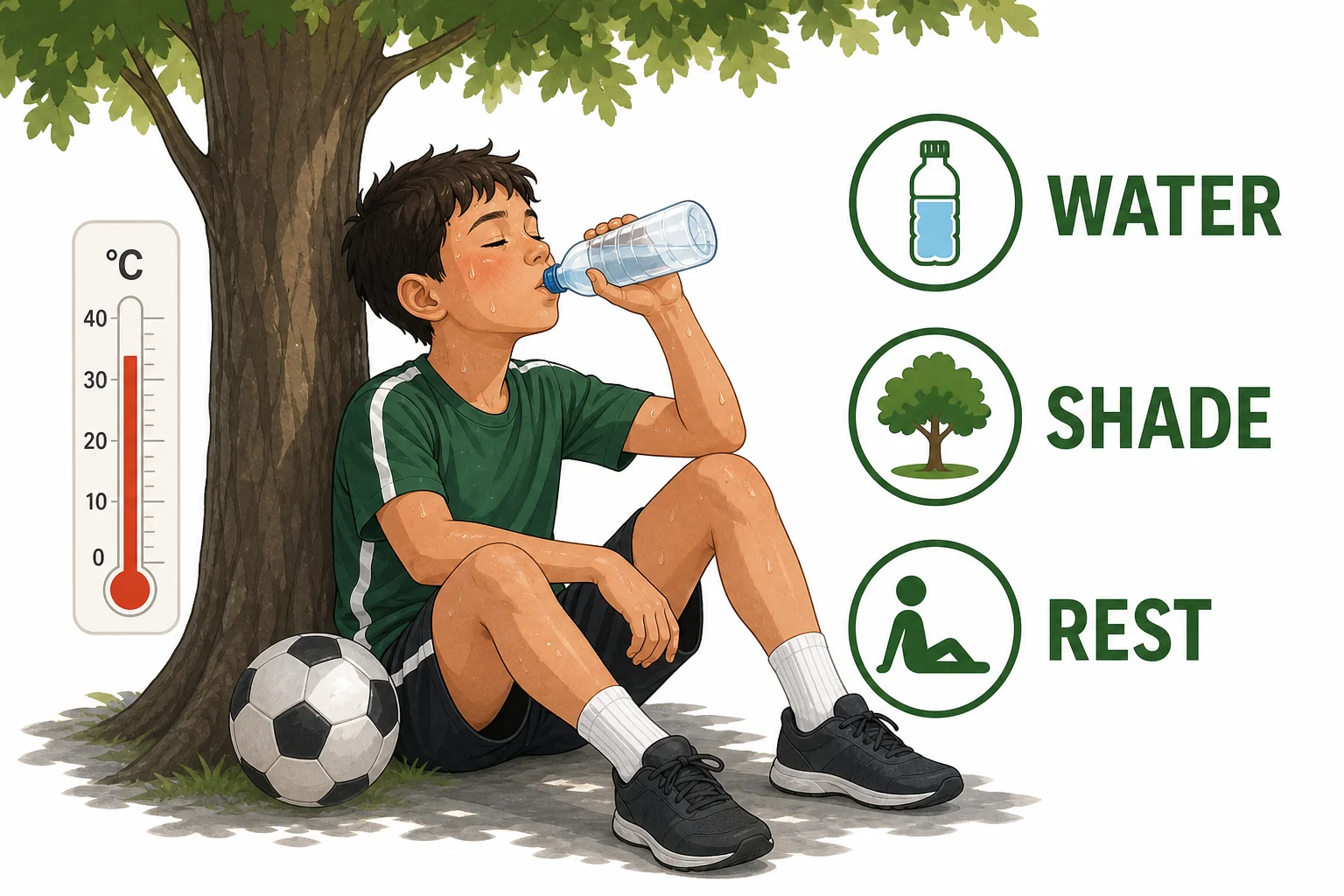
Sweating works best when the body has enough water.
Vocabulary
- Sweat
- A watery liquid made by glands in the skin that can help cool the body.
- Sweat gland
- A tiny structure in the skin that makes sweat and sends it to the surface.
- Pore
- A small opening in the skin where sweat can come out.
- Evaporation
- The change from liquid water to water vapor in the air.
- Homeostasis
- The process living things use to keep inside conditions steady.
- Body temperature
- A measure of how warm the inside of the body is.
In the Classroom
Wet paper towel cooling test
15 minutes | Grades 3-5
Students place one dry paper towel and one damp paper towel on the backs of their hands for a short time. They compare how each feels, then connect the cooler feeling to evaporation.
Skin diagram model
20 minutes | Grades 4-5
Students draw a simple skin cross section with a sweat gland, pore, and sweat drop. They add arrows to show sweat moving out and heat moving away.
Homeostasis response chart
25 minutes | Grades 4-5
Students sort cards into body change, body response, and result. Examples include getting warm, sweating, and cooling down.
Key Takeaways
- • Sweat helps cool the body when it gets too warm.
- • Sweat is made by sweat glands under the skin.
- • Sweat leaves the skin through small openings called pores.
- • Evaporation removes heat from the skin.
- • Sweating is part of homeostasis, which helps keep body conditions steady.