Sign in to save

Bookmark this page so you can find it later.

Sign in to save

Bookmark this page so you can find it later.

Chemistry high-school May 24, 2026

How Does Bleach Make White Clothes White?

How color disappears by chemical change
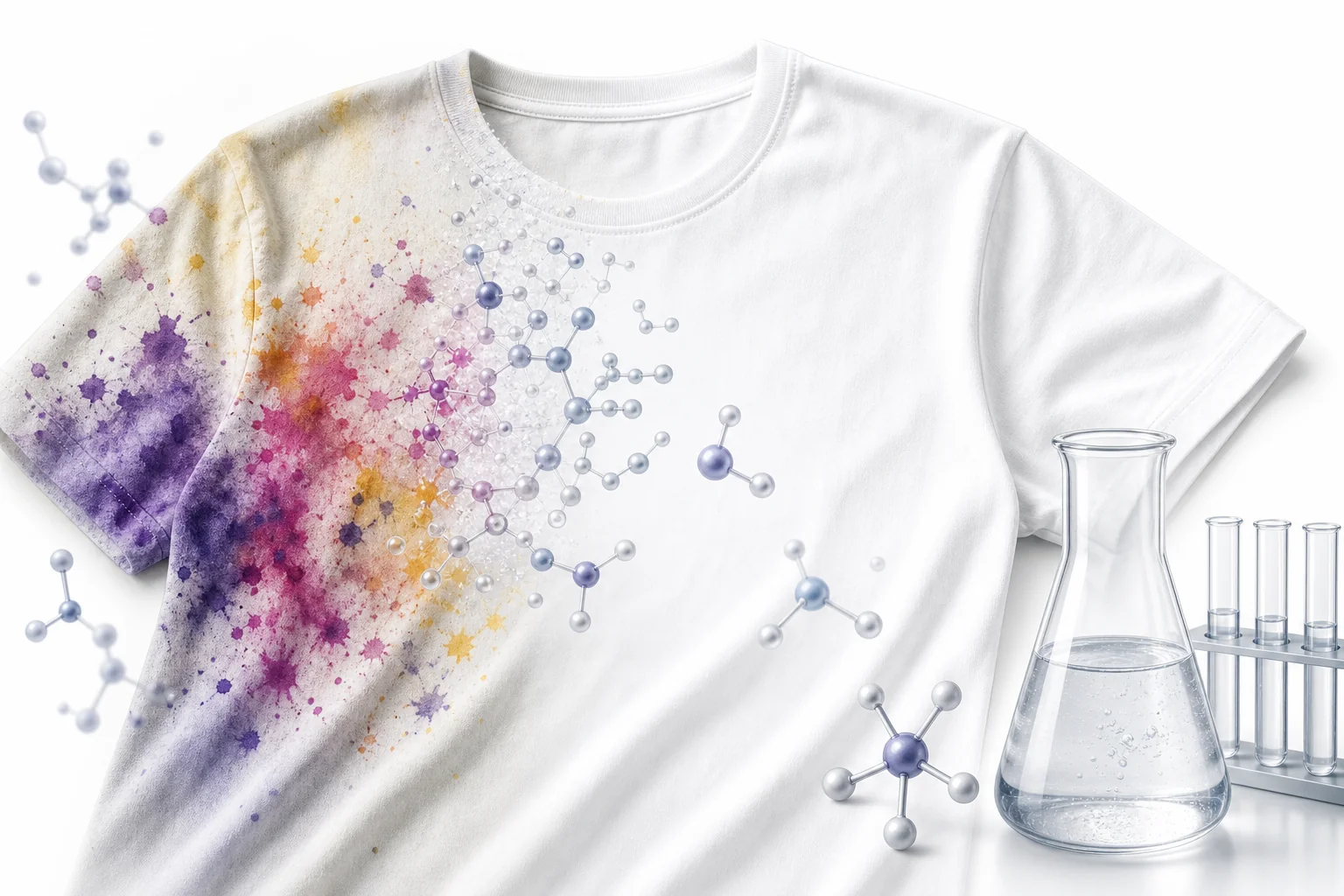
A white cotton shirt beside colored stain molecules that are being broken into smaller colorless pieces by bleach molecules

Bleach makes white clothes look white by breaking apart the colored molecules that cause stains. After those molecules are changed, they stop soaking up visible colors from light. Some bleaches can also attack fabric dyes and fibers, so they can fade colors and weaken cloth.

Big Idea. NGSS HS-PS1-2 connects bleach to how atoms rearrange during chemical reactions and create new substances with new properties.

A white shirt can look gray or yellow after many wears because tiny colored molecules get trapped in the fabric. These molecules come from sweat, food, dirt, body oils, and old dye. Bleach does not cover them up with white color. It changes the molecules themselves. Many stains have parts that absorb visible light. When bleach reacts with those parts, the stain no longer absorbs the same light, so the fabric reflects more of the white light that hits it. That is why the cloth looks brighter. This is chemistry at the particle level. Atoms are not destroyed. Bonds are broken and new bonds form. Different bleaches do this in different ways. Chlorine bleach is strong and fast. Oxygen bleach is usually slower and gentler. Both can help whites, but both can also damage the wrong material.

Color comes from molecules
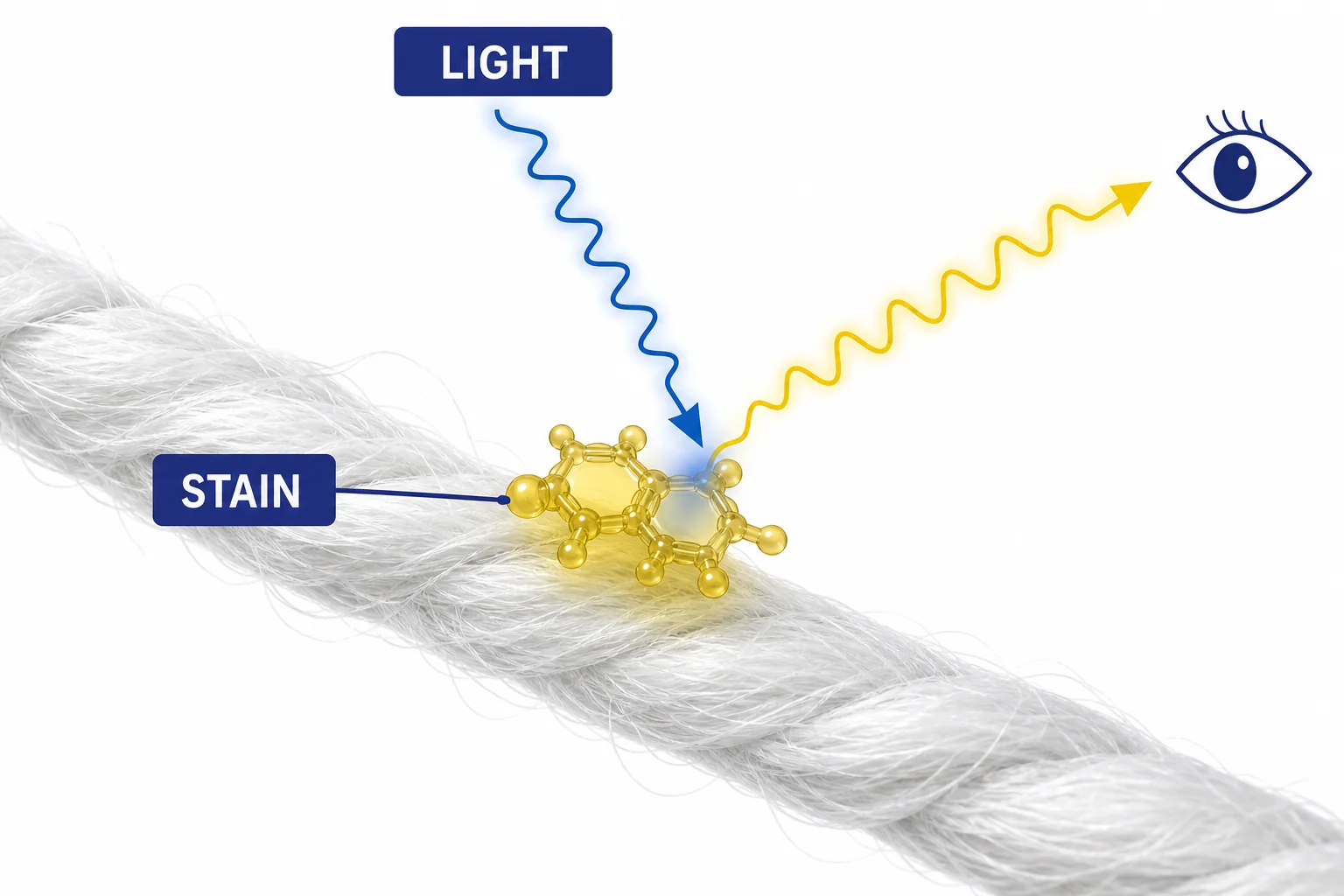
A white fabric fiber with a colored stain molecule absorbing blue light and reflecting yellow light
Colored stains absorb part of visible light
Most stains look colored because their molecules interact with visible light. A molecule may absorb some wavelengths and reflect or transmit others. Your eyes see the leftover light as color. In many organic stains, color comes from a connected pattern of bonds in the molecule. Chemists call the color-making part a chromophore. Food dyes, grass stains, tea, coffee, and body oils can include molecules with these light-absorbing patterns. A white cotton shirt looks white when it reflects most visible wavelengths back to your eyes. If a yellow stain absorbs blue light, the reflected light looks yellowish. The shirt has not become yellow paint. It is carrying molecules that change which light reaches your eyes. Bleach works because it changes those molecules. Once their bond patterns are disrupted, they often stop absorbing visible light strongly.

A stain looks colored because it changes the mix of light that returns to your eyes.

Bleach changes bonds
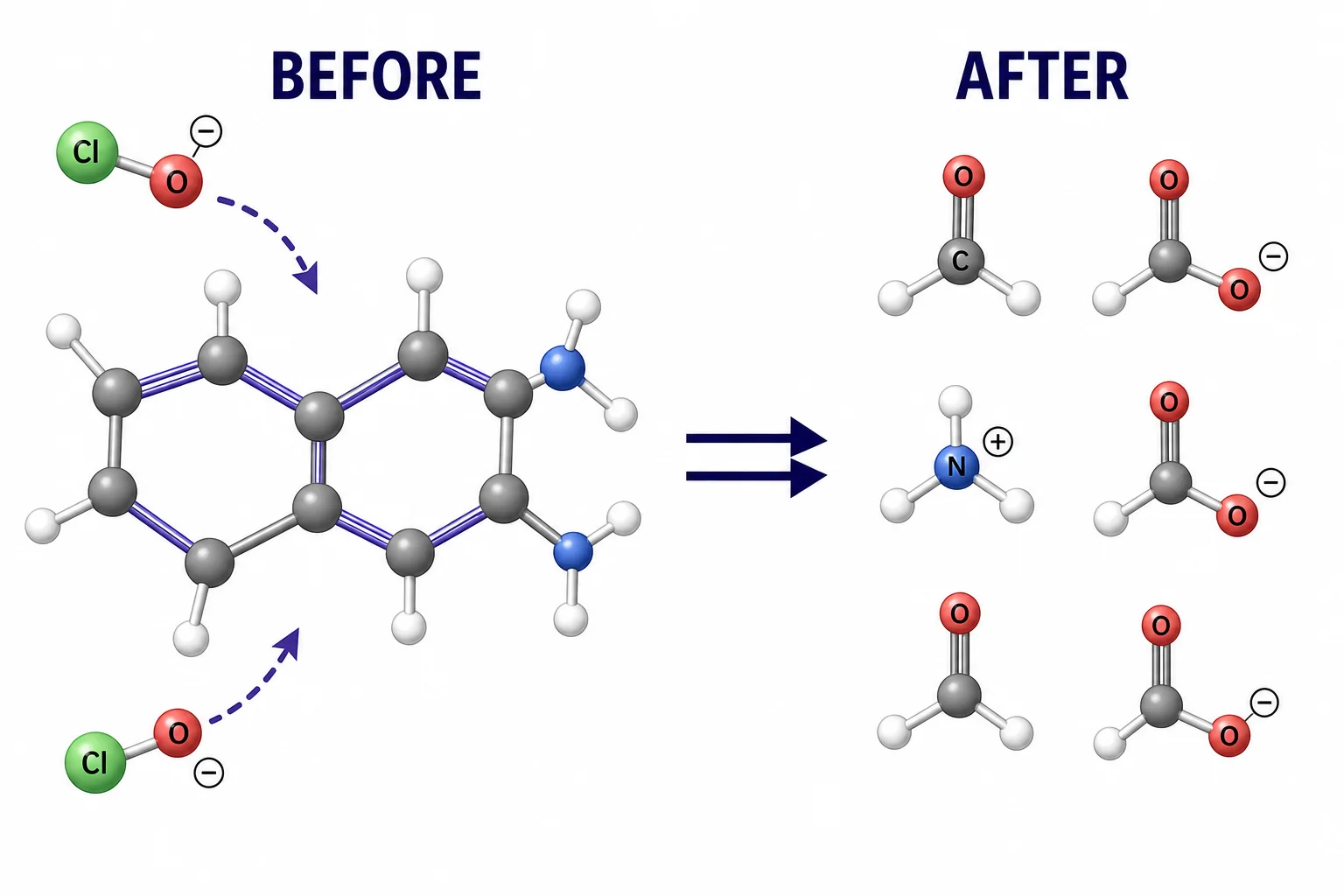
A colored organic molecule before bleaching and smaller colorless molecule fragments after oxidation
Oxidation can break the color-making pattern
Bleach removes color by causing a chemical reaction. The key process is oxidation. In oxidation, electrons are pulled away or shared differently, and bonds in the stain molecule can change. For many colored organic molecules, the reaction breaks up the connected bond pattern that made the molecule absorb visible light. The atoms are still present, but they are arranged in new ways. The new products may be smaller molecules or molecules with different bonds. These products often absorb ultraviolet light or little visible light, so they look colorless on fabric. This is not the same as washing dirt away with soap. Soap helps lift oily material from fibers. Bleach changes molecules so their color is reduced. In a real laundry cycle, water, detergent, temperature, and time all affect how well the reaction works.

Bleaching is a chemical change, not a layer of white paint.

Chlorine bleach is fast
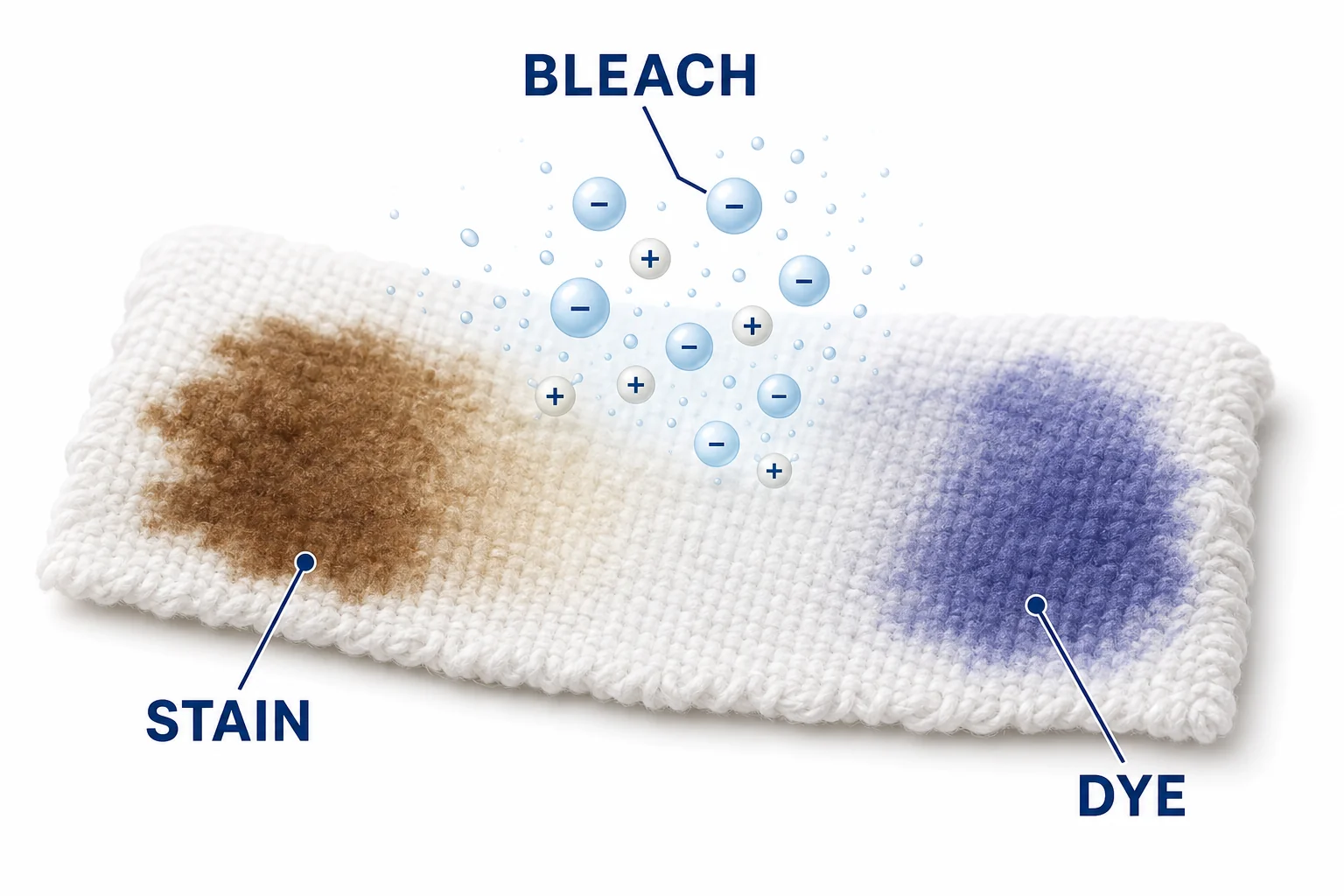
Chlorine bleach particles reacting with stain molecules on a white cotton fiber and also fading a nearby dye molecule
Chlorine bleach attacks stains and many dyes
Household chlorine bleach is usually a water solution of sodium hypochlorite. In water, it forms reactive particles that can oxidize stain molecules. This makes chlorine bleach very useful for white cotton and many hard surfaces. It is also why it must be handled carefully. It can fade dyes because the same reaction that attacks stain molecules can attack dye molecules in colored fabric. It can also weaken some fibers after repeated use. Chlorine bleach should not be mixed with ammonia, vinegar, or other cleaners because dangerous gases can form. Fabric care labels matter because different fibers react differently. Cotton can usually handle diluted bleach better than wool, silk, or spandex. In chemistry terms, chlorine bleach is effective because it is a strong oxidizing agent. In laundry terms, it is powerful but not gentle.

Chlorine bleach does not know the difference between a stain and a fabric dye.

Oxygen bleach is gentler
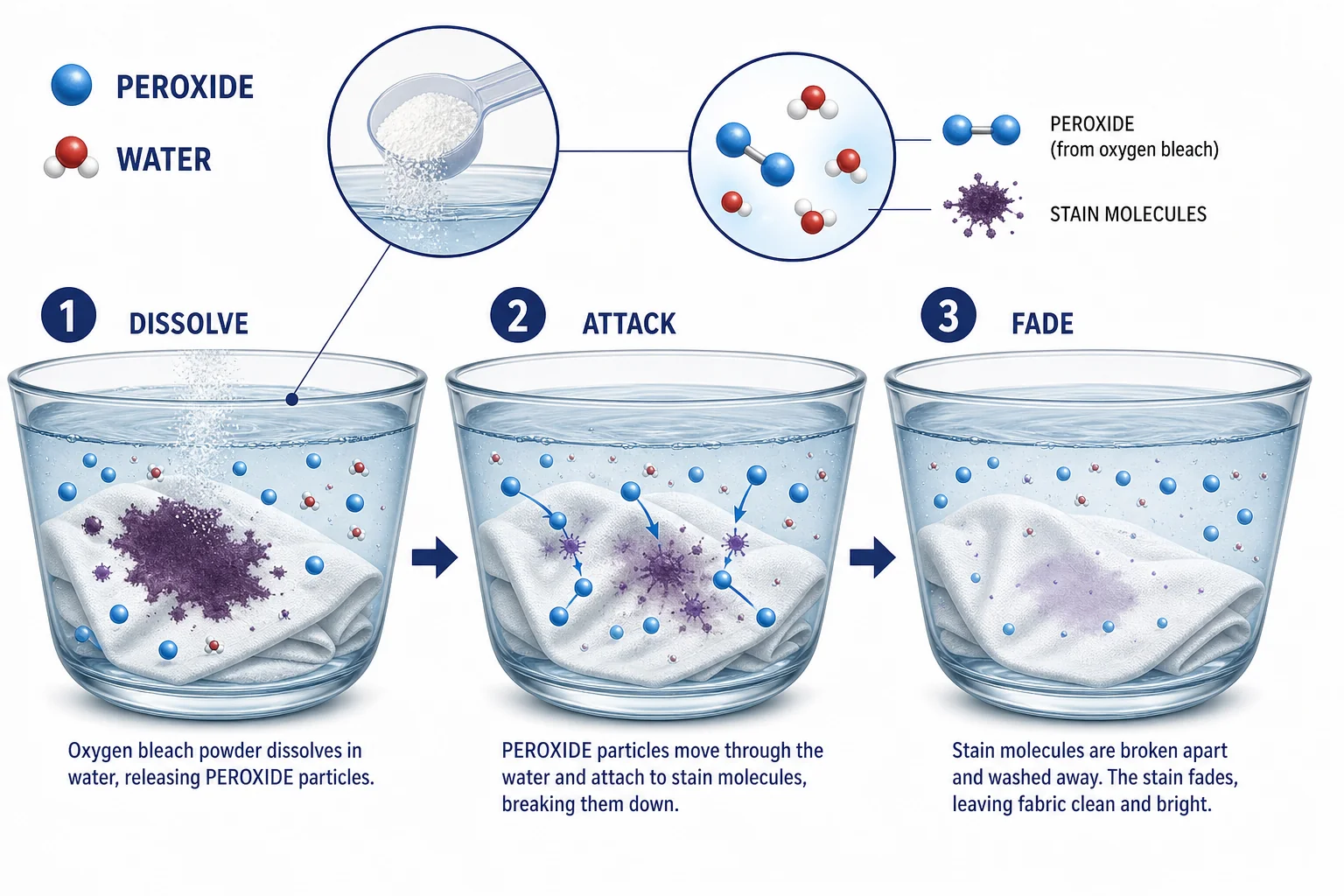
Oxygen bleach releasing peroxide in water and slowly fading colored stain molecules on fabric
Oxygen bleach releases peroxide in water
Oxygen bleach is a name for bleaches that release hydrogen peroxide or related peroxide species in water. Many color-safe laundry products use this chemistry. Peroxide can also oxidize colored molecules, but it usually reacts more slowly than chlorine bleach under laundry conditions. That slower action can be useful. It may reduce stains without stripping many fabric dyes as quickly. Oxygen bleach often works best with warm water and enough soaking time. It is common in powders that contain sodium percarbonate, which releases hydrogen peroxide when dissolved. It can brighten whites and help with many food and body stains. It is not perfect for every stain, and it can still affect some dyes. The main idea is that both chlorine bleach and oxygen bleach use oxidation. They differ in strength, speed, and fabric risk.

Oxygen bleach uses the same general idea, but it is often slower and less harsh.

Why whites can weaken
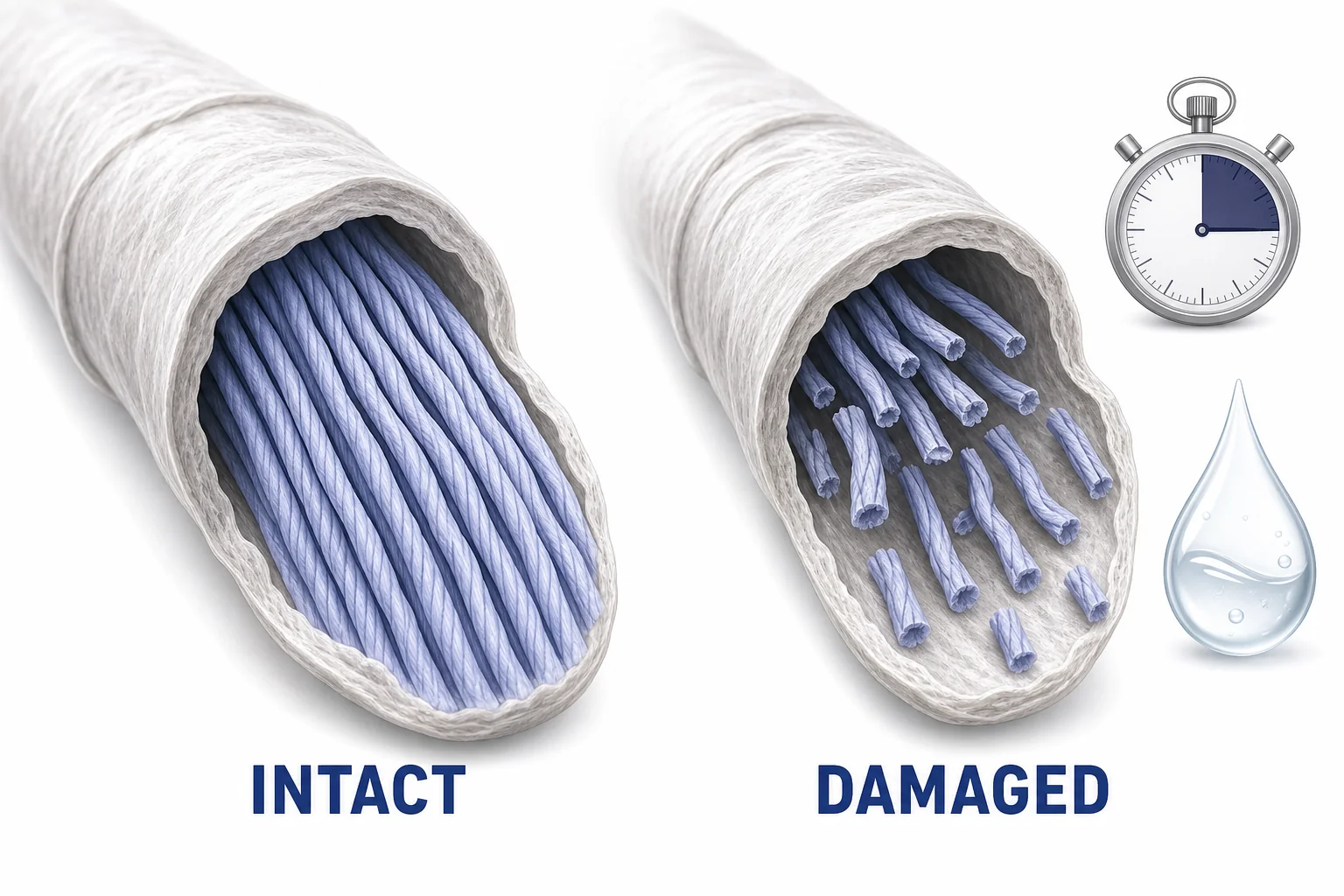
Cellulose chains inside cotton fiber before and after too much bleach, showing broken chains and weakened fabric
Too much bleach can damage fibers
Bleach reactions can keep going after visible stains fade. Cotton is made mostly of cellulose, a long chain molecule. Strong oxidizers can damage cellulose chains, especially when bleach is too concentrated or left too long. Shorter or damaged chains make fibers weaker. That can lead to thinning, holes, or a rough feel after many washes. Heat, high bleach concentration, and long soaking time can speed unwanted reactions. Dyes are also organic molecules, so colored clothes are at risk. A blue shirt may turn pink, orange, or pale because only some dye molecules are changed first. This is why laundry instructions give dilution and timing rules. The goal is to oxidize stain molecules enough to reduce color while limiting reactions with dyes and fibers. Good bleaching is controlled chemistry.

The same reactions that remove color can also harm cloth.

Vocabulary

Oxidation
A chemical change in which electrons are removed or shared differently, often changing bonds in a molecule.
Chromophore
The part of a molecule that absorbs visible light and helps give the molecule its color.
Sodium hypochlorite
The main active chemical in many household chlorine bleaches.
Hydrogen peroxide
A common oxygen bleach chemical that can oxidize stain molecules in water.
Cellulose
A long chain molecule that makes up most cotton fibers and gives them strength.

In the Classroom

Model a chromophore

20 minutes | Grades 9-12

Students draw a simple colored molecule as a chain of connected bonds, then show how breaking the chain could change light absorption. The model does not need exact structures. The goal is to connect molecular structure to visible color.

Compare bleach labels

25 minutes | Grades 9-12

Students examine labels for chlorine bleach and oxygen bleach products and identify the active ingredients. They sort safety instructions into categories for concentration, mixing, fabric type, and time.

Safe stain fading demo

30 minutes | Grades 9-12

The teacher demonstrates diluted hydrogen peroxide on a small stained cloth or colored drink sample using goggles and standard lab safety. Students record color change over time and discuss reaction rate and evidence of chemical change.

Key Takeaways

  • White fabric looks brighter when colored stain molecules stop absorbing visible light.
  • Bleach works by oxidation, which changes bonds in stain molecules.
  • Chlorine bleach is strong and fast, but it can fade dyes and weaken fibers.
  • Oxygen bleach releases peroxide and is often slower and gentler in laundry.
  • Bleaching is controlled chemistry, so concentration, time, fabric type, and safety rules matter.