Why Are Some Things Sticky?
Tiny attractions make surfaces hold together
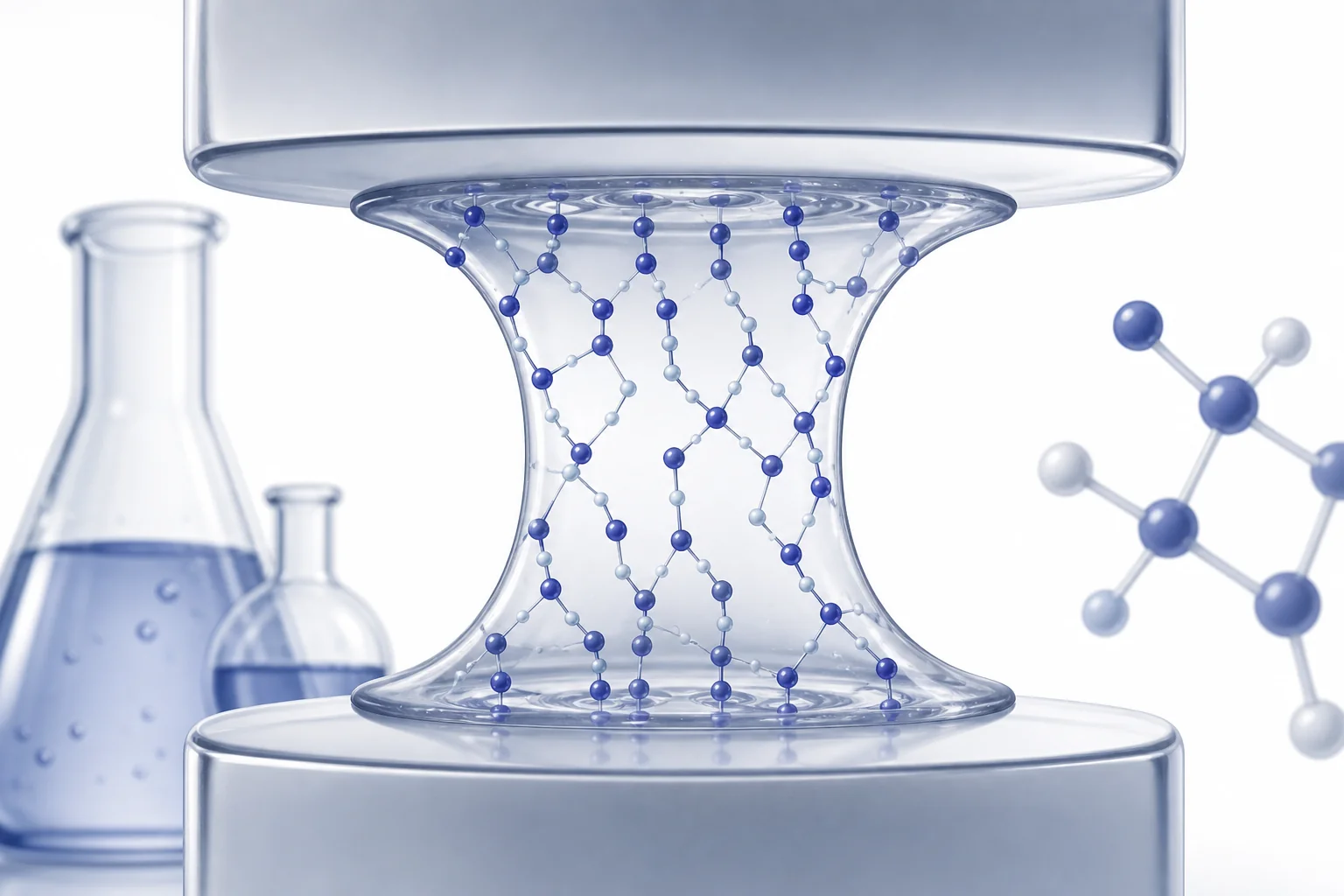
Things feel sticky when tiny pulls form between a material and a surface. Some sticky materials also flow into small bumps and cracks, then hold on as they settle. Tape, glue, syrup, and gecko feet stick in different ways, but all depend on close contact.
Stickiness starts at a scale too small to see. A clean piece of tape can grab paper because its sticky layer touches the paper in many places at once. Glue can spread into tiny gaps, then dry or harden so the surfaces stay together. Syrup feels sticky for another reason. It is thick, so it resists being pulled apart. These examples look simple, but they show a key chemistry idea. Matter is made of particles, and those particles can attract each other. The attractions may be weak one by one, but millions of them can add up to a strong hold. In middle school chemistry, this helps explain why materials have different properties. A plastic ruler, a paper towel, a glue stick, and a sticker all behave differently because their particles and surfaces are different. Stickiness is not one single property. It is a mix of surface contact, particle attractions, and material change.
Sticky needs contact
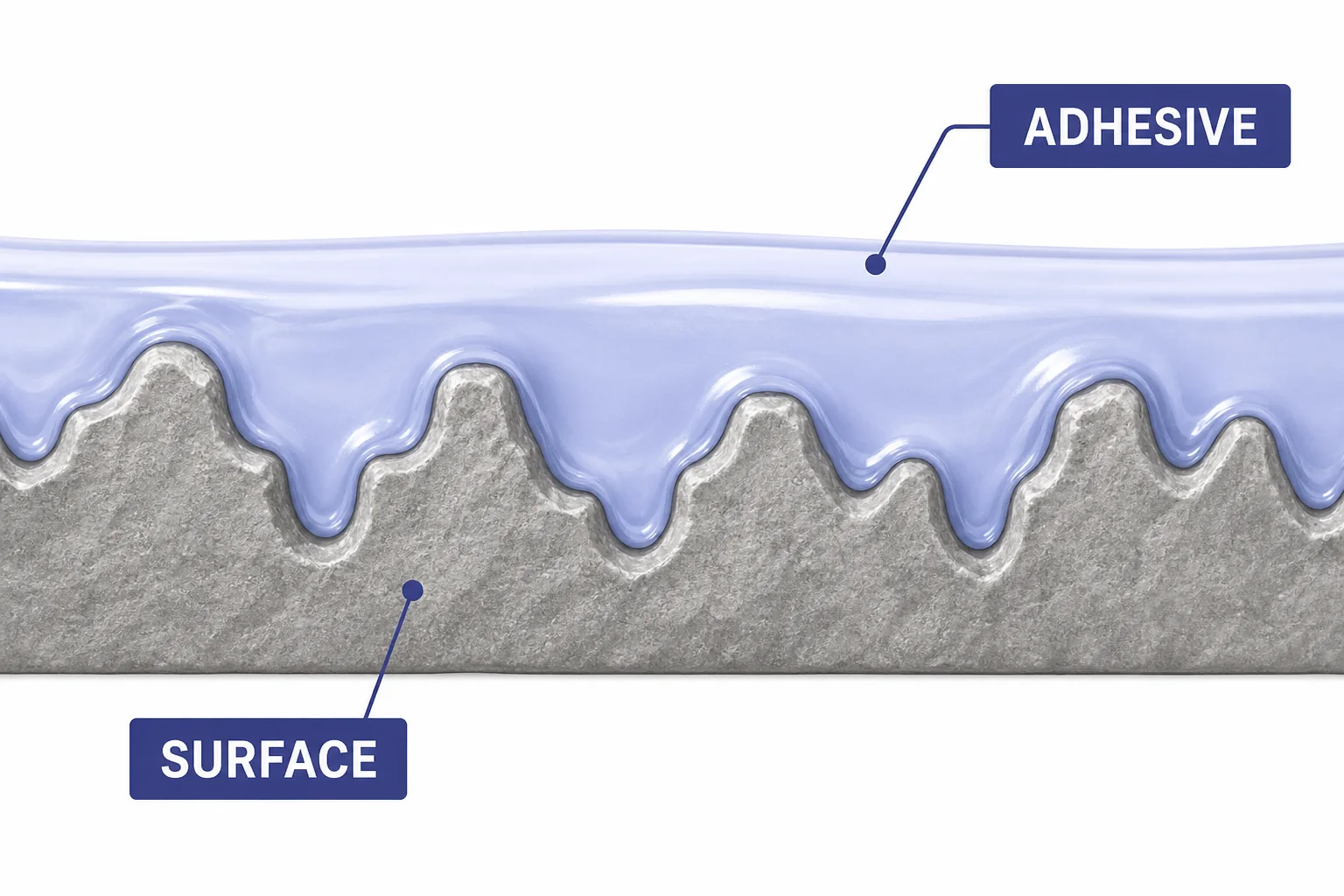
A sticky material works best when it can touch the surface closely.
Adhesion and cohesion
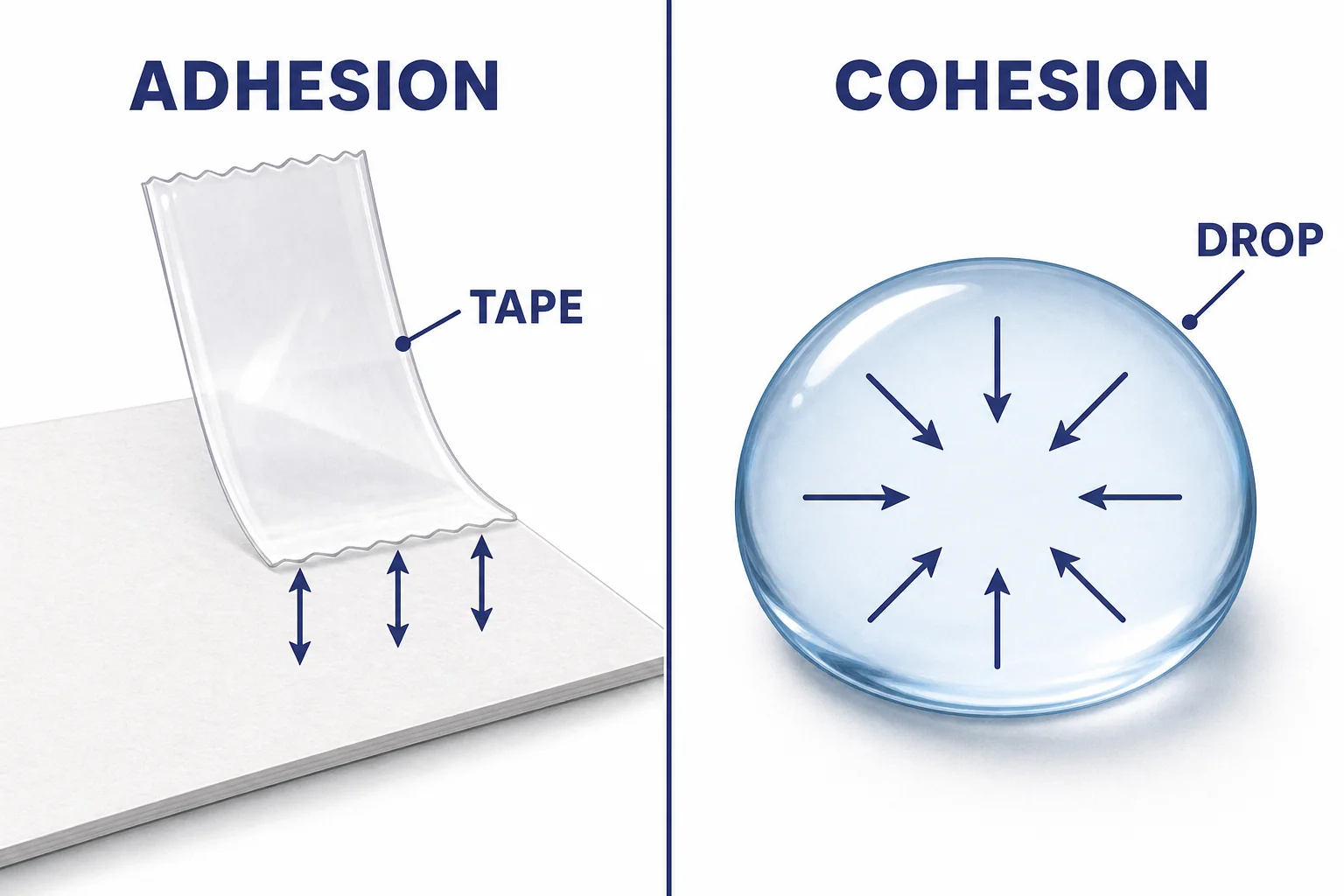
Good stickiness needs attraction to the surface and strength inside the sticky material.
Tiny forces add up
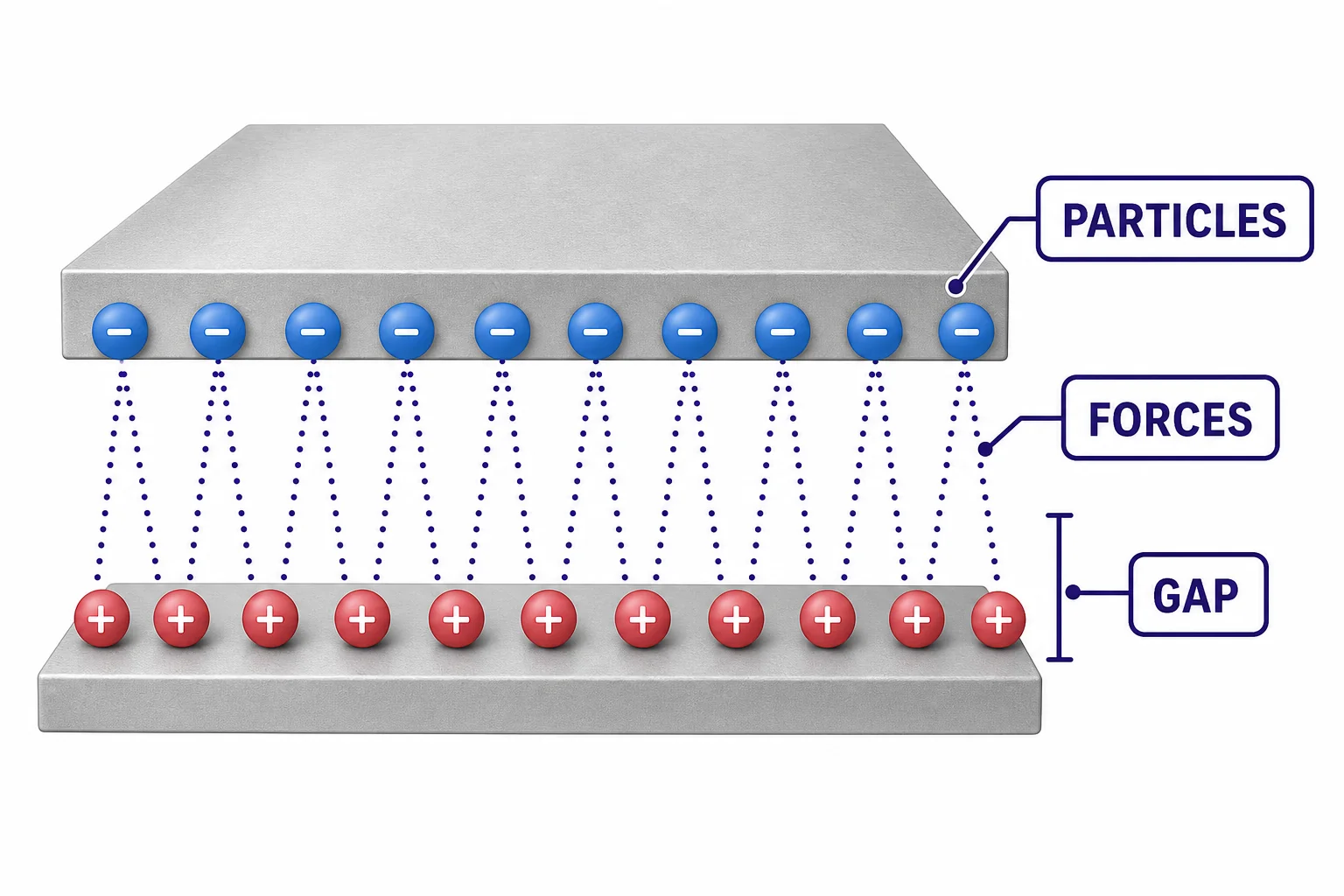
Particle attractions are small, but a large contact area can make them important.
Tape is already ready
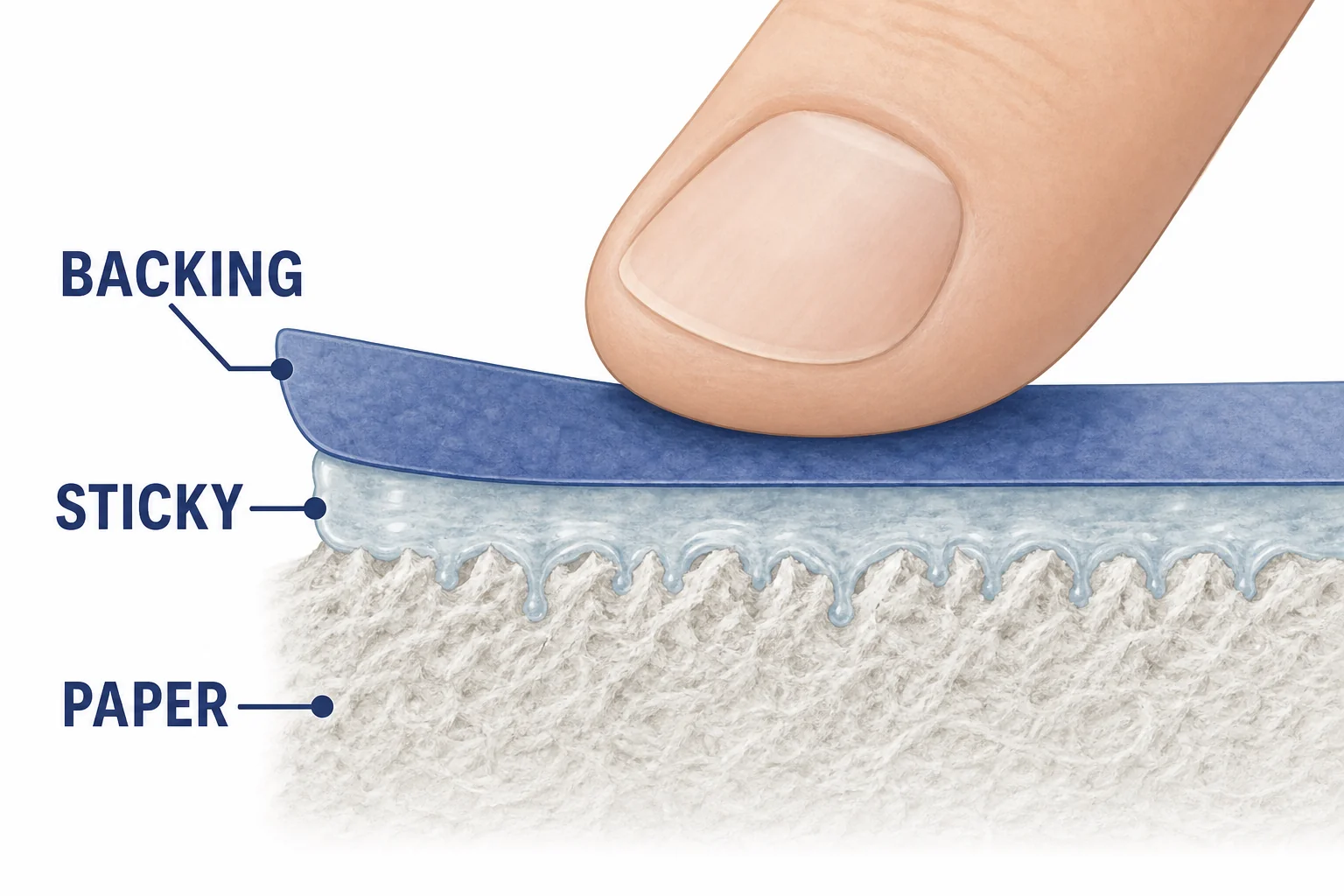
Tape is designed to stay soft enough to grab when pressed.
Glue changes as it sets
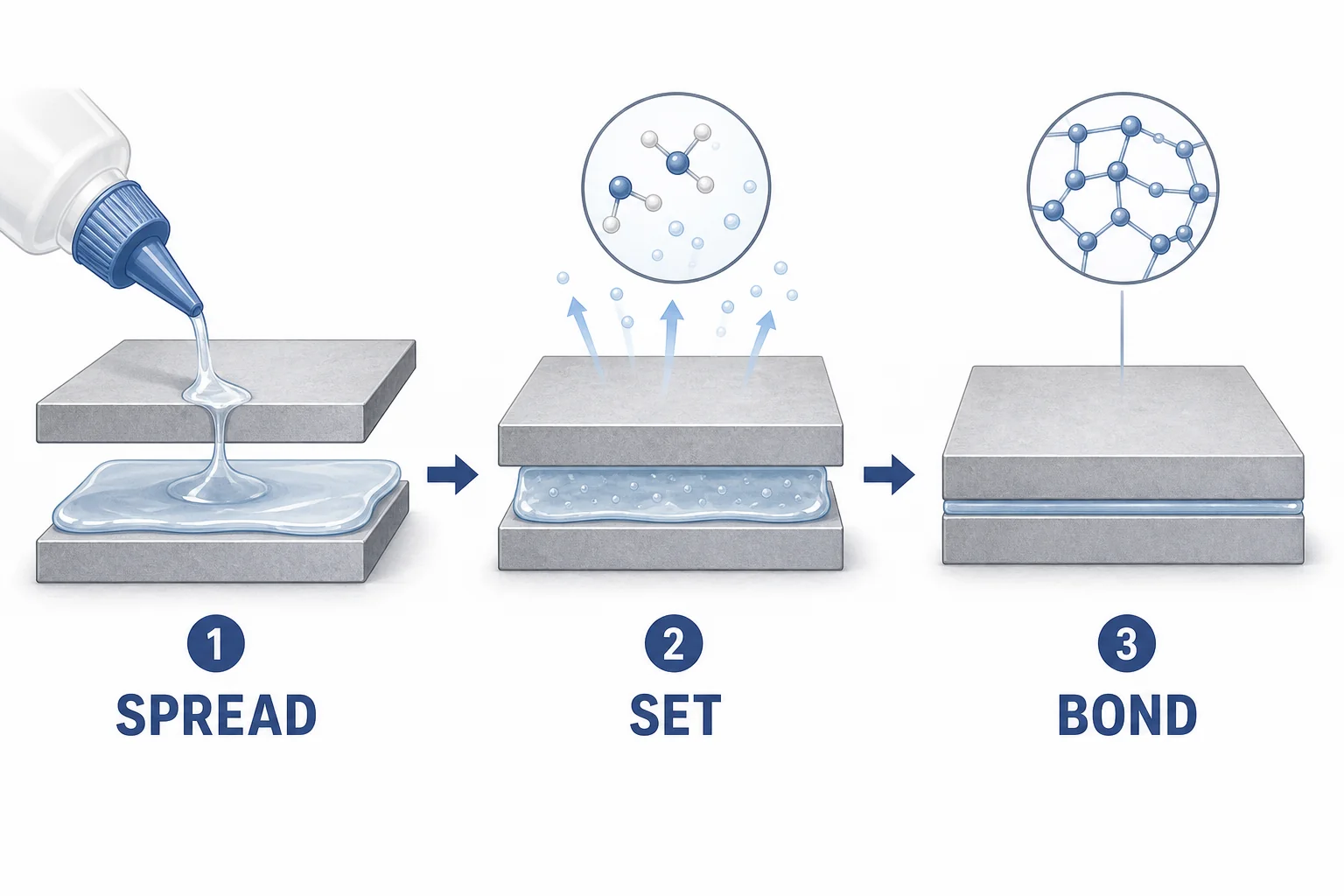
Glue often becomes stronger because it changes after it is applied.
Vocabulary
- Adhesion
- Attraction between two different materials, such as glue and wood.
- Cohesion
- Attraction within one material, such as honey holding together as it stretches.
- Intermolecular force
- An attraction between nearby particles that helps explain material properties.
- Van der Waals force
- A weak attraction that can happen between many particles when they are very close.
- Hydrogen bond
- A stronger attraction that can form between certain parts of nearby particles.
- Pressure-sensitive adhesive
- A sticky material, such as tape adhesive, that bonds to a surface when pressed.
In the Classroom
Tape surface test
25 minutes | Grades 6-8
Students press the same tape onto paper, plastic, foil, and cloth with the same force. They compare how easily it peels off and connect the results to surface contact and particle attractions.
Adhesion versus cohesion demo
30 minutes | Grades 6-8
Students compare water drops, syrup drops, and glue drops on wax paper and notebook paper. They observe spreading, beading, stretching, and drying, then sort each observation as adhesion, cohesion, or both.
Design a better label
40 minutes | Grades 6-8
Teams choose a surface and design a label that must stick but also peel away cleanly. They explain which material properties matter and why one adhesive might fail on a different surface.
Key Takeaways
- • Stickiness starts when materials make close contact.
- • Adhesion is attraction between different materials.
- • Cohesion is attraction within one material.
- • Tiny particle attractions can add up across a large area.
- • Tape stays sticky, while many glues spread first and then set.