Why Does Cut Fruit Turn Brown?
How oxygen changes sliced apples
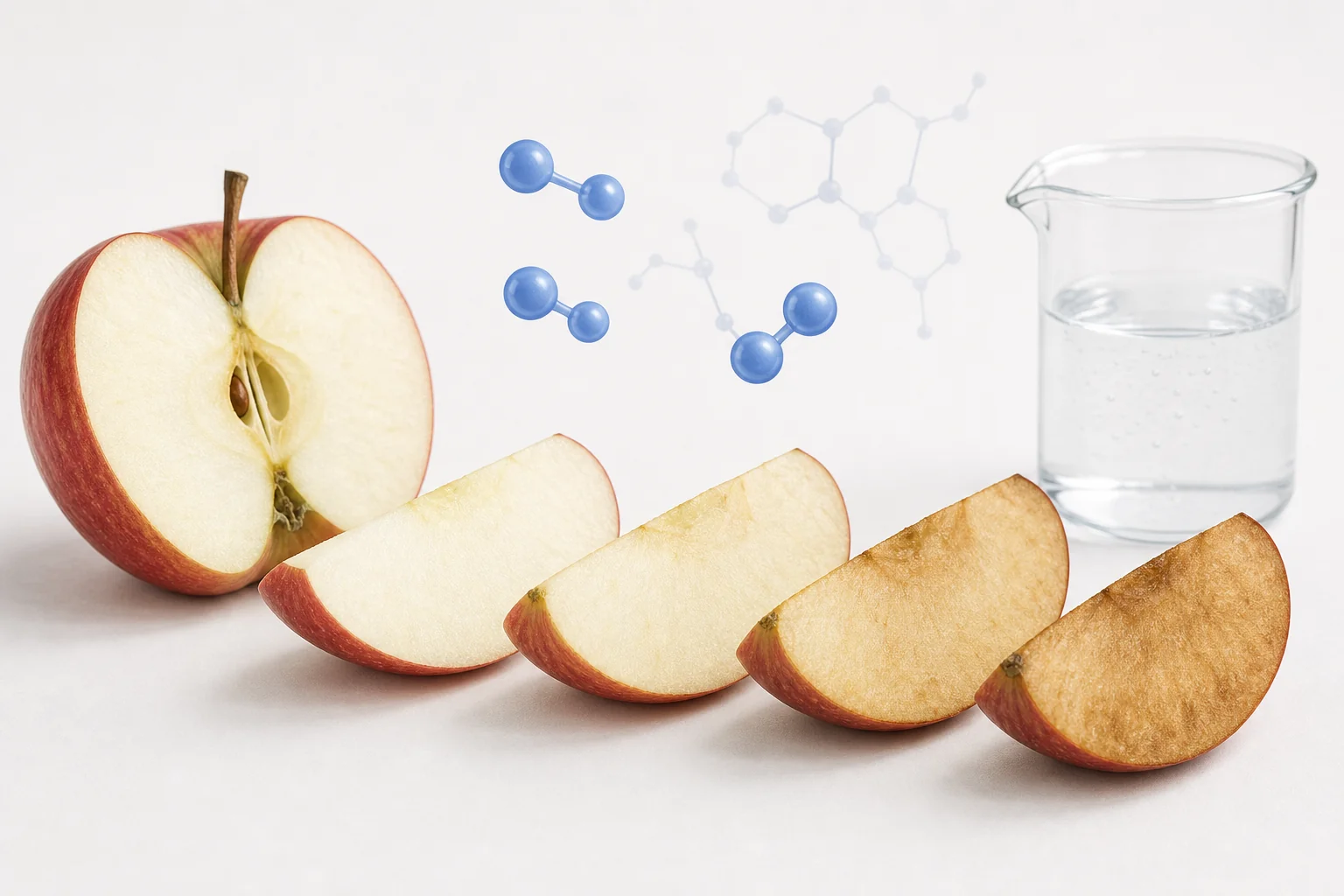
Cut fruit turns brown because air touches chemicals that were inside the fruit. Tiny helper proteins in the fruit speed up a change that makes brown-colored compounds. Lemon juice slows the change because it is acidic and makes the helper proteins work poorly.
A fresh apple slice can look pale and crisp at first. After a few minutes, the cut surface may turn tan, then brown. The same thing can happen to bananas, pears, peaches, and potatoes. This color change is not dirt. It is chemistry happening inside damaged fruit cells. When a knife cuts through fruit, it breaks open cells that normally keep some materials apart. Oxygen from the air can now mix with those materials. A natural protein in the fruit helps the reaction move faster. The result is a group of brown pigments on the cut surface. This process is called enzymatic browning. It matters in kitchens, farms, and food science. It also gives students a simple way to watch evidence of a chemical reaction. The apple slice becomes a small lab for studying matter, reactions, and how changing conditions can slow a reaction down.
Cut cells open
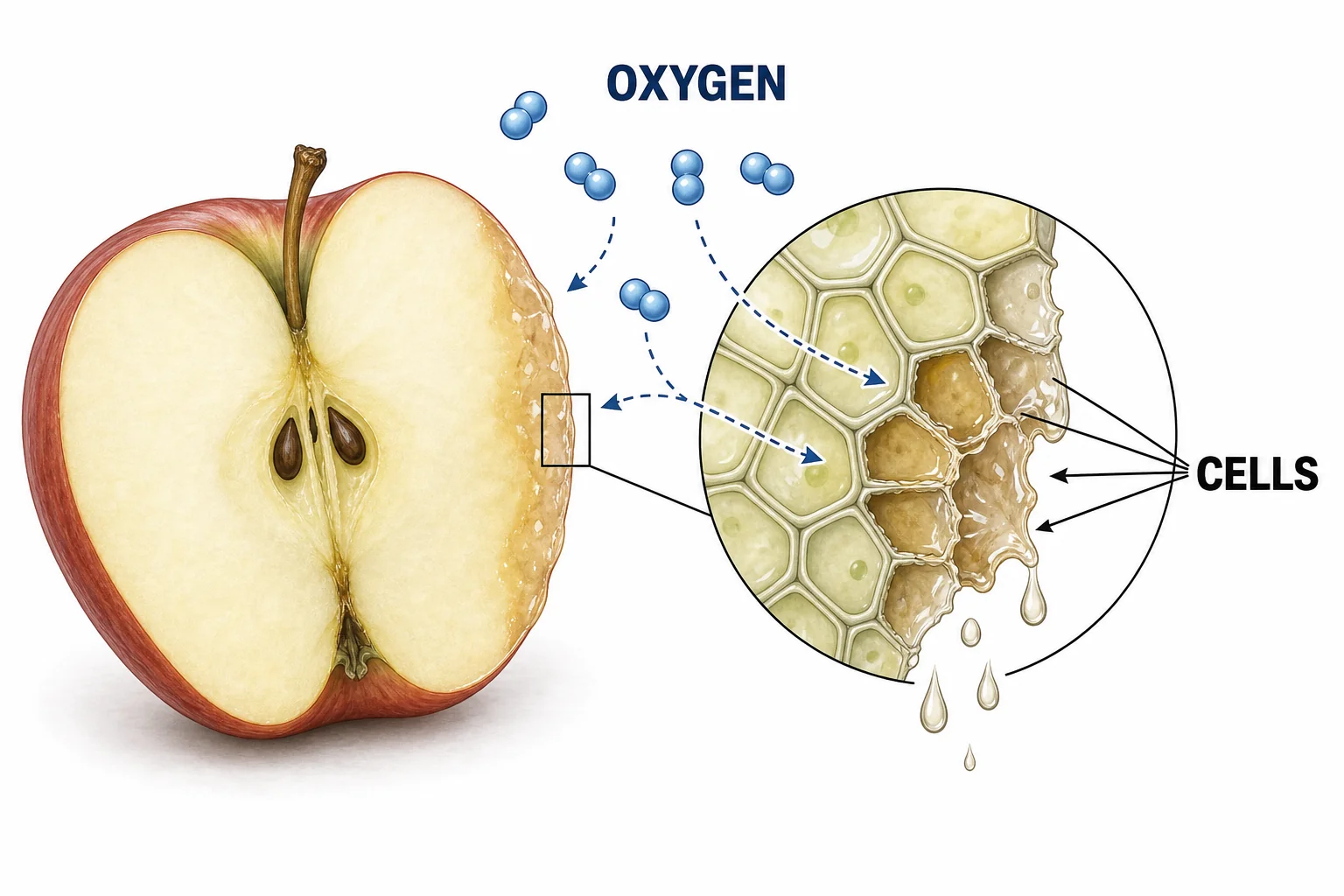
Browning begins when cutting or bruising lets oxygen reach broken cells.
The enzyme speeds it up
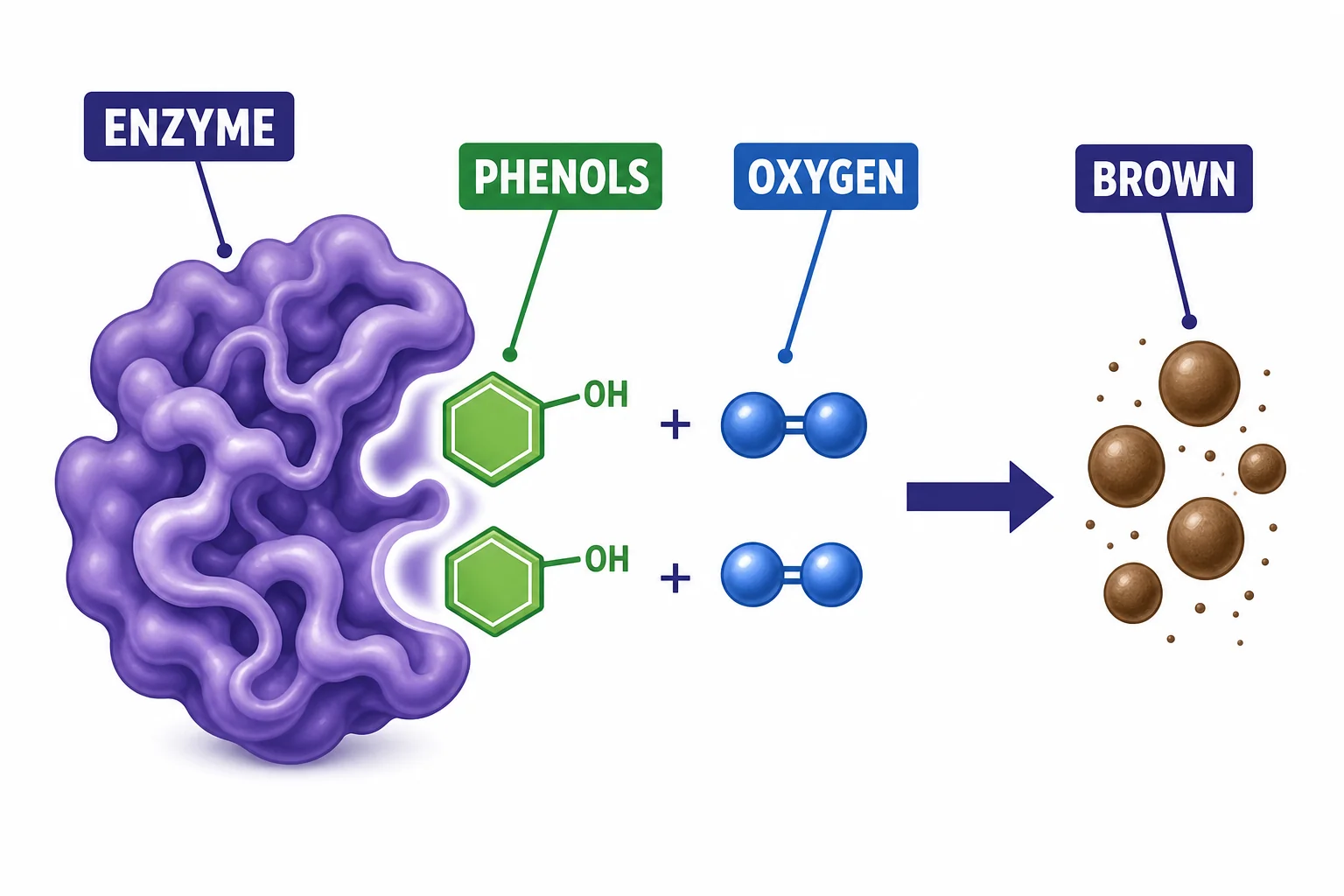
Polyphenol oxidase speeds up the reaction between fruit molecules and oxygen.
Oxygen changes the molecules
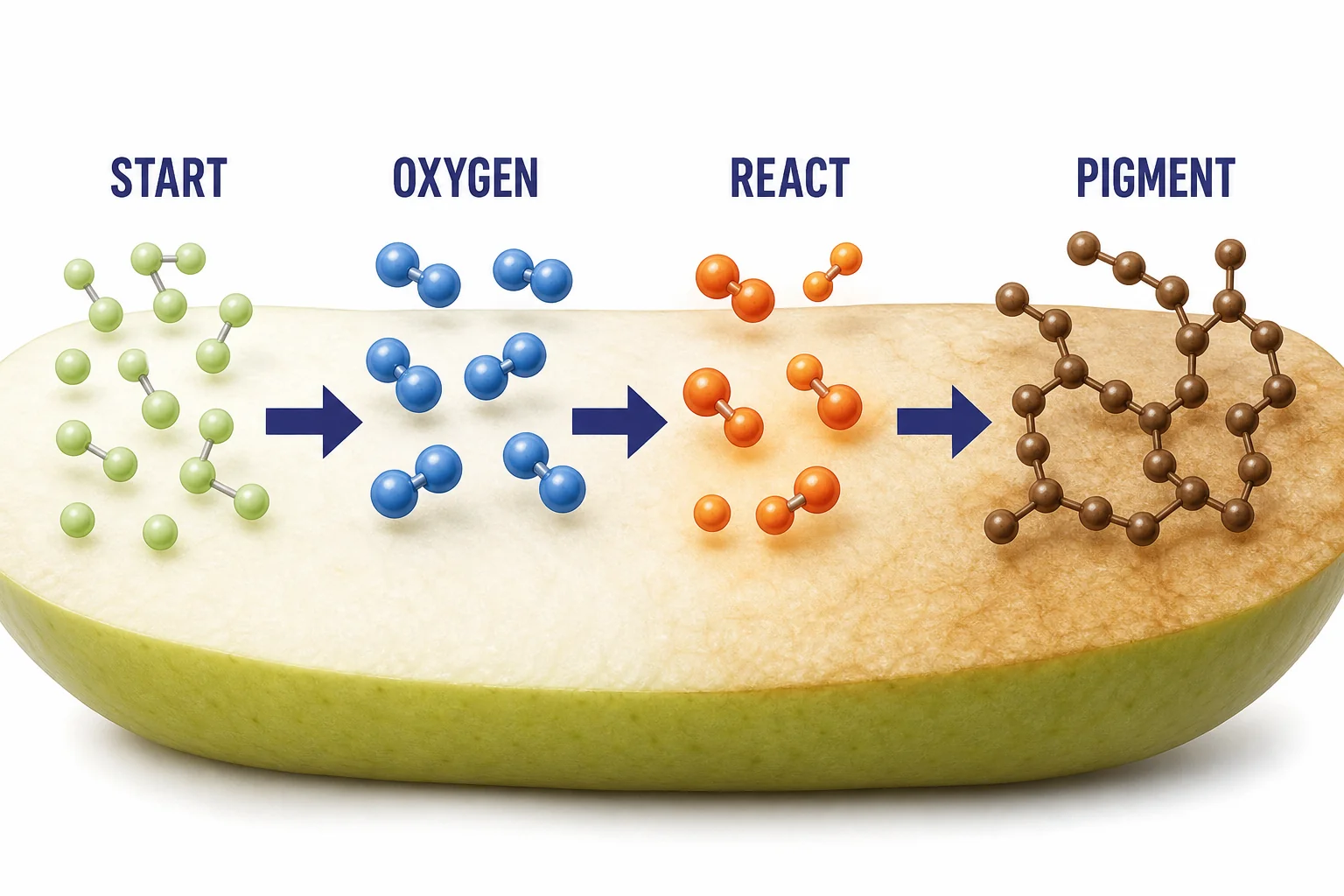
The brown color is evidence that a chemical change has happened.
Lemon juice slows browning
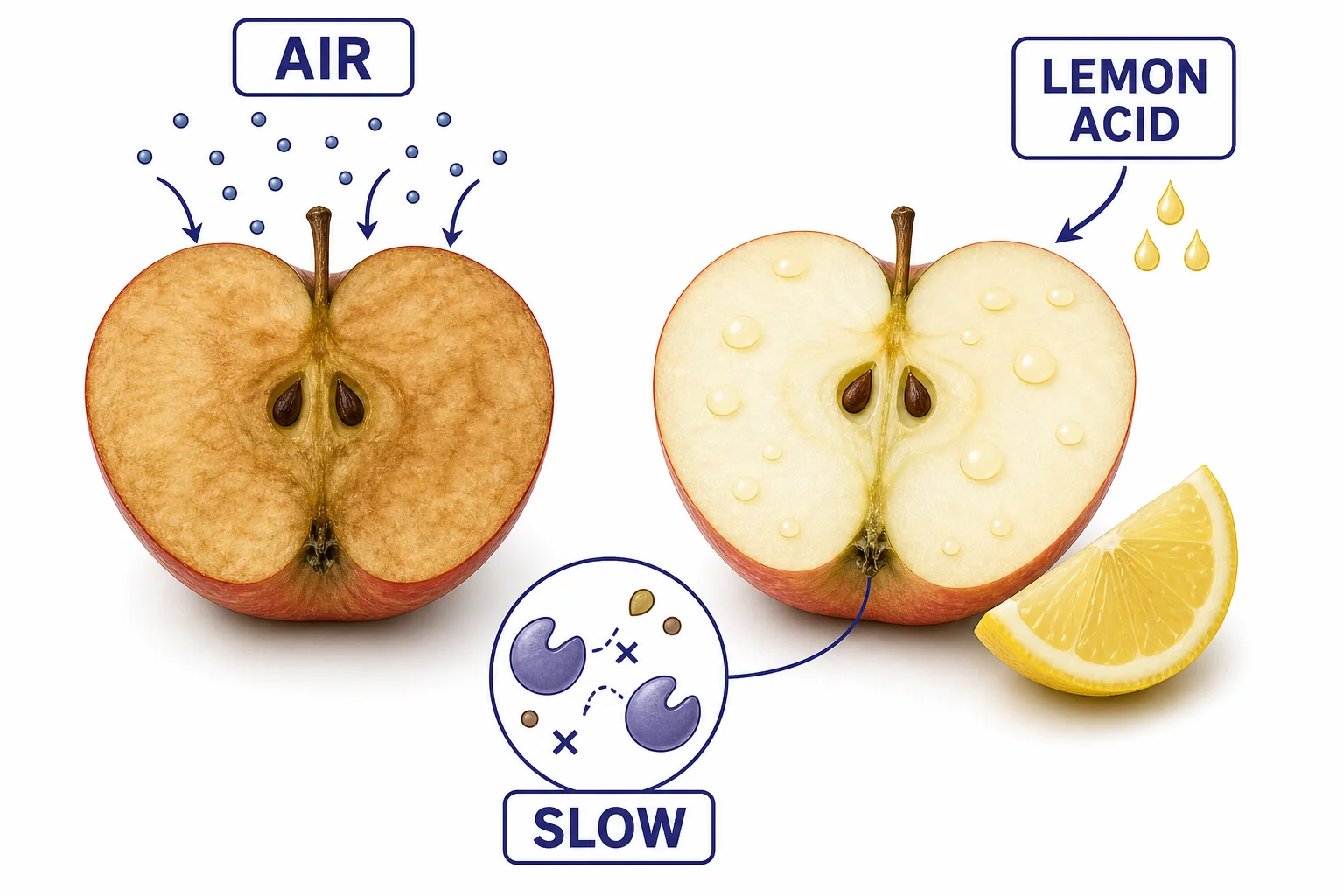
Lemon juice changes the conditions so the browning reaction slows down.
A kitchen test
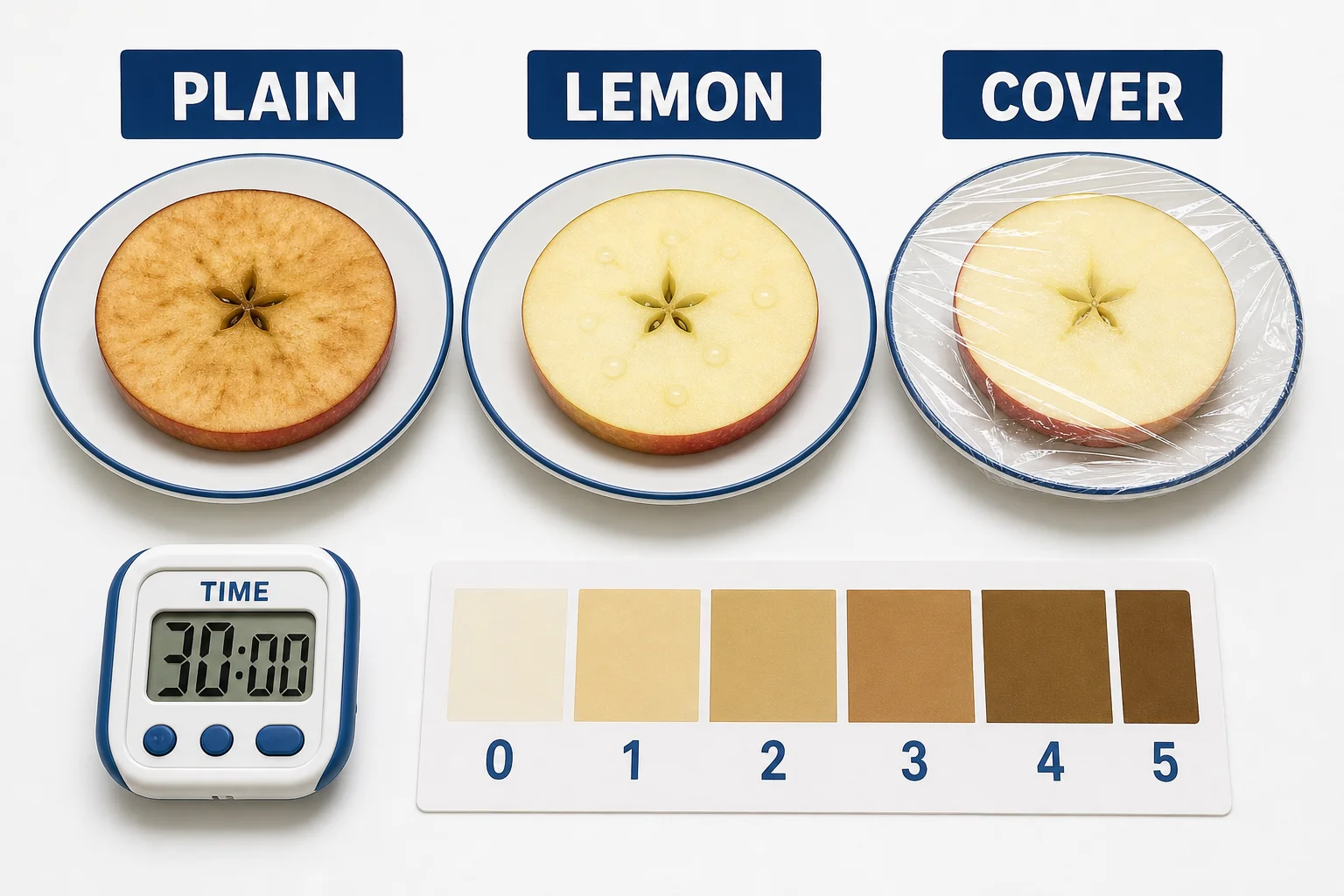
Changing one condition at a time helps show what affects browning.
Vocabulary
- Enzyme
- A protein that speeds up a chemical reaction without being used up.
- Polyphenol oxidase
- An enzyme in many fruits and vegetables that helps start browning when cells are damaged.
- Oxidation
- A chemical change that often involves oxygen or the movement of electrons.
- Phenols
- Molecules found in plants that can react during fruit browning.
- pH
- A measure of how acidic or basic a substance is.
- Ascorbic acid
- Vitamin C, a substance in lemon juice that can delay browning reactions.
In the Classroom
Apple browning comparison
30 minutes | Grades 6-8
Students compare plain apple slices with slices treated with lemon juice, water, or plastic wrap. They record color changes every five minutes and identify which treatment slowed browning most.
Color scale data table
25 minutes | Grades 6-8
Students create a 0 to 5 browning scale and use it to score fruit samples over time. They graph the scores and discuss how consistent measurements help scientists compare results.
Temperature and reaction rate
20 minutes plus waiting time | Grades 6-8
Students place matched apple slices in a refrigerator and at room temperature. They compare browning after a set time and connect slower browning to lower enzyme activity.
Key Takeaways
- • Cutting fruit breaks cells and lets oxygen reach the inside.
- • Polyphenol oxidase is an enzyme that speeds the browning reaction.
- • Oxygen changes fruit molecules into new substances that can form brown pigments.
- • Lemon juice slows browning because acid changes enzyme conditions and vitamin C delays pigment formation.
- • Fruit browning is a useful classroom example of a chemical reaction.