Why Do Some Animals Travel Thousands of Miles Every Year?
Seasonal journeys follow food, weather, and survival
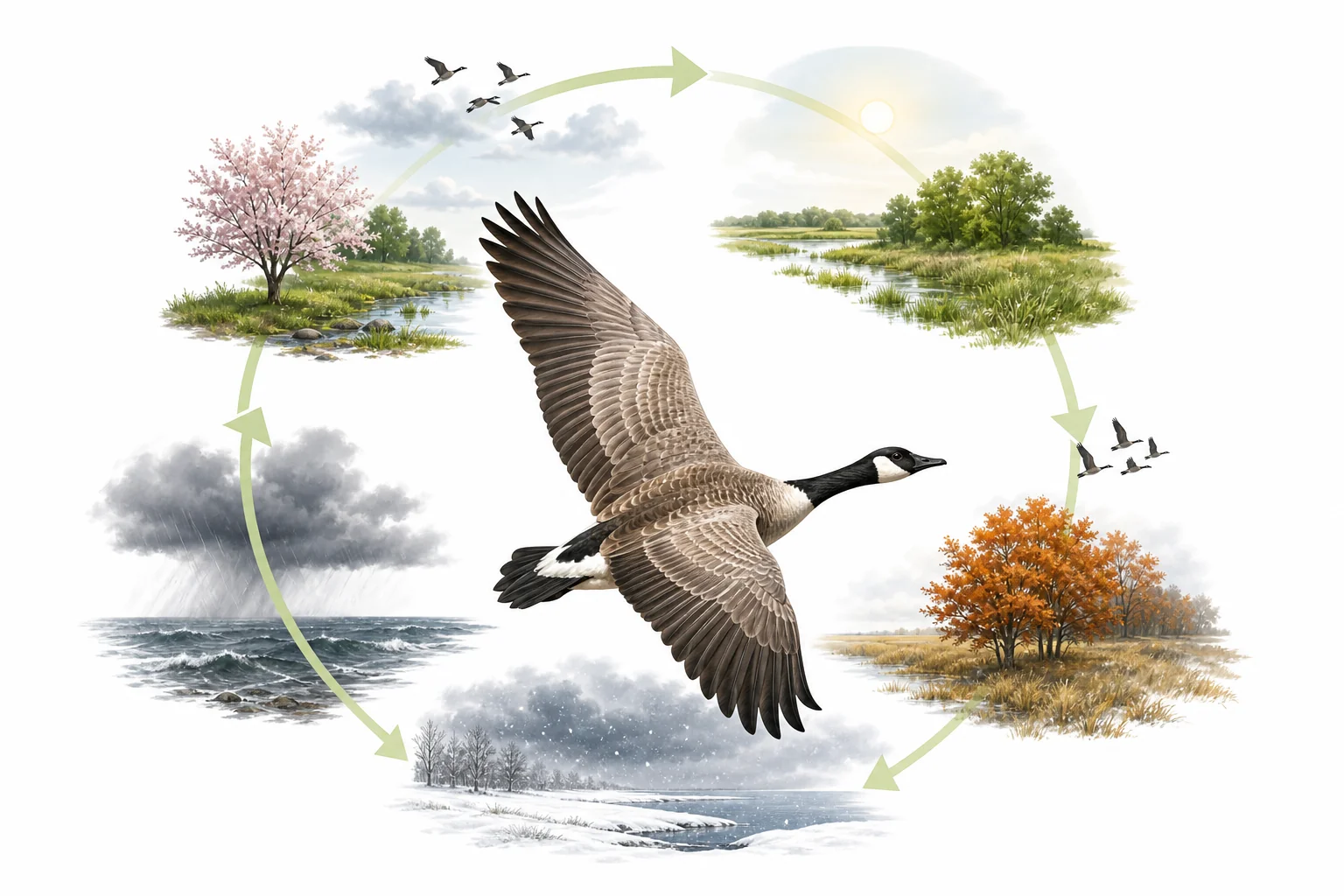
Animals migrate because the best places for food, breeding, and safety change with the seasons. Long trips cost energy, but they can help animals find more resources and raise young successfully. Climate change can disrupt these journeys by shifting weather, food timing, and habitat conditions along the route.
Many animals live in places that change a lot during the year. A wetland may be full of insects in spring, then freeze in winter. An ocean feeding ground may bloom with tiny plankton for only part of the year. A tundra plain may have fresh plants in summer, then deep snow later. Migration is one way animals track these moving resources. Birds, whales, fish, insects, and mammals can travel hundreds or thousands of miles between seasonal habitats. These trips are not random. They follow patterns shaped by food, temperature, daylight, predators, and safe places to have young. Migration also connects ecosystems that may be far apart. A shorebird that nests in the Arctic may depend on mudflats thousands of miles away. Environmental science studies these links, and why changes in one place can affect animals along an entire route.
Resources move with seasons
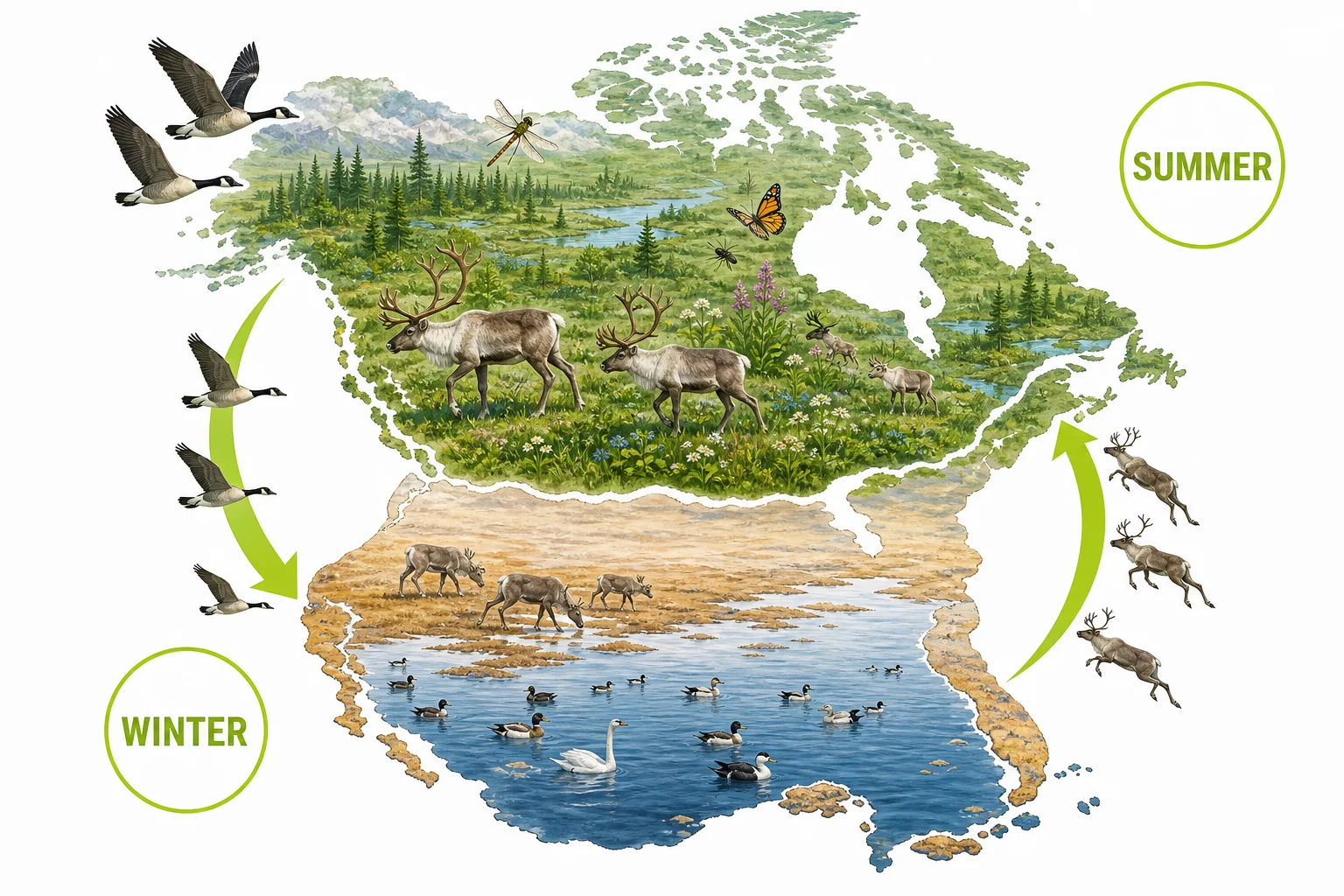
Migration tracks food, warmth, and safe breeding sites.
Long trips have energy costs
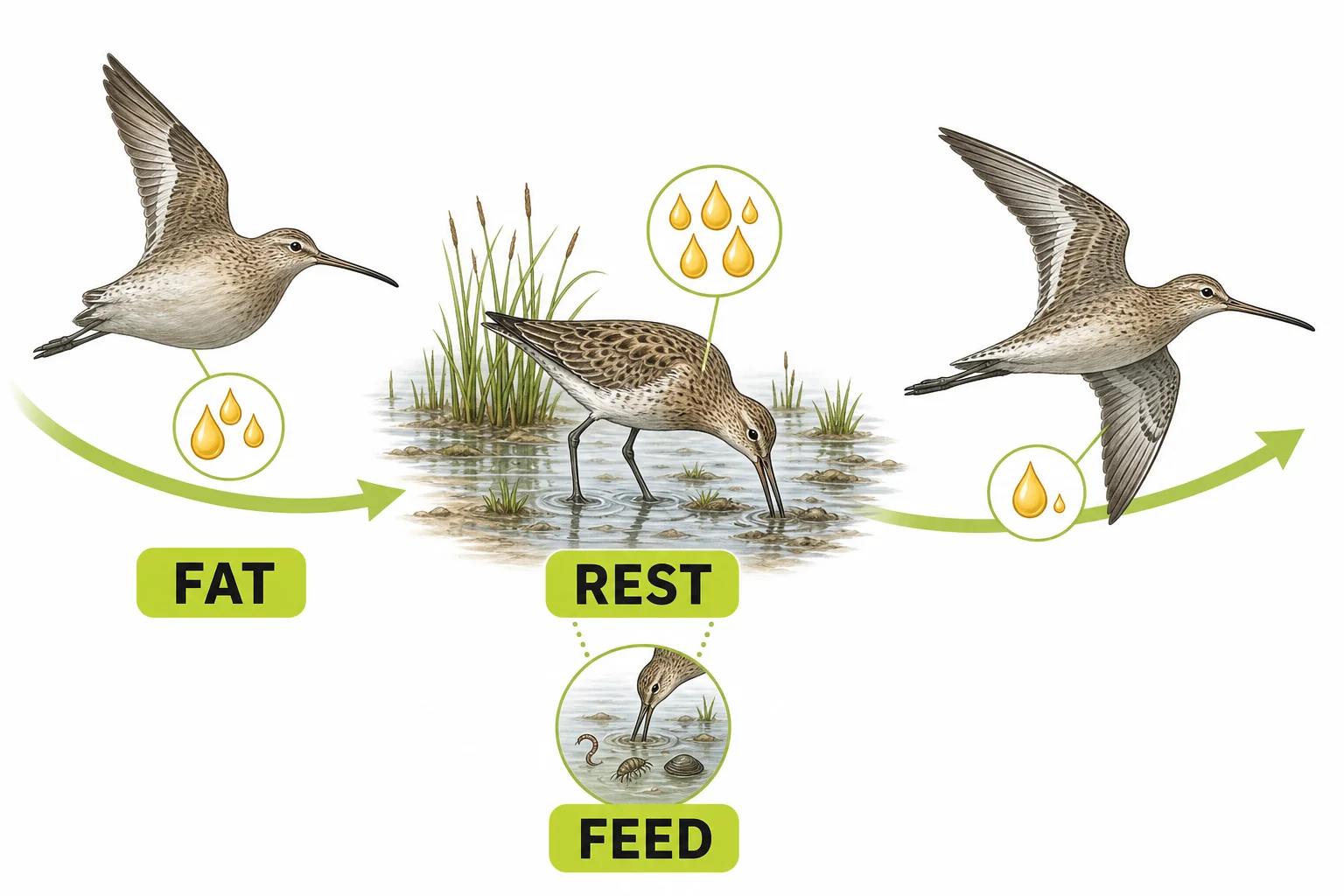
A migration route depends on both movement and refueling.
Animals navigate in many ways
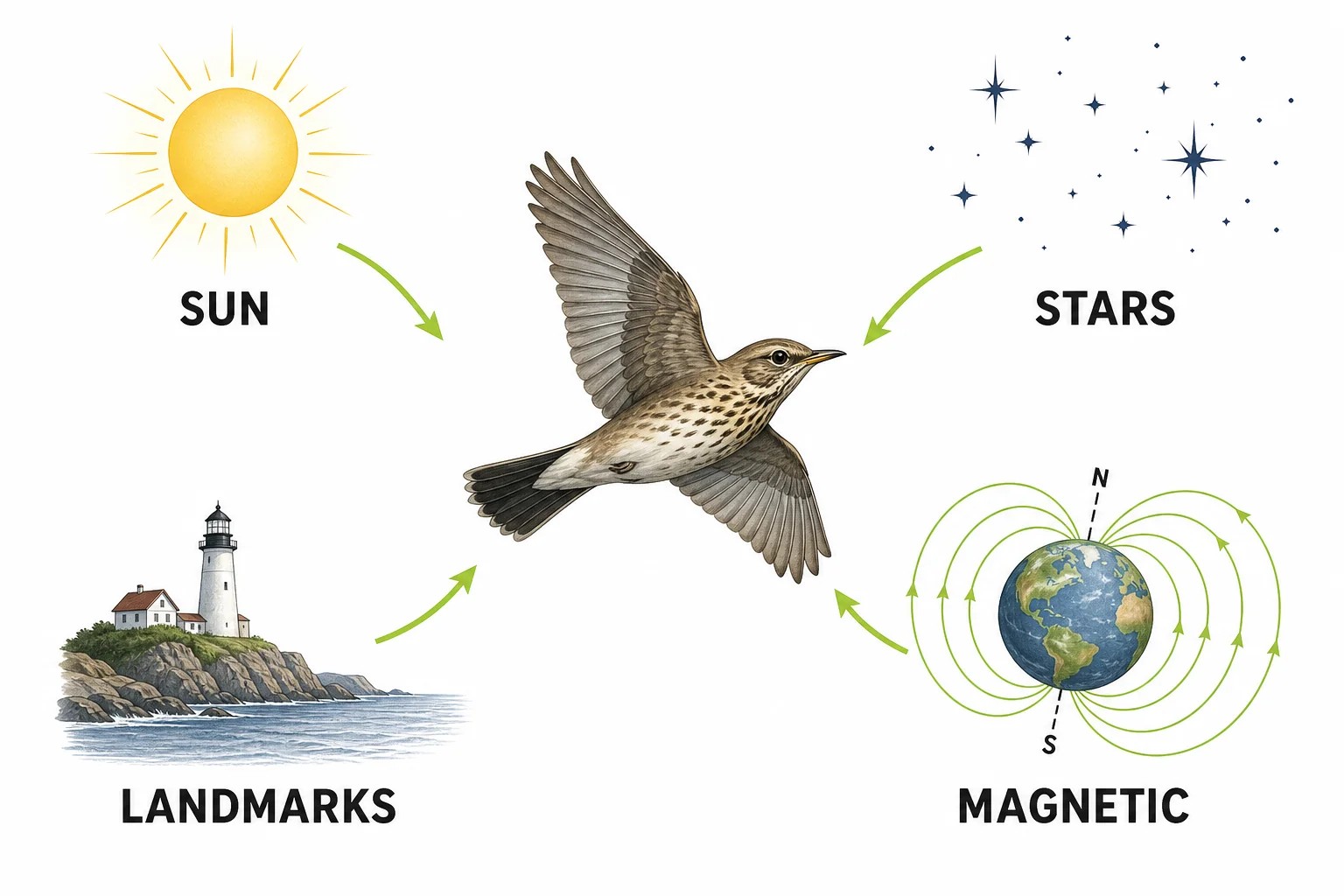
Navigation uses multiple cues, not just one built-in compass.
Migration links ecosystems
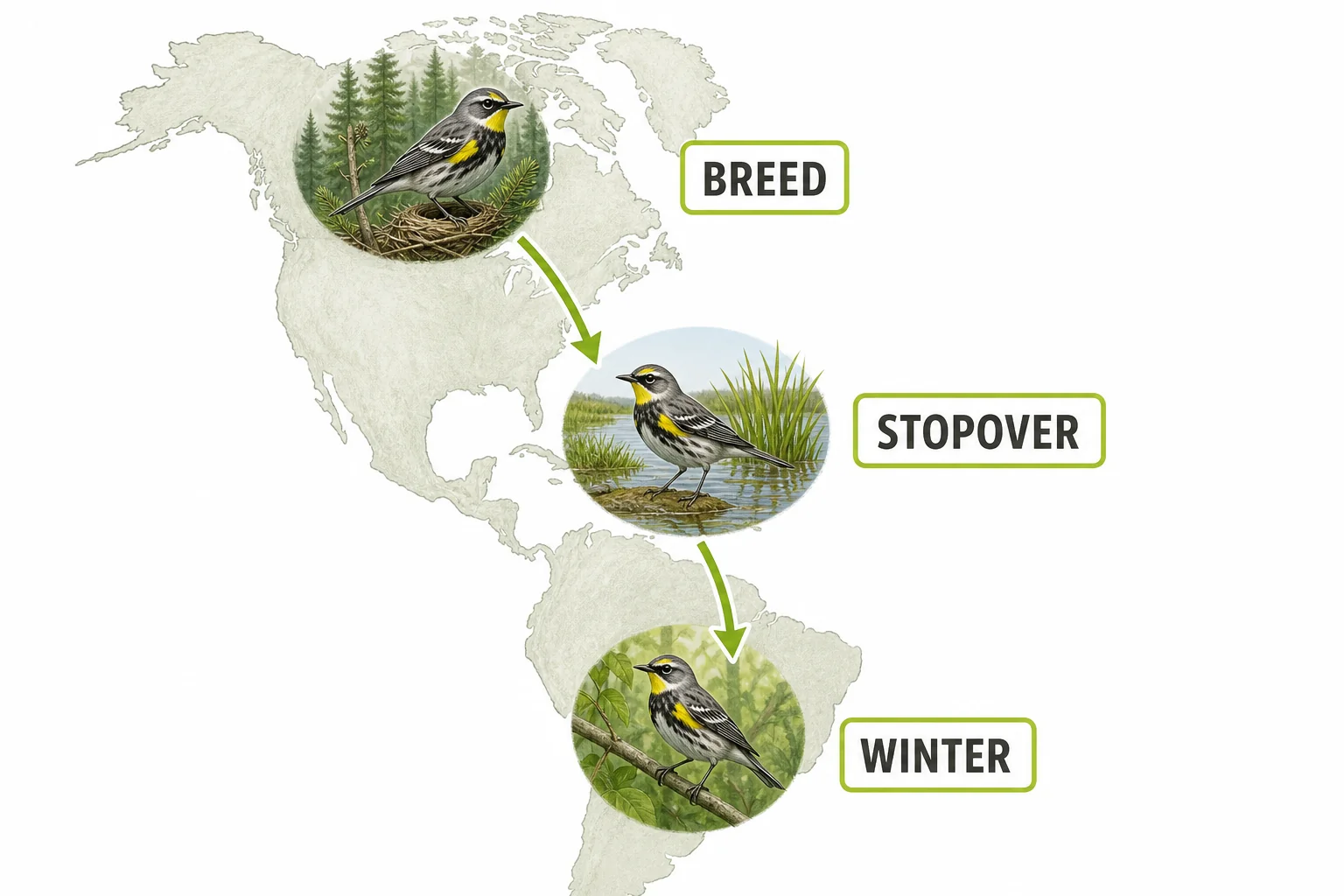
A migration route is a chain of habitats.
Climate change can shift routes
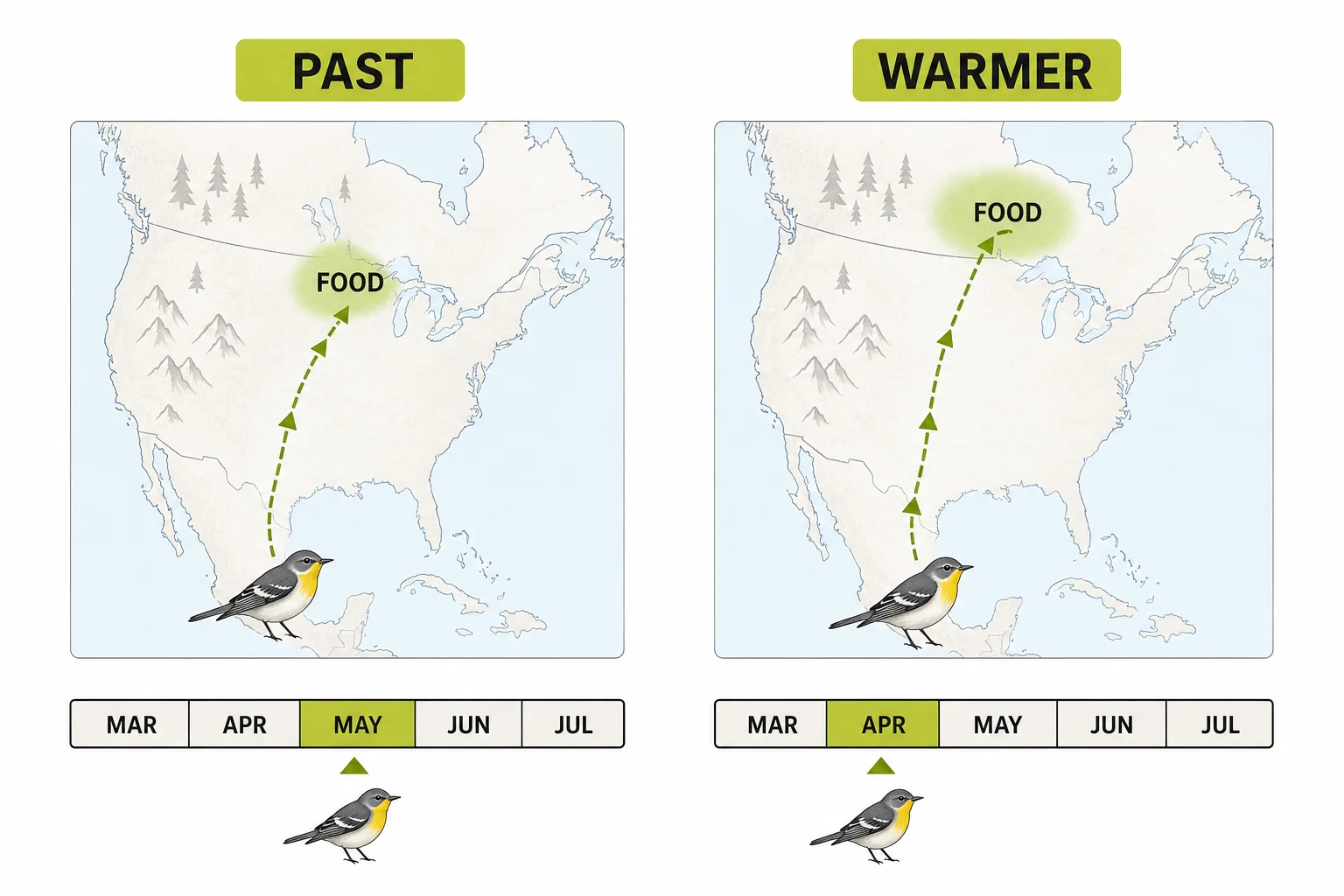
Routes can become risky when resource timing changes.
Vocabulary
- Migration
- A regular movement of animals between habitats, often linked to seasons.
- Stopover site
- A place where migrating animals rest, feed, or recover during a journey.
- Magnetic field
- The invisible field around Earth that some animals can use as a direction cue.
- Energetics
- The study of how organisms gain, store, and use energy.
- Phenology
- The timing of seasonal events, such as flowering, insect hatching, or migration.
- Mismatch
- A problem that happens when a migrant arrives at a time or place where needed resources are not available.
In the Classroom
Map a migration chain
30 minutes | Grades 6-8
Students choose a migratory species and map its breeding area, stopover sites, and wintering area. They mark where food, shelter, and risks occur along the route.
Energy budget walk
25 minutes | Grades 6-8
Students model migration with tokens that represent stored energy. Each movement costs tokens, and feeding stops add tokens, so students can test how habitat loss changes survival.
Climate timing graph
35 minutes | Grades 6-8
Students graph two seasonal events, such as bird arrival and insect hatch date. They compare matching and mismatching years, then explain how timing affects young animals.
Key Takeaways
- • Animals migrate when food, weather, breeding sites, or safety change with the seasons.
- • Long-distance travel uses energy, so migrants need places to rest and refuel.
- • Birds and other animals can navigate using cues such as the Sun, stars, smells, landmarks, and Earth’s magnetic field.
- • Migration connects ecosystems that may be thousands of miles apart.
- • Climate change can disrupt migration by shifting habitats, food timing, and stopover conditions.