Point of View Analyzer
Read the same story passage written in four different narrative perspectives. Switch between first person, second person, third-person limited, and third-person omniscient to see how the choice of narrator changes what the reader knows and feels.
Choose a story
The rain came without warning. One moment I was walking home through the park, my jacket slung over my arm, and the next, cold drops were hammering my shoulders. I sprinted for the nearest shelter, an old wooden gazebo, my sneakers squeaking against the wet path. Standing inside, breathing hard, I watched the storm roll in and felt strangely, unexpectedly alive.
Reflections are saved only in this browser session. Use the URL to share a specific passage and POV.
Point of View Reference Guide
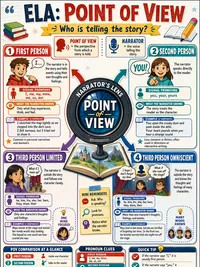
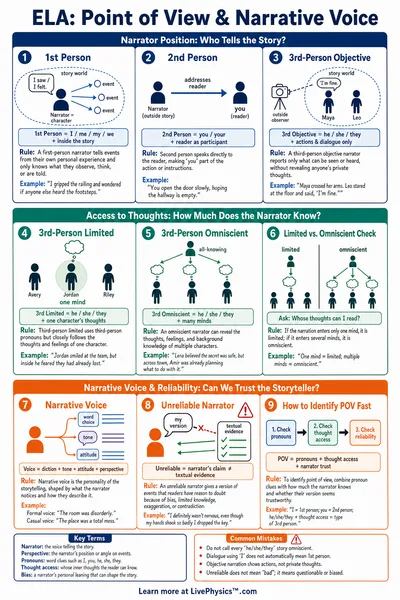
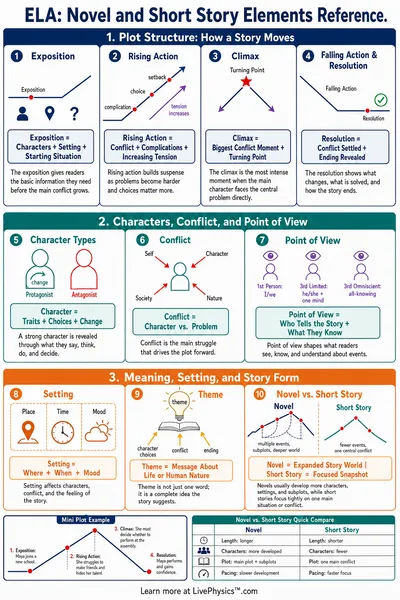
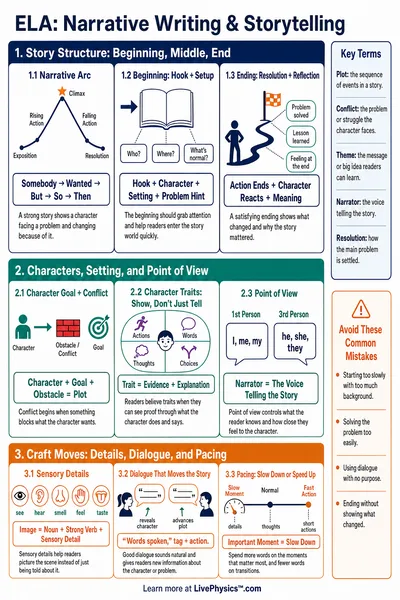
First Person
The narrator is a character inside the story, usually the protagonist. They can only report what they personally see, hear, think, and feel.
- Key pronouns I, me, my, mine, we, us, our
- Effect Creates a close, intimate bond between reader and narrator. Readers experience events through one person's eyes, which limits what they know.
- Common in Memoirs, personal essays, coming-of-age novels
Because the narrator can only know their own thoughts, first person is both limiting and very personal. The reader never fully knows what other characters are thinking.
Second Person
The narrator speaks directly to the reader, placing them inside the story as the main character. This is the rarest POV in literary fiction.
- Key pronouns you, your, yours, yourself
- Effect Pulls the reader into the action immediately. Can feel urgent, immersive, or even unsettling because the narrative is addressing the reader directly.
- Common in Choose-your-own-adventure books, some experimental novels, game instructions, recipe writing
Second person is often used briefly for effect inside a first-person or third-person story, rather than sustained throughout an entire text.
Third Person Limited
The narrator stands outside the story but stays close to one character, reporting only that character's inner thoughts and perceptions.
- Key pronouns he, she, they, him, her, his, their
- Effect Keeps the intimacy of first person while adding a slight narrative distance. The reader still only knows one character's mind.
- Common in Most modern novels, young adult fiction, fantasy series
Third person limited is the most popular POV in contemporary fiction because it balances emotional closeness with narrative flexibility.
Third Person Omniscient
The narrator knows the thoughts, feelings, and motivations of every character in the story, and can move freely between them.
- Key pronouns he, she, they - applied to all characters
- Effect Gives readers a broad, god-like view of the story world. Can build dramatic irony when readers know something a character does not.
- Common in Classic 19th-century novels, epic fantasy, stories with large ensemble casts
Writers using omniscient narration must be careful not to jump between characters too quickly (called "head-hopping"), which can confuse readers.