Parametric, Polar & Vector Motion Lab
Trace parametric curves, shade polar regions, and decompose vector-valued motion into velocity and acceleration. Switch between three modes to see how different coordinate systems reveal different properties of curves and motion.
Guided Experiment Parametric Motion Analysis
How does the velocity vector change along a cycloid? Is the speed constant?
Write your hypothesis in the Lab Report panel, then click Next.
Controls
Results
Graph
Data Table
(0 rows)| # | Trial | Mode | Preset | t / θ | Position | Derivative / Slope | Speed / Area / κ |
|---|
Reference Guide
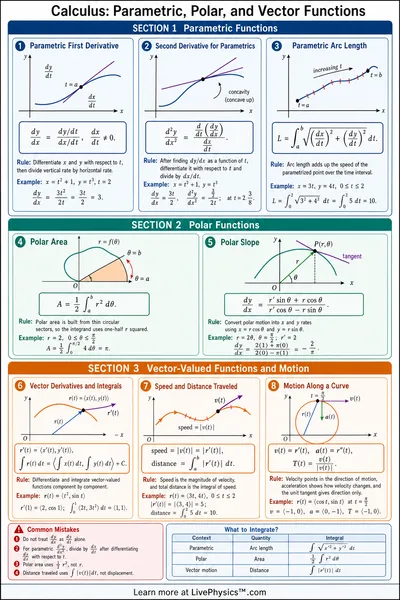
Parametric Derivatives
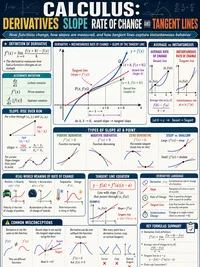
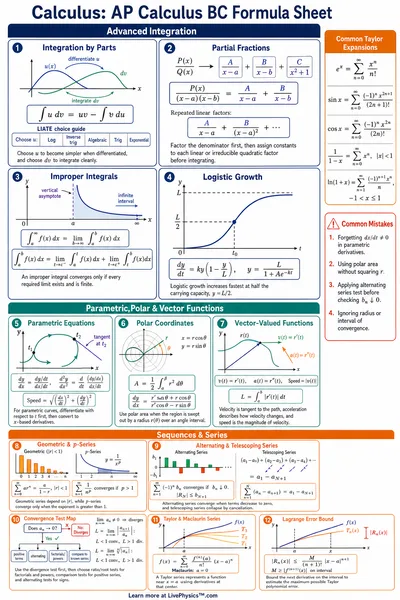
For a curve defined by x(t) and y(t), the slope is found using the chain rule.
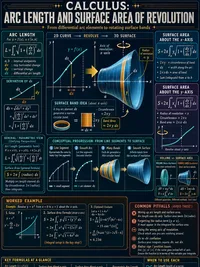
Arc length is the integral of the speed function.
Polar Area
The area enclosed by a polar curve between two angles is given by the following integral.
This formula sweeps out infinitesimal triangular sectors from the origin. The factor of 1/2 comes from the area of each triangle with base r and infinitesimal angle dθ.
Polar Slope
The slope of a polar curve in Cartesian coordinates requires converting derivatives.
This comes from x = r cos θ and y = r sin θ with the product rule.
Vector Calculus
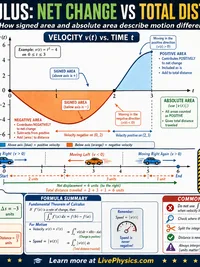
For a vector-valued function r(t), velocity and acceleration decompose into tangential and normal components.
Curvature κ measures how quickly the direction of velocity changes. Tangential acceleration changes the speed, while normal acceleration changes the direction.