Tone and Mood Lab
Pick a passage, find the words that create its mood, then swap the key word for an alternative and read how the tone shifts. Switch to Practice or Challenge mode to test yourself without the highlighting.
Guided ExperimentFind the Tone, Shift the Mood
Hypothesis
Setup
Run Experiment
Analyze
Conclude
Which words do you predict create the passage's mood, and why?
Write your hypothesis in the Lab Report panel, then click Next.
Controls
Passage
The old house loomed at the end of the block, its windows dark and silent.
Mood
The highlighted words above create a mood of ominous. Try swapping the keyword in the Controls panel to see how the tone shifts.
0 / 500
0 / 500
0 / 500
Reference Guide
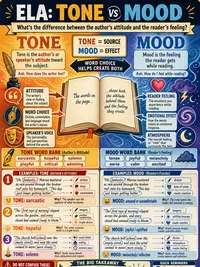
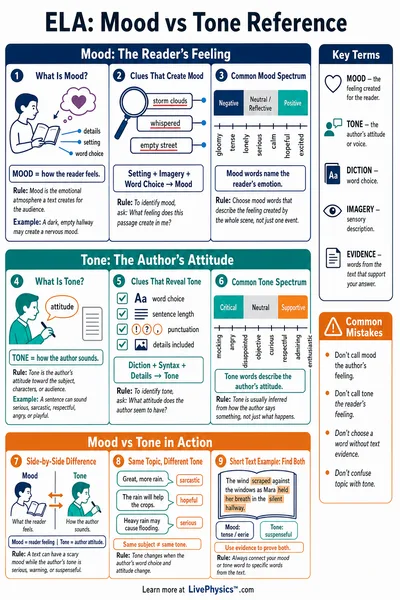
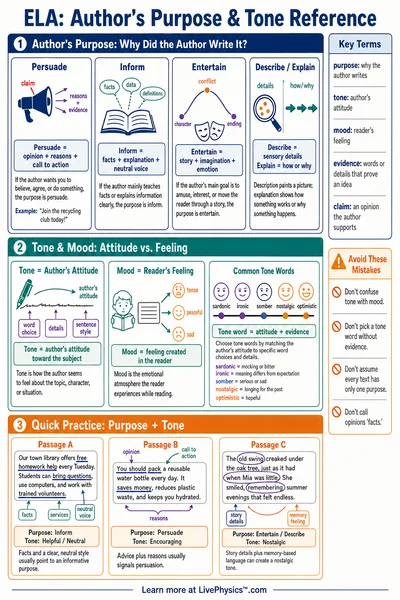
Tone vs Mood
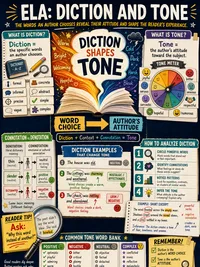
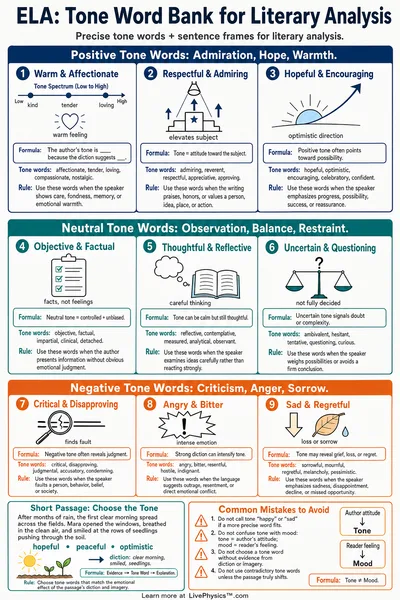
- Tone is the author's attitude toward the subject, shown through word choice.
- Mood is the feeling the passage creates in the reader.
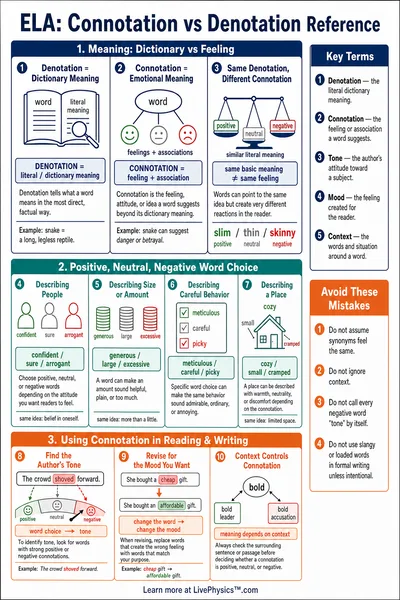
- A single word can carry most of a passage's tone, so swapping it can shift the mood.
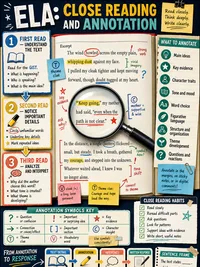
- Look for verbs and adjectives first. They usually do the most tone-setting work.
How to Use This Lab
- Pick a passage and a difficulty level.
- In Learn mode, read the highlighted tone words and the named mood.
- In Practice or Challenge mode, select the words you think create the mood, then reveal.
- Swap the keyword for an alternative and read the updated tone-shift description.
Related Content
Related Tools
Vocabulary Word Map
Explore 40 academic vocabulary words with visual maps showing definition, synonyms, antonyms, etymology, and example sentences. Filter by grade level and print any map.
Figurative Language Explorer
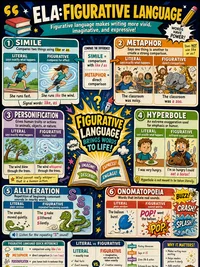
Browse and quiz yourself on 10 types of figurative language including simile, metaphor, personification, hyperbole, alliteration, and irony. Each device includes definition, tip, and three examples.
Literary Devices Explorer
Browse and quiz on 22 literary devices across five categories, figurative language, sound devices, structure, narrative techniques, and rhetoric. Real literary examples from Shakespeare, Orwell, Steinbeck, and more.
Context Clues Practice
Multiple-choice practice for inferring word meaning from surrounding text. Bank of 34 passages covering synonym, antonym, definition, inference, and example clue types for grades 5-9.
Related Labs
Story Plot Arc Lab
Map a story's exposition, rising action, climax, falling action, and resolution on an interactive plot diagram. Record key events in each stage and analyze how structure reveals theme.
Figurative Language Lab
Tag similes, metaphors, personification, hyperbole, alliteration, and more across three passages. Click each sentence to identify the device type and record how figurative language shapes meaning.
Claim-Evidence-Reasoning Lab
Build structured arguments using the CER framework across three debate topics. Write a claim, add evidence with reasoning, acknowledge counter-claims, and measure your argument's strength.
Reading Strategies Lab
Practice active reading across three non-fiction passages. Make text connections, ask before/during/after questions, form predictions, and write summaries using guided strategy prompts.