Understanding Rotational Equilibrium & Torque Lab
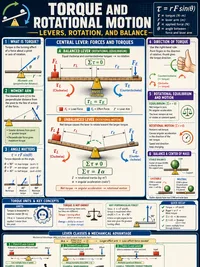
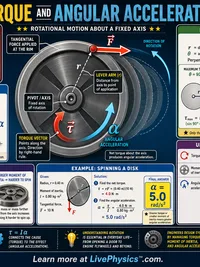
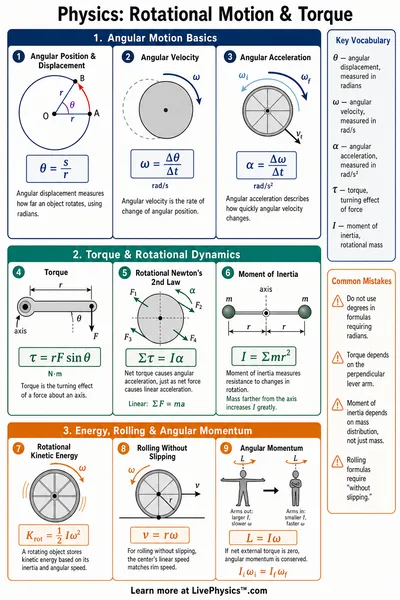
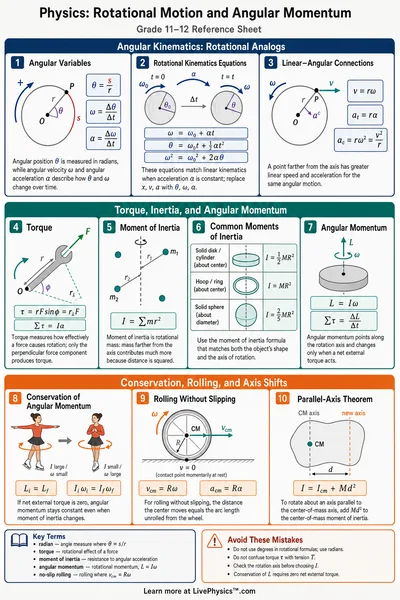
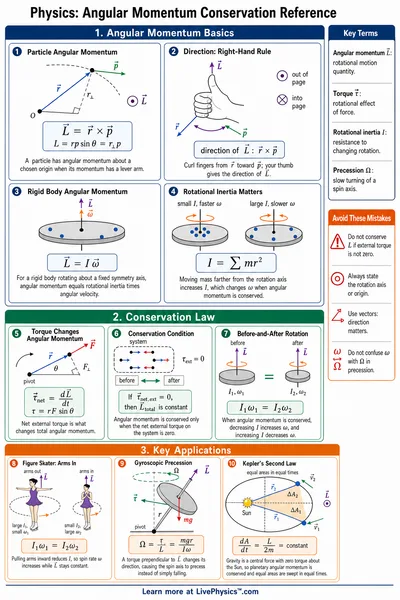
Torque depends on the turning effect of a force, not just the size of that force. A small force can turn an object strongly when it acts far from the pivot.
This is why a long wrench loosens a tight bolt more easily than a short wrench. The direction of the force matters because only the part that pushes at right angles to the beam produces the full turning effect.
A pivot is the point or axis about which an object could rotate. In a beam lab, choosing the pivot carefully makes the calculations clearer because forces applied exactly at that point produce no turning effect.
Forces on opposite sides of the pivot usually tend to turn in opposite directions. Students should keep a consistent sign rule, such as treating clockwise turns as negative and anticlockwise turns as positive, so that turning effects can be combined without confusion.
Balanced rotation requires more than having equal sized forces. The total clockwise turning effect must match the total anticlockwise turning effect. For an object that is fully at rest, the overall push in every straight direction must balance too.
A ruler on a support can have zero net turning effect yet still slide sideways if its horizontal forces do not cancel. This distinction helps explain why some structures tip, rotate, or move even when part of the force analysis looks balanced.
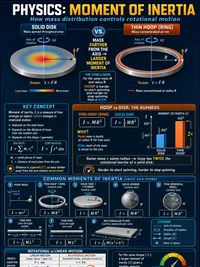
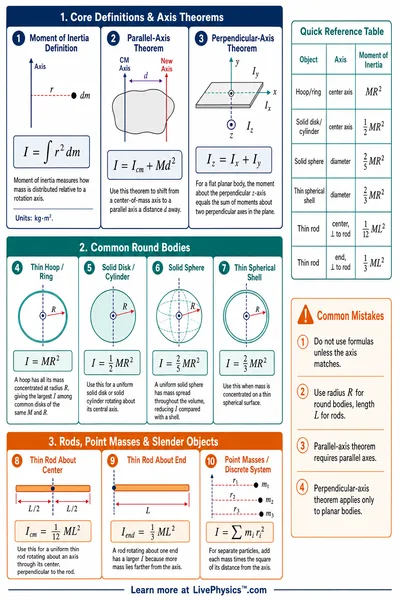
Mass distribution controls how readily an object changes its rotation. Two objects can have the same mass but respond differently when the same turning effect is applied. Mass placed far from the axis makes rotation harder to speed up or slow down, much like a figure skater spins more slowly with arms extended.
This property is called moment of inertia, and it depends on where the mass is located rather than mass alone. In angular motion, a larger net turning effect produces a greater angular acceleration, while a larger moment of inertia reduces that acceleration. Real examples include bicycle wheels, doors, playground seesaws, cranes, and vehicle steering.
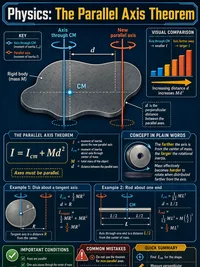
When working with a simulation or lab beam, check distances from the pivot, force directions, units, and whether the beam itself has weight. The beam weight often acts through its center of mass, so ignoring it can create a result that appears balanced on paper but fails in the experiment.