Citation Builder & Plagiarism Trainer
Enter the details of a book, website, or journal article and get a ready to copy citation in MLA or APA style. Then switch to the plagiarism trainer to practice telling proper paraphrasing apart from patchwriting and copied text.
Source type
Citation style
MLA citation
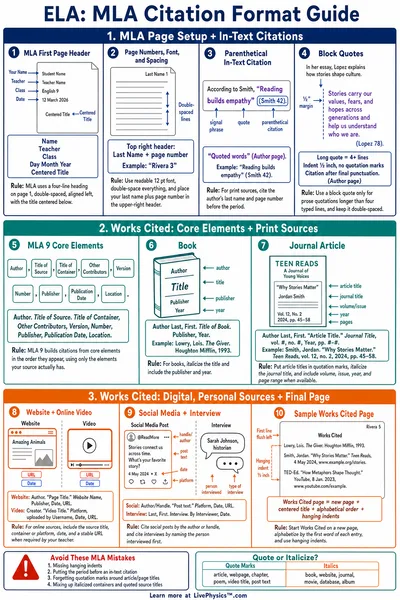
Lee, Harper. To Kill a Mockingbird. Lippincott, 1960.
Title case note
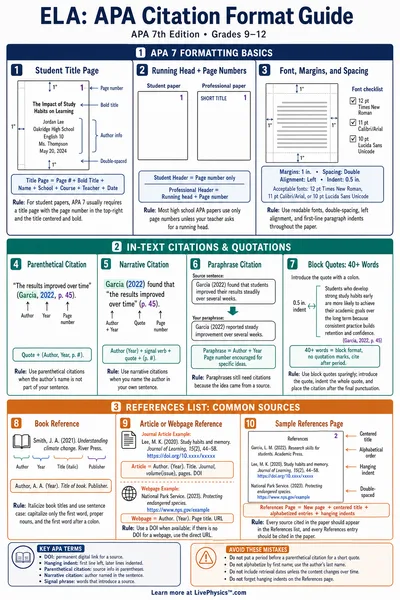
APA article titles use sentence case, so only the first word and proper nouns are capitalized. MLA uses title case, where most words are capitalized. Adjust the title you type to match the style you choose.
Citing Sources the Right Way
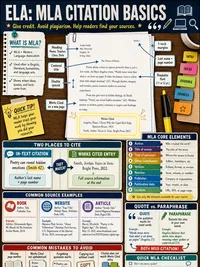
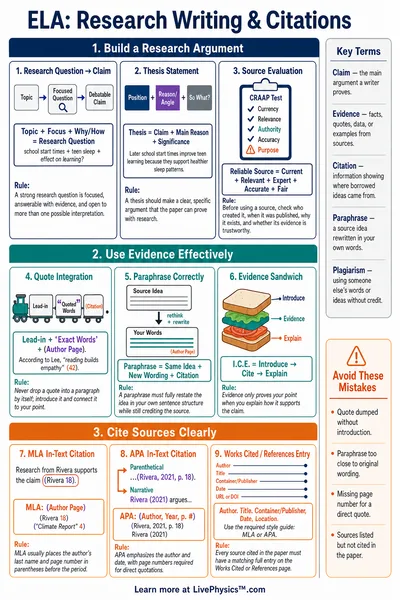
The parts of a citation
A citation tells your reader exactly where you found an idea. Most citations name a few core parts.
- Author. Who wrote it.
- Title. The book, page, or article name.
- Source. The publisher, website, or journal.
- Date. When it was published.
- Location. Page numbers or a web address.
Getting these in the right order and punctuation is what each style guide controls.
MLA and APA basics
MLA is common in English and the humanities. APA is common in science and social science. The two styles order the same facts differently.
MLA example. Lee, Harper. To Kill a Mockingbird. Lippincott, 1960.
APA example. Lee, H. (1960). To Kill a Mockingbird. Lippincott.
Notice that MLA spells out the first name while APA uses just the initial, and APA puts the year right after the author.
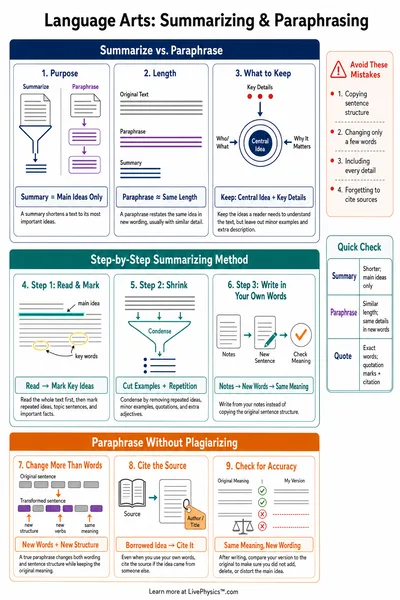
Paraphrase, patchwriting, and plagiarism
Using a source well means putting the idea in your own words and naming where it came from. There are three common outcomes.
- Proper paraphrase. You restate the idea with fresh wording and sentence structure, and you credit the source. This is good practice.
- Patchwriting. You keep the original structure and swap only a few words. This is too close to the source and is not allowed, even with a citation.
- Plagiarism. You copy the wording with no quotation marks and no citation. This passes off another person's work as your own.
The trainer gives you original passages and student versions so you can practice telling these apart.