Your Weight on Other Planets
Enter your Earth weight and see how heavy you would feel on the Moon, Mars, Jupiter, Saturn, the Sun, and every planet in the solar system. Each world has a different surface gravity, so your weight changes everywhere you go but your mass stays the same.
Enter Your Earth Weight
Typical adult weight 50 to 100 kg
Weight Across the Solar System
How heavy you would feel on each world, compared to Earth.
Every World in Detail
Sun
g = 274 m/s²
You would weigh
1955.1 kg
The Sun contains 99.86% of all the mass in the solar system.
Mercury
g = 3.7 m/s²
You would weigh
26.4 kg
A day on Mercury lasts longer than its entire year.
Venus
g = 8.87 m/s²
You would weigh
63.3 kg
Venus spins backwards compared to most planets, so the Sun rises in the west.
Earth
g = 9.81 m/s²
You would weigh
70.0 kg
Earth is the only planet known to support life, thanks to liquid water and a protective atmosphere.
Moon
g = 1.62 m/s²
You would weigh
11.6 kg
Apollo astronauts could jump about 3 metres high on the Moon.
Mars
g = 3.72 m/s²
You would weigh
26.5 kg
Mars has the tallest volcano in the solar system, Olympus Mons, at 21 km high.
Jupiter
g = 24.79 m/s²
You would weigh
176.9 kg
Jupiter is so massive that it has 95 known moons, including four large enough to be planets on their own.
Saturn
g = 10.44 m/s²
You would weigh
74.5 kg
Saturn's rings are made mostly of ice and rock and stretch out 282,000 km from the planet.
Uranus
g = 8.69 m/s²
You would weigh
62.0 kg
Uranus rotates on its side with an axial tilt of 98 degrees, causing extreme seasons.
Neptune
g = 11.15 m/s²
You would weigh
79.6 kg
Neptune has the strongest winds in the solar system, reaching 2,100 km/h.
Pluto
g = 0.62 m/s²
You would weigh
4.4 kg
Pluto has a heart-shaped nitrogen glacier larger than the state of Texas.
The Science of Weight and Gravity
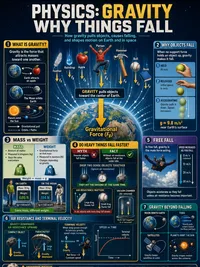
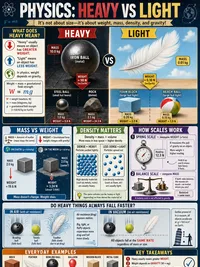
Weight vs Mass
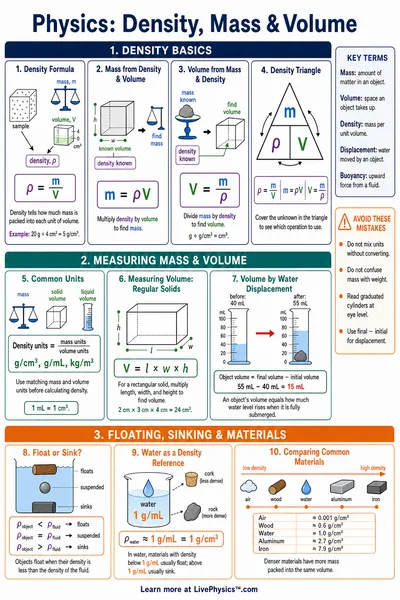
Mass is how much matter you are made of. It never changes. A person with a mass of 70 kg has exactly 70 kg of mass on Earth, on the Moon, on Mars, and in deep space.
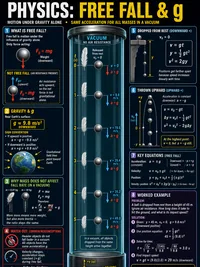
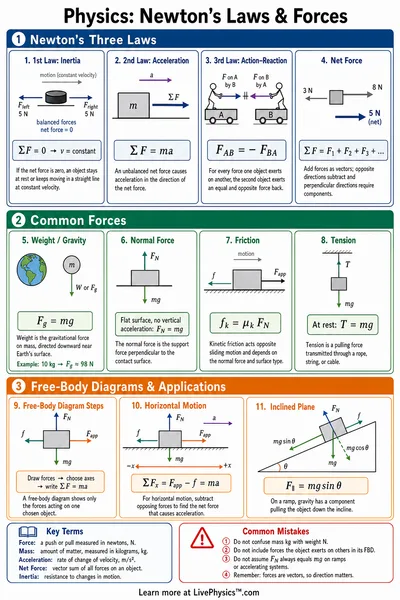
Weight is the pull of gravity on that mass. The formula is weight = mass x g. When g is smaller, you weigh less even though you are the same person.
This is why astronauts bounce around on the Moon. Their mass is unchanged, but the Moon only pulls them with 1/6 the force Earth does, so they feel light and springy.
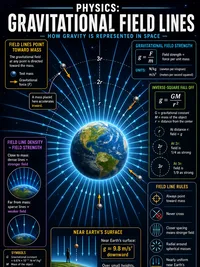
What is Surface Gravity?
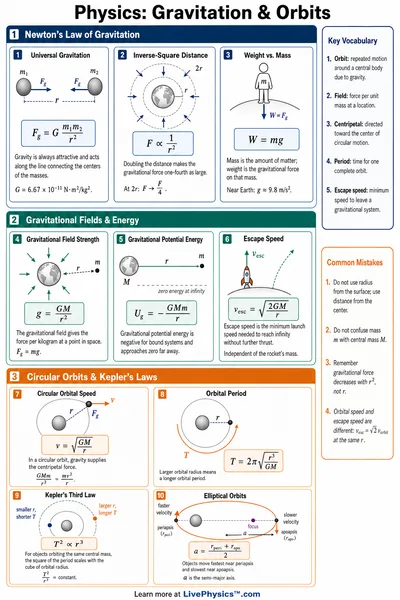
Surface gravity depends on two things, how massive the body is and how large it is. A more massive body has stronger gravity. A larger body (bigger radius) spreads that gravity out more, making it weaker at the surface.
That is why Saturn and Earth have similar surface gravity even though Saturn is much larger. Saturn is also much less dense, so the two effects roughly cancel.
| Body | g (m/s²) | vs Earth |
|---|---|---|
| Pluto | 0.62 | 0.06x |
| Moon | 1.62 | 0.17x |
| Mars | 3.72 | 0.38x |
| Earth | 9.81 | 1.00x |
| Jupiter | 24.79 | 2.53x |
| Sun | 274.0 | 27.9x |
Heaviest and Lightest Worlds
You weigh the most on the Sun because it contains 99.86% of all the mass in the solar system. Its surface gravity is 28 times stronger than Earth. A 70 kg person would weigh nearly 2000 kg there.
Among the planets, Jupiter has the strongest surface gravity at 24.79 m/s². Even though Jupiter is enormous, its gravity is only about 2.5 times Earth's because it is much larger in size.
You weigh least on Pluto. Its tiny size and low mass give it surface gravity of just 0.62 m/s², only 6% of Earth's. A 70 kg person would weigh about 4.4 kg there.
The Weight Formula
The formula for weight is simple. Weight equals mass times the gravitational acceleration g
To find your weight on another planet, multiply your mass (in kg) by that planet's g value. For example, with a mass of 70 kg on Mars (g = 3.72 m/s²)
The result in Newtons is the actual force. Divide by 9.81 to get what a scale reading would show in kilograms.
Could You Walk on the Sun?
The Sun has no solid surface. It is a ball of superheated plasma with temperatures reaching 5,500 degrees Celsius at the visible surface and over 15 million degrees at its core.
Walking on the Sun is not physically possible. But the weight calculation is still useful because it shows just how enormous the Sun's gravitational pull really is.
The Sun's gravity holds all eight planets in their orbits, keeps comets in long loops around the solar system, and even bends light from distant stars. Everything in our solar system is held together by that single massive pull.