Practice explaining how the Sun produces energy, identifying sunspots, and understanding solar flares and their effects on Earth.
Read each problem carefully. Use complete sentences when explaining your thinking. Show your work in the space provided.
Explore how the Sun makes energy and how solar activity affects space weather
Astronomy - Grade 6-8
- 1
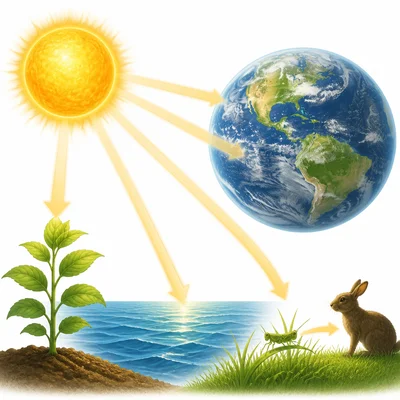
The Sun is a star made mostly of hydrogen and helium. Explain why the Sun is the main source of energy for life on Earth.
- 2
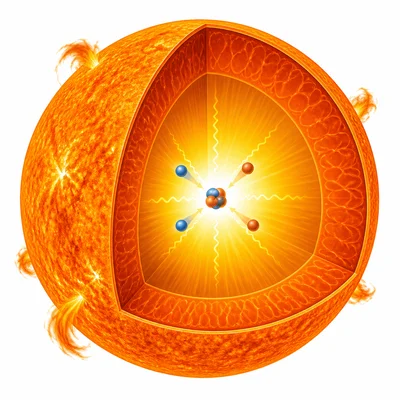
In the Sun's core, hydrogen atoms combine to form helium. What is this process called, and why is it important?
- 3
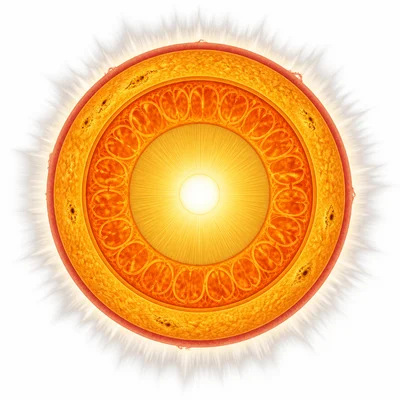
Put these layers of the Sun in order from the center outward: corona, core, photosphere, radiative zone, convective zone, chromosphere.
- 4
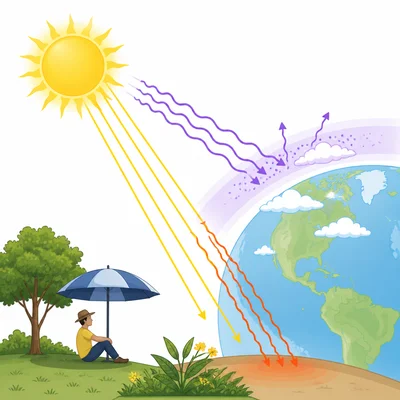
The Sun gives off energy in many forms, including visible light, ultraviolet light, and infrared radiation. Describe one way each of these forms of energy affects Earth.
- 5
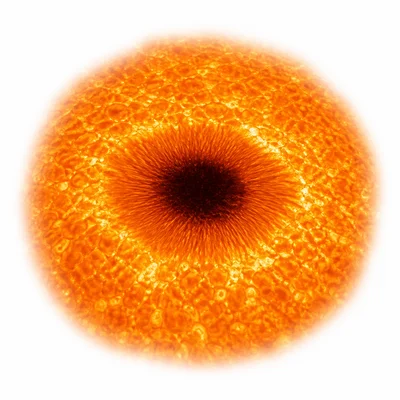
A sunspot looks dark when viewed on the Sun's surface. Does that mean it is cold? Explain your answer.
- 6
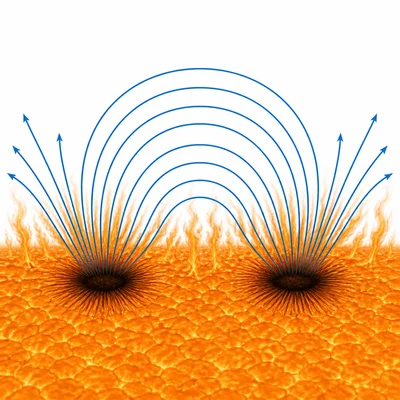
Sunspots are linked to strong magnetic fields. Explain how magnetic fields are related to sunspot formation.
- 7
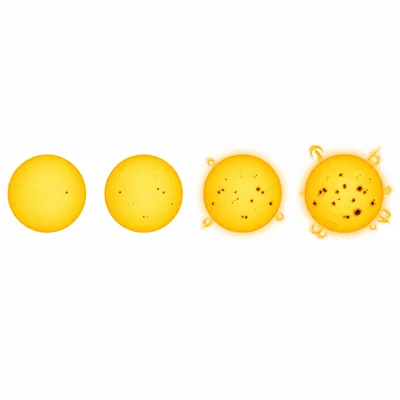
Scientists often count sunspots to study solar activity. If the number of sunspots is increasing over several months, what can scientists infer about the Sun's activity level?
- 8
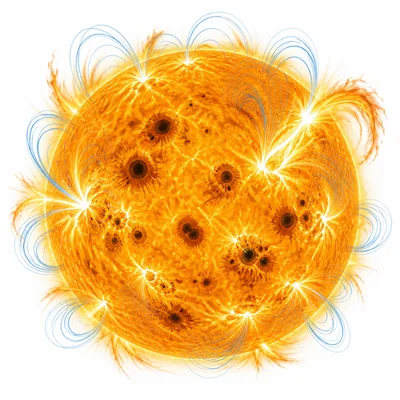
The Sun has an approximately 11-year sunspot cycle. What happens during a solar maximum?
- 9

Study the data: Year 1 had 18 sunspots, Year 2 had 35 sunspots, Year 3 had 62 sunspots, and Year 4 had 80 sunspots. Describe the trend and identify whether the Sun may be moving toward solar minimum or solar maximum.
- 10
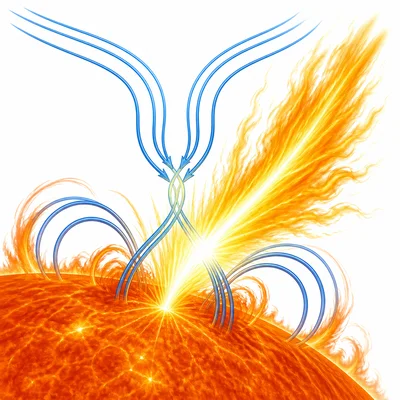
A solar flare is a sudden burst of energy from the Sun's atmosphere. What causes solar flares?
- 11
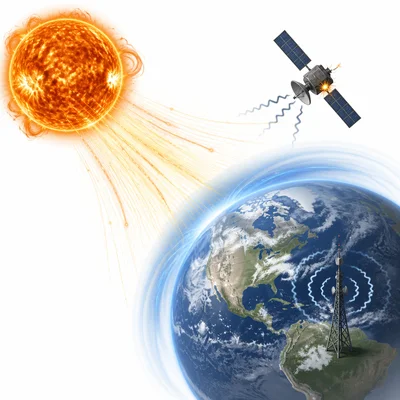
Name two possible effects of strong solar flares on technology near Earth.
- 12
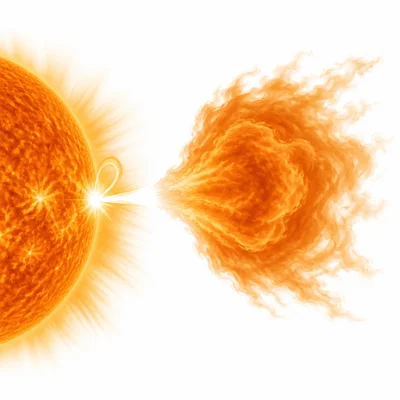
Explain the difference between a solar flare and a coronal mass ejection.
- 13
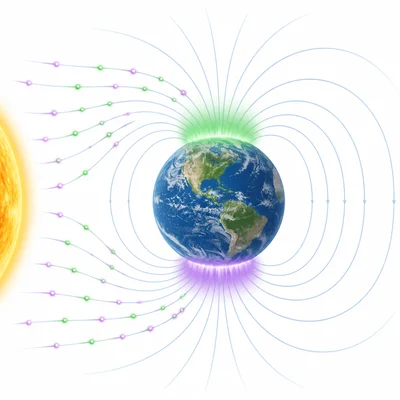
Charged particles from the Sun can interact with Earth's magnetic field and atmosphere to create auroras. Explain why auroras are often seen near the North and South Poles.
- 14
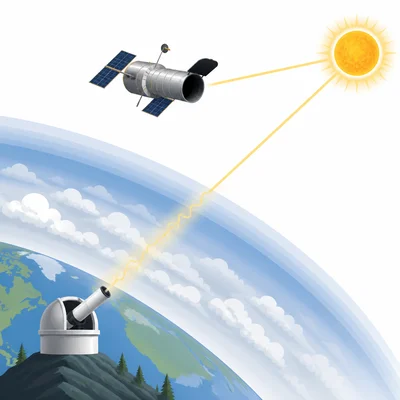
Why do scientists monitor the Sun using telescopes and spacecraft instead of only looking at it from Earth's surface?
- 15
A news report says a strong solar flare is aimed toward Earth. Write a short explanation for the public that describes what a solar flare is and one reason scientists track it.