Practice identifying minerals by using hardness, streak, luster, cleavage, fracture, density, and other physical properties.
Read each problem carefully. Use complete sentences when explaining your reasoning. Show your work for calculations.
Using observable properties to identify common minerals
Earth Science - Grade 6-8
- 1
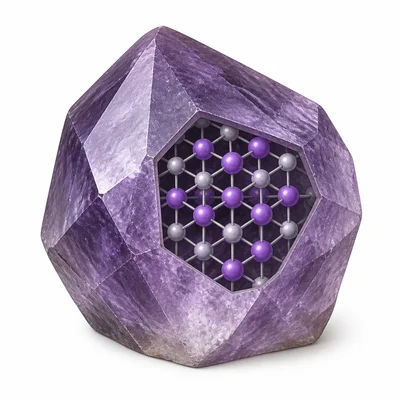
A sample is naturally occurring, inorganic, solid, has a definite chemical composition, and has atoms arranged in a crystal structure. Does it meet the scientific definition of a mineral? Explain.
- 2
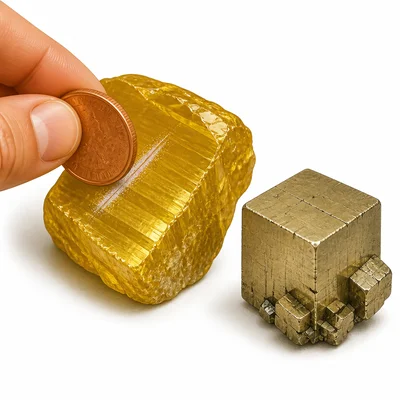
A student finds a shiny yellow material in a stream. It looks like gold, but it can be scratched by a copper penny. Gold has a hardness of about 2.5 to 3, and pyrite has a hardness of about 6 to 6.5. Is the sample more likely to be gold or pyrite? Explain.
- 3
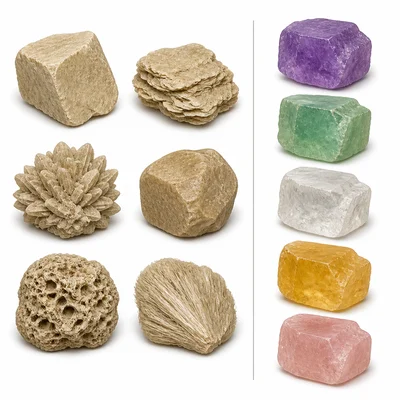
Why is color usually not the best property to use by itself when identifying a mineral?
- 4
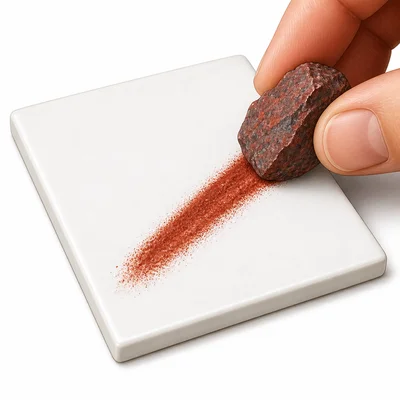
A mineral is rubbed across a white streak plate and leaves a reddish-brown powder. What property is being tested, and why can this be more useful than the mineral's outside color?
- 5
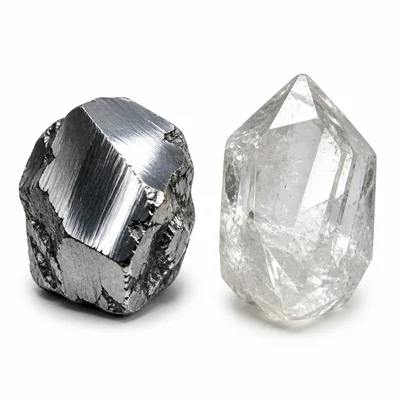
A mineral reflects light like metal. Another mineral reflects light like glass. Name the property being described and identify the two types of this property.
- 6
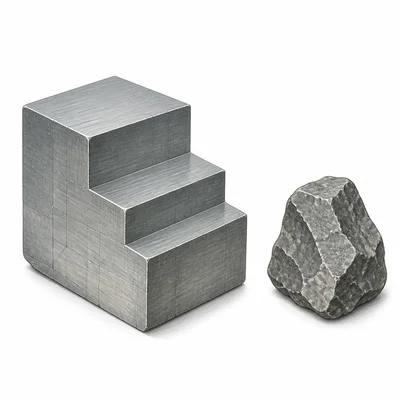
A mineral breaks along flat, smooth surfaces in three directions. Is this cleavage or fracture? Explain how you know.
- 7
A mineral has a mass of 48 grams and a volume of 16 cubic centimeters. Calculate its density.
- 8
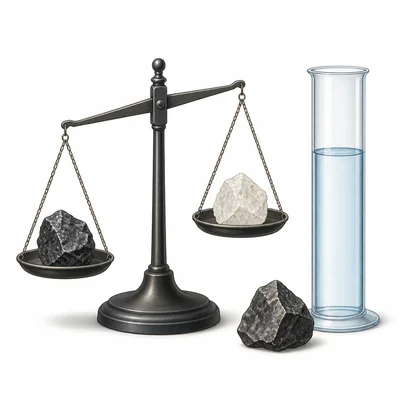
Two minerals are the same size, but Mineral A feels much heavier than Mineral B. What physical property is different, and how could you measure it more accurately?
- 9
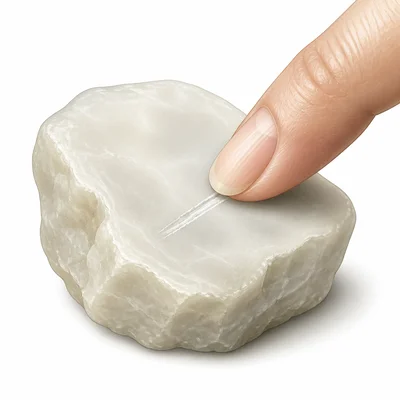
Use these clues to identify the mineral: it is very soft, can be scratched with a fingernail, feels slippery or soapy, and has a hardness of 1 on the Mohs scale.
- 10
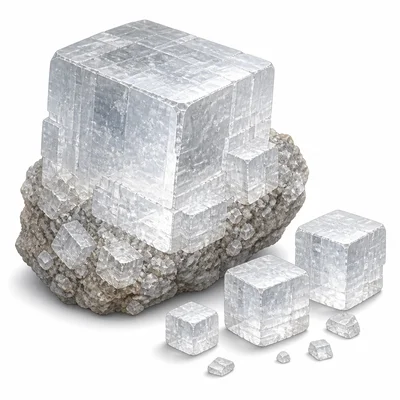
Use these clues to identify the mineral: it has a salty taste, forms cube-shaped crystals, and has cubic cleavage. In a school lab, you should not taste unknown minerals. What is the mineral likely to be?
- 11
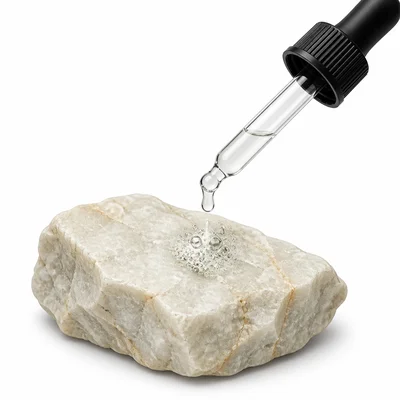
A mineral sample fizzes when a drop of weak acid is placed on it. Which common mineral is most likely present, and what property is being tested?
- 12
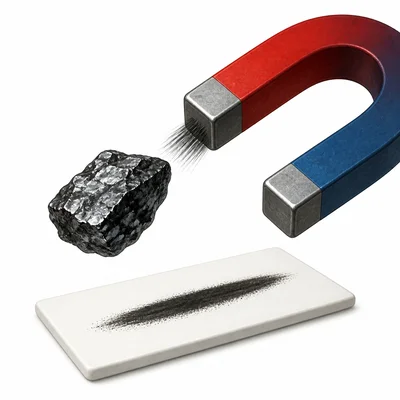
A black mineral is attracted to a magnet and leaves a black streak. Which mineral is the best match: quartz, magnetite, or gypsum? Explain.
- 13
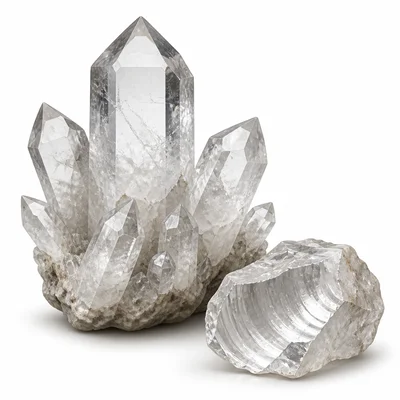
A student uses the following data for an unknown mineral: hardness 7, glassy luster, no cleavage, curved fracture, and white streak. Which mineral is a strong match: quartz, mica, or talc? Explain.
- 14
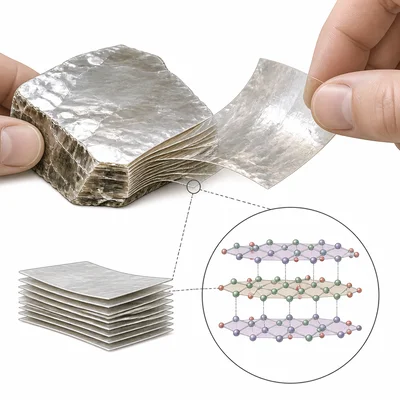
Mica can be peeled into very thin sheets. Which property does this show, and what does it tell you about the arrangement of mica's atoms?
- 15
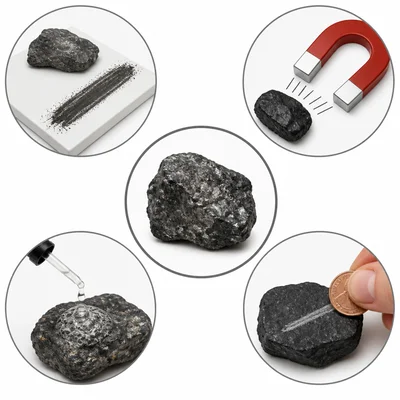
You are given an unknown mineral. List four tests or observations you could use to identify it, and explain why using several properties is better than using only one.