Practice explaining causes of water scarcity, interpreting water-use data, and choosing effective conservation strategies.
Read each problem carefully. Show your work in the space provided when calculations are needed. Use complete sentences for explanations.
Understanding why water becomes scarce and how people can conserve it
Environmental Science - Grade 6-8
- 1
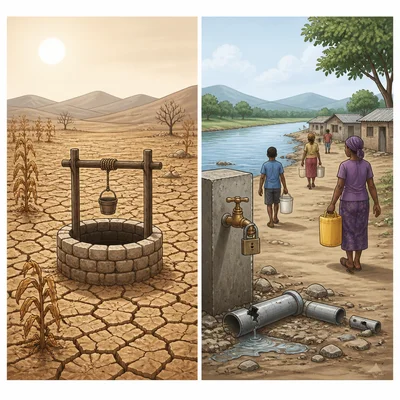
Explain the difference between physical water scarcity and economic water scarcity.
- 2
A shower uses 2 gallons of water per minute. If a person takes a 12-minute shower, how many gallons of water are used? How many gallons would be saved by taking an 8-minute shower instead?
- 3
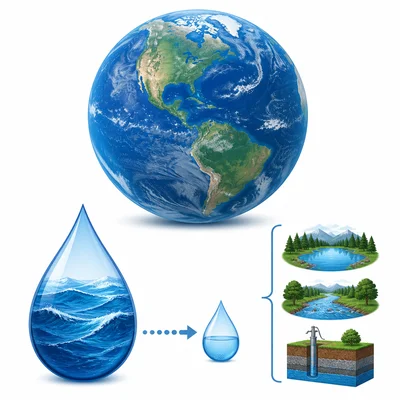
Only a small part of Earth’s water is fresh water that humans can easily use. Explain why oceans do not solve most water scarcity problems.
- 4
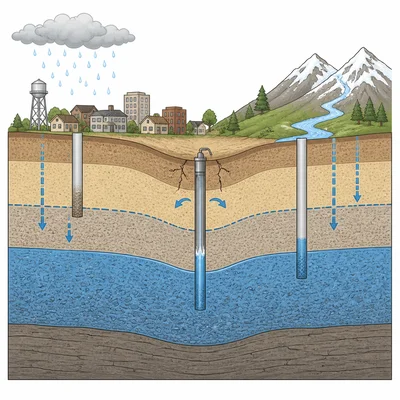
A town pumps groundwater from an aquifer faster than rain and snowmelt can refill it. Describe two possible effects of this overuse.
- 5
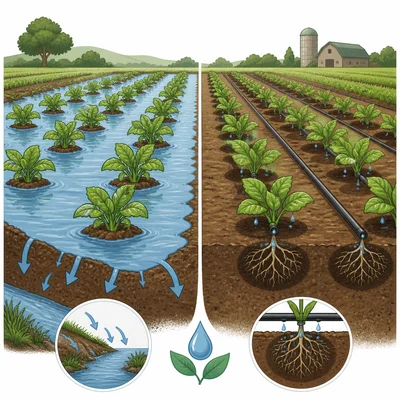
A farmer switches from flood irrigation to drip irrigation. Explain how this can help conserve water.
- 6
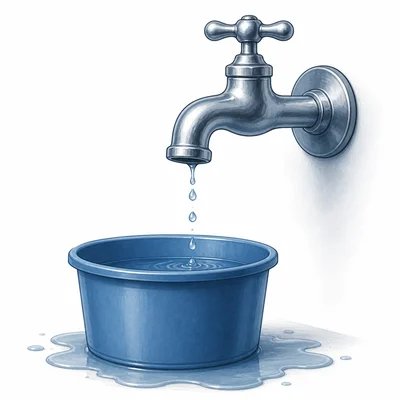
A family finds that a leaky faucet wastes 3 gallons of water each day. How many gallons are wasted in 30 days? Explain why fixing small leaks matters.
- 7
List three household actions that can reduce water use without seriously changing quality of life.
- 8
A city uses water for homes, farms, parks, and factories. During a drought, leaders limit lawn watering but keep drinking water available. Explain why this is a reasonable conservation choice.
- 9
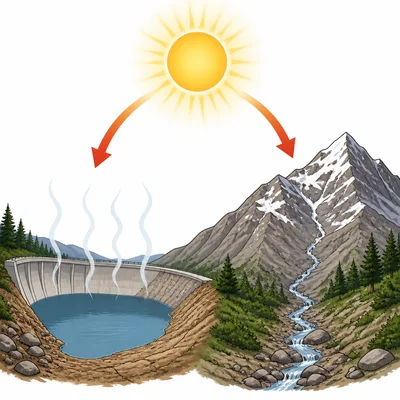
Climate change can affect water scarcity. Describe two ways a warmer climate can make water supplies less reliable.
- 10
A water bill shows these daily uses: showering 32 gallons, toilets 24 gallons, laundry 18 gallons, dishwashing 6 gallons, and leaks 10 gallons. What is the total daily water use? Which category should the family try to reduce first, and why?
- 11
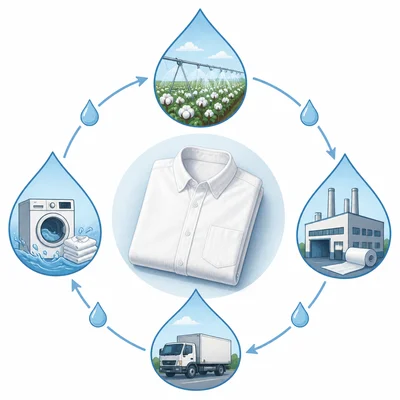
Explain what is meant by a product’s water footprint. Give one example of a product that may have a large water footprint.
- 12
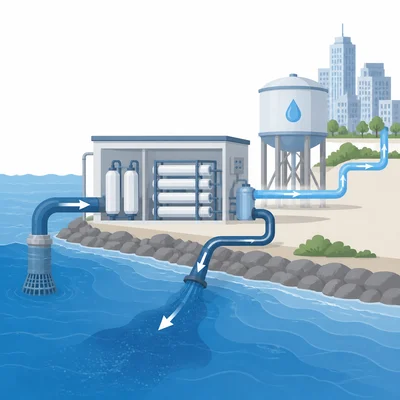
A coastal city is considering desalination to increase its drinking water supply. Give one benefit and one drawback of desalination.
- 13
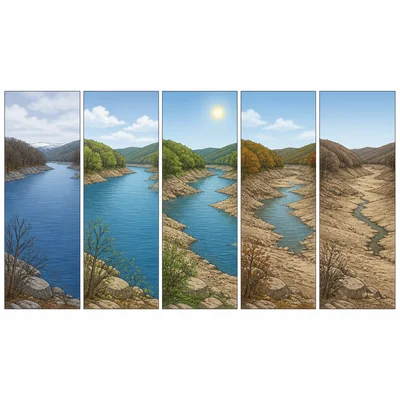
Study this reservoir data: January 80 percent full, March 70 percent full, May 55 percent full, July 35 percent full, and September 25 percent full. Describe the trend and explain one possible reason for it.
- 14
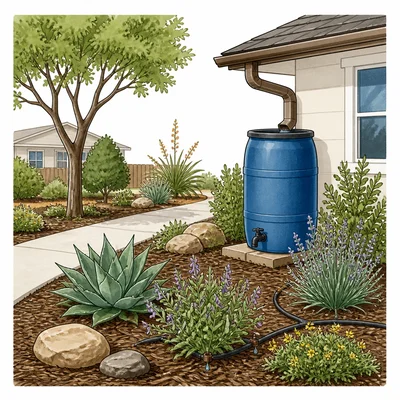
A neighborhood wants to reduce outdoor water use. Choose two of these ideas and explain why they would help: planting native plants, watering at noon, collecting rainwater, replacing grass with mulch, or using sprinklers on windy days.
- 15
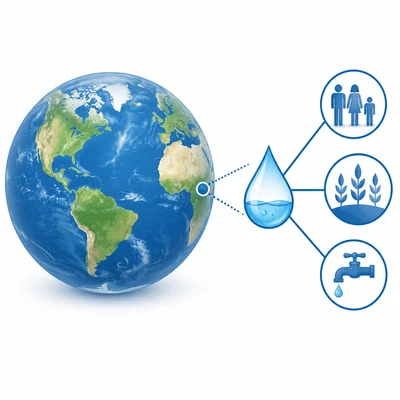
Respond to this claim: Earth has plenty of water, so humans do not need to worry about water scarcity.