Practice reading pay stubs, calculating gross pay and net pay, and understanding common paycheck deductions such as federal income tax, state income tax, Social Security, and Medicare.
Read each problem carefully. Use the pay stub information given, show your work, and write your answer in a complete sentence when possible.
Understanding earnings, deductions, net pay, and basic taxes
Financial Literacy - Grade 6-8
- 1
Maya worked 12 hours at a rate of $15 per hour. What is her gross pay before any taxes or deductions?
- 2
A pay stub shows gross pay of $420. The deductions are $38 for federal income tax, $18 for state income tax, $26.04 for Social Security, and $6.09 for Medicare. What is the total amount of deductions?
- 3
Using the same pay stub from problem 2, what is the net pay?
- 4
Carlos earns $14 per hour. He worked 20 regular hours and 3 overtime hours. Overtime is paid at 1.5 times the regular hourly rate. What is Carlos's total gross pay?
- 5
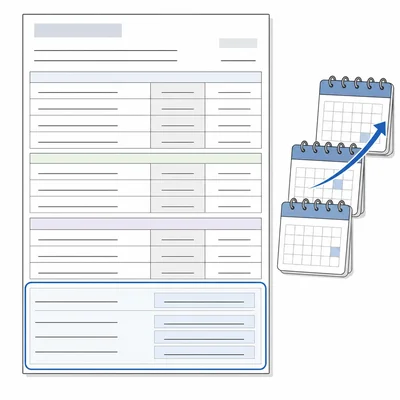
A pay stub lists year-to-date earnings of $3,250. What does year-to-date mean on a pay stub?
- 6
A student sees these deductions on a pay stub: federal income tax, Social Security, and Medicare. Which of these deductions helps pay for retirement and disability benefits for workers?
- 7
A pay stub shows gross pay of $500 and net pay of $402.50. How much money was taken out for deductions?
- 8
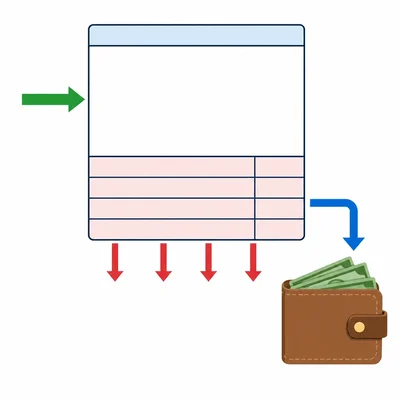
Look at this pay information: Gross pay is $600. Federal income tax is $54. State income tax is $24. Social Security is $37.20. Medicare is $8.70. Health insurance is $30. What is the net pay?
- 9
Jada's pay stub says she earned $750 this pay period. Social Security is 6.2% of gross pay. How much is taken out for Social Security?
- 10
Liam's pay stub says he earned $750 this pay period. Medicare is 1.45% of gross pay. How much is taken out for Medicare? Round to the nearest cent.
- 11
A pay stub has a line labeled employee contribution to retirement: $25. Is this amount part of gross pay, a deduction, or net pay?
- 12
A weekly pay stub shows net pay of $286. If the worker receives the same net pay every week for 4 weeks, how much net pay will the worker receive in 4 weeks?
- 13

Compare the two pay stubs. Pay Stub A has gross pay of $400 and deductions of $70. Pay Stub B has gross pay of $400 and deductions of $95. Which pay stub has the higher net pay, and by how much?
- 14
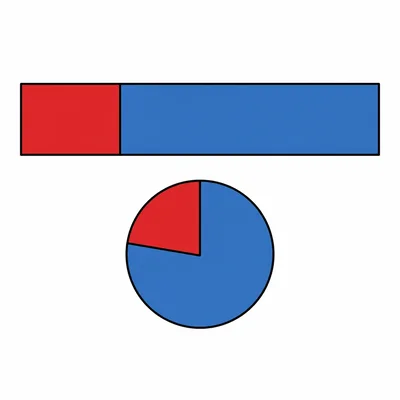
A worker's gross pay is $480. The total deductions are $96. What percent of the gross pay was taken out for deductions?
- 15

Explain why net pay is often called take-home pay.