Practice identifying rhetorical situations, analyzing choices, and writing commentary for AP Language rhetorical analysis tasks.
Read each problem carefully. For passage-based questions, refer directly to the wording of the passage. Write complete answers and explain how each rhetorical choice supports the speaker's purpose.
Analyzing rhetorical choices, audience, purpose, and effect
Language Arts - Grade 9-12
- 1
Read the passage: At dawn, the river does not announce itself. It gathers light quietly, lifting the city out of darkness one window at a time. By noon, we will forget it is there, though every bridge, factory, and street bends toward it. Identify the speaker's likely purpose and explain how the imagery supports that purpose.
- 2
In a rhetorical analysis essay, what is the difference between identifying a device and analyzing a rhetorical choice?
- 3
Read the sentence: We asked for clean water, for safe streets, for schools that open doors instead of locking them. Name the main rhetorical strategy and explain its effect.
- 4
A writer addresses a graduating class and says, You inherit not a finished world, but a workshop. Analyze the metaphor and its likely effect on the audience.
- 5
Read the passage: Some claim the library is obsolete because answers now arrive in seconds. But an answer is not the same as understanding, and speed is not the same as wisdom. Identify the writer's counterargument and explain how the contrast strengthens the argument.
- 6
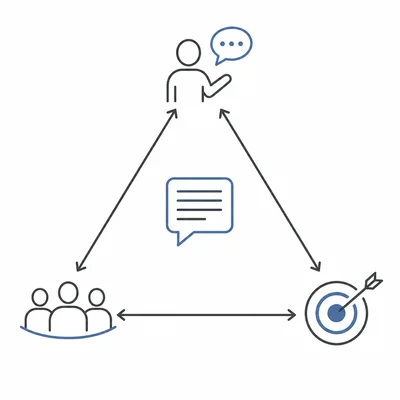
Look at the rhetorical triangle. Explain how speaker, audience, and purpose interact in a rhetorical situation.
- 7
Read the passage: The old stadium stood at the edge of town, peeling paint and cracked concrete visible from the highway. Yet on Friday nights, it became the town's brightest room. Analyze the shift in tone.
- 8
Write a defensible thesis for this prompt: Analyze how the speaker uses rhetorical choices to persuade residents to support a new public garden.
- 9
Read the passage: If we measure progress only by profit, then a forest becomes timber, a river becomes a pipeline, and a neighborhood becomes real estate. Explain how the conditional structure helps the writer's argument.
- 10
Complete the chart in words: For a speech encouraging volunteers after a natural disaster, identify one possible appeal to ethos, one to pathos, and one to logos.
- 11
Read the passage: The policy is called efficient, but efficient for whom? Not for the nurse working a double shift, not for the parent waiting three months for an appointment, not for the patient told to try again next year. Analyze the effect of the rhetorical question and repetition.
- 12
A student writes: The author uses diction to show that the problem is bad. Revise this into stronger rhetorical analysis.
- 13
Read the passage: First, the city planted trees along the hottest streets. Then, neighbors organized weekend watering teams. Within two summers, the blocks once avoided in July became shaded routes to school. Identify the line of reasoning and explain how the organization supports the claim.
- 14
Read the sentence: I do not ask you to agree with every proposal; I ask you to agree that doing nothing is also a decision. Analyze how concession functions in this sentence.
- 15
Write a short rhetorical analysis paragraph about this passage: We can pave the last meadow and call it growth. We can silence the birds and call it convenience. Or we can decide that progress should leave room for life. Your paragraph should identify at least two rhetorical choices and explain their effects.