Practice using Marxist criticism and historical criticism to interpret literary texts, characters, conflicts, and themes.
Read each problem carefully. Write complete sentences and support your ideas with specific details.
Analyzing literature through class, power, and historical context
Language Arts - Grade 9-12
- 1
In your own words, explain what Marxist literary criticism focuses on when analyzing a text.
- 2
In your own words, explain what historical criticism focuses on when analyzing a text.
- 3
Complete this comparison: Marxist criticism and historical criticism are similar because they both look beyond the plot, but they are different because Marxist criticism focuses especially on blank, while historical criticism focuses especially on blank.
- 4
Read this brief passage: The mill owner watched from the balcony as workers poured through the gates before sunrise. By noon, his guests were praising the factory's success while the workers ate bread beside the machines. Explain one Marxist interpretation of the passage.
- 5
Using the same passage about the mill owner and workers, explain one question a historical critic might ask before interpreting it.
- 6

The term superstructure refers to social institutions and ideas, such as schools, religion, art, laws, and media, that can support the economic system. In a novel, a school teaches poor students to obey wealthy employers without question. Explain how this school could be analyzed as part of the superstructure.
- 7
A character says, I was born poor, so I must stay in my place. What concept would a Marxist critic most likely discuss when analyzing this statement?
- 8
Choose the stronger Marxist claim and explain why it is stronger: A. The novel has many rich characters. B. The novel shows that wealth allows certain characters to control other people's choices.
- 9
A historical critic is studying a poem written during a war. List three types of historical information that could help the critic interpret the poem.
- 10
Read this brief passage: The family kept a silver tea set in the parlor, though the roof leaked and the children needed shoes. Explain how a Marxist critic might interpret the silver tea set.
- 11
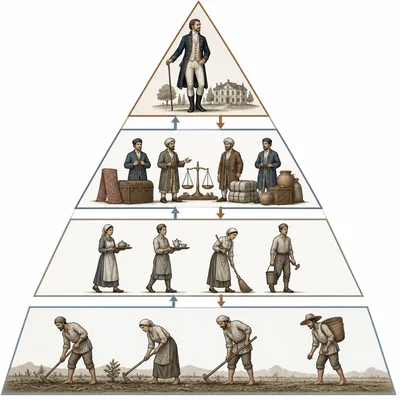
A novel includes nobles, merchants, servants, and landless laborers. Use a Marxist lens to explain why the relationships among these groups matter.
- 12
A story is set in a city during a major economic depression. Explain how historical context could change a reader's interpretation of a character who steals bread.
- 13
Explain one risk of using only historical criticism and ignoring the text's language, structure, and imagery.
- 14
Write a thesis statement that uses a Marxist lens to analyze a story about a wealthy family and the workers who serve them.
- 15
Write a thesis statement that combines Marxist criticism and historical criticism for a novel set during the Industrial Revolution.