Practice ethical reasoning by examining thought experiments, identifying moral principles, and explaining arguments with clarity.
Read each scenario carefully. Identify the ethical issue, state your judgment, and support it with reasons. When asked, compare different ethical theories and explain your thinking.
Analyze moral dilemmas using clear claims, reasons, and principles
Philosophy - Grade 9-12
- 1
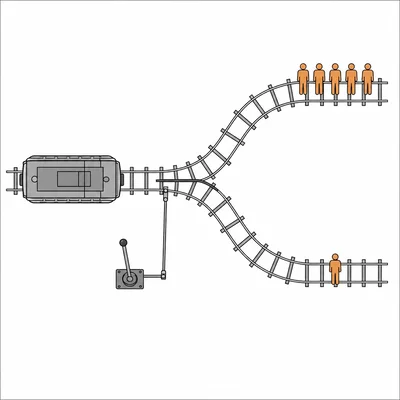
A runaway trolley is headed toward five workers on the track. You can pull a lever to switch the trolley onto another track where one worker will be hit. Should you pull the lever? Explain your answer using at least one moral principle.
- 2
In a hospital, five patients will die without organ transplants. A healthy visitor has organs that could save all five patients, but removing them would kill the visitor. Explain why this case may feel different from the trolley case, even though both involve one life and five lives.
- 3
A student promises to keep a friend's secret. Later, the student learns the secret involves a plan to cheat on a major exam. Should the student keep the promise or tell someone? Explain using duty-based reasoning.
- 4
Define the difference between a moral claim and a factual claim. Then write one example of each related to the issue of lying.
- 5
A person lies to protect a friend from embarrassment. Analyze this action from a consequentialist point of view.
- 6
A person lies to protect a friend from embarrassment. Analyze this action from a Kantian or duty-based point of view.
- 7
A city can spend its budget on either a new sports stadium that many people will enjoy or a clean water system that will help fewer people but prevent serious illness. Use utilitarian reasoning to decide what the city should do.
- 8
Explain the principle of universalizability. Then apply it to the rule 'It is acceptable to break promises whenever it is convenient.'
- 9
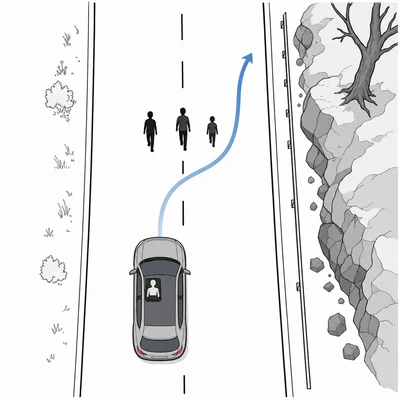
A self-driving car must choose between swerving to avoid three pedestrians and staying on course to protect its passenger. Identify one ethical question programmers must answer when designing the car's decision rules.
- 10
What is the difference between an argument and an opinion in ethical reasoning? Use an example about animal testing.
- 11
A lifeboat has room for only one more person. Two people are waiting: a doctor who may save lives later and a teenager who is not trained in medicine. Name two possible criteria for deciding who gets the seat, and explain one strength or weakness of each.
- 12
A company discovers that one of its products is unsafe, but announcing the problem will cost millions of dollars and hurt its reputation. Explain what virtue ethics would ask company leaders to consider.
- 13
Read this argument: 'If an action is legal, then it is morally right. This action is legal. Therefore, it is morally right.' Identify a possible weakness in the argument.
- 14
A person finds a wallet with cash and an ID inside. No one is watching. Compare how consequentialism, duty-based ethics, and virtue ethics might each support returning the wallet.
- 15
Choose one ethical dilemma from this worksheet and write a short paragraph explaining your final judgment. Your paragraph should include a claim, at least two reasons, and one possible objection to your view.