Practice analyzing projectile motion in two dimensions using horizontal and vertical components, time of flight, range, and maximum height.
Read each problem carefully. Assume g = 9.8 m/s^2 downward and ignore air resistance unless the problem says otherwise. Show your work in the space provided.
Resolving vectors and predicting projectile paths
Physics - Grade 9-12
- 1
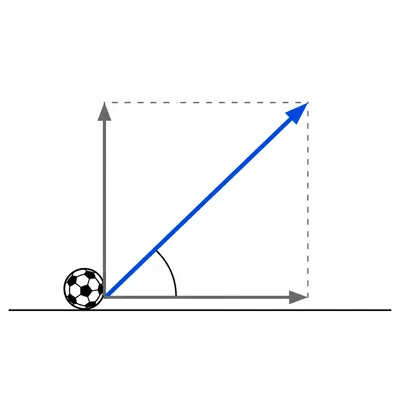
A soccer ball is kicked with an initial speed of 25 m/s at an angle of 40 degrees above the horizontal. Find the horizontal and vertical components of the initial velocity.
- 2
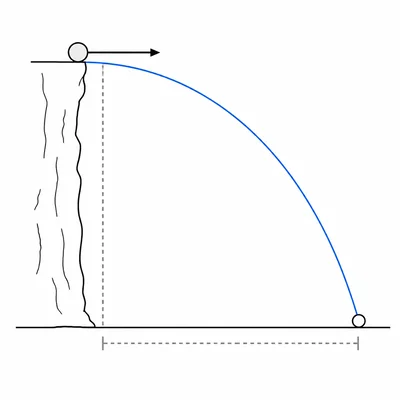
A ball rolls horizontally off a 45 m tall cliff with a horizontal speed of 20 m/s. How long does it take to hit the ground, and how far from the base of the cliff does it land?
- 3
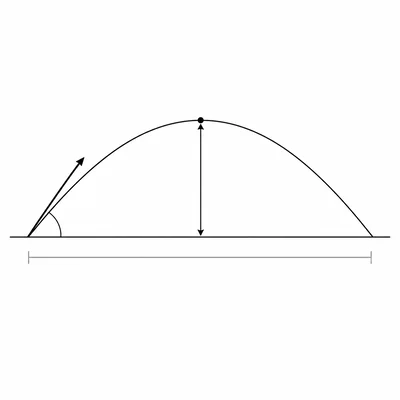
A projectile is launched from level ground at 18 m/s and 30 degrees above the horizontal. Find its total time in the air and its maximum height.
- 4
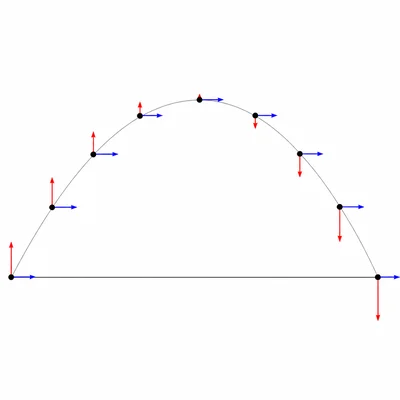
Explain why the horizontal velocity of a projectile stays constant while the vertical velocity changes during ideal projectile motion.
- 5
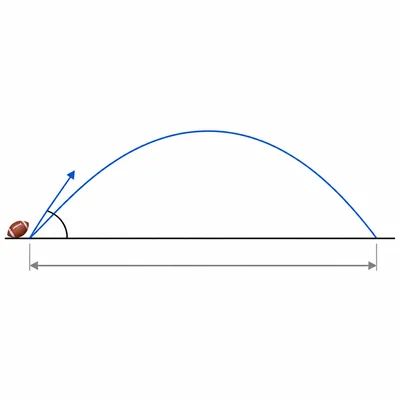
A football is kicked from level ground at 22 m/s and 35 degrees above the horizontal. Find the range of the football if it lands at the same height it was kicked.
- 6
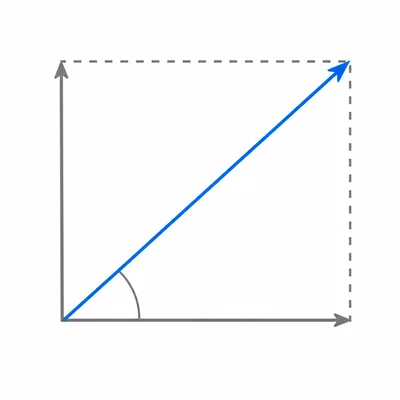
A projectile has an initial horizontal velocity of 12 m/s and an initial vertical velocity of 16 m/s. Find its initial speed and launch angle above the horizontal.
- 7
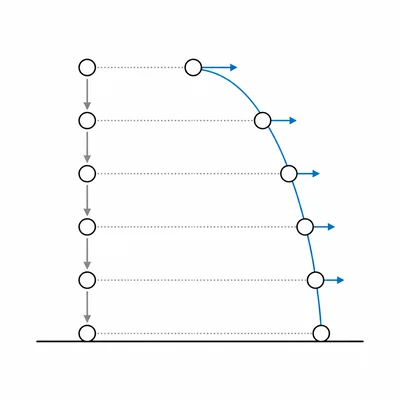
Two balls are released from the same height at the same time. Ball A is dropped straight down. Ball B is fired horizontally. Which ball hits the ground first, and why?
- 8
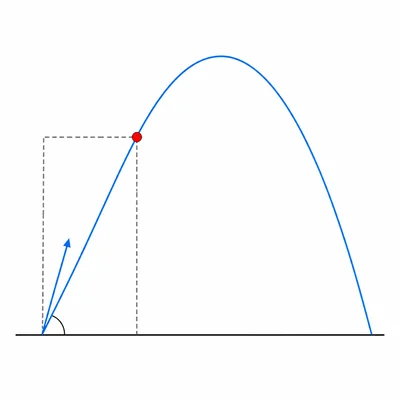
A projectile is launched from the ground at 30 m/s and 60 degrees above the horizontal. Find its horizontal position and height after 2.0 s.
- 9
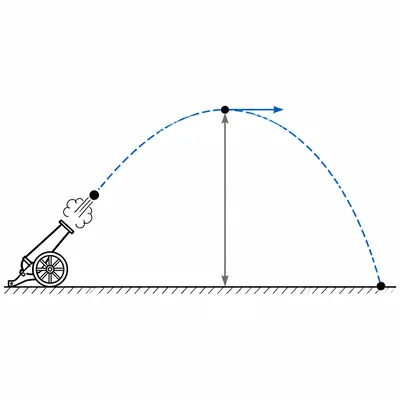
A cannonball reaches its maximum height 3.5 s after launch. Find the initial vertical velocity and the maximum height above the launch point.
- 10
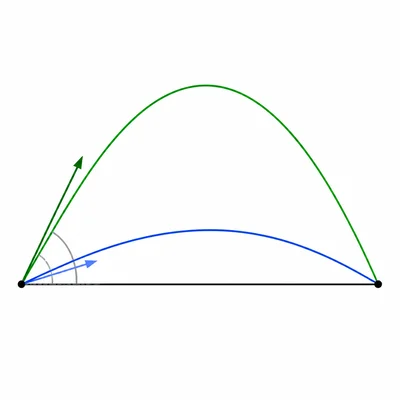
A ball is kicked at 16 m/s from level ground and lands 20 m away at the same height. Find the two possible launch angles that could produce this range.
- 11
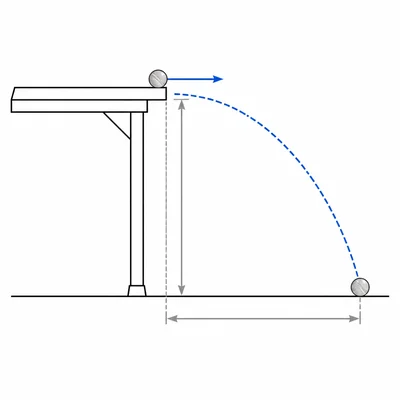
A marble rolls horizontally off a table that is 0.90 m high and lands 1.40 m from the table edge. What was the marble's horizontal speed as it left the table?
- 12
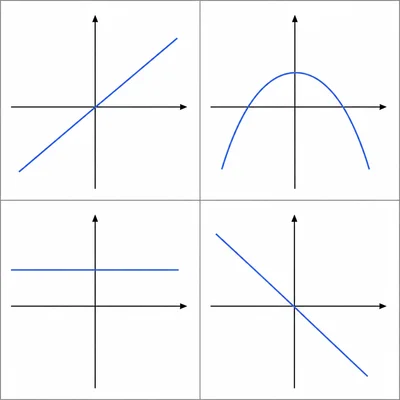
Describe the shapes of these graphs for ideal projectile motion: horizontal position vs. time, vertical position vs. time, horizontal velocity vs. time, and vertical velocity vs. time.
- 13
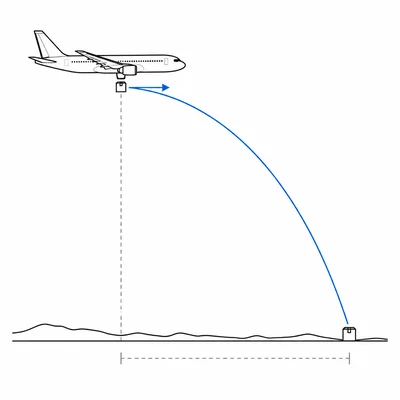
An airplane flying horizontally at 70 m/s drops a package from an altitude of 490 m. How long does the package take to reach the ground, and how far horizontally does it travel before landing?
- 14
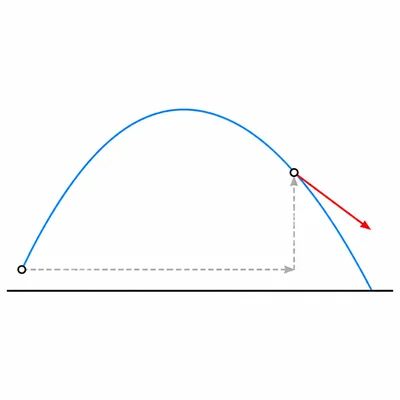
A projectile is launched from the ground at 10 m/s and 45 degrees above the horizontal. Find its displacement components and speed after 1.2 s.
- 15
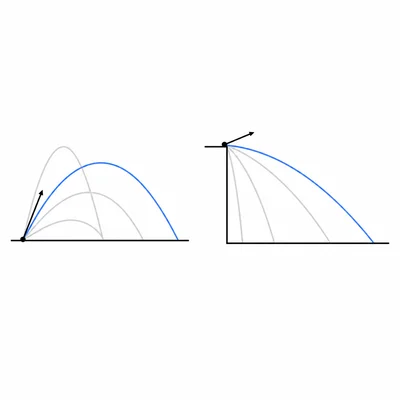
For a projectile launched and landing at the same height with no air resistance, what launch angle gives the greatest range? Explain how the answer changes if the landing point is much lower than the launch point.