Learn how emotions are connected to the limbic system, including the amygdala, hippocampus, hypothalamus, and prefrontal cortex.
Read each problem carefully. Use complete sentences when explaining your thinking.
Exploring how the brain helps us feel and respond
Psychology - Grade 6-8
- 1
What are emotions? Write a short definition and give two examples of emotions a person might feel during a school day.
- 2
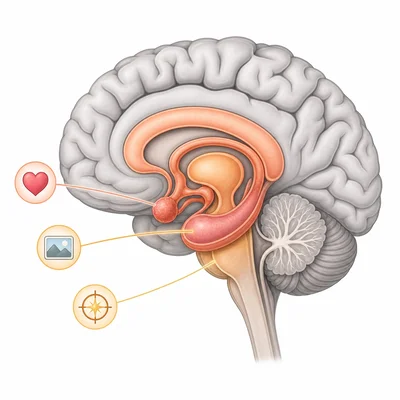
The limbic system is a group of brain structures involved in emotion, memory, and motivation. Explain why emotions and memories are often connected.
- 3
The amygdala helps detect danger and respond to fear. Describe one everyday situation where the amygdala might become active.
- 4
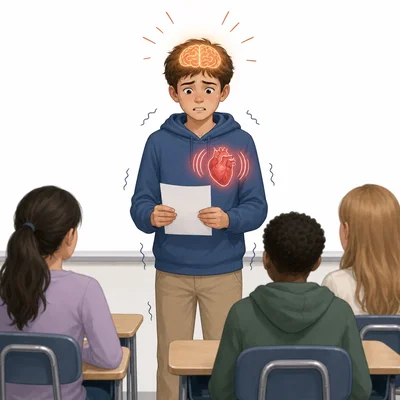
A student feels their heart beat faster before giving a class presentation. Explain how this body reaction is connected to emotion.
- 5
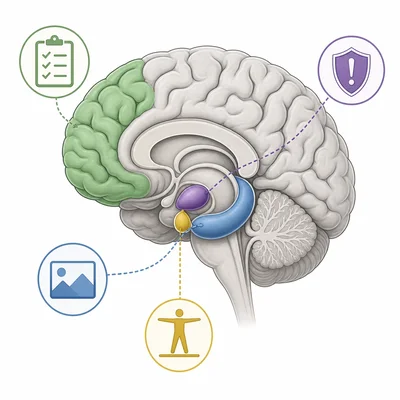
Match each brain area to its main role: amygdala, hippocampus, hypothalamus, prefrontal cortex. Roles: helps with memory, helps control hunger and body balance, helps with planning and self-control, helps detect fear or threat.
- 6
Why might a person have trouble thinking clearly when they are extremely angry or scared?
- 7
Read the scenario: Maya studies hard, but when the quiz begins she feels panic and forgets some answers. Which limbic system structure is likely involved in storing the information she studied, and how might stress affect her recall?
- 8
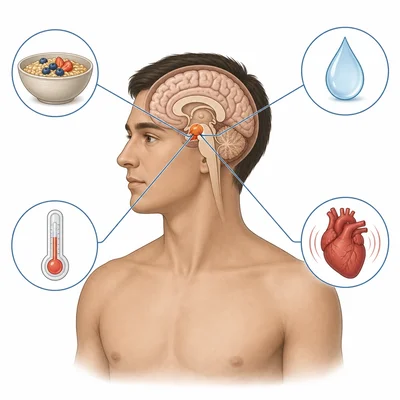
The hypothalamus helps control body functions such as hunger, thirst, temperature, and stress responses. Describe how emotion could affect one of these body functions.
- 9
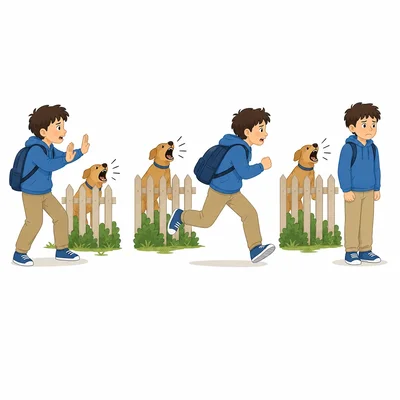
Look at the idea of fight, flight, or freeze. Explain what each response means when a person senses danger.
- 10
A classmate says, 'Emotions are bad because they get in the way of logic.' Write a response that explains why emotions can also be useful.
- 11
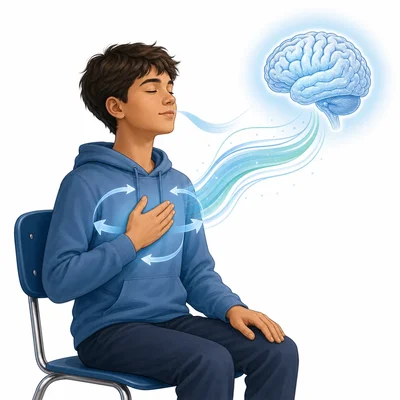
Explain how deep breathing or pausing before reacting might help the brain during a strong emotion.
- 12
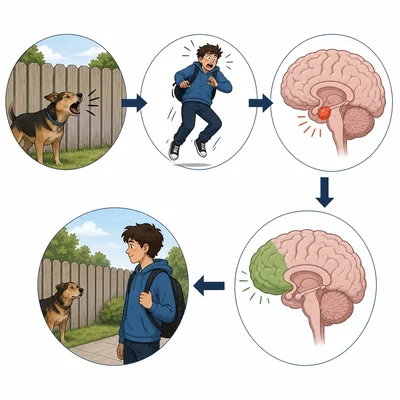
Create a simple cause-and-effect chain for this situation: A dog suddenly barks behind you, you jump, and then you realize the dog is behind a fence. Include the amygdala and prefrontal cortex in your explanation.