Sign in to save

Bookmark this page so you can find it later.

Sign in to save

Bookmark this page so you can find it later.

Astronomy middle-school May 24, 2026

Why Don't Planets Fall Into the Sun?

Gravity pulls inward while motion carries planets sideways
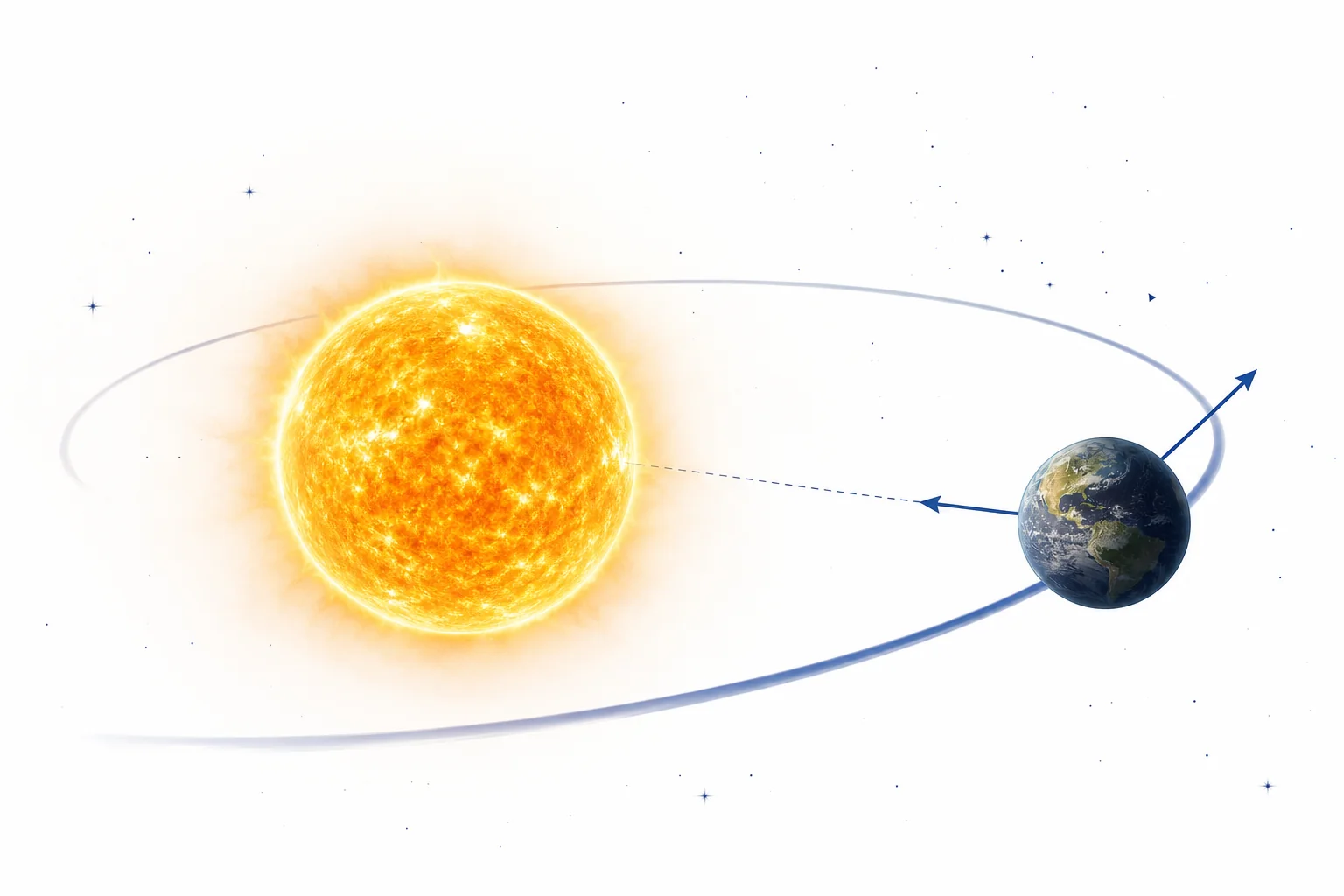
Diagram of Earth moving sideways around the Sun while gravity pulls Earth toward the Sun

Planets do fall toward the Sun, but they also move sideways very fast. The sideways motion keeps them from hitting the Sun. The result is an orbit, which is a path made by falling around the Sun again and again.

Big Idea. NGSS MS-ESS1-2 and MS-PS2-2 connect planetary orbits to gravity and balanced patterns of motion.

The Sun pulls on every planet with gravity. That pull never turns off. If a planet were sitting still near the Sun, it would fall straight in. Planets are not sitting still. They formed from a spinning disk of gas and dust, so they already had sideways motion. That sideways motion is called tangential velocity. Gravity keeps bending the planet’s path inward, while the planet keeps moving forward. Together, those two motions make an orbit. This idea goes back to Isaac Newton. He pictured a cannonball fired from a high mountain. Fire it slowly, and it falls to the ground. Fire it fast enough, and Earth curves away underneath it as it falls. A planet does the same kind of thing around the Sun. It is always falling, but it keeps missing.

Gravity pulls inward
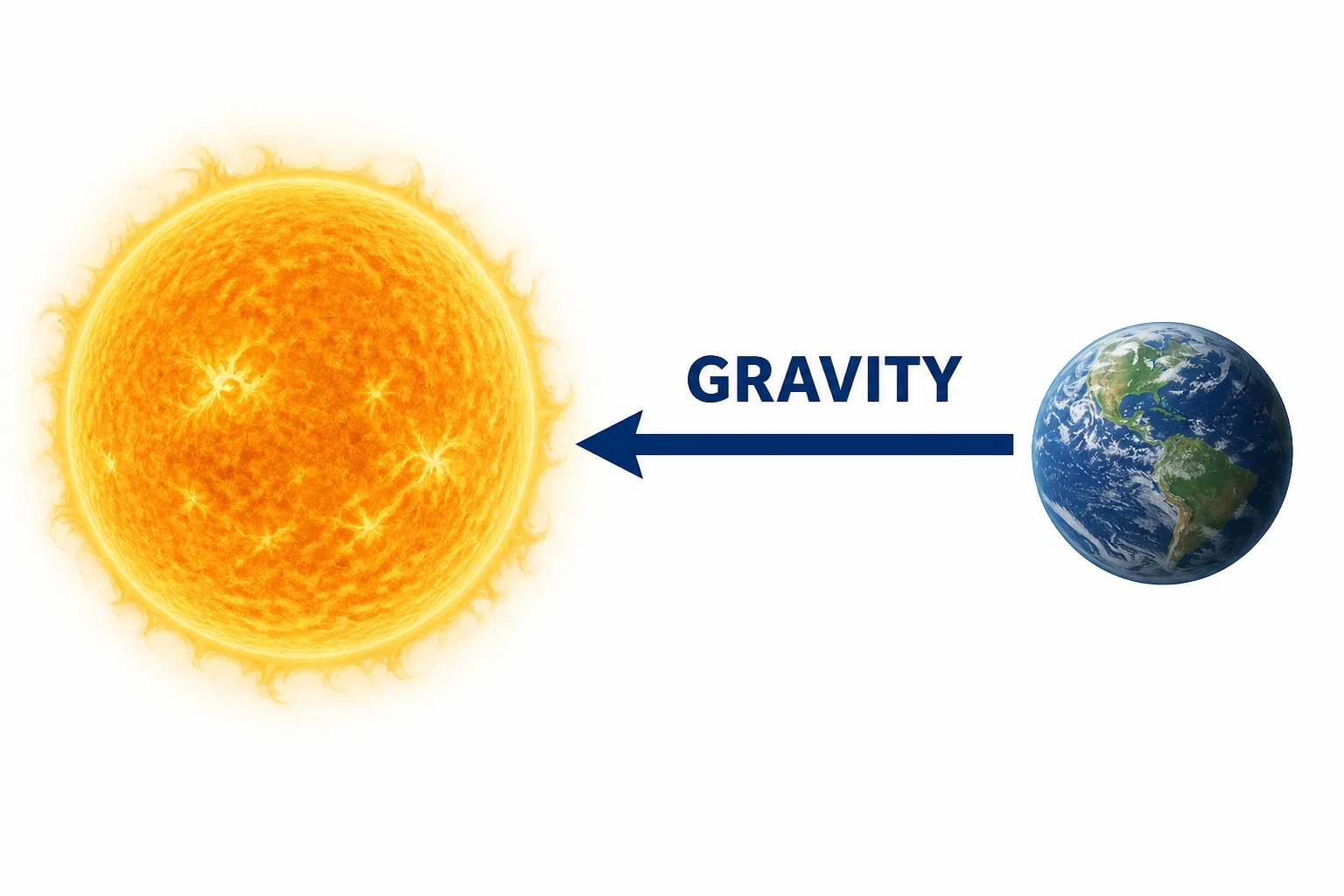
A planet near the Sun with an arrow showing gravity pulling the planet inward toward the Sun
Gravity points toward the Sun
Gravity is the Sun’s pull on a planet. It points toward the center of the Sun. That direction matters. Gravity does not push a planet forward along its path. It changes the direction of the planet’s motion. A planet moving past the Sun would travel in a straight line if there were no force on it. The Sun’s gravity bends that straight path into a curve. This bending is continuous. At every moment, the planet moves a little forward and falls a little inward. The path that results can be nearly circular, like Venus, or more stretched out, like Mars. In both cases, the inward pull is what keeps the planet near the Sun. Without gravity, planets would leave the solar system in straight lines.

Gravity changes a planet’s direction, not just its speed.

Sideways motion matters
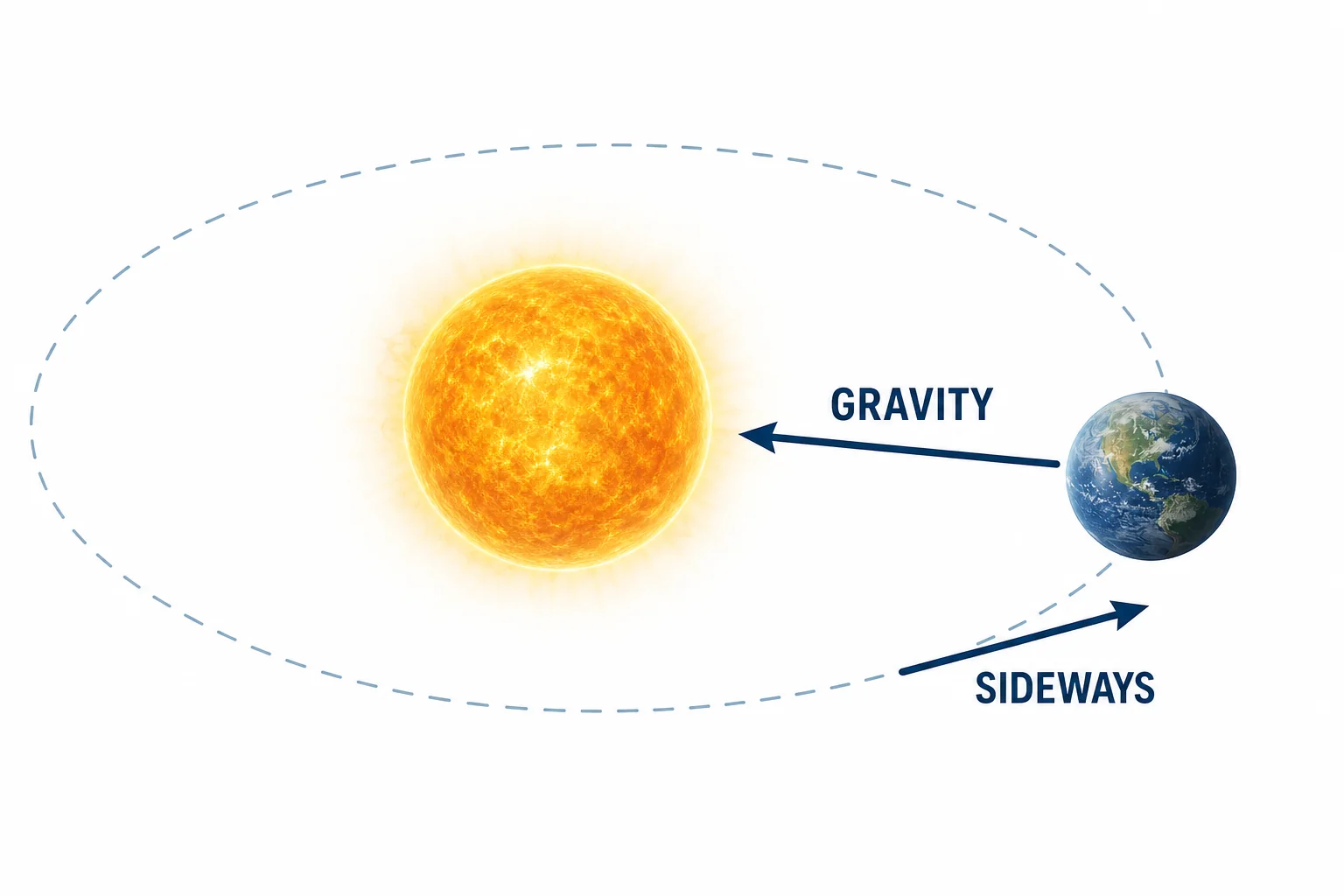
A planet with one arrow showing sideways motion and another arrow showing inward gravity toward the Sun
An orbit combines sideways motion and inward pull
A planet also has sideways motion. This means it is moving across the Sun’s line of pull, not straight toward the Sun. Scientists call this tangential velocity. The word tangential means along the edge of a curve. If Earth suddenly lost all sideways motion, it would fall toward the Sun. If Earth suddenly lost the Sun’s gravity, it would fly away in a straight line. In real life, both effects happen together. Earth moves forward while gravity pulls inward. The forward motion keeps Earth from dropping straight into the Sun. The inward pull keeps Earth from escaping. A stable orbit needs the right combination of distance, gravity, and sideways speed. Change one of those enough, and the path changes.

A planet misses the Sun because it keeps moving sideways.

An orbit is falling around
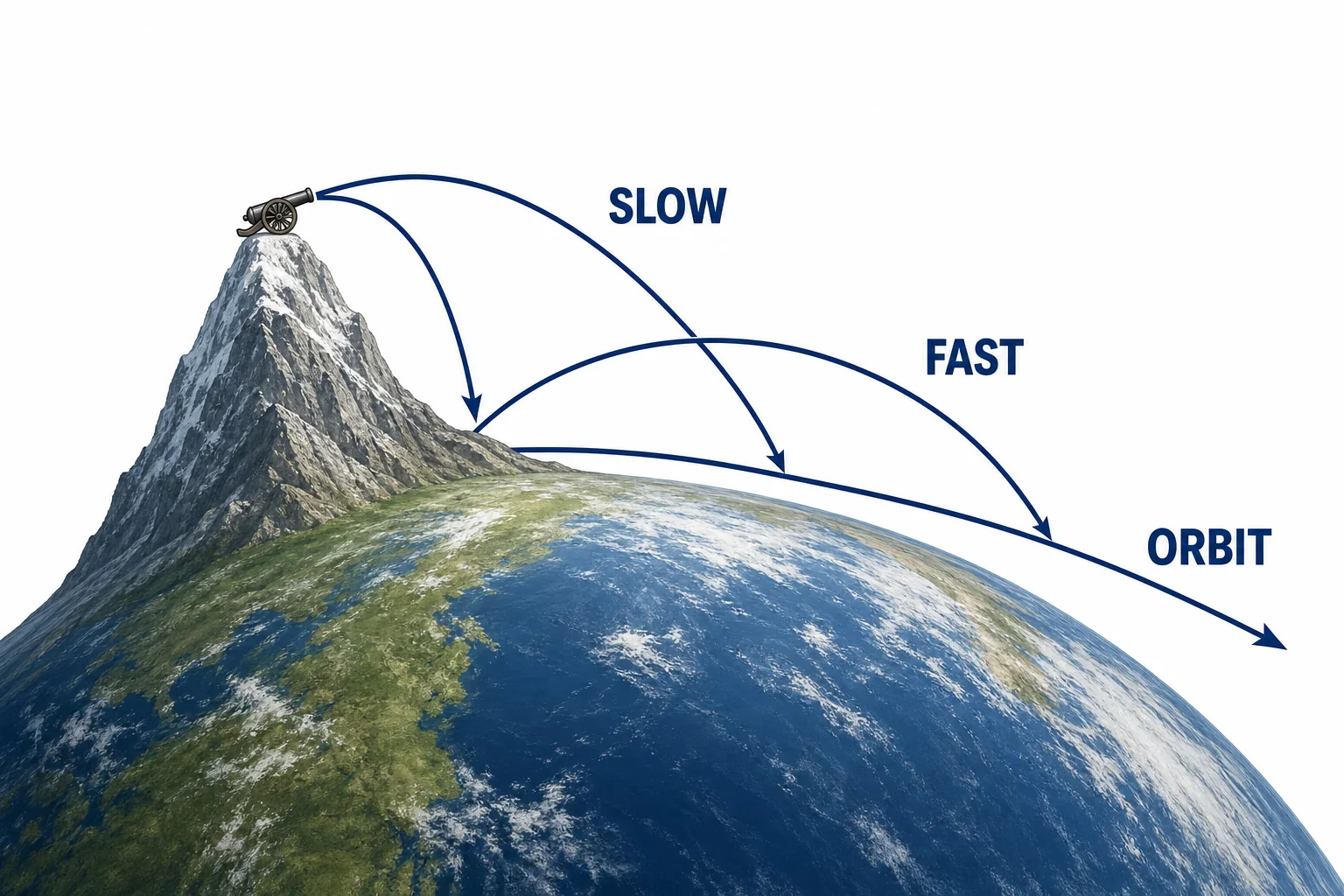
Newton's cannon idea showing short, medium, and orbital paths from a mountain on a curved Earth
Falling can become orbiting
Newton explained orbits with a simple thought experiment. Imagine firing a cannonball sideways from a very tall mountain. A slow cannonball falls to the ground nearby. A faster one lands farther away. A very fast one falls as Earth curves away beneath it. It keeps falling, but it never reaches the ground. That is an orbit. The same idea works for planets around the Sun. Earth is not floating because gravity is weak. The Sun’s gravity is strong enough to bend Earth’s path. Earth is moving fast enough sideways to keep missing the Sun. This is why astronauts in orbit feel weightless too. They are not beyond gravity. They, and their spacecraft, are falling together around Earth.

Orbiting is continuous falling with enough sideways speed.

There is no outward force
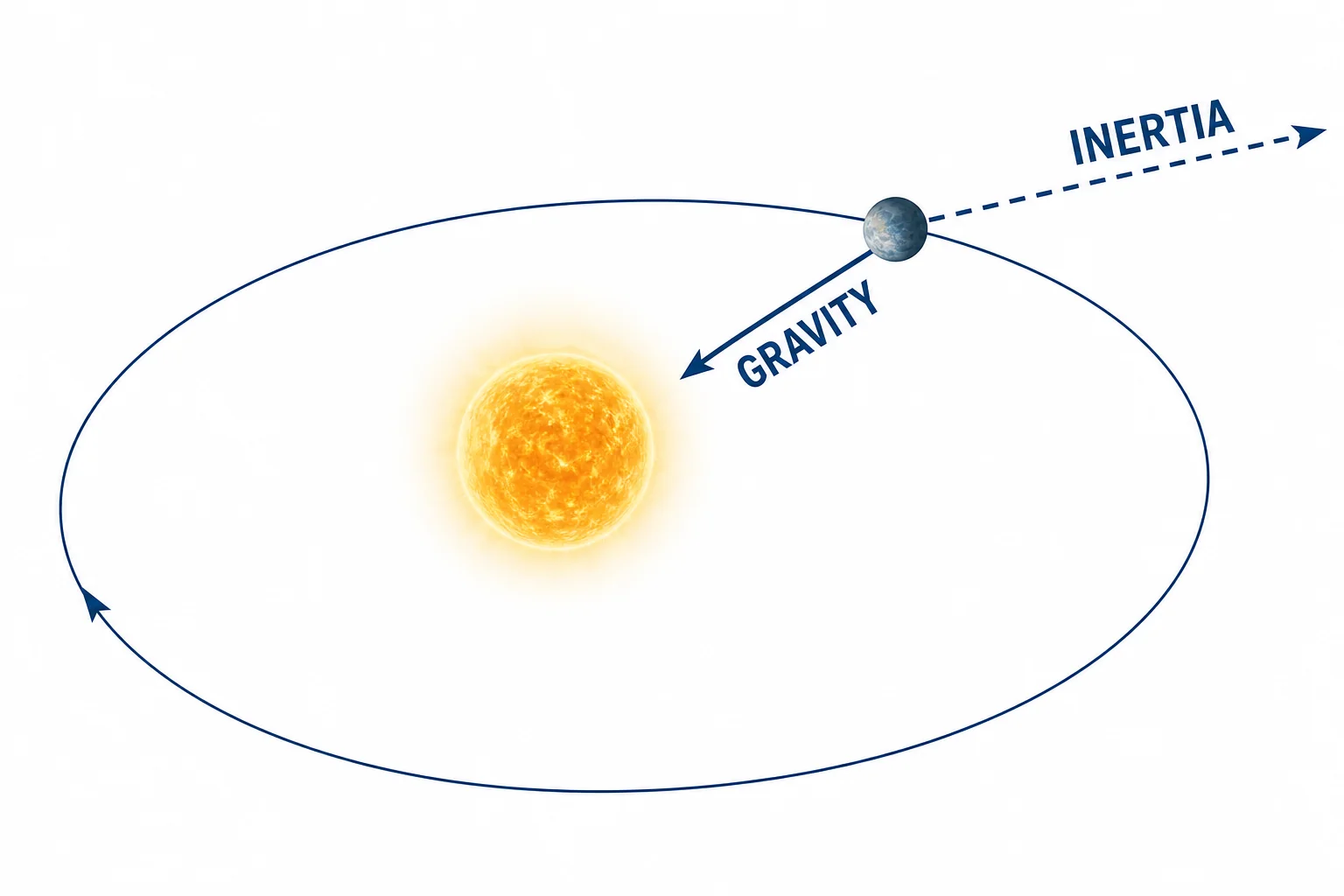
Diagram showing a planet's straight-line tendency and the Sun's inward gravity, with no outward force arrow
Gravity bends a straight-line path
People often say a planet stays up because gravity is balanced by centrifugal force. That can be misleading. In the Sun’s frame of reference, the real force on a planet is gravity pulling inward. There is no physical outward force pushing the planet away from the Sun. The planet’s inertia is what matters. Inertia means an object keeps moving in a straight line unless a force changes its motion. Gravity keeps changing the planet’s direction toward the Sun. This inward change in direction is called centripetal acceleration. Centripetal means center seeking. The planet does not need an outward force to stay in orbit. It needs forward motion, plus an inward force that bends the path.

The inward force is gravity. The sideways motion comes from inertia.

Speed sets the path
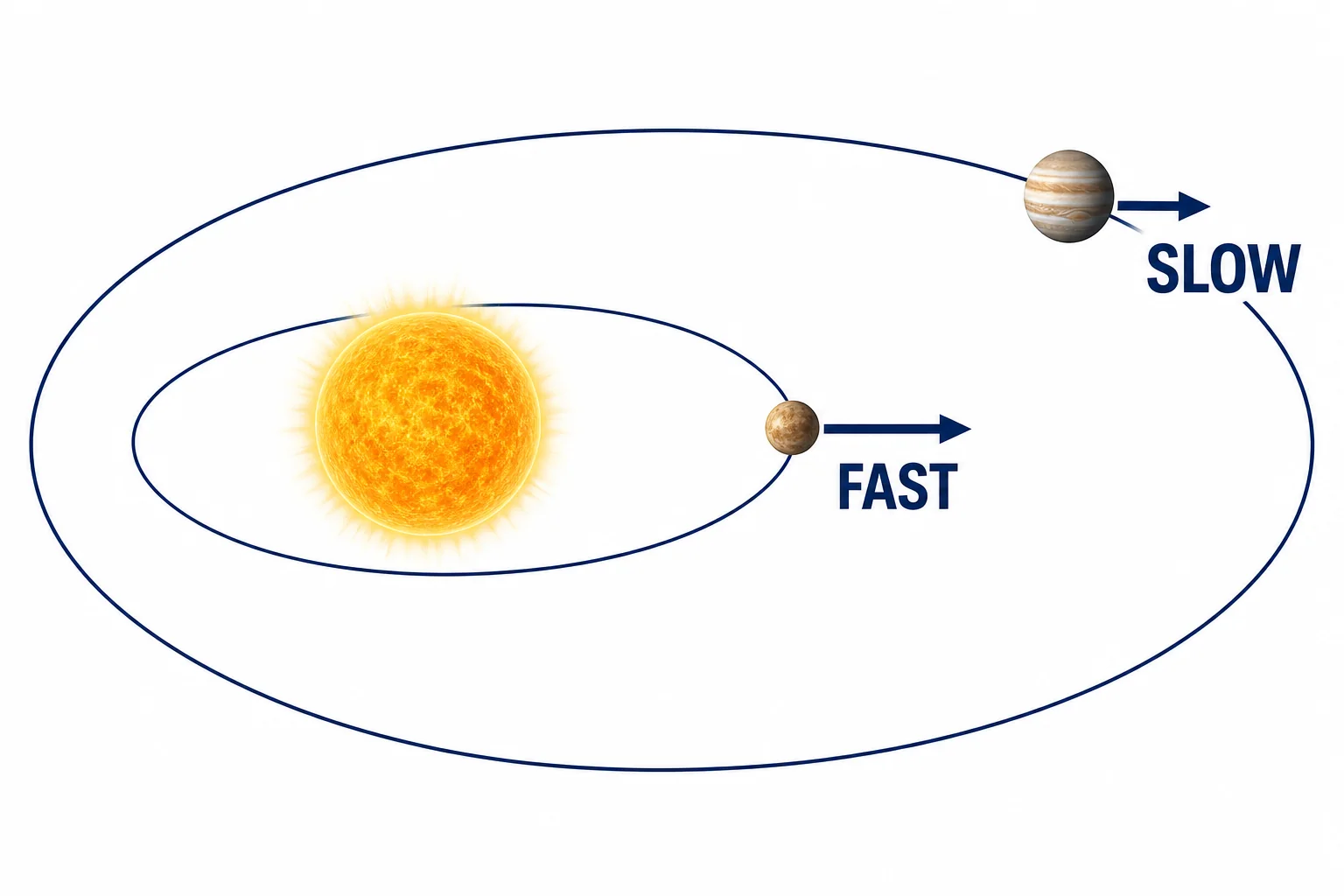
Solar system diagram comparing a closer fast orbit with a farther slow orbit
Closer planets move faster
A planet’s orbital path depends on its speed and distance from the Sun. Closer planets need more speed because the Sun’s gravity is stronger there. Mercury moves around the Sun much faster than Earth. Neptune moves much slower because it is far away and the Sun’s pull is weaker there. If a planet moved too slowly for its distance, its path would dip closer to the Sun. If it moved too fast, its path would stretch outward or even escape. Real planets follow ellipses, which are oval-like paths. A circle is a special case of an ellipse. The same rule still applies. Gravity pulls inward, and motion carries the planet along its path.

Distance and speed work together to shape an orbit.

Vocabulary

Gravity
An attractive force between objects with mass. In the solar system, the Sun’s gravity pulls planets inward.
Tangential velocity
Motion along the edge of a curved path. For a planet, it is the sideways motion that helps it keep missing the Sun.
Orbit
The repeated path of an object around another object in space, caused by forward motion and gravity.
Inertia
The tendency of an object to keep moving in a straight line at the same speed unless a force acts on it.
Centripetal acceleration
A change in motion directed toward the center of a curved path. In planetary orbits, gravity causes it.
Ellipse
An oval-shaped path. Planetary orbits are ellipses, with the Sun near one focus.

In the Classroom

String orbit model

15 minutes | Grades 6-8

Tie a small soft ball to a string and swing it gently in a circle. Students identify the inward pull from the string and compare it with the Sun’s gravity in an orbit.

Newton cannon sketch

20 minutes | Grades 6-8

Students draw three launch paths from a tall mountain on a curved Earth. They explain why the fastest path can keep falling without hitting the ground.

Orbit speed compare

30 minutes | Grades 6-8

Students use planet distance and orbital period data to rank planets by average orbital speed. They look for the pattern that closer planets move faster.

Key Takeaways

  • Planets do fall toward the Sun, but their sideways motion keeps them from hitting it.
  • Gravity supplies the inward pull that bends a planet’s path.
  • Without gravity, a planet would move away in a straight line.
  • There is no real outward force needed to keep a planet in orbit.
  • Closer planets usually move faster because the Sun’s gravity is stronger near the Sun.