Why Does Metal Rust?
How iron changes when water and air meet
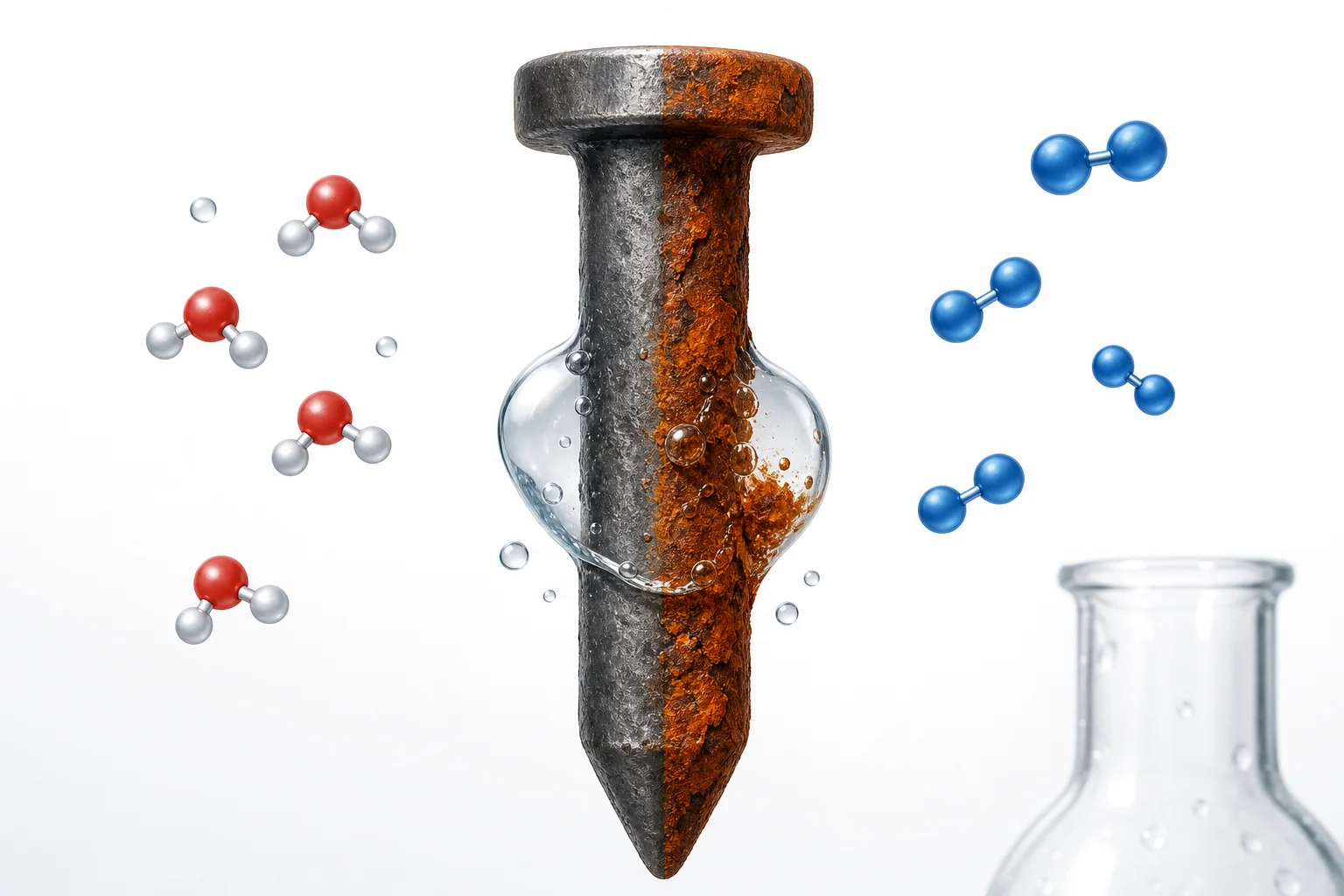
Rust forms when iron meets oxygen and water. The metal changes into a reddish brown solid that flakes away. Salt and acids speed this change by helping tiny electric currents move through the wet surface.
A shiny bike chain, a school fence, and an old nail can all turn reddish brown after time outside. That color is rust. Rust is not dirt sitting on metal. It is a new substance that forms when iron reacts with oxygen from the air and water from rain, dew, or humidity. This makes rust a useful middle-school chemistry example because it shows a chemical change that students can see. The metal does not just look different. Some iron atoms become part of iron oxide, a crumbly material that does not protect the metal underneath. Rusting also shows why the environment matters. A nail in dry air rusts slowly. A nail in salty water rusts faster. The same atoms are present, but water, oxygen, and dissolved particles help the reaction move along. Understanding rust helps explain bridges, cars, tools, ships, and why coatings can keep metal useful longer.
Rust is a chemical change
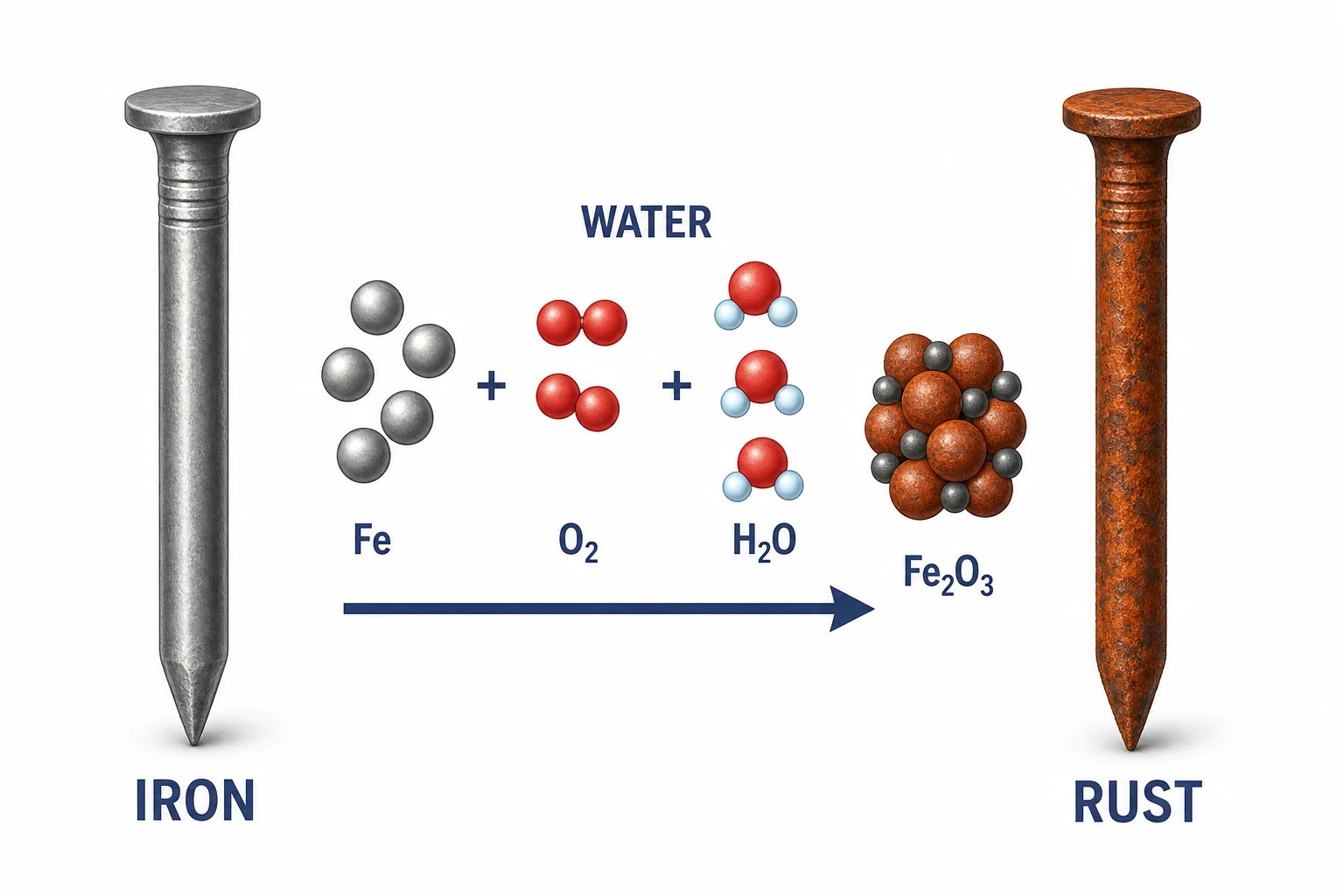
Rusting makes a new substance, so it is a chemical change.
Water helps the reaction move
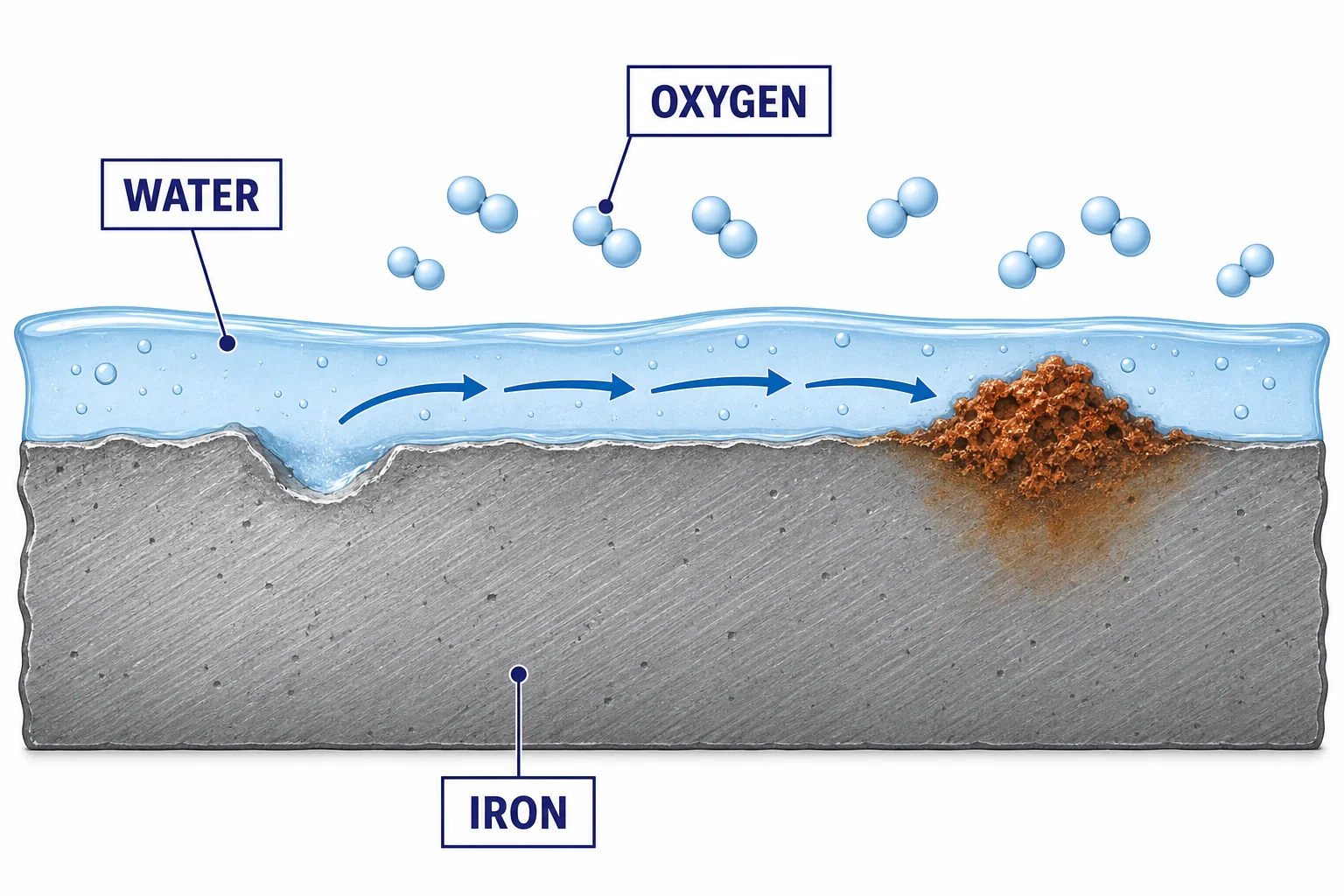
Water acts like a pathway that lets rusting reactions keep going.
Rust is electrochemical corrosion
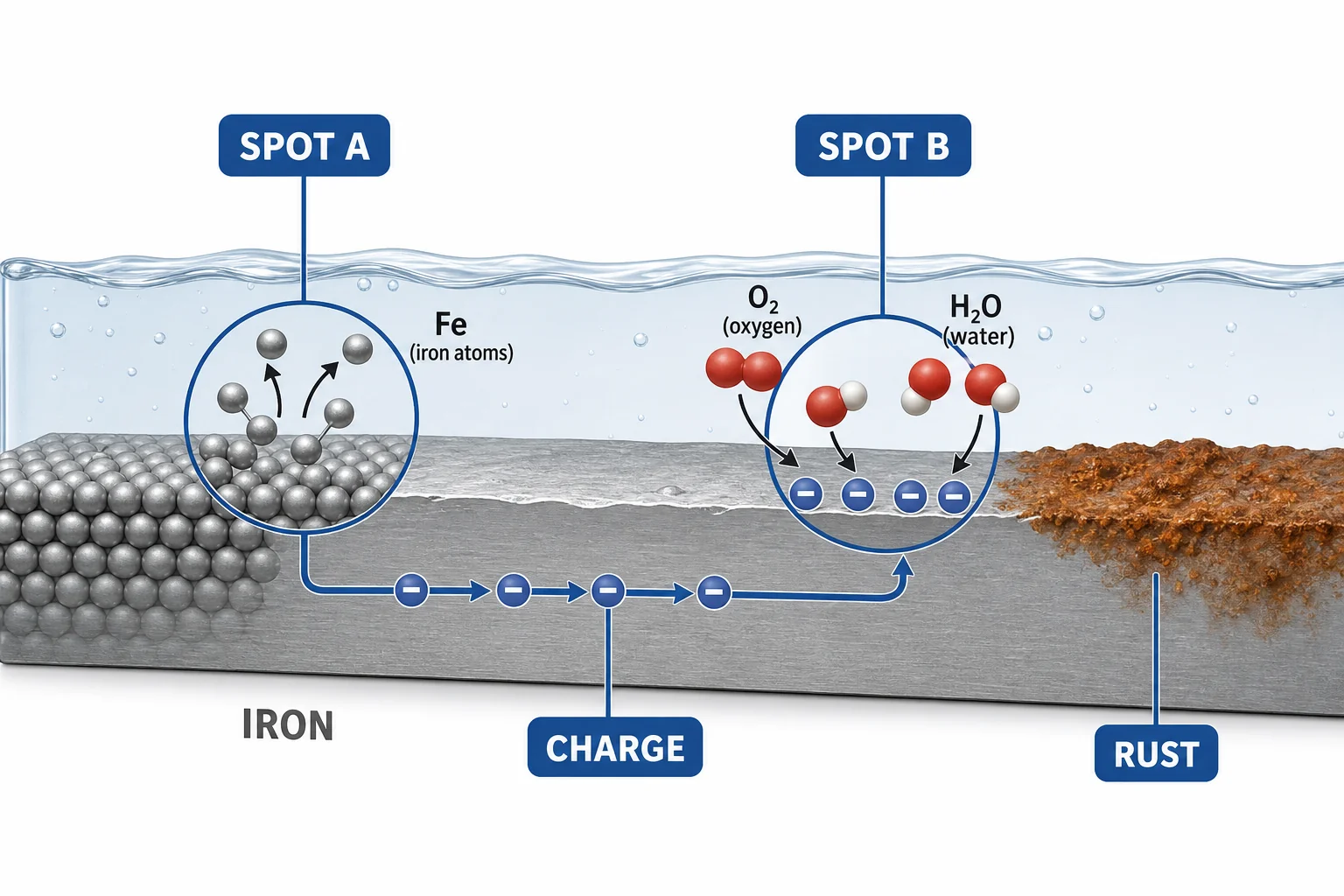
Rusting is chemistry plus movement of electric charge on a wet surface.
Salt speeds rusting
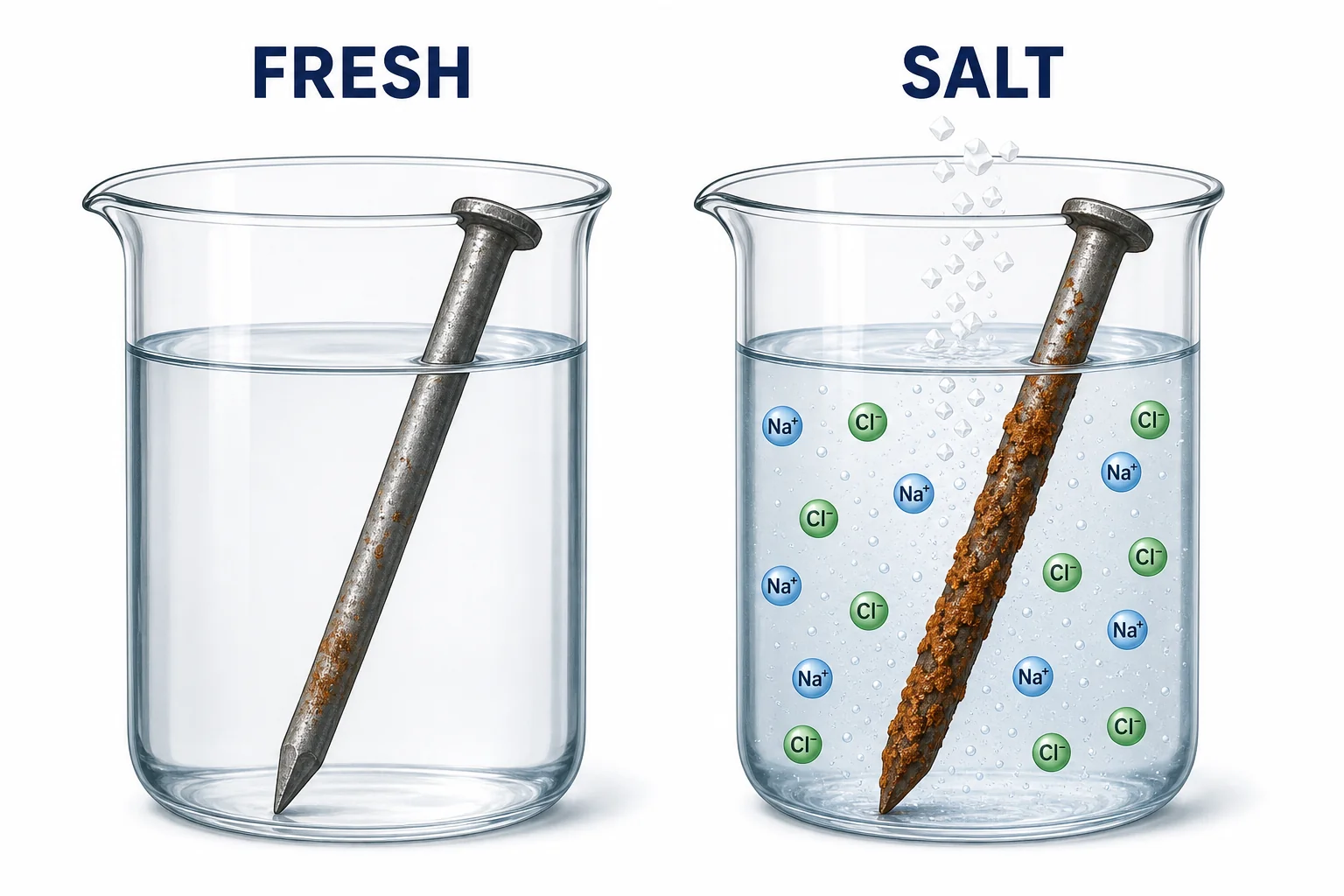
Salt helps charge move through water, so rust can form faster.
Protection blocks the ingredients
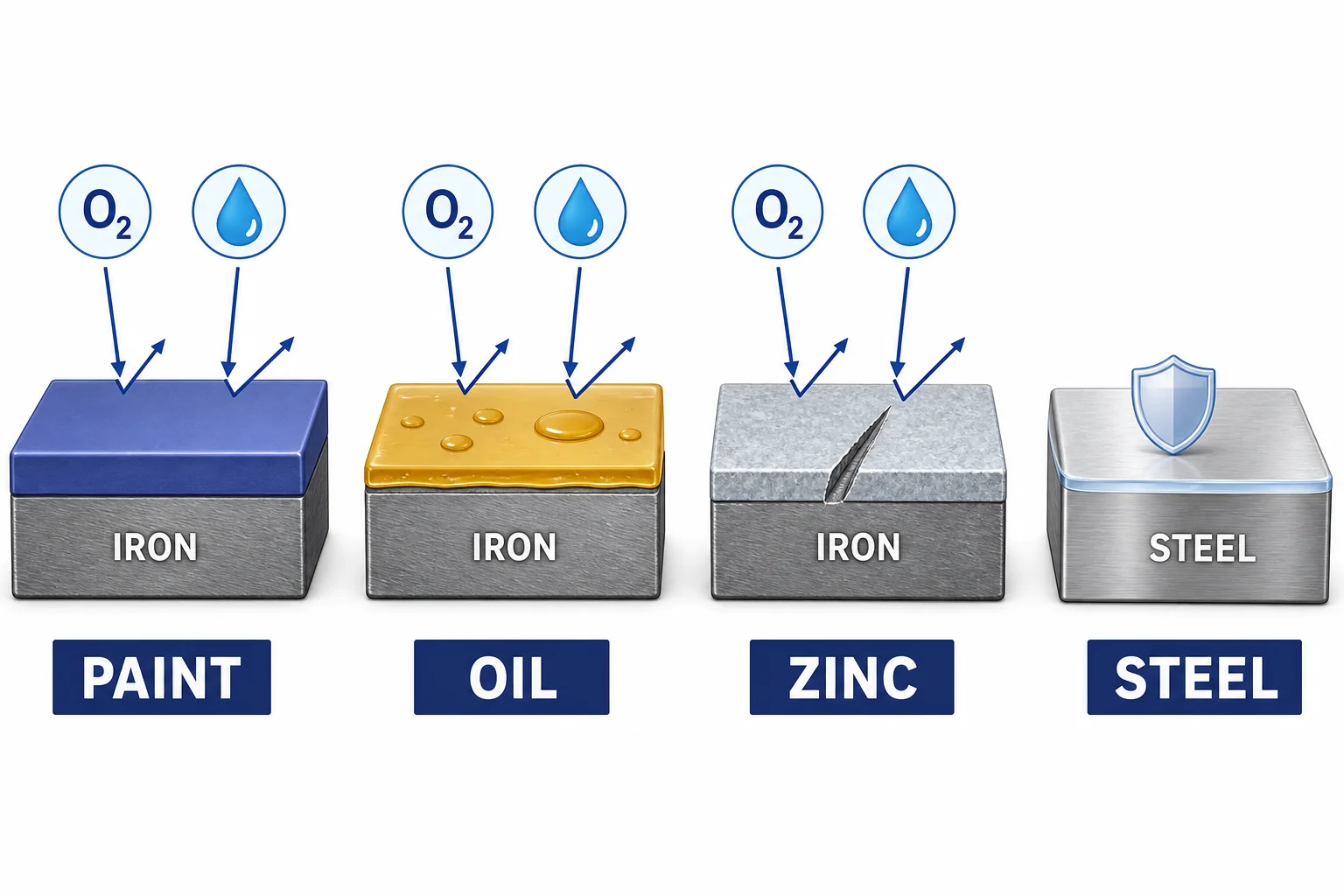
Rust prevention works by separating iron from water, oxygen, or both.
Vocabulary
- Rust
- A reddish brown material made when iron reacts with oxygen and water.
- Iron oxide
- A compound made of iron and oxygen atoms. Rust contains iron oxide and related compounds.
- Oxidation
- A reaction in which a substance loses electrons. Rusting includes oxidation of iron.
- Corrosion
- The slow breakdown of a material by reactions with its environment.
- Electrochemical reaction
- A chemical reaction that includes movement of electric charge.
- Galvanizing
- Coating iron or steel with zinc to help protect it from rust.
In the Classroom
Nail rust test
15 minutes setup, 5 minutes daily observations | Grades 6-8
Place clean iron nails in dry air, tap water, salt water, and oil-covered water. Students observe changes over several days and compare which conditions produced the most rust.
Evidence of a chemical change
20 minutes | Grades 6-8
Give students photos or samples of clean iron, bent iron, and rusty iron. Have them sort each change as physical or chemical and support the claim with evidence.
Design a rust barrier
30 minutes setup, 20 minutes analysis | Grades 6-8
Teams coat nails with paint, wax, oil, tape, or no coating, then place them in salt water. After several days, students use their results to explain how well each barrier blocked water and oxygen.
Key Takeaways
- • Rust forms when iron reacts with oxygen and water.
- • Rust is a chemical change because a new substance forms.
- • Water helps charge move across the iron surface during corrosion.
- • Salt water usually speeds rusting by helping the wet layer carry charge.
- • Paint, oil, zinc, and stainless steel slow rust by blocking or changing the reaction.