Why Salt Melts Ice but Sugar Does Not
How tiny particles change when water freezes
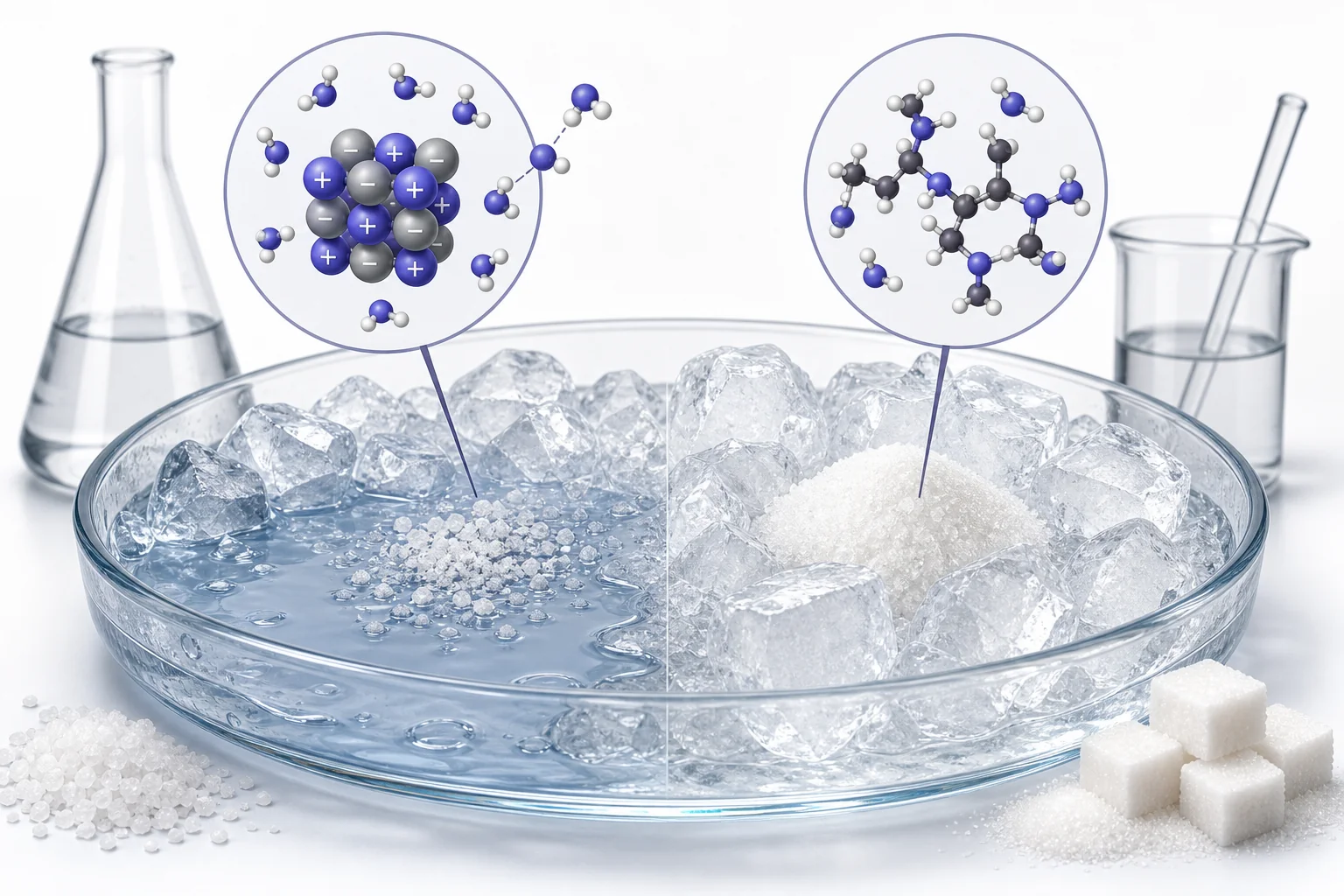
Salt makes ice melt because it lowers the temperature at which water can freeze. Sugar can do this a little too, but it does not split into as many pieces in water, so it has a much weaker effect. On icy roads and sidewalks, salt works better because each grain creates many particles that disrupt ice forming.
Salt and sugar can look similar on a kitchen counter. Both are white crystals. Both dissolve in water. On ice, they behave very differently. Salt is useful for sidewalks and roads because it makes liquid water stay liquid at a lower temperature. Sugar dissolves too, but it usually does not melt ice well enough to matter. The key difference is what happens after each substance enters water. Table salt is made of ions that separate. Sugar is made of molecules that mostly stay whole. Freezing point depression depends on how many dissolved particles are present, not just how much solid was added. That makes salt much more effective per spoonful. This idea links everyday winter safety to particle models, solutions, and chemical structure. It also shows why chemistry explanations often depend on what happens at a scale too small to see.
Ice and liquid water
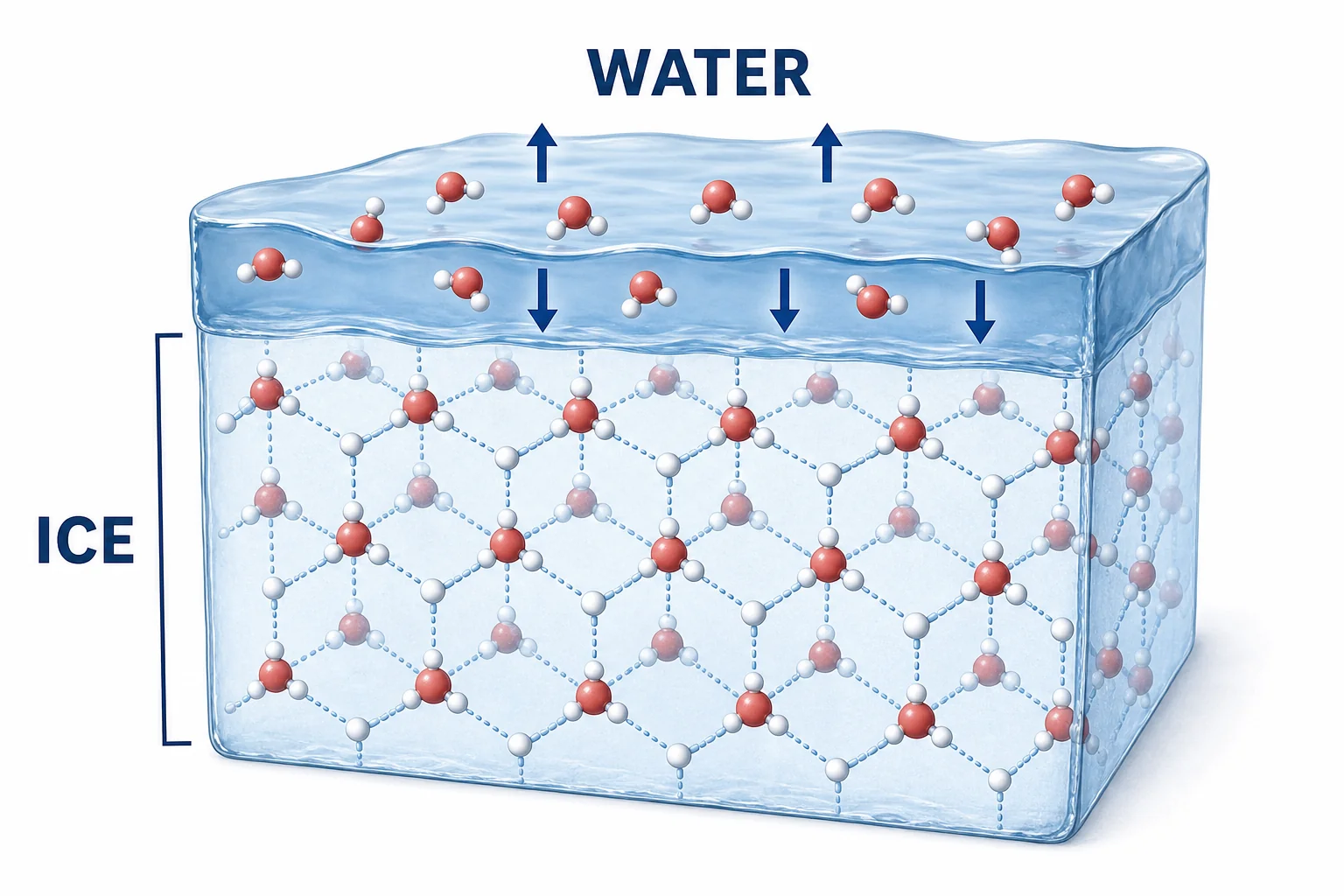
Salt starts working in the thin liquid layer on the ice surface.
Freezing point depression
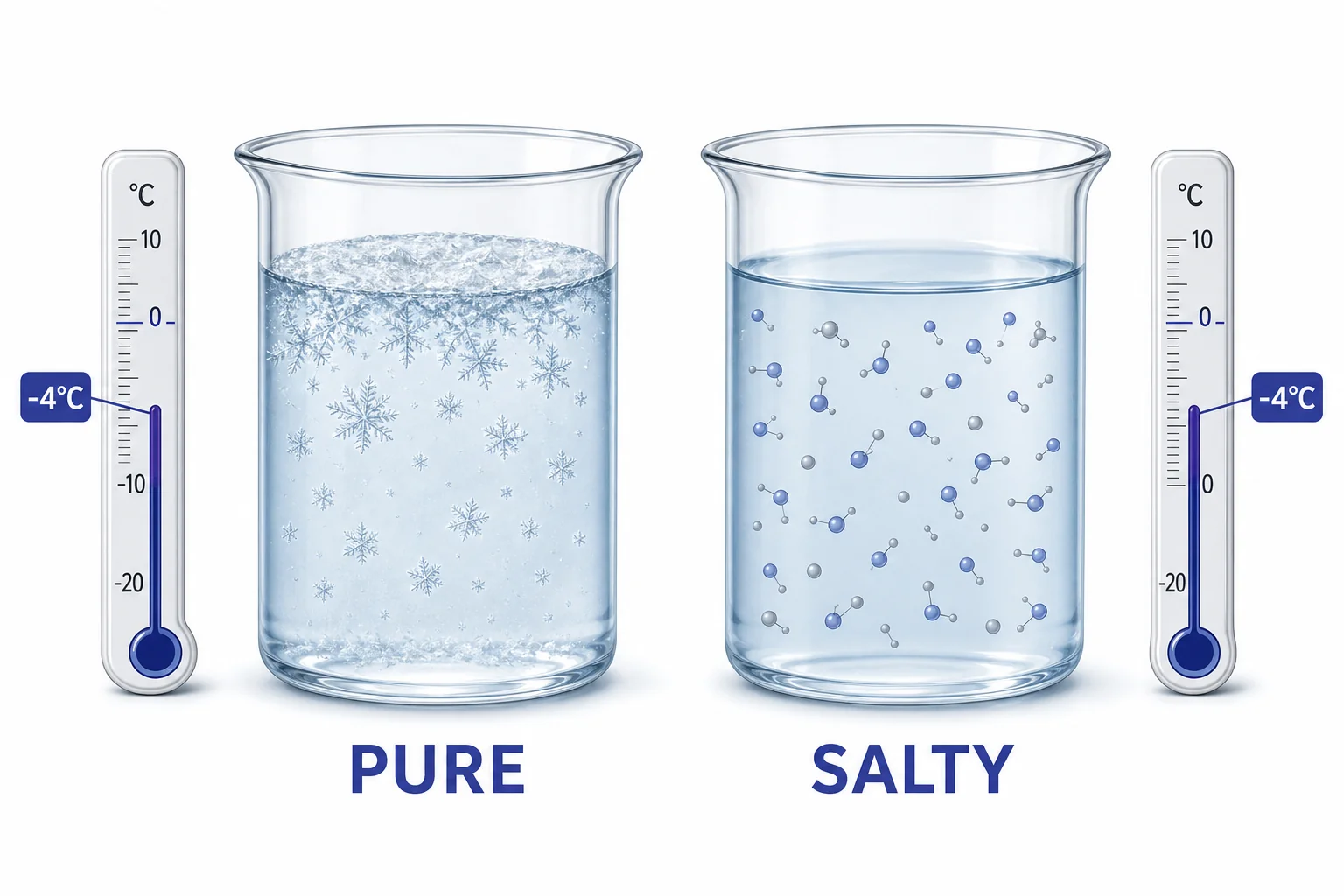
More dissolved particles make it harder for water to freeze.
Salt splits apart
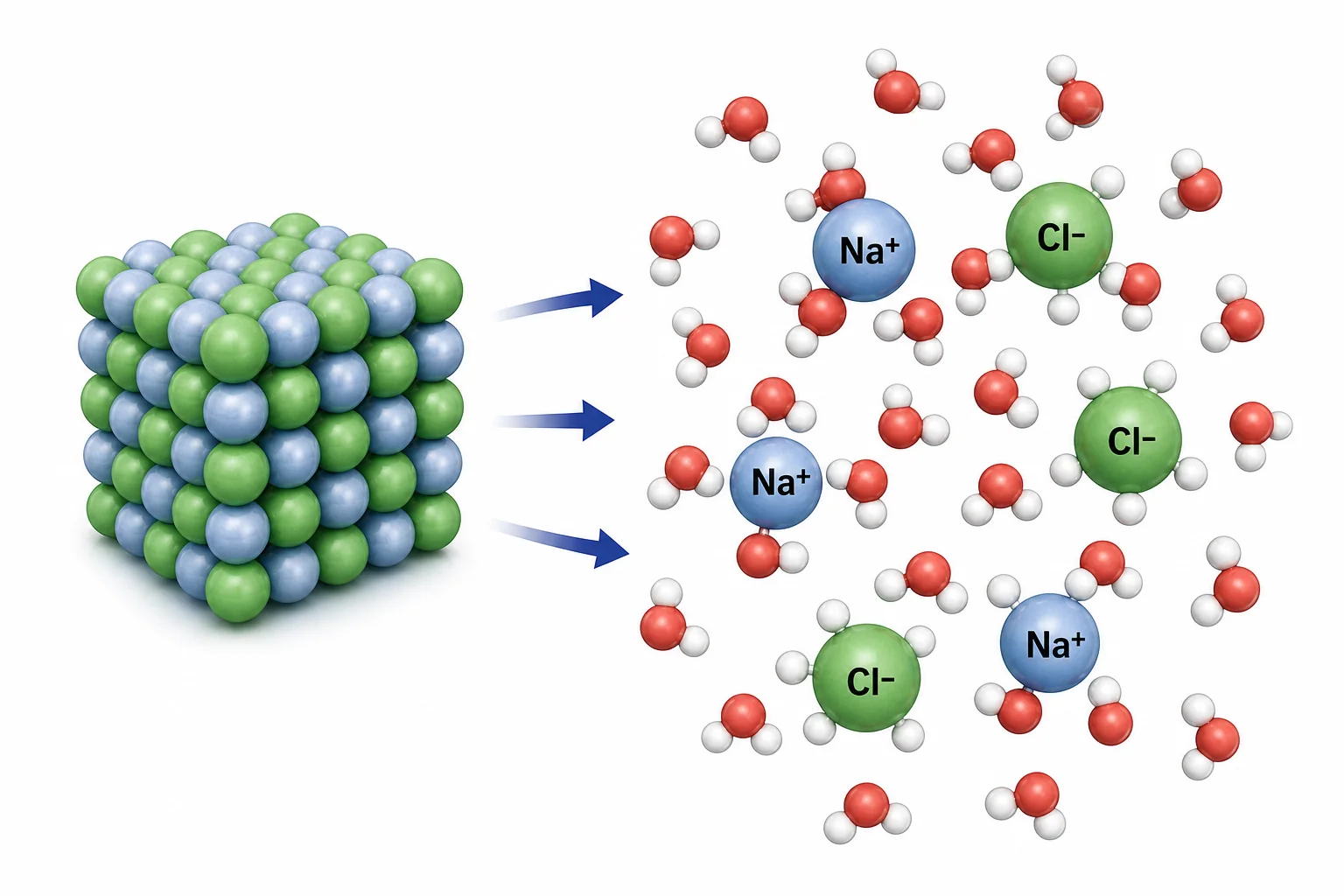
One unit of salt becomes two dissolved particles in water.
Sugar stays whole
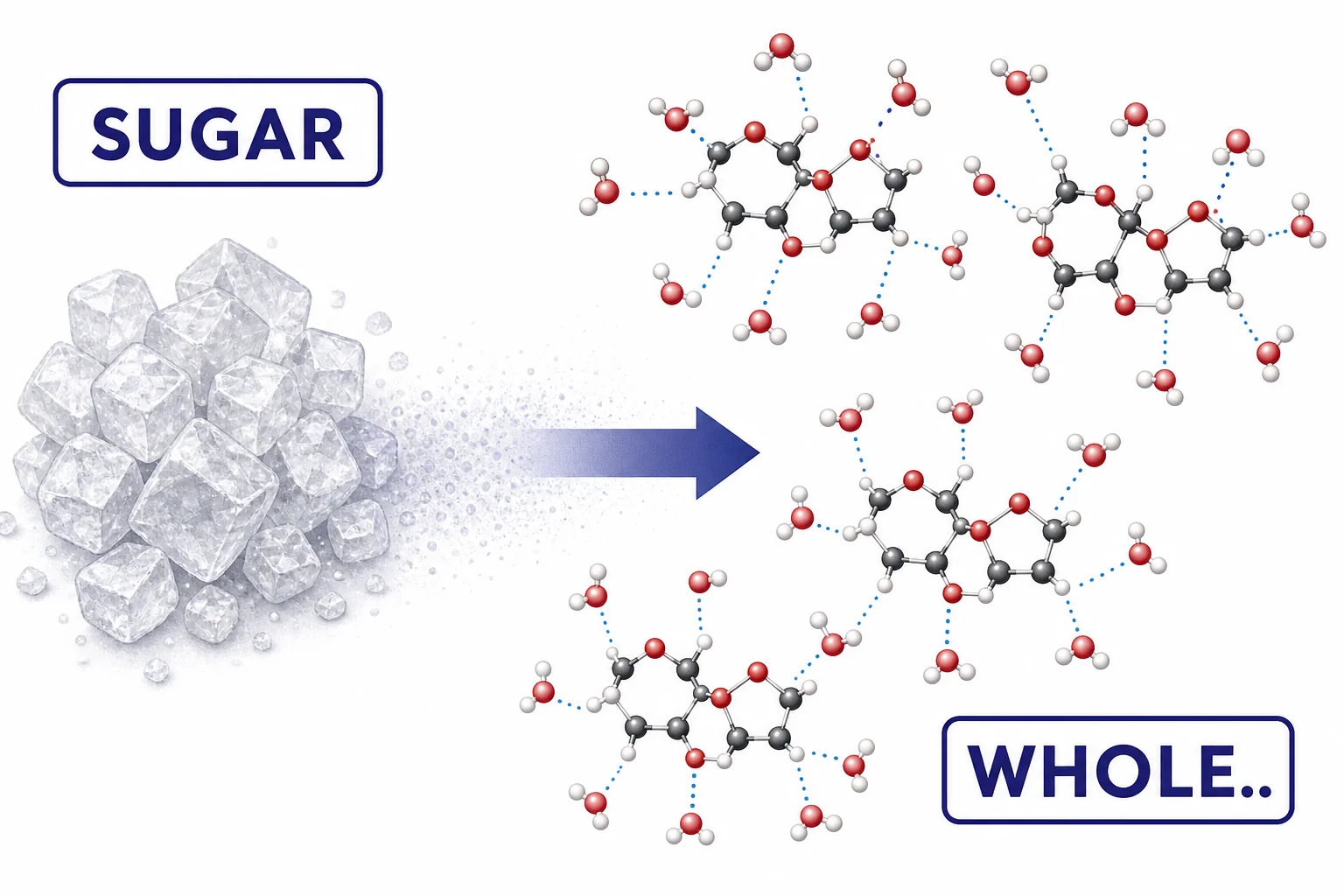
Sugar dissolves, but each molecule usually stays as one particle.
Why roads use salt
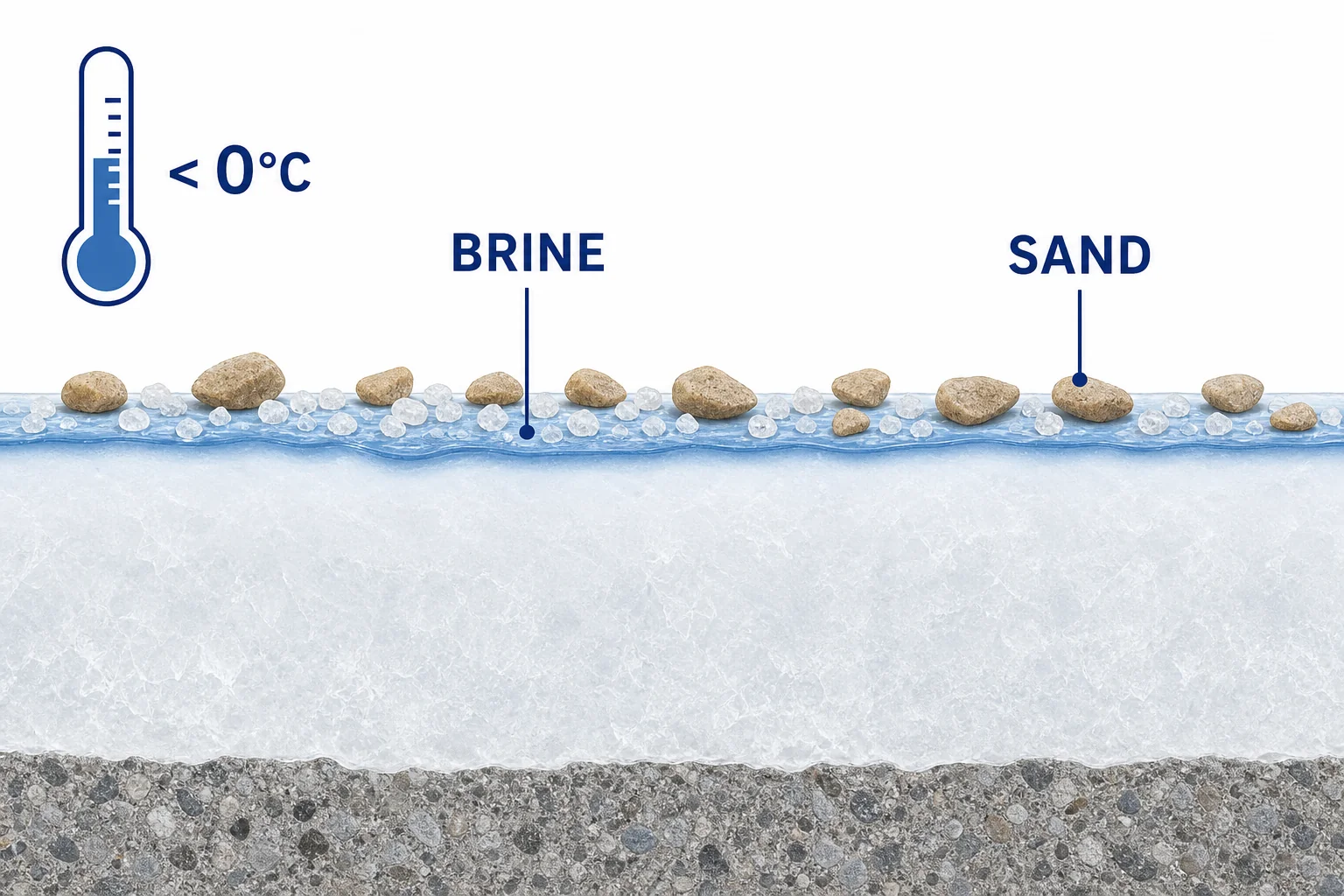
Salt changes freezing behavior, while sand mainly increases grip.
Vocabulary
- Freezing point depression
- The lowering of a liquid's freezing temperature when particles dissolve in it.
- Ion
- An atom or group of atoms with an electric charge because it has gained or lost electrons.
- Ionic compound
- A compound made of positive and negative ions held together in a crystal structure.
- Molecular compound
- A compound made of neutral molecules whose atoms are bonded together.
- Colligative property
- A solution property that depends mainly on the number of dissolved particles, not their identity.
- Brine
- A salty water solution that can stay liquid below the normal freezing point of pure water.
In the Classroom
Compare salt and sugar on ice
20 minutes | Grades 9-12
Place equal masses of salt and sugar on separate ice cubes in small cups. Students observe melting over 10 to 15 minutes, then connect the results to particle number in solution.
Model dissolved particles
25 minutes | Grades 9-12
Use beads or paper circles to model salt splitting into two ions and sugar staying as one molecule. Students count particles and predict which cup should have the lower freezing point.
Graph freezing point data
30 minutes | Grades 9-12
Give students a small data set for different solution concentrations. They graph concentration versus freezing point and explain why the trend supports the particle model.
Key Takeaways
- • Salt melts ice by lowering the freezing point of water.
- • Salt separates into sodium ions and chloride ions when it dissolves.
- • Sugar dissolves in water but usually stays as whole molecules.
- • Freezing point depression depends mainly on the number of dissolved particles.
- • Road salt works by making brine, but it has limits and environmental costs.