How Does Drinking Water Get to Your Tap?
From watershed to faucet
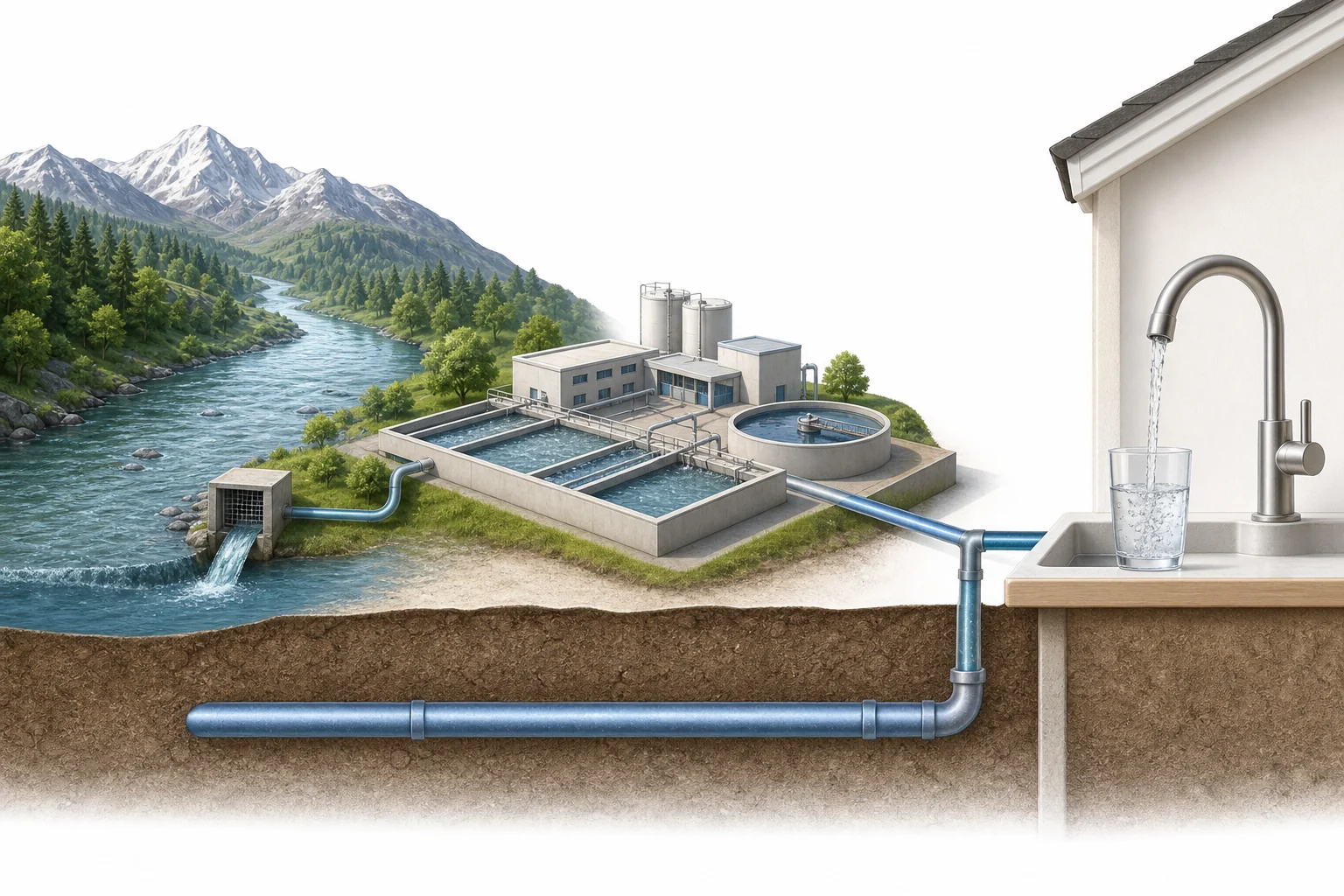
Drinking water usually starts in a river, lake, reservoir, or underground aquifer. A treatment plant removes dirt, many germs, and harmful substances before the water is sent through pipes. Pumps, tanks, and water pressure move the clean water to homes, schools, and taps.
Tap water feels instant, but it has already taken a long trip. In many communities, the trip starts in a watershed. Rain and melting snow flow downhill into streams, rivers, lakes, reservoirs, or underground spaces called aquifers. That source water can carry soil, leaves, microbes, road salt, fertilizer, and other materials picked up along the way. A drinking water treatment plant uses several steps to make the water safer to drink. The steps often include mixing in chemicals that help tiny particles clump together, letting those clumps settle, filtering the water through layers, and disinfecting it to kill many germs. After treatment, the water moves through a distribution system. Pipes, pumps, storage tanks, and pressure work together so water can reach a faucet when the handle turns. This system connects Earth science, chemistry, engineering, and public health.
1. The watershed collects water
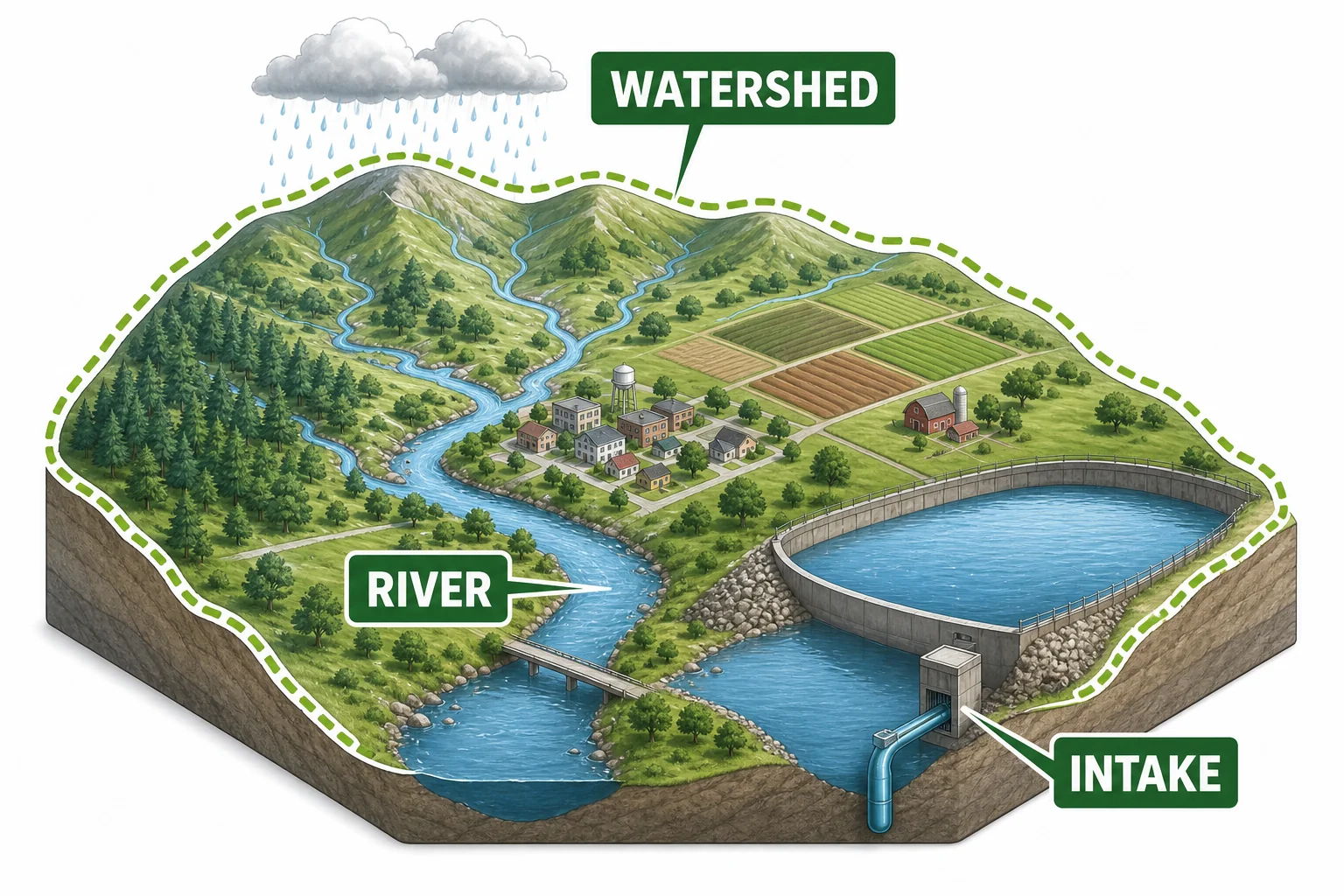
What happens on the land can affect what enters the water supply.
2. Water enters the treatment plant
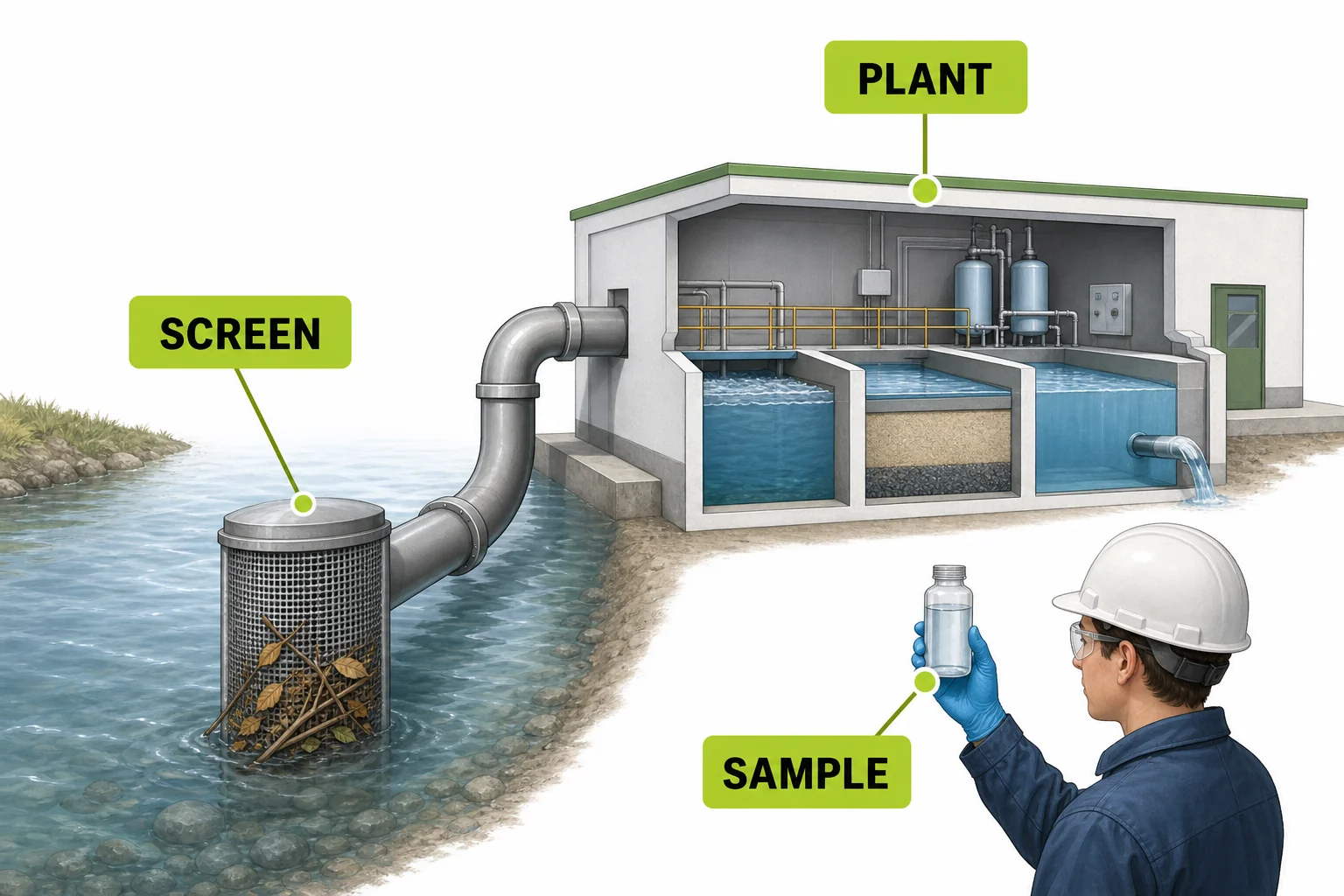
Treatment starts by keeping large debris out and checking water conditions.
3. Tiny particles clump and settle
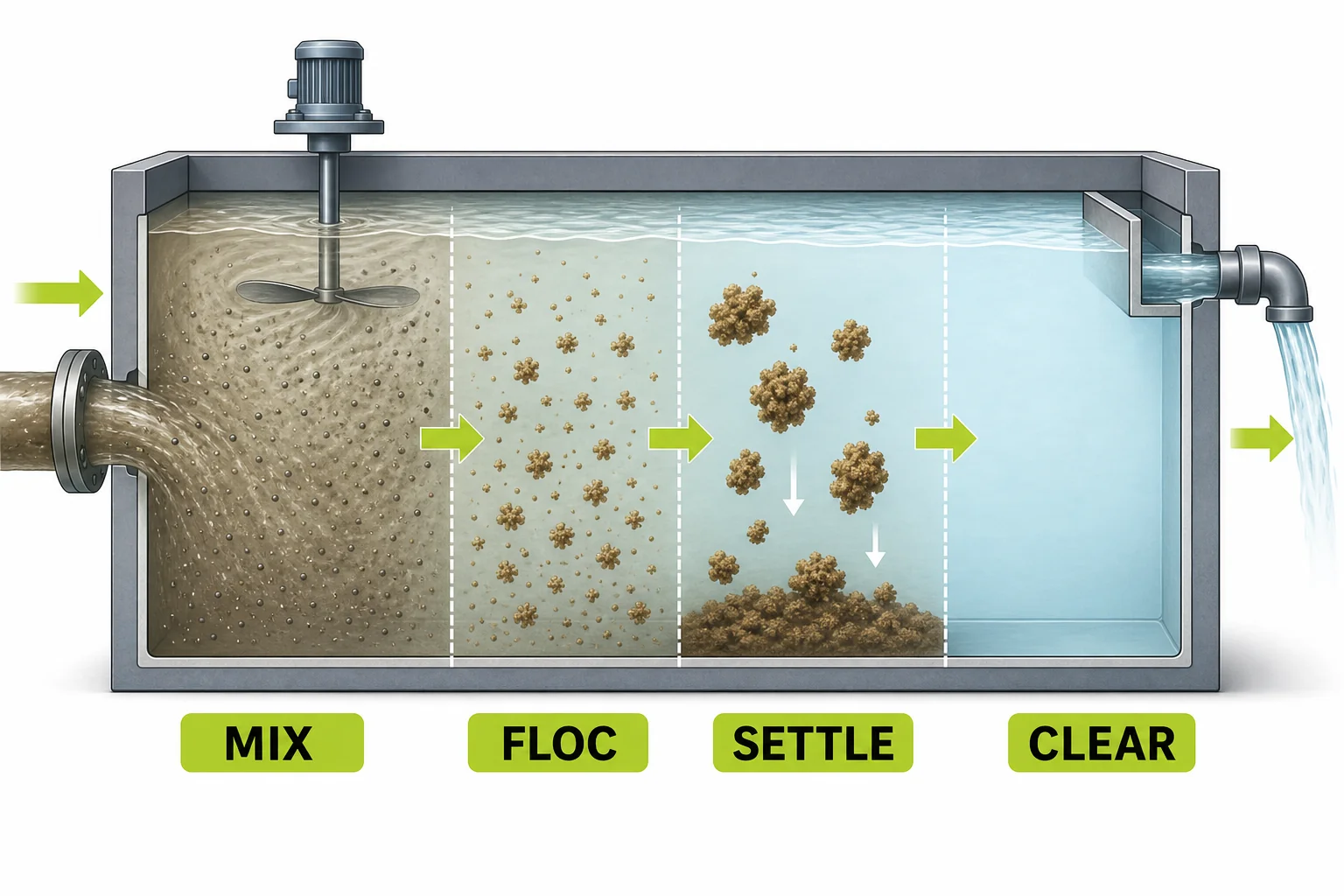
Small particles are easier to remove after they form larger clumps.
4. Filters and disinfectants finish the job
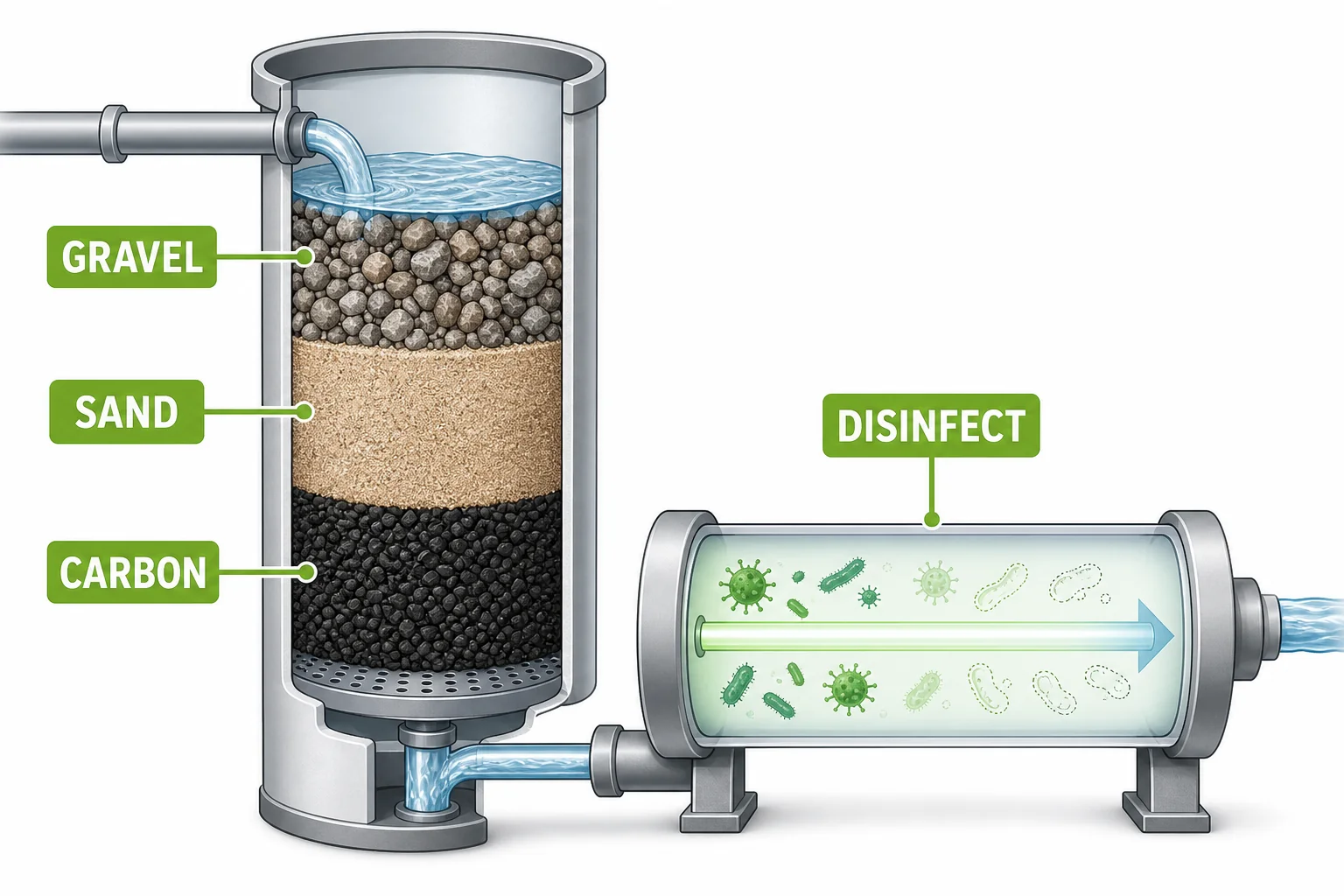
Clear water is not always safe water, so disinfection is a key step.
5. Pressure sends water to taps
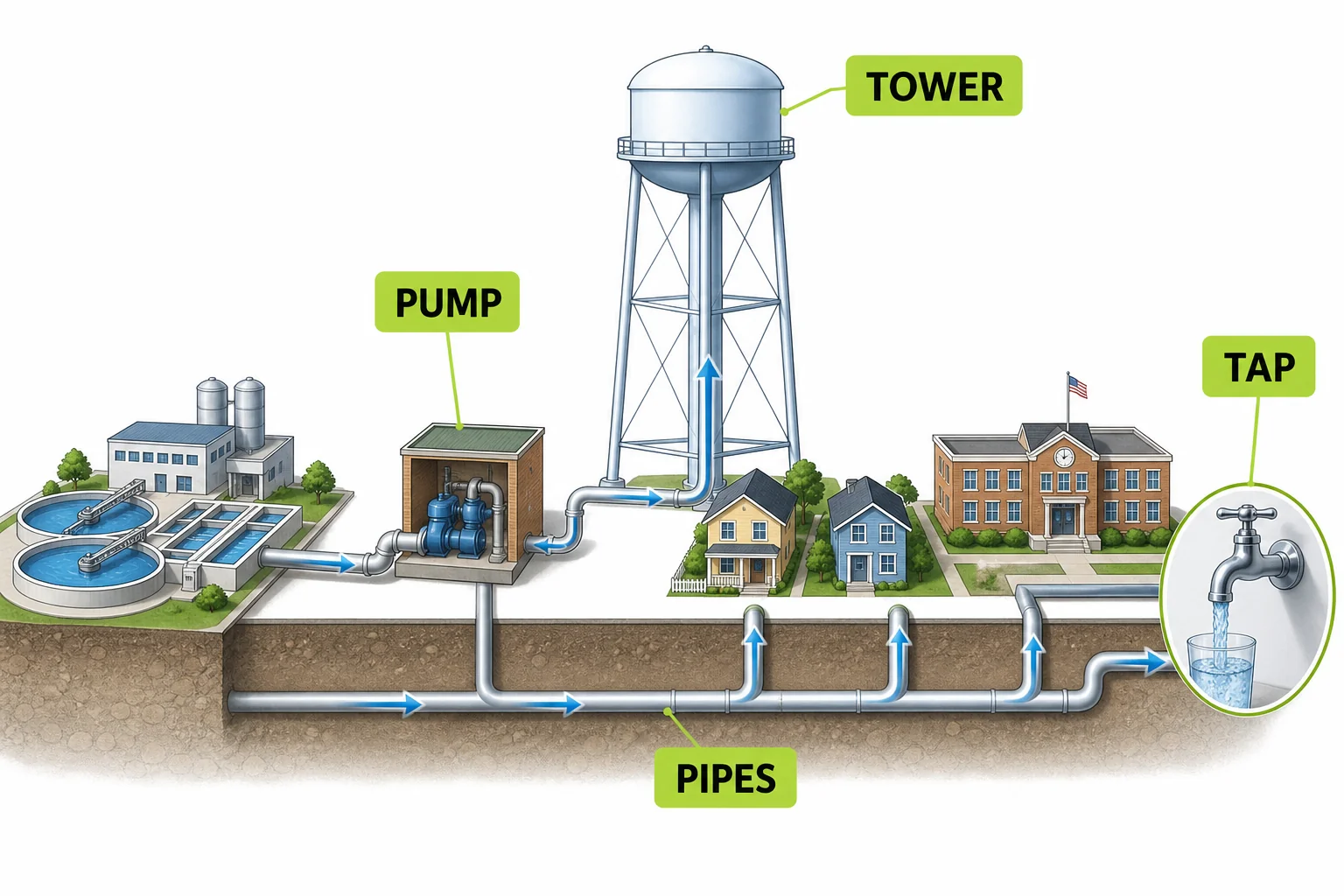
A clean water system also needs pressure, pipes, and maintenance.
Vocabulary
- Watershed
- An area of land where water drains toward the same river, lake, wetland, reservoir, or ocean.
- Coagulation
- A treatment step that helps tiny particles stick together so they can be removed more easily.
- Sedimentation
- The process in which heavier particles sink to the bottom of a tank or body of water.
- Filtration
- A treatment step that passes water through materials that trap particles.
- Disinfection
- A treatment step that kills or inactivates many germs that can cause disease.
- Distribution system
- The network of pipes, pumps, valves, and storage tanks that carries treated water to users.
In the Classroom
Build a model filter
35 minutes | Grades 6-8
Students layer gravel, sand, and coffee filter paper in a clear bottle, then pour cloudy water through it. They compare appearance before and after filtering and discuss why clear water still may need disinfection.
Map the school watershed
30 minutes | Grades 6-8
Students use a local map to trace where rainwater from the school grounds might flow. They identify possible pollution sources and propose one action that could reduce runoff pollution.
Pressure in a bottle
20 minutes | Grades 6-8
Students poke holes at different heights in a plastic bottle filled with water and observe how far each stream travels. They connect the pattern to water towers, gravity, and pressure in pipes.
Key Takeaways
- • Drinking water often begins as surface water or groundwater in a watershed.
- • Treatment plants remove particles and reduce germs through several steps.
- • Coagulation and sedimentation help remove tiny suspended particles.
- • Filtration and disinfection make water safer before it enters pipes.
- • Pumps, storage tanks, water towers, and pressure move treated water to taps.