How Does Plastic End Up in the Ocean?
How everyday litter travels from land to sea
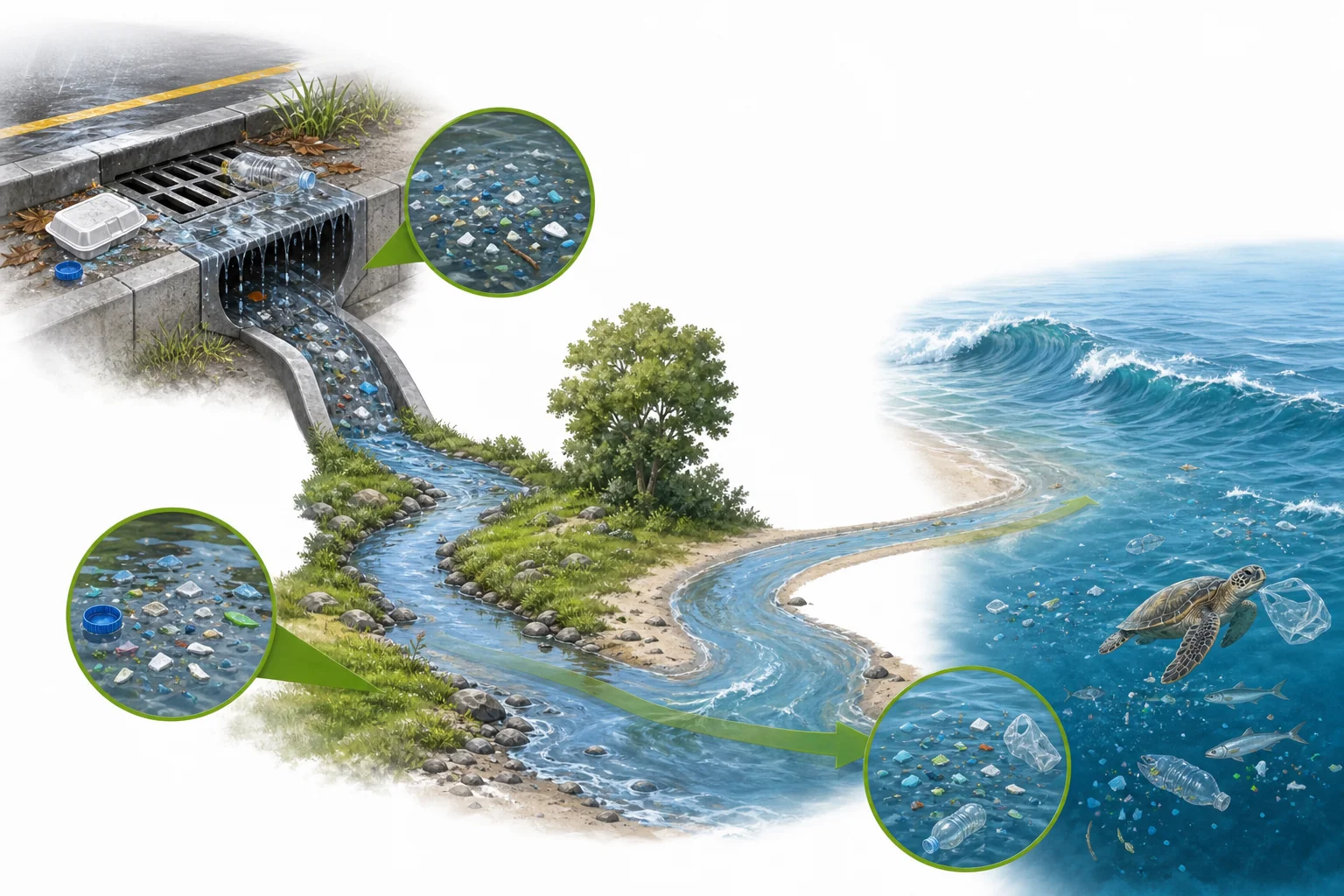
Most plastic in the ocean starts on land. Rain and wind can move litter into storm drains, streams, and rivers that lead to the sea. Once plastic reaches the ocean, waves and sunlight can break it into tiny pieces that are hard to clean up.
A plastic straw on a sidewalk may seem far from the ocean. It can still begin a long trip after the next rain. Water runs over streets, parking lots, and lawns. It carries loose trash into storm drains. Many storm drains send water straight to creeks or rivers without going through a water treatment plant. Rivers flow downhill toward lakes, bays, and oceans. Wind can push light plastic bags and wrappers into the same path. Plastic does not disappear like a leaf. It can float, sink, snag on plants, or break into smaller pieces. Some pieces become microplastics that are small enough for animals to eat by mistake. This is why ocean plastic is not only a beach problem. It is also a neighborhood, schoolyard, and watershed problem. Small choices on land can change what reaches the sea.
Plastic often starts on land
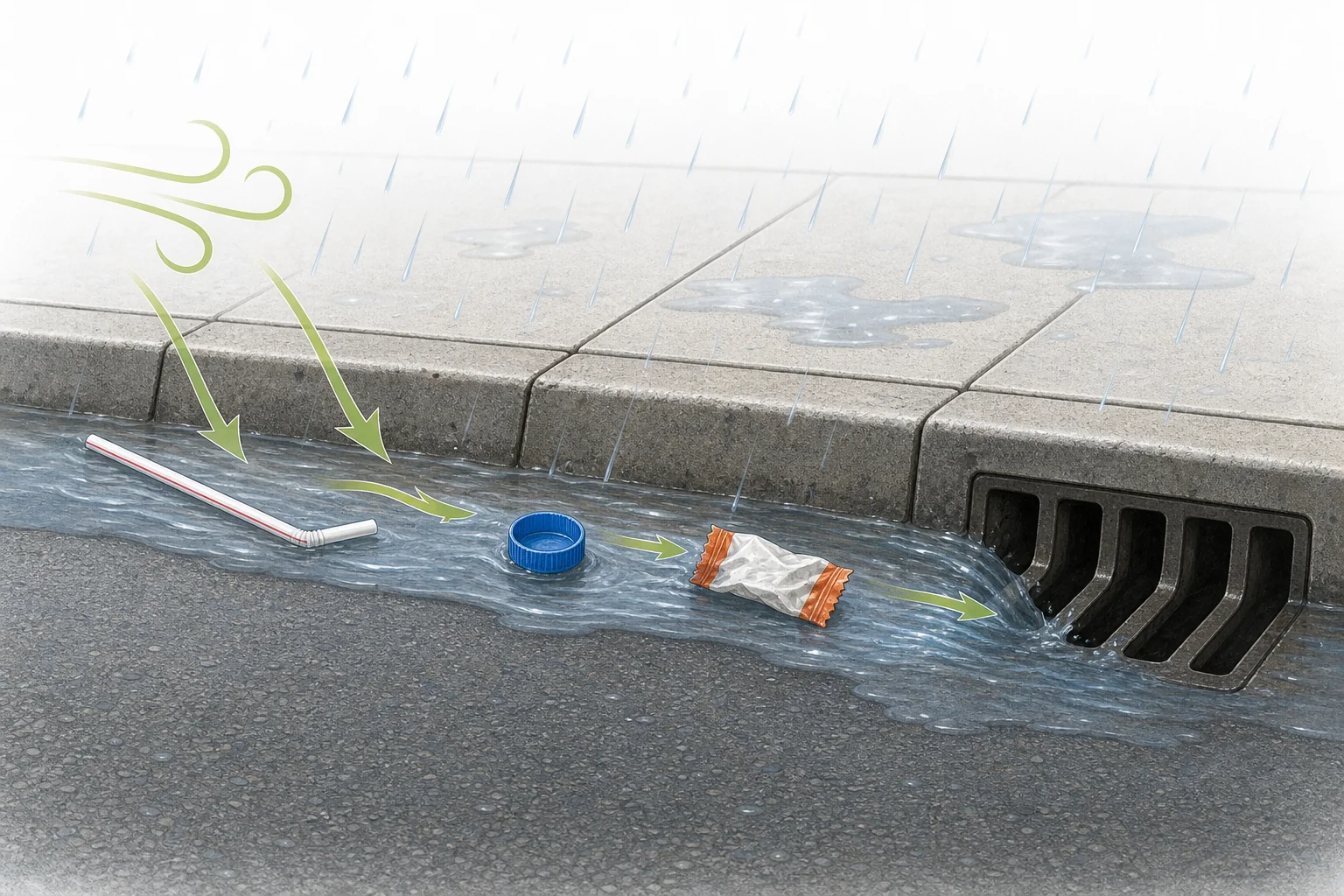
Ocean plastic can begin with one piece of litter on land.
Storm drains make a path
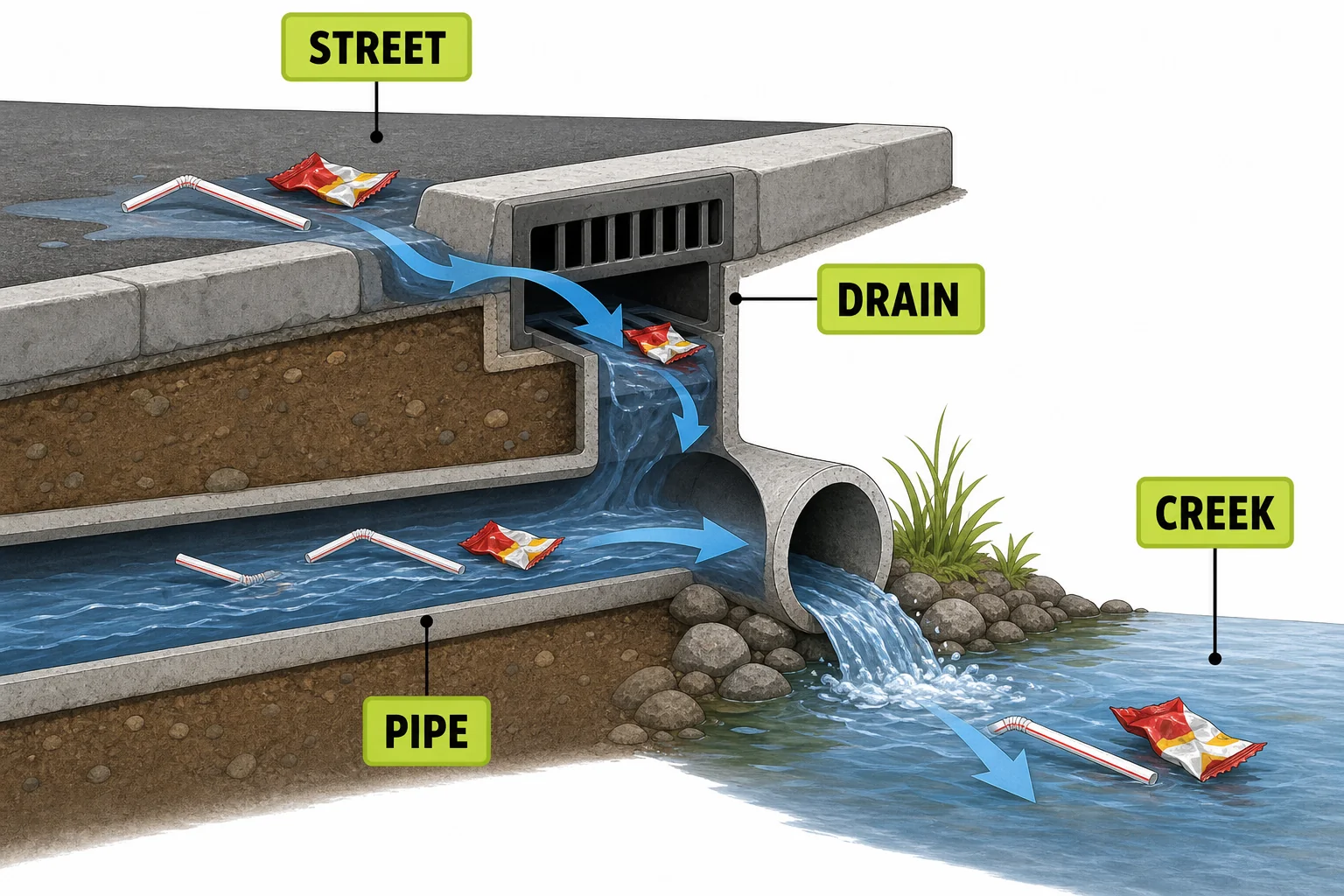
A storm drain can be a direct shortcut from a street to a waterway.
Rivers carry plastic downhill
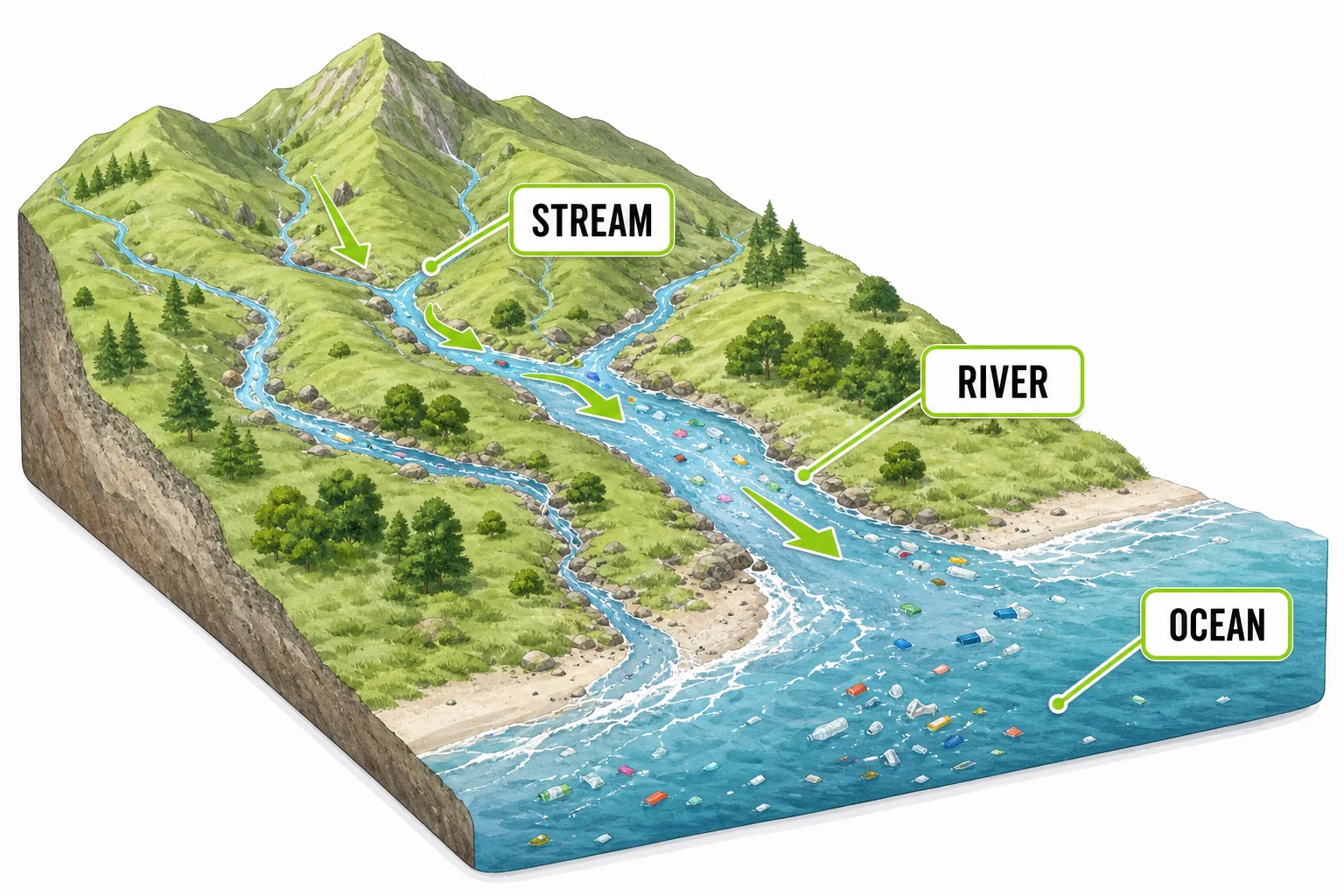
A watershed links inland litter to the ocean.
Ocean currents can gather trash
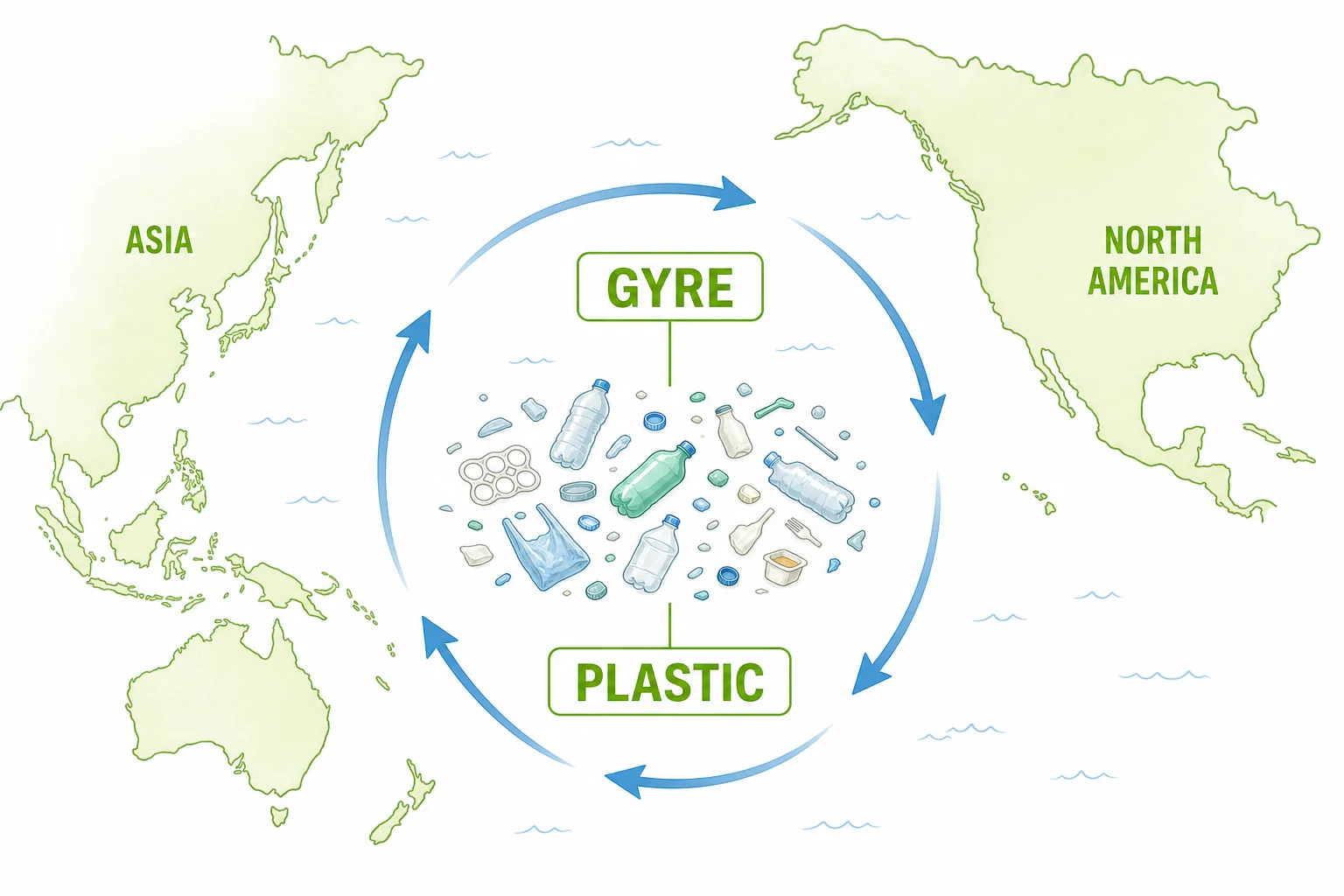
A garbage patch is spread-out plastic, not a solid island.
Tiny pieces enter food webs
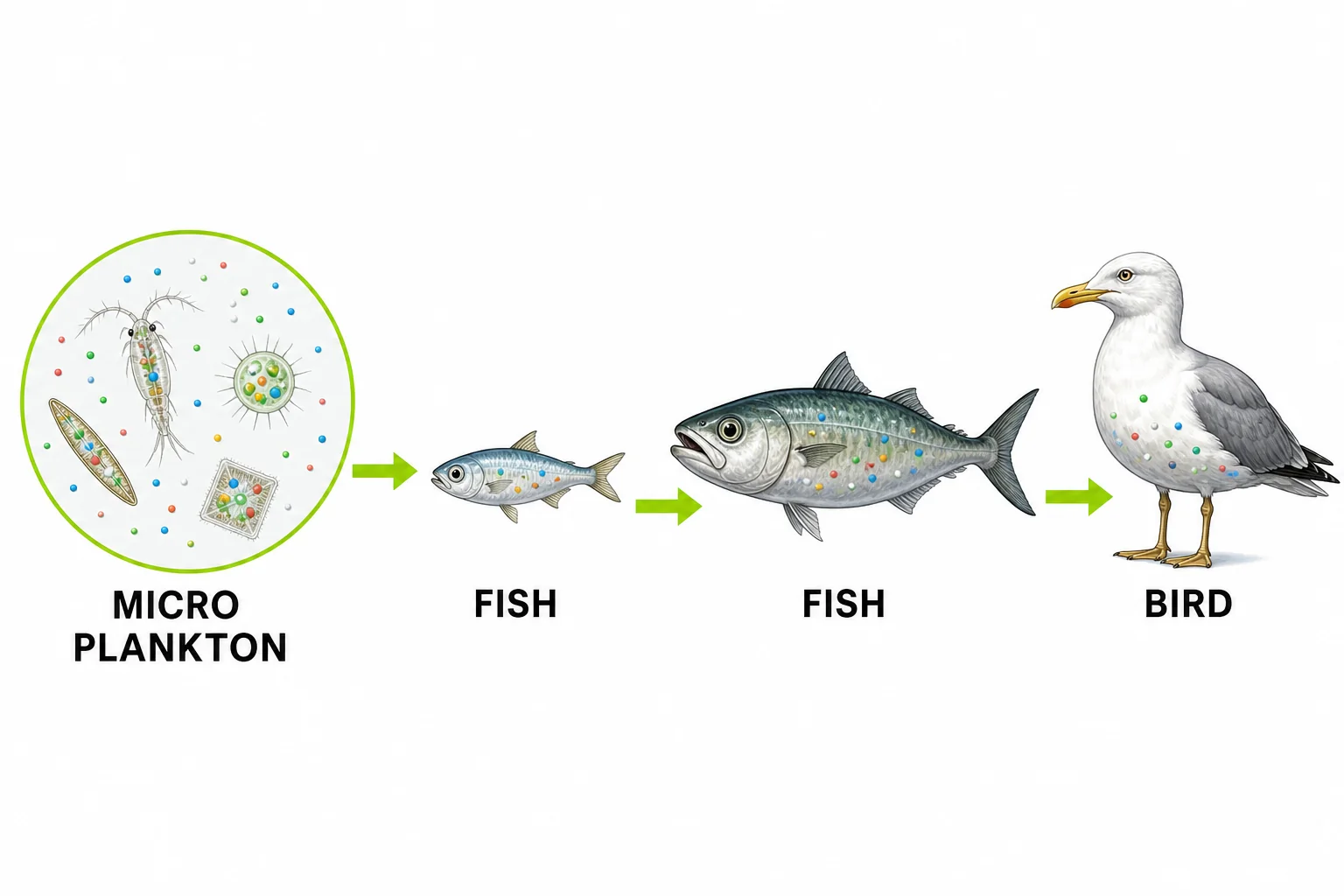
Smaller plastic pieces are harder to see and harder to remove.
Vocabulary
- Runoff
- Water that flows over land after rain or melting snow instead of soaking into the ground.
- Storm drain
- An opening that collects rainwater from streets and carries it through pipes to nearby waterways.
- Watershed
- An area of land where water drains into the same stream, river, lake, or ocean.
- Gyre
- A large circular pattern of moving ocean water.
- Microplastic
- A very small piece of plastic, usually smaller than 5 millimeters.
In the Classroom
Map the school watershed
30 minutes | Grades 3-5
Students sketch the school grounds and mark high places, low places, gutters, and storm drains. They use arrows to show where rainwater and litter would likely move during a storm.
Runoff tray model
25 minutes | Grades 4-5
Students build a small model landscape in a tray with soil, foil roads, paper houses, and small plastic bits. They spray water at the top and observe how runoff moves materials downhill.
Design a litter stopper
40 minutes | Grades 4-5
Students design a simple way to keep trash out of a pretend storm drain while still letting water pass. They test materials such as mesh, craft sticks, and paper clips, then discuss limits and tradeoffs.
Key Takeaways
- • Most ocean plastic starts on land as litter or waste that escapes collection.
- • Rainwater runoff can carry plastic into storm drains, streams, and rivers.
- • Rivers connect inland places to bays and oceans through watersheds.
- • Ocean gyres can gather floating plastic into large, spread-out patches.
- • Plastic can break into microplastics that may enter food webs.