Practice applying the ideas of work, kinetic energy, potential energy, conservation of energy, and power to real physical situations.
Read each problem carefully. Use appropriate formulas, include units, and show your work for calculations.
Calculating force, motion, energy changes, and power
Physics - Grade 9-12
- 1
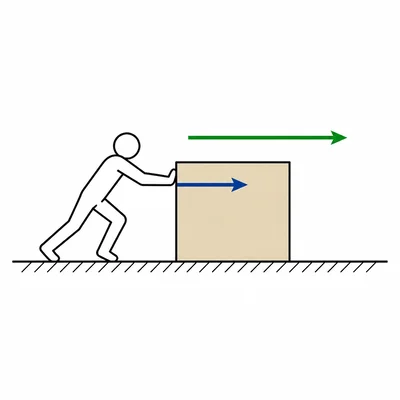
A student pushes a box with a force of 25 N across a floor for 4 m in the same direction as the motion. How much work is done on the box?
- 2
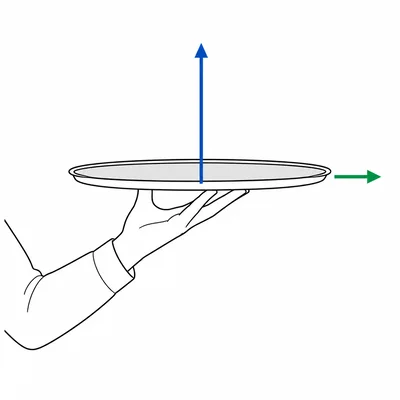
A waiter carries a tray horizontally across a room at constant height. The upward force from the waiter's hand is 60 N, and the tray moves 8 m horizontally. How much work does the upward force do on the tray?
- 3
A 3 kg cart moves at 6 m/s. What is its kinetic energy?
- 4
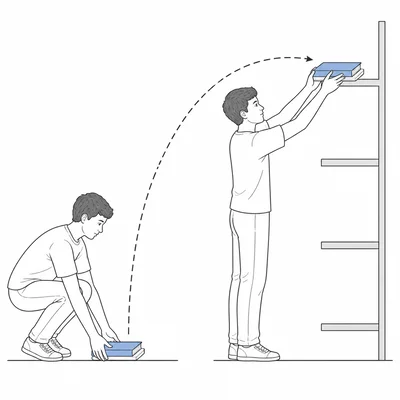
A 2 kg book is lifted onto a shelf 1.5 m above the floor. What is the increase in gravitational potential energy of the book? Use g = 9.8 m/s^2.
- 5
A machine does 600 J of work in 12 s. What is its power output?
- 6
A 1200 W microwave runs for 30 s. How much energy does it use during that time?
- 7
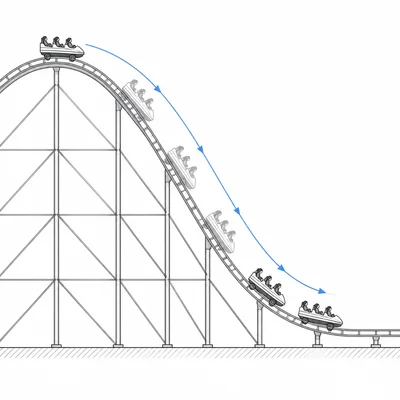
A roller coaster car has 20,000 J of gravitational potential energy at the top of a hill. Neglecting friction, what will its kinetic energy be at the bottom if all of that potential energy is converted?
- 8
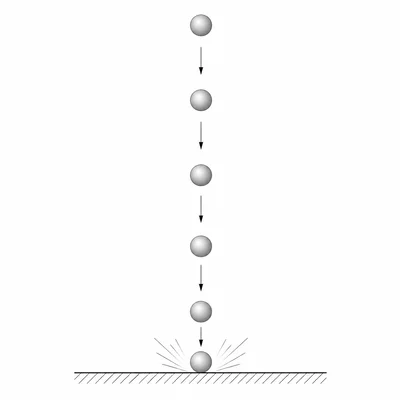
A 0.5 kg ball is dropped from a height of 10 m. Ignore air resistance. What is its speed just before it hits the ground? Use g = 9.8 m/s^2.
- 9
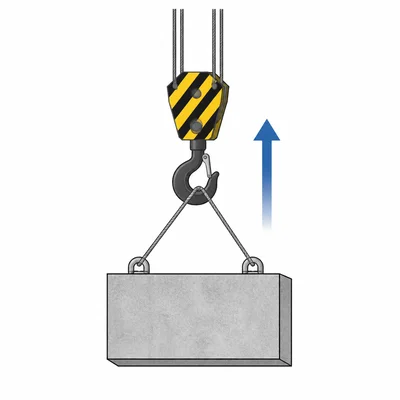
A crane lifts a 200 N load straight up by 5 m. How much work does the crane do on the load?
- 10
A 4 kg object speeds up from 2 m/s to 8 m/s. Find the change in kinetic energy.
- 11
A student climbs a flight of stairs and gains 1800 J of gravitational potential energy in 15 s. What is the student's average power output?
- 12
A car engine transfers 90,000 J of energy in 3 s. What is the engine's power in watts and kilowatts?