Thermal Insulation Lunchbox Lab
Pick a wall material, set the thickness, and choose how hot or cold the food starts. Press Run to watch the temperature drift toward the room over six hours and see how long the lunch stays inside the food-safety limit. Compare every material on safe time and cost to find the smartest engineering choice.
Guided ExperimentWhich material keeps the lunch cold longest?
You will test several wall materials at the same thickness and the same starting and room temperatures. Predict which material keeps a chilled lunch below the food-safety limit for the longest time, and explain your reasoning using thermal conductivity.
Write your hypothesis in the Lab Report panel, then click Next.
Lunchbox Cross-Section
The food block warms or cools toward room temperature through the wall. Blue is cold and red is hot. A thicker wall and a lower-conductivity material slow the change.
Cooling Curve
Press Run to trace the temperature over six hours. The dashed line is the food-safety limit.
Controls
Results
| Material | τ (h) | Safe time | Cost | Safe h / $ |
|---|---|---|---|---|
| Aerogel | 12.92 | 1 h 59 min | $4.80 | 0.41 |
| Styrofoam (EPS) | 5.87 | 54 min | $0.48 | 1.89 |
| Cork | 4.84 | 45 min | $0.96 | 0.78 |
| Wool felt | 4.84 | 45 min | $0.72 | 1.04 |
| Cardboardbest value | 3.23 | 30 min | $0.24 | 2.07 |
| Plastic (HDPE) | 0.43 | 4 min | $0.36 | 0.18 |
| Aluminum | 0.00 | 0 min | $1.20 | 0.00 |
The best value row gives the most safe hours per dollar. Aerogel often wins on raw safe time, but its high cost can drop its value below cheaper foams.
Data Table
(0 rows)| # | Material | Thickness(cm) | Start temp(°C) | Ambient(°C) | Safe time(h) | Cost($) | Safe h per $ |
|---|
Reference Guide
Newton's Law of Cooling
Heat flows out of warm food and into cold food until it matches the room. The temperature follows a smooth exponential curve toward the room temperature.
The time constant tau sets the pace. After one tau the gap to the room has shrunk to about 37 percent of its starting size. A larger tau means the lunch holds its temperature for longer.
Conductivity and Thickness
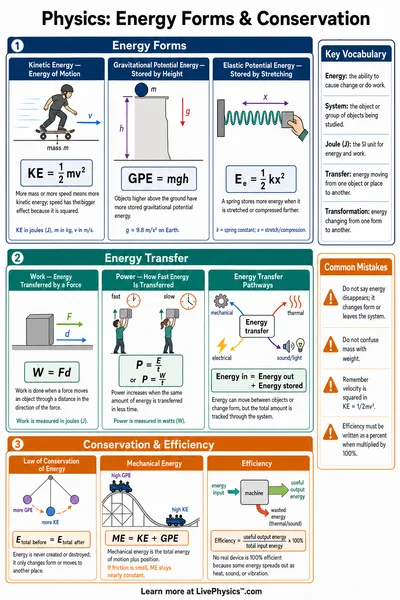
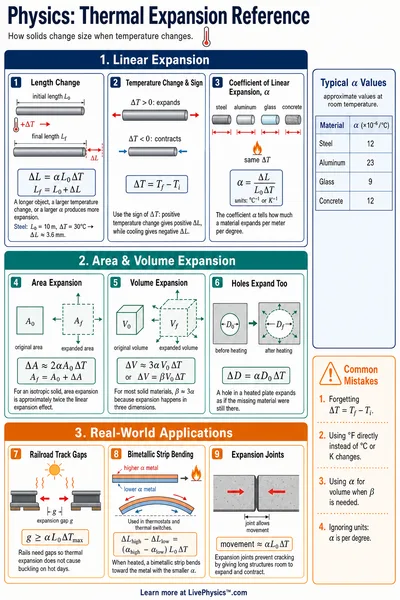
Thermal conductivity k measures how fast a material carries heat. A low k traps heat, which is exactly what an insulator should do. Aerogel and foam have a very low k, while metals have a very high k.
The time constant rises when k falls and when the wall thickness d grows. Doubling the wall thickness roughly doubles tau and roughly doubles the safe time, because the heat has twice as far to travel through the slow material.
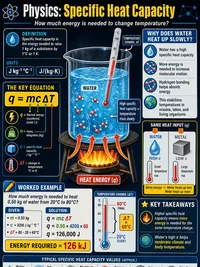
Mass m and specific heat c also matter. A heavier lunch with a high specific heat, like one full of water, stores more heat and changes temperature more slowly.
The Cost Tradeoff
Better insulation usually costs more. The best engineering choice is not always the material with the longest safe time. It is the one that gives the most safe hours for each dollar spent.
Because both safe time and cost grow with thickness, adding more insulation gives diminishing returns on value. There is a practical thickness beyond which the extra cost is not worth the extra protection.
Why a Metal Box Fails
A metal tin feels solid and protective, so it seems like it should keep a lunch safe. The opposite is true. Aluminum conducts heat hundreds of times faster than foam, so its time constant is tiny.
With a high k, heat races through the wall and the food reaches room temperature almost at once. Feeling sturdy has nothing to do with being a good insulator. What matters is how slowly the material lets heat pass through, not how hard it is.