Biology
Confusing Homozygous and Heterozygous
Students call any genotype with a dominant allele homozygous, even when the two alleles are different.
Quick check
Why students make it
Students often focus on which trait shows instead of comparing the two allele symbols. A dominant allele can hide a recessive allele, so the phenotype can distract from the genotype.
The rule done right
Homozygous means the two alleles for a gene match, such as or . Heterozygous means the two alleles are different, such as .
Related resources
-
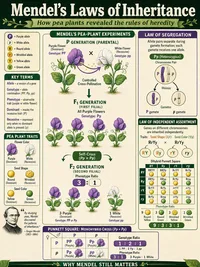 Biology, Mendel's Laws of Inheritance Infographic
-
 Biology, Dihybrid Crosses Infographic
-
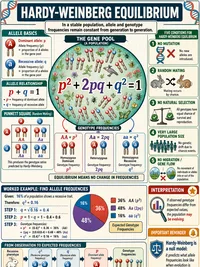 Biology, Hardy-Weinberg Equilibrium Infographic
-
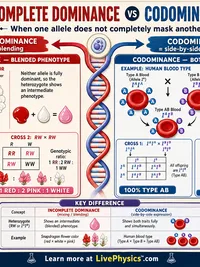 Biology, Incomplete Dominance and Codominance Infographic
-
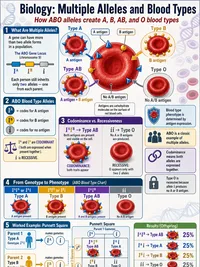 Biology, Multiple Alleles and Blood Types Infographic
- Punnett Squares & Probability Genetics Cheat Sheet
- Genetics & Mendelian Inheritance Cheat Sheet
- Dihybrid Cross Problem-Solving Reference Cheat Sheet
- Hardy-Weinberg Equilibrium Reference Cheat Sheet
- Pedigree Analysis Reference Cheat Sheet
- Biology, AP Biology, Hardy-Weinberg Equilibrium Worksheet
- Biology, Genetics, Mutations and Their Effects Worksheet
- Biology, Genetics, DNA Replication and Repair Worksheet
- Genetics & Punnett Square Calculator Tool
- Pedigree Chart & Inheritance Pattern Analyzer Tool
- Hardy-Weinberg Equilibrium Calculator Tool
- Population Genetics Explorer Tool
- Mendelian Genetics & Punnett Square Lab Lab
- Hardy-Weinberg & Natural Selection Lab Lab
- Artificial Selection Lab Lab