Biology
Thinking Dominant Means More Common
Students assume a dominant allele must be the allele found in most individuals.
Quick check
Why students make it
The word dominant sounds like strongest, best, or most common. In genetics, dominant only describes how an allele affects the phenotype when paired with another allele.
The rule done right
A dominant allele shows its trait in a heterozygote, such as . Allele frequency depends on inheritance, selection, mutation, migration, and chance, not on whether an allele is dominant or recessive.
Related resources
-
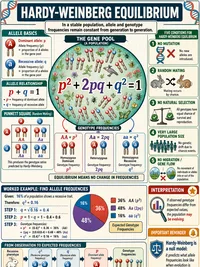 Biology, Hardy-Weinberg Equilibrium Infographic
-
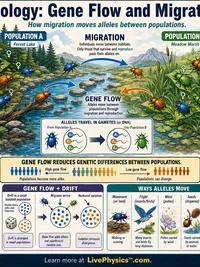 Biology, Gene Flow and Migration Infographic
-
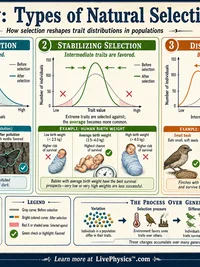 Biology, Types of Natural Selection Infographic
-
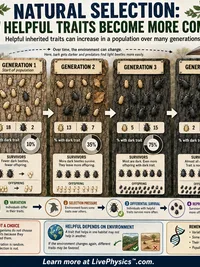 Natural Selection Infographic
-
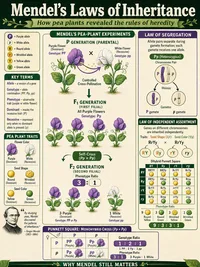 Biology, Mendel's Laws of Inheritance Infographic
- Evolution & Natural Selection Cheat Sheet
- Hardy-Weinberg Equilibrium Reference Cheat Sheet
- Genetics & Mendelian Inheritance Cheat Sheet
- Punnett Squares & Probability Genetics Cheat Sheet
- Genetics, Dominant and Recessive Traits Worksheet
- Biology, AP Biology, Hardy-Weinberg Equilibrium Worksheet
- Biology, Evolution, Evidence and Mechanisms Worksheet
- Biology, Conservation Genetics, Bottlenecks and Founder Effects Worksheet
- Biology, Genetics, Mutations and Their Effects Worksheet
- Population Genetics Explorer Tool
- Hardy-Weinberg Equilibrium Calculator Tool
- Natural Selection Simulator Tool
- Genetics & Punnett Square Calculator Tool
- Hardy-Weinberg & Natural Selection Lab Lab
- Antibiotic Resistance Evolution Lab Lab
- Artificial Selection Lab Lab
- Mendelian Genetics & Punnett Square Lab Lab