Earth Science
Confusing Igneous, Sedimentary, and Metamorphic Rocks
Students identify a rock type by color or hardness instead of by how the rock formed.
Quick check
Why students make it
Many rocks can look alike, so students often trust visible clues first. The misleading idea is that each rock type has one obvious appearance.
The rule done right
Classify rocks by formation process. Igneous rocks form from cooled magma or lava, sedimentary rocks form from compacted or cemented sediments or chemical deposits, and metamorphic rocks form when existing rocks change because of heat, pressure, or fluids.
Related resources
-
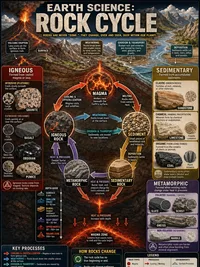 Rock Cycle Infographic
-
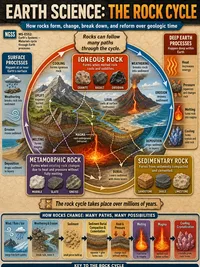 The Rock Cycle Infographic
-
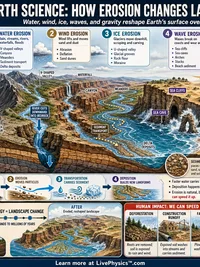 How Erosion Changes Landscapes Infographic
-
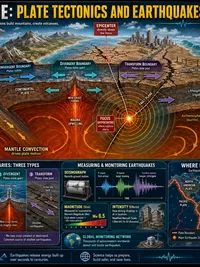 Plate Tectonics and Earthquakes Infographic
- Rock Cycle & Minerals Cheat Sheet
- Sedimentary Rock Classification Reference Cheat Sheet
- Igneous Rock Classification Reference Cheat Sheet
- Metamorphic Rock Grades & Facies Cheat Sheet
- Mineral Properties Reference Cheat Sheet
- Earth Science, Types of Rocks, Igneous, Sedimentary, Metamorphic Worksheet
- Science, Rocks Minerals and the Rock Cycle Worksheet
- Science, Erosion, Weathering, and Deposition Worksheet
- Earth Science, Minerals, Identification and Properties Worksheet
- Earth Science, Mohs Hardness Scale from 1 to 10 Practice Worksheet
- Rock Cycle Explorer Tool
- Plate Tectonics Explorer Tool
- Rock Layers & Landscape Change Explorer Tool
- Plate Boundary Simulator Tool
Continue learning
- Igneous Rock Textures ReferenceCheat sheet
- Volcanoes & Igneous ActivityCheat sheet
- How Do Geologists Know How Old Rocks Are?Explainer
- Confusing a Renewable Resource with an Inexhaustible OneCommon mistake
- Confusing Convergent, Divergent, and Transform BoundariesCommon mistake
- Early Learners, Rocks and SoilStudy poster