Understanding 3D Shape Calculator
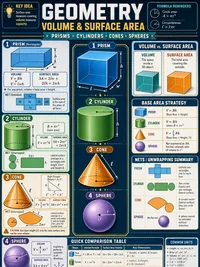
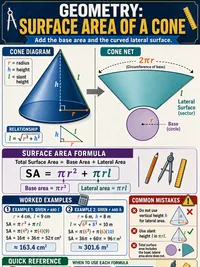
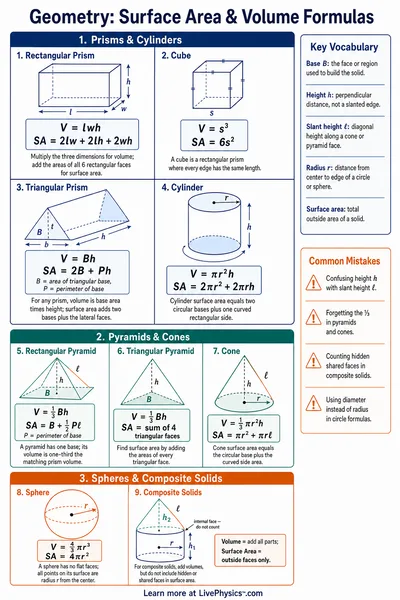
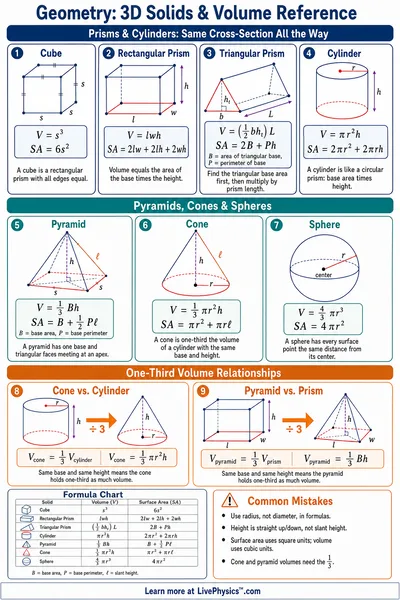
A three-dimensional shape has measurements that describe different directions in space. A prism usually needs a base measurement, another base measurement, and a height. A cylinder needs a radius and a height, while a cone needs a radius, a vertical height, and sometimes a slant height.
The slant height is the distance along the tilted side, not the straight distance from base to tip. Mixing those two heights gives a common wrong answer.
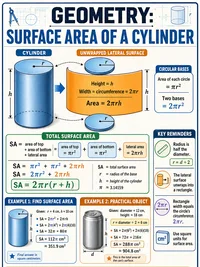
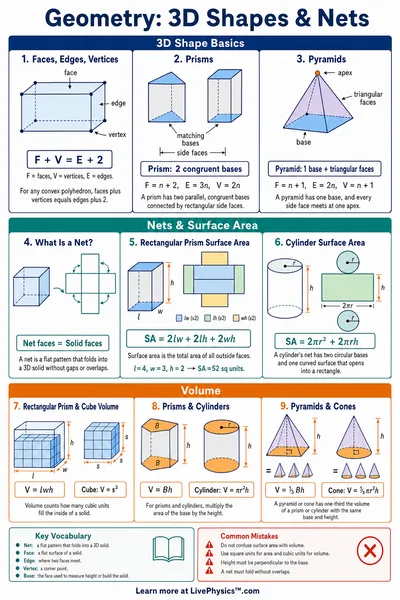
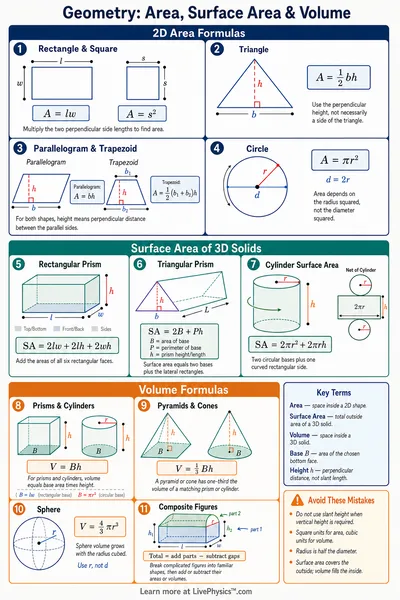
Surface area measures the material covering the outside of an object. Imagine cutting open a cardboard box and laying every face flat on a table. The total area of those pieces is the surface area.
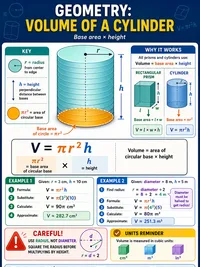
Volume measures the space inside, such as the amount of water a tank can hold. For a rectangular prism, volume equals length times width times height because layers of unit cubes fill the space. Curved shapes use circle areas, so the radius has a large effect because it is multiplied by itself.
Units matter because area and volume do not use the same kind of unit. A sheet covering a shape might be measured in square centimetres, while its capacity is measured in cubic centimetres or litres. One cubic centimetre equals one millilitre, which helps connect geometry to measuring liquids in science class.
Convert every dimension into the same unit before calculating. If one measurement is in metres and another is in centimetres, the result will be wrong even when the formula is correct.
Many real objects are only approximately ideal shapes. A soup can is close to a cylinder, a tent may be modelled as a triangular prism, and a ball is close to a sphere. Engineers use these models to estimate paint needed, storage space, packaging size, and material cost.
Students should first identify the shape, then mark which dimensions are given and what each dimension means. It is useful to estimate whether an answer makes sense. A very large volume from a small object, or a surface area smaller than one visible face, signals that a measurement, unit, or formula needs checking.