Understanding Biological Macromolecules Explorer
Cells do not treat large molecules as simple lists of parts. Their three dimensional shape and the placement of chemical groups determine what they can do.
A slight change in the order of units can change a protein from a useful enzyme into a molecule that no longer works. This is why biology pays close attention to arrangement, not merely to the ingredients present.
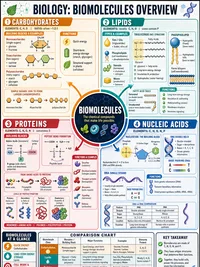
Many carbohydrate units differ only in how their atoms are oriented, yet living things recognize them differently. Plants join glucose units in a pattern that makes sturdy cellulose for cell walls, while animals store glucose in branched glycogen.
Human digestive enzymes can release glucose from glycogen and starch, but they cannot cut the particular links in cellulose. Fiber therefore passes through much of the digestive system while still helping movement through the gut.
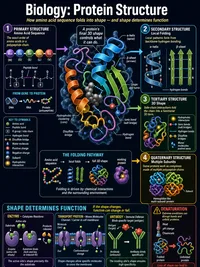
Proteins show especially clearly why the sequence of building blocks matters. A chain folds because different amino acid side groups attract, repel, or form temporary links with nearby groups.
Heat, extreme acidity, or some chemicals can disrupt this folding, which is called denaturation. Cooked egg white changes from clear to solid because its proteins unfold and connect in new ways, so their original jobs are lost.
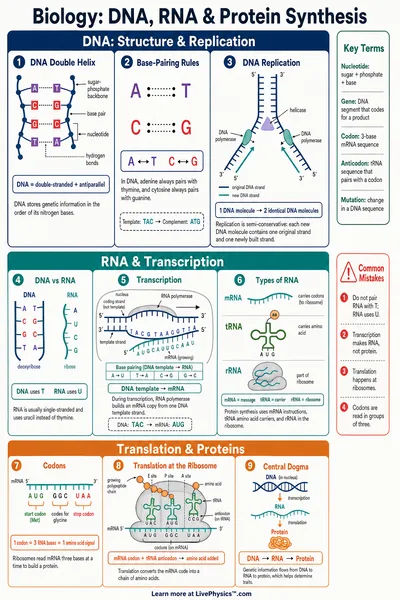
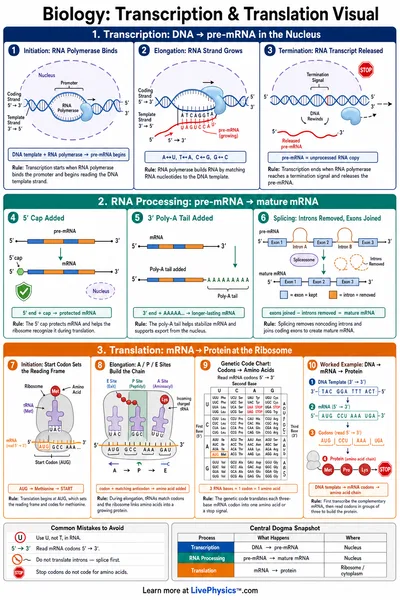
Nucleic acids store instructions through the order of their bases, not through their overall size alone. In DNA, matching bases form weak links that allow the two strands to separate when a cell copies its genetic information.
RNA uses related information to help build proteins, so a change in DNA can sometimes change an amino acid in a protein. Some changes have little effect, while others can alter a trait or cause disease.
Lipids behave differently from long chains with repeating units because their parts are assembled in varied arrangements. Phospholipids have a water friendly end and water avoiding tails, causing them to form the basic double layer of cell membranes.
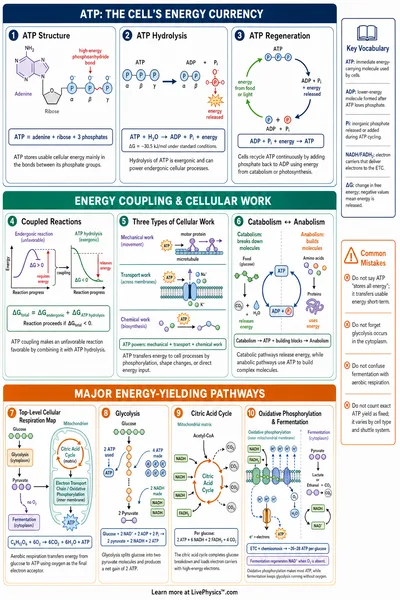
This layer controls which substances enter or leave cells, making it essential for every cell. Fats store energy densely, while steroids can act as chemical signals, so similar element types can support very different roles.
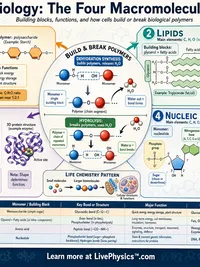
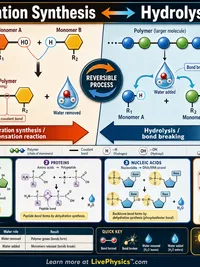
When studying these molecules, track both the bond being made or broken and the job the finished structure performs. Water is not just a background substance in these reactions, because its parts can become attached to the separated pieces during breakdown.
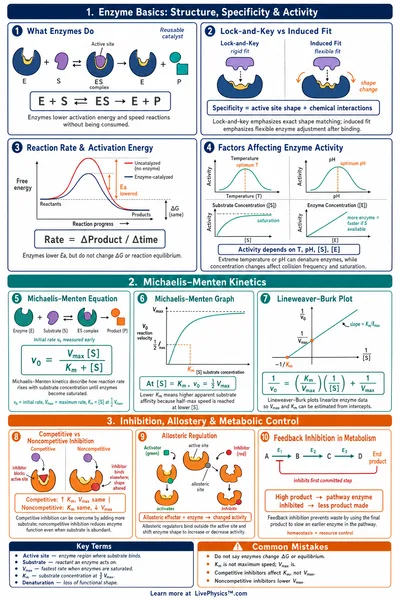
Enzymes speed up these changes without being used up, but each enzyme fits only certain molecules or bonds. Digestion depends on this specificity, turning food molecules into smaller units that cells can absorb and use.