Practice choosing safe and useful ways to separate mixtures using filters, evaporation, and magnets.
Read each problem carefully. Decide which separation method works best and explain your thinking. Show your work in the space provided.
Using filtering, evaporation, and magnetism
Chemistry - Grade 4-5
- 1
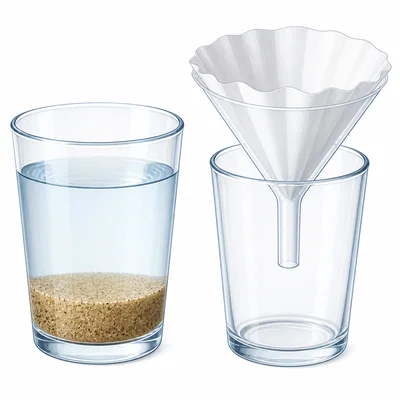
A student mixes sand and water in a cup. Which method should the student use to separate the sand from the water, and why?
- 2
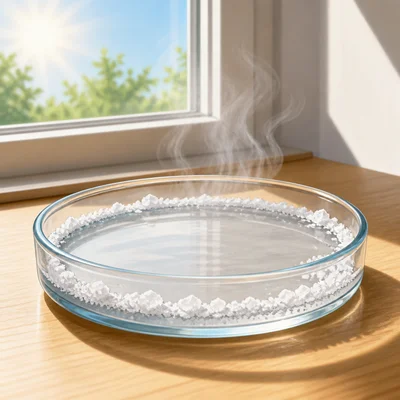
A cup contains salt water. The student wants to get the salt back. Which method should the student use?
- 3
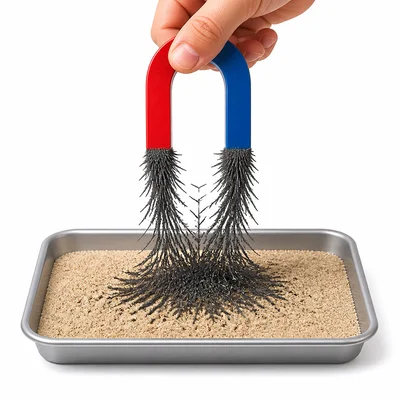
A mixture contains iron filings and sand. Which tool can separate the iron filings from the sand?
- 4
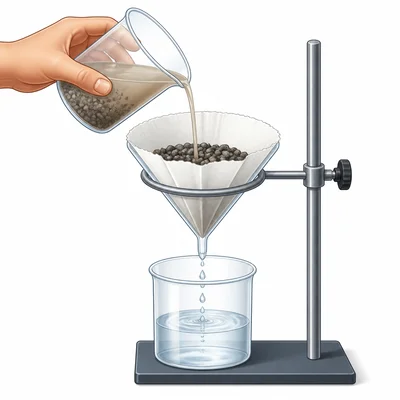
Circle the mixture that could be separated by filtering: salt dissolved in water, gravel mixed with water, or sugar dissolved in tea. Explain your choice.
- 5
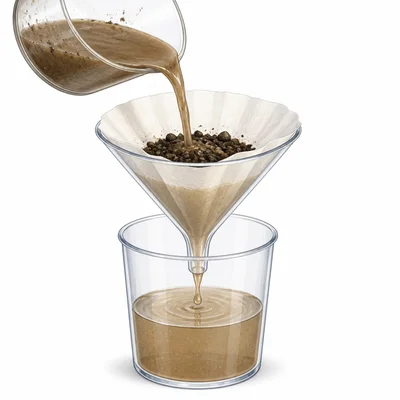
A student pours muddy water through a filter. The water that comes out is clearer, but it is still a little brown. What does this show about filtering?
- 6
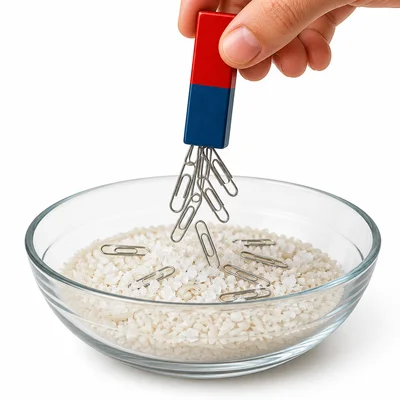
A mixture has paper clips, rice, and salt. Which material can be removed first using a magnet?
- 7
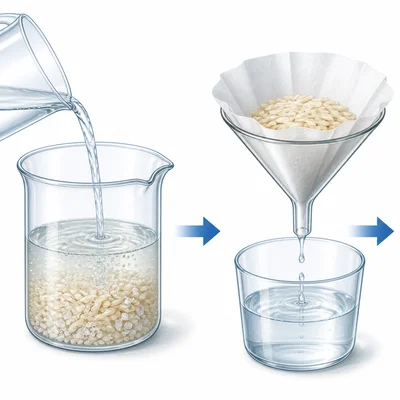
After removing the paper clips from a mixture of paper clips, rice, and salt, how could a student separate the rice from the salt?
- 8
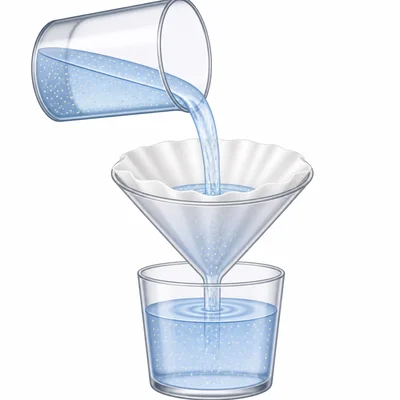
A student stirs sugar into warm water until the sugar disappears. Can the sugar be removed by a paper filter? Explain why or why not.
- 9
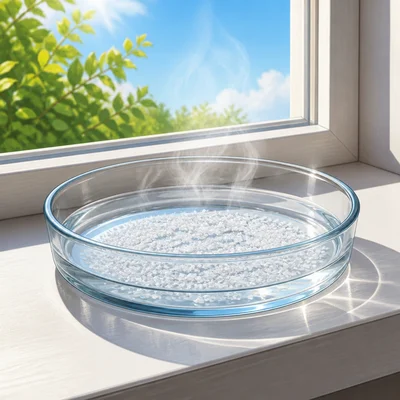
A teacher places a dish of salt water near a sunny window for several days. What will happen to the water and the salt?
- 10
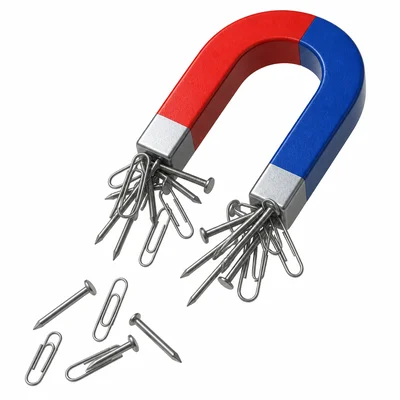
Which separation method depends on a material being attracted to a magnet: filtering, evaporation, or magnetism?
- 11
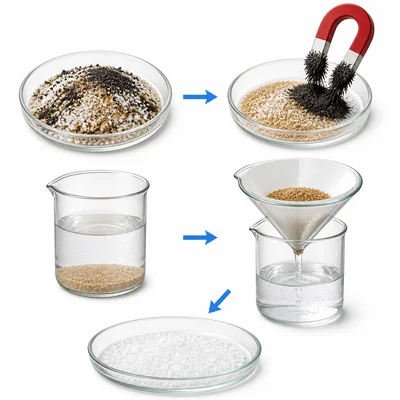
A mixture contains salt, sand, and iron filings. Write the best order of steps to separate all three materials.
- 12
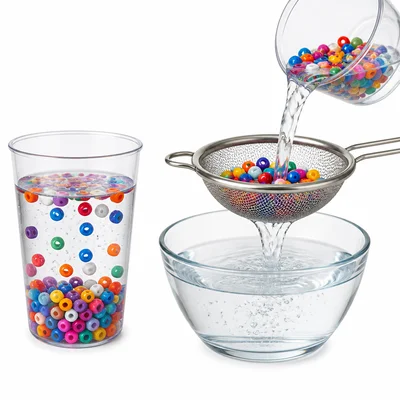
A student wants to separate a mixture of small plastic beads and water. Would evaporation be the best first method? Explain your answer.
- 13
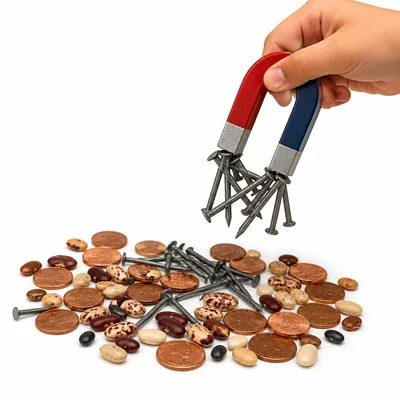
A magnet is held near a mixture of copper pennies, iron nails, and dry beans. Which items will the magnet most likely pick up?
- 14
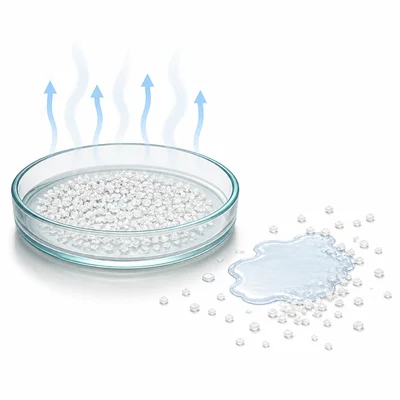
Why is it important to use a container or dish when evaporating salt water to get the salt back?
- 15
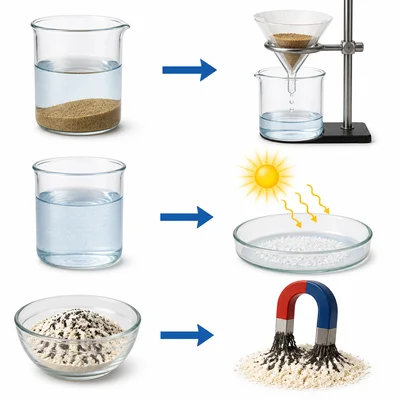
A student has three mixtures: sand and water, salt water, and iron filings mixed with flour. Match each mixture to the best separation method.