Understanding Density Tower Lab
A density tower makes differences between liquids visible as layers. In this activity, predict the order of the six liquids before pouring, then compare the resulting stack with your original arrangement and explain any changes.
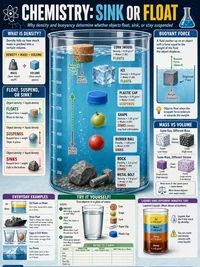
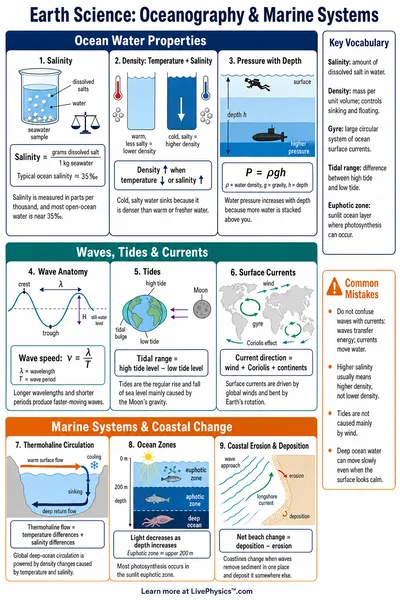
Density describes mass per unit volume. Comparing equal volumes makes the idea concrete, because a milliliter of a denser liquid has more mass than a milliliter of a less dense liquid.
The model places denser liquids lower in the tower. A less dense liquid sits above a denser neighbor when the liquids remain separated, producing a stack that can be read from greatest density at the bottom to least density at the top.
Honey and rubbing alcohol provide useful reference points. The lab uses a higher density for honey and a lower density for rubbing alcohol, with water between them, so these three help anchor a prediction for the remaining liquids.
Color is a label in the visualization, rather than a cause of layering. Changing a liquid's color would not by itself change its density, and a dark liquid is not necessarily denser than a pale one.
Thickness is a different property called viscosity. A liquid that flows slowly can be dense, but flow speed alone cannot establish density, so the tower should be interpreted using mass and volume rather than appearance alone.
Dropping an object adds another density comparison. An object that is denser than an upper liquid can pass through that layer, then receive enough upward support when it reaches a denser liquid below.
At rest, the upward buoyant force balances the object's weight. Near an interface, different parts of the object can displace different liquids, so its support comes from the combined weight of those displaced portions.
Use one object at a time and record its final position on paper. Compare that position with the neighboring liquid densities, then use the same reasoning to predict the destination of a second object before dropping it.
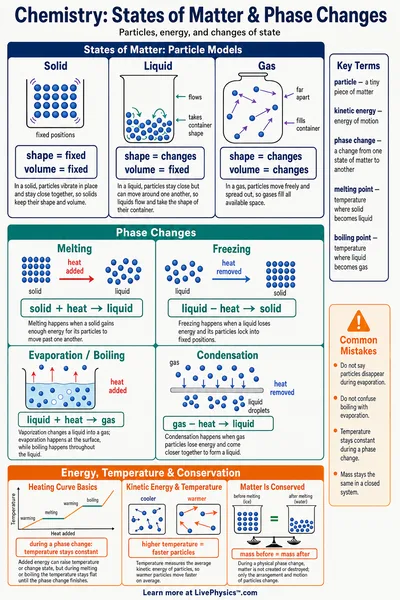
The clean layers are a teaching simplification. Some real liquids in classroom towers, including water and rubbing alcohol, mix together, so density differences alone do not guarantee permanent boundaries between every pair of liquids.
Careful pouring can delay mixing in a real demonstration, but shaking, diffusion, and temperature changes can alter the layers. The simulation isolates density ordering so that you can study that relationship without treating its tidy boundaries as a promise about every physical mixture.
A useful conclusion explains both the ordering rule and a limitation of the model. Cite a liquid comparison and an object's resting position as evidence, then describe why miscibility would also matter when building a tower with real materials in a classroom.