Practice understanding geologic time, Earth's age, fossils, rock layers, and how scientists learn about the ancient past.
Read each problem carefully. Use complete sentences when explaining your thinking. Show your work in the space provided.
Exploring Earth's 4.6 billion year history
Earth Science - Grade 4-5
- 1
Scientists estimate that Earth is about 4.6 billion years old. Write this age in standard form using digits.
- 2
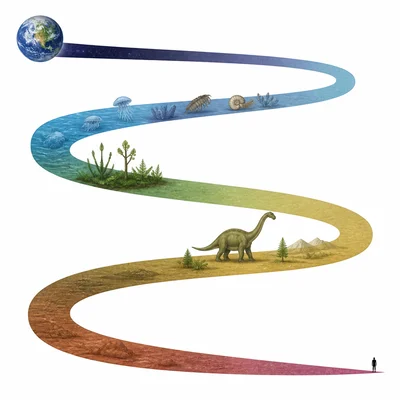
Explain why scientists use the phrase geologic time when talking about Earth's history.
- 3
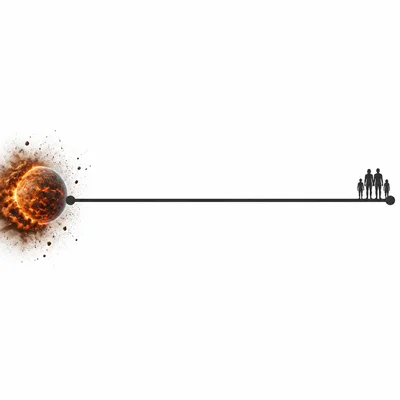
A timeline shows Earth forming 4.6 billion years ago and the first humans appearing much closer to today. What does this tell you about humans in Earth's history?
- 4
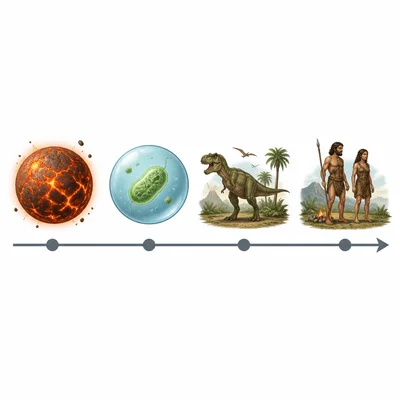
Put these events in order from oldest to most recent: dinosaurs live on Earth, Earth forms, first humans appear, first simple life appears.
- 5
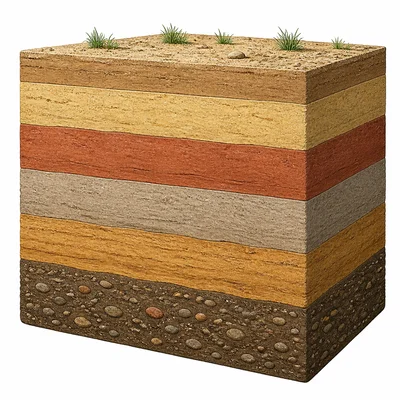
Rock layers are often stacked on top of each other. In an undisturbed stack of rock layers, which layer is usually the oldest: the top layer or the bottom layer? Explain.
- 6
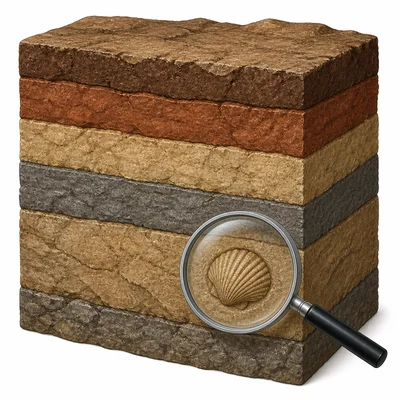
A fossil is found in a very old rock layer. What can the fossil help scientists learn?
- 7
Choose the better unit for measuring the age of Earth: days, years, millions of years, or billions of years. Explain your choice.
- 8
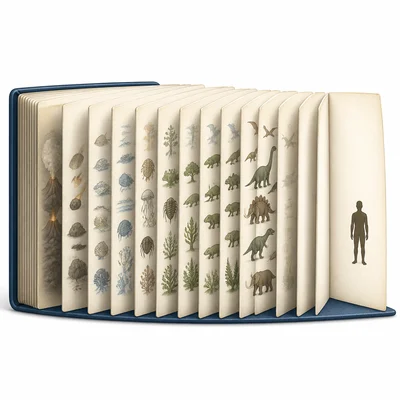
If Earth were represented by a 100-page book, and humans appeared on the last page, what does that model show?
- 9
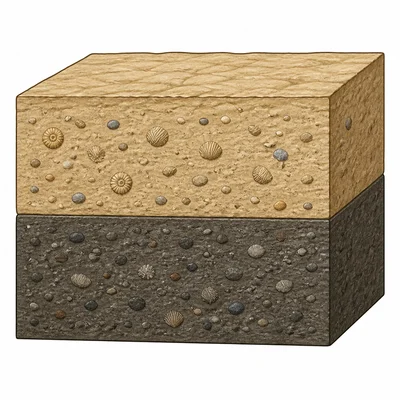
A scientist finds two rock layers. Layer A is above Layer B. The layers have not been folded or flipped. Which layer is older, and why?
- 10
Describe one reason it is hard for people to imagine 4.6 billion years.
- 11
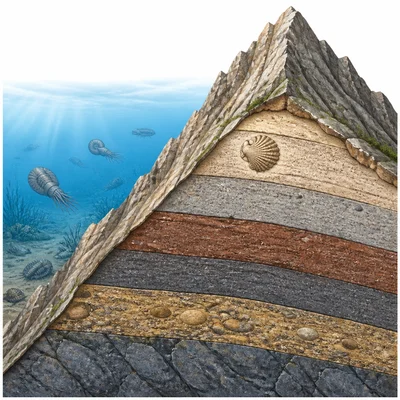
A fossil of a sea animal is found in rock high in a mountain. What might this suggest about that area long ago?
- 12
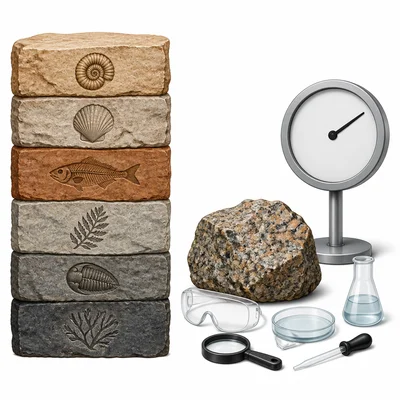
What is the main difference between relative age and exact age in geology?
- 13
A rock sample is 200 million years old. Is it older or younger than a rock sample that is 50 million years old? Explain.
- 14
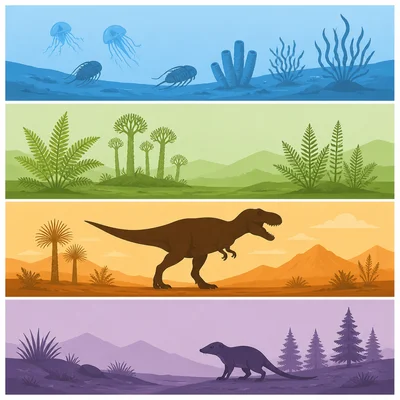
Look at a geologic time scale with four sections: Precambrian, Paleozoic, Mesozoic, and Cenozoic. Dinosaurs lived during the Mesozoic. Which section should be labeled the Age of Dinosaurs?
- 15
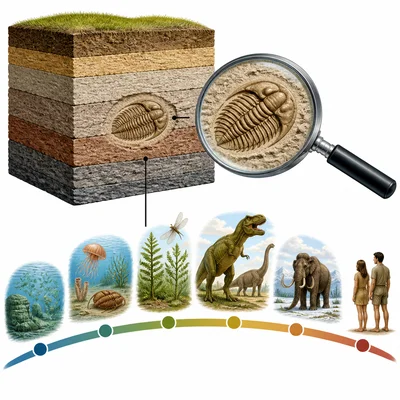
Write a short explanation of how rock layers, fossils, and timelines help scientists understand how old Earth is.