Practice explaining how volcanoes and earthquakes happen, where they are most common, and how people can stay safe.
Read each problem carefully. Use complete sentences when explaining your ideas. Show your work in the space provided.
Exploring Earth's moving plates, eruptions, and shaking ground
Earth Science - Grade 4-5
- 1
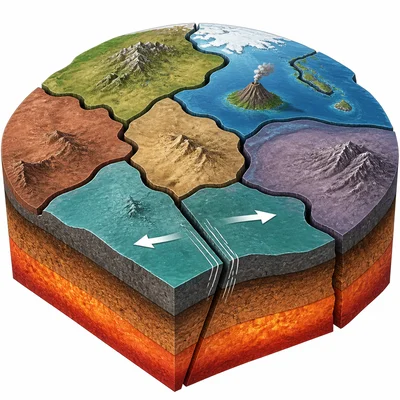
What are tectonic plates, and how can their movement cause earthquakes?
- 2
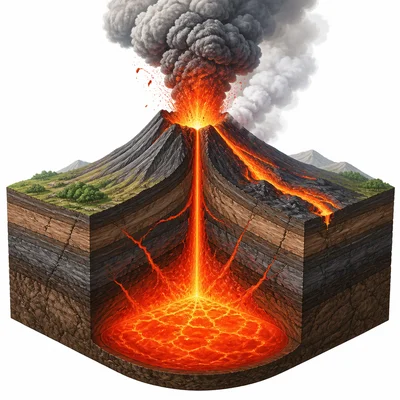
A volcano erupts and releases lava, ash, and gases. Explain the difference between magma and lava.
- 3
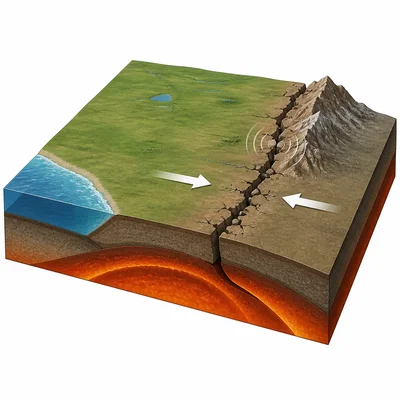
Circle the place where earthquakes are most likely to happen: the middle of a large tectonic plate or along the edge of a tectonic plate. Explain your choice.
- 4
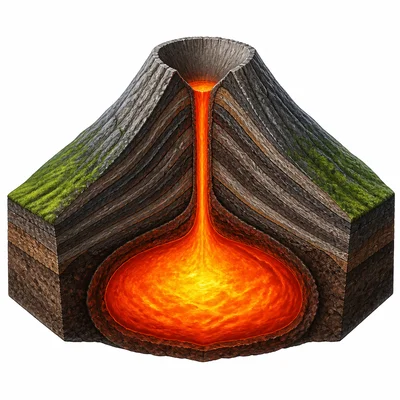
Label the three parts of a volcano in a diagram: crater, vent, and magma chamber. Then write one sentence explaining what one of those parts does.
- 5
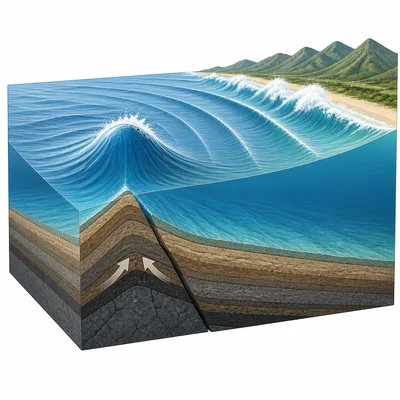
An earthquake happens under the ocean. What natural hazard can sometimes form if the seafloor suddenly moves upward or downward?
- 6
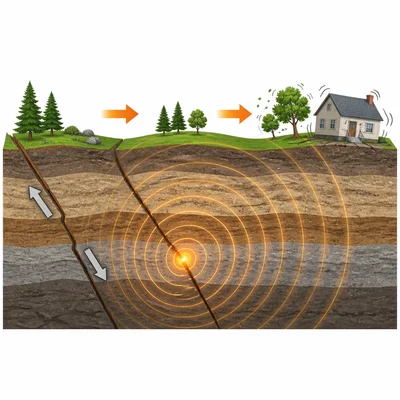
Put these earthquake events in order from first to last: energy travels as seismic waves, rocks break or slip along a fault, the ground shakes.
- 7
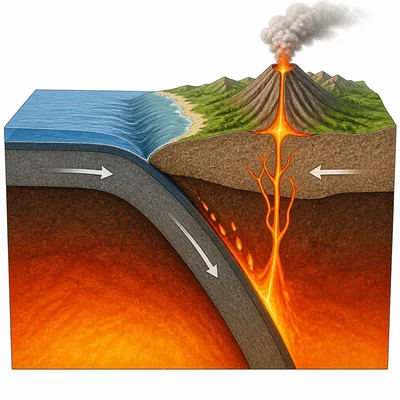
Why do many volcanoes form near tectonic plate boundaries?
- 8
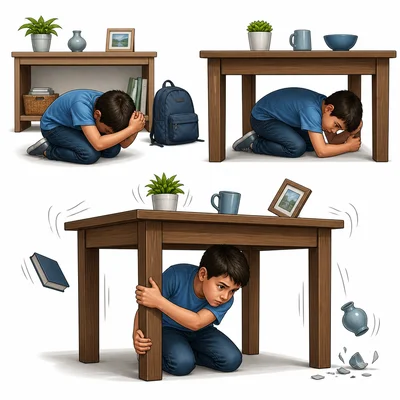
Look at a safety poster that says, 'Drop, Cover, and Hold On.' Explain what each step means during an earthquake.
- 9
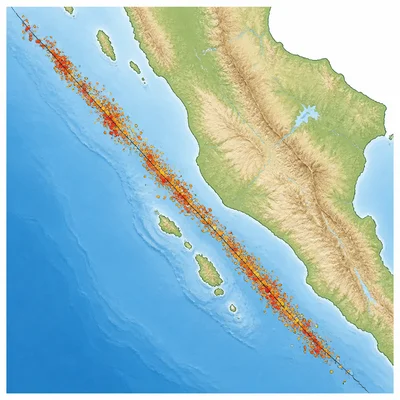
A scientist records many small earthquakes in a line across a map. What might this pattern show about the area?
- 10
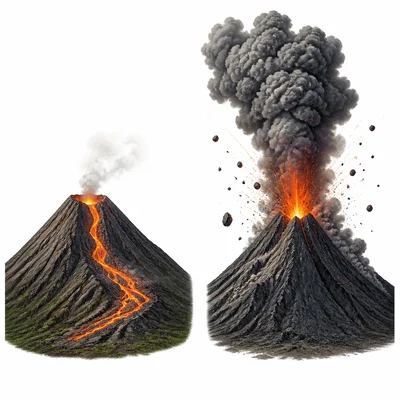
Compare a quiet volcanic eruption and an explosive volcanic eruption. Name one difference between them.
- 11
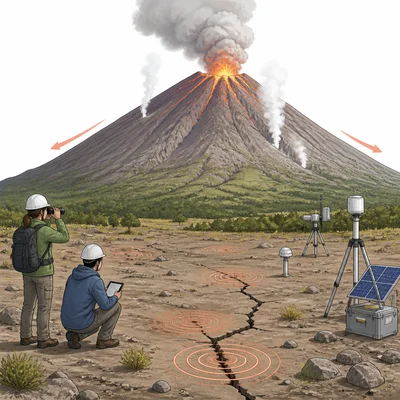
A town is near an active volcano. List two signs scientists might watch for before an eruption.
- 12
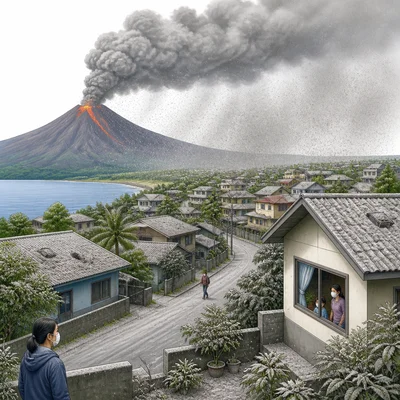
Explain why ash from a volcano can be dangerous even if the lava does not reach a town.
- 13
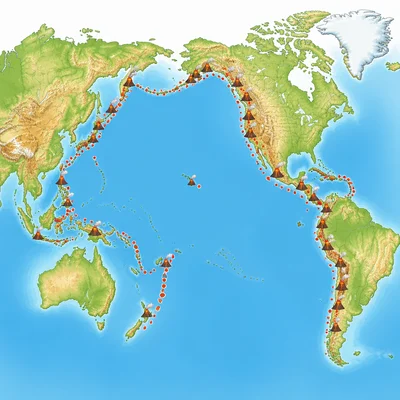
Use the map description to answer: Earthquakes are marked around the edges of the Pacific Ocean, near Japan, Alaska, the west coast of North America, and South America. What famous earthquake and volcano zone does this describe?
- 14
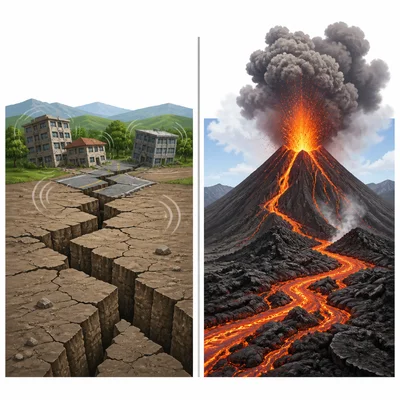
A student says, 'Earthquakes only happen when volcanoes erupt.' Is the student correct? Explain your answer.
- 15
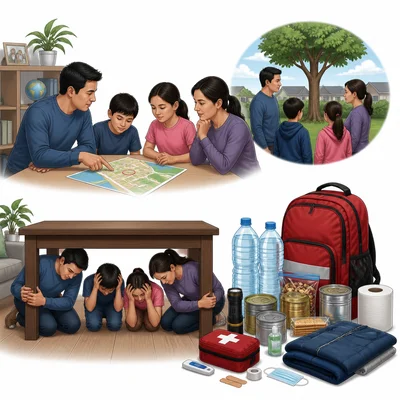
Create a simple safety plan for a family that lives in an earthquake area. Include at least three important actions.