Explore how biomedical engineers design prosthetic hands by identifying user needs, choosing materials, testing grip, and improving prototypes.
Read each problem carefully. Use complete sentences when explaining your ideas. Show calculations and label sketches when needed.
Designing, testing, and improving a model prosthetic hand
Engineering - Grade 6-8
- 1
A prosthetic hand is a device that helps replace some functions of a missing or injured hand. List three tasks a middle school student might want a prosthetic hand to help with during a normal school day.
- 2
Biomedical engineers begin by understanding the user. Write two design criteria and two constraints for a prosthetic hand made for a 12-year-old student.
- 3
A team is comparing three materials for the fingers of a model prosthetic hand. Cardboard is low cost but bends easily, craft sticks are stronger but harder to cut, and plastic strips are flexible but more expensive. Which material would you choose for a classroom prototype and why?
- 4
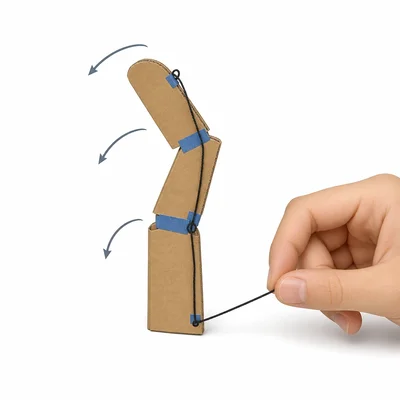
Look at a simple finger mechanism made from three cardboard segments connected by tape joints. A string runs along the front of the finger. When the string is pulled, the finger bends. Explain how this model is similar to how tendons help fingers move.
- 5
A prototype hand can lift a 200 gram cup but drops a smooth marker. What does this test result suggest about the design?
- 6
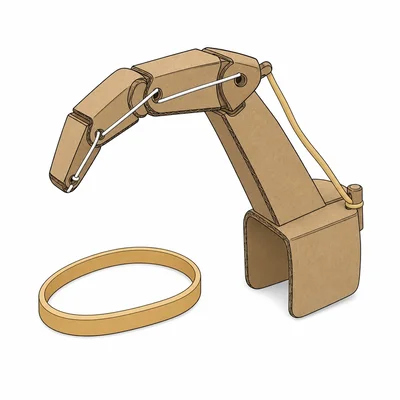
A prosthetic hand prototype has rubber bands that reopen the fingers after the strings are released. One rubber band is too weak, so the finger does not open fully. What change could improve the design?
- 7

During testing, a model prosthetic hand picks up the following objects: tennis ball, pencil, paper cup, and small box. It fails to pick up a coin. Explain why picking up a coin may be harder than picking up the other objects.
- 8
A team records grip test results for two prototypes. Prototype A lifts 4 out of 6 objects. Prototype B lifts 5 out of 6 objects but takes twice as long to put on. Which prototype is better? Explain using evidence and tradeoffs.
- 9
Calculate the success rate for a prosthetic hand that successfully picks up 9 objects during 12 trials. Write the answer as a fraction and a percent.
- 10
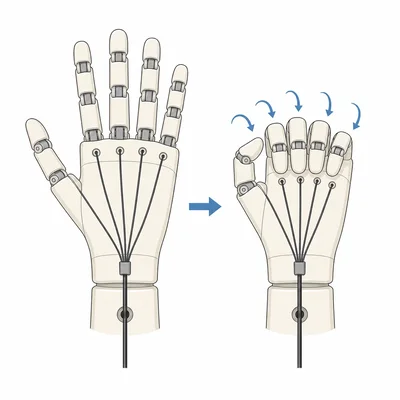
A student sketches a prosthetic hand with five fingers, but all five fingers close at exactly the same time using one string. Name one advantage and one disadvantage of this design.
- 11
Engineers often use iterative design. Put these steps in a logical order: improve the prototype, identify the problem, test the prototype, build a prototype, brainstorm possible solutions.
- 12
A user says, 'The hand works, but it hurts my wrist after a few minutes.' What design issue is the user describing, and what is one possible improvement?
- 13

A prosthetic hand prototype has a palm that is 10 centimeters long and a thumb that is only 1 centimeter long. Why might this thumb design make gripping difficult?
- 14
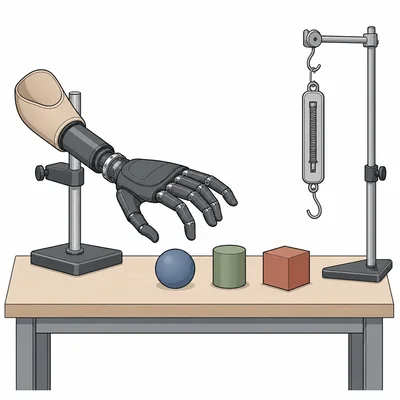
You are asked to design a test for how well a prosthetic hand can grip different shapes. Describe a fair test using at least three objects and one measurement you would record.
- 15
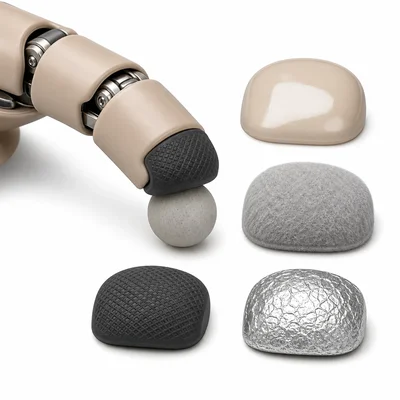
A class wants to improve the grip pads on a model prosthetic hand. They can choose smooth plastic, felt, rubber, or aluminum foil. Predict which material will likely provide the best grip and explain why.