Analyze why structures fail by connecting forces, materials, geometry, safety factors, and engineering design decisions.
Read each problem carefully. Show calculations when needed and explain your reasoning using engineering vocabulary.
Investigating loads, stresses, materials, and failure modes
Engineering - Grade 9-12
- 1
A steel cable in a small pedestrian bridge can safely carry 12,000 N before permanent damage begins. During a test, the cable is loaded with 8,000 N. Calculate the factor of safety for the cable. Then explain what the result means.
- 2
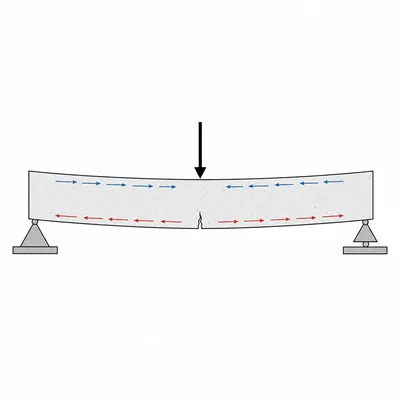
A beam has a small crack on its bottom surface near the center, where bending tension is highest. Explain why this crack is dangerous even if it is small.
- 3
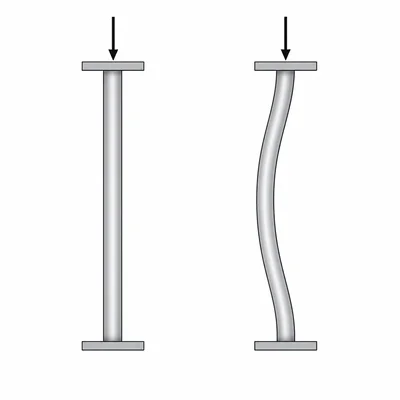
A column in a building is made longer without increasing its diameter or changing its material. Describe how this change affects the risk of buckling.
- 4
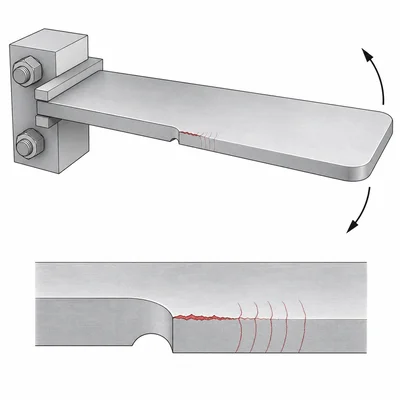
A bracket made of aluminum is repeatedly loaded and unloaded 50,000 times. It eventually breaks even though the load was always below the strength measured in a one-time test. Identify the likely failure mode and explain why it happened.
- 5
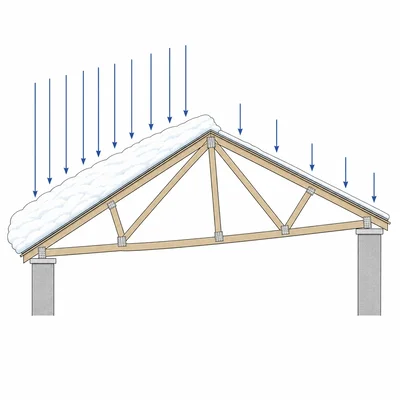
A roof truss is designed for snow, wind, and its own weight. During a severe storm, wet snow builds up unevenly on one side of the roof. Explain why uneven loading can be more dangerous than a uniform load with the same total weight.
- 6
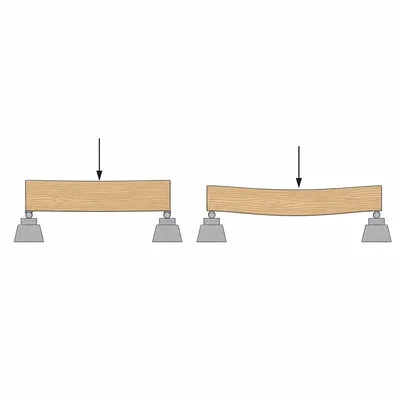
A rectangular wooden beam is 10 cm wide and 20 cm tall. Another beam has the same material and length but is rotated so it is 20 cm wide and 10 cm tall. Which orientation is better for resisting vertical bending loads, and why?
- 7
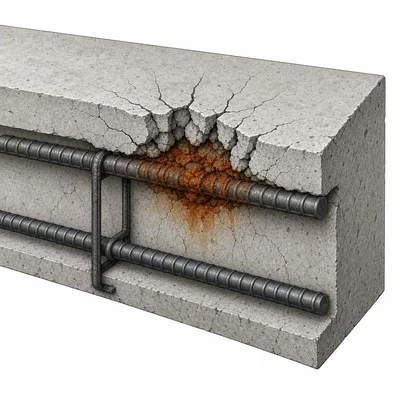
During an investigation, engineers find rust on steel reinforcement bars inside a concrete beam. Explain how corrosion can lead to structural failure.
- 8
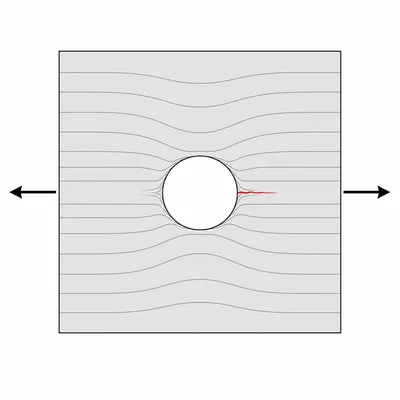
A support plate has a circular hole drilled through it for a bolt. A crack begins at the edge of the hole. Explain why holes are common locations for cracks to start.
- 9
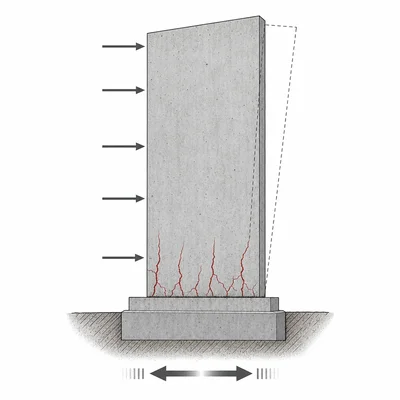
A concrete wall fails during an earthquake. It did not fall because of vertical weight alone, but because it was shaken side to side. Identify the type of loading involved and explain why it can be severe.
- 10
A bridge component has a calculated working stress of 90 MPa. The material yield strength is 250 MPa. Calculate the factor of safety against yielding. State whether a factor of safety of 2.0 is met.
- 11
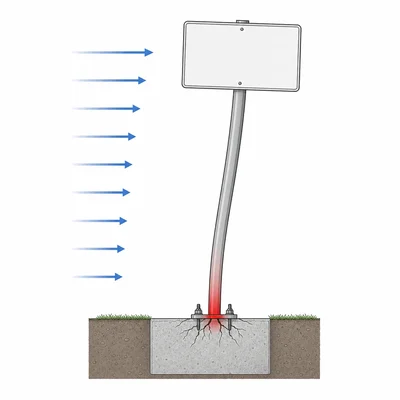
A tall signpost fails on a windy day at the base rather than halfway up the pole. Explain why the base is often the most critical location for this kind of structure.
- 12
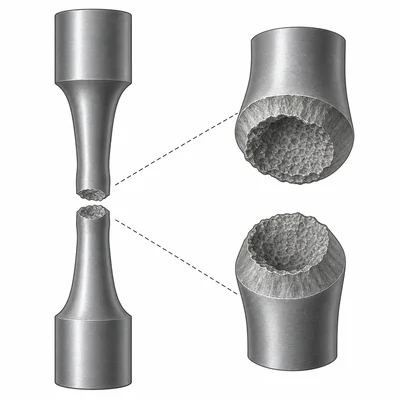
In a failure analysis report, an engineer writes that the failed part showed ductile behavior. Describe two signs that would support this conclusion.
- 13
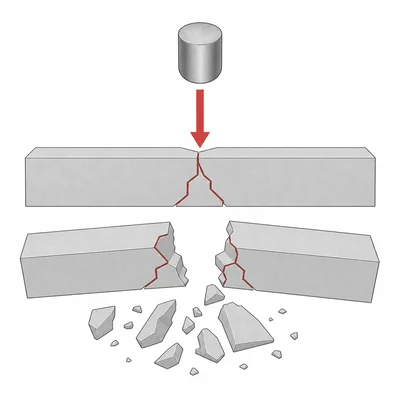
A brittle ceramic support breaks suddenly with almost no visible bending or stretching. Explain why brittle materials can be risky in structures that may experience impact or sudden loads.
- 14
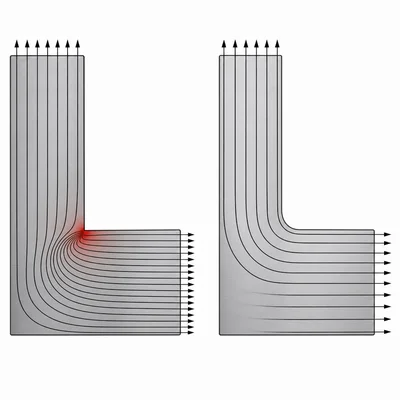
A team redesigns a metal part by replacing a sharp inside corner with a rounded fillet. Explain how this change can reduce the chance of failure.
- 15
A structure failed after a contractor substituted a lower-grade material without updating the design calculations. Explain why material substitutions must be reviewed by engineers before construction.