Investigate food systems, food miles, transportation choices, and the environmental impacts of how food is grown, processed, moved, and eaten.
Read each problem carefully. Show your thinking and use complete sentences when explaining your answer.
Exploring how food travels from farm to plate
Environmental Science - Grade 6-8
- 1
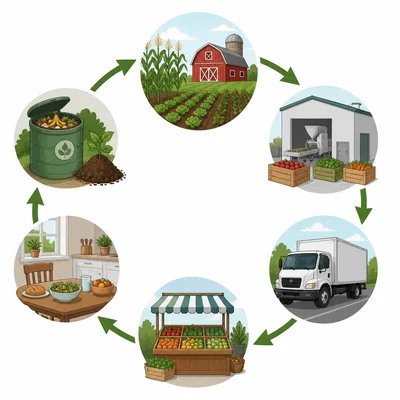
Define the term food system in your own words. Include at least three parts of a food system in your definition.
- 2
A carton of strawberries travels 45 miles from a local farm to a farmers market. Another carton travels 1,250 miles from a distant farm to a supermarket. How many more food miles does the distant carton travel?
- 3
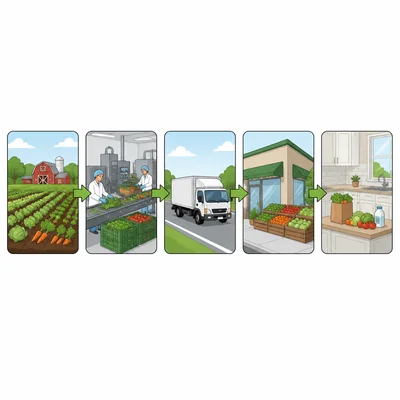
Look at the food system diagram. Put these steps in the correct order: grocery store, processing plant, farm, home kitchen, truck transportation.
- 4
Explain why food miles can be useful when comparing two foods, but may not tell the whole environmental story.
- 5
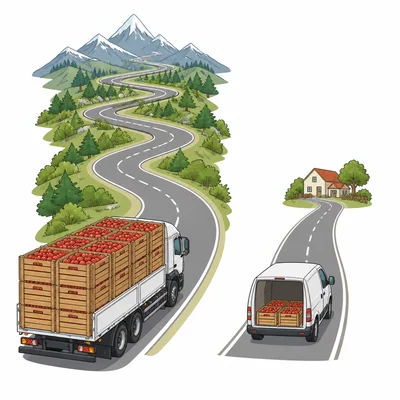
A truck carries 2,000 kilograms of apples for 300 miles. A small van carries 100 kilograms of apples for 80 miles. Which trip has more total food miles if total food miles are calculated as kilograms multiplied by miles?
- 6
The chart shows four foods and the distance each traveled to reach a school cafeteria. Which food has the lowest food miles, and which has the highest?
- 7
A school wants to reduce the environmental impact of its lunches. List two actions the school could take related to food systems or food miles.
- 8
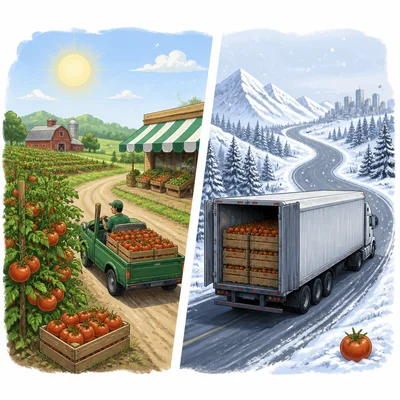
Why might a locally grown tomato in summer have a lower environmental impact than a tomato shipped from far away in winter?
- 9
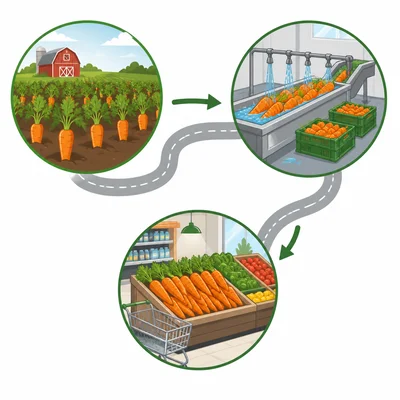
A food label says the carrots were grown 20 miles away, washed at a facility 60 miles away, and then delivered 15 miles to the store. What is the total distance in this food journey?
- 10
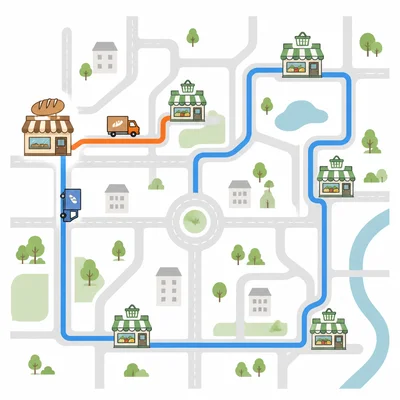
Examine the map showing two delivery routes for bread. Route A is 50 miles. Route B is 85 miles but delivers to five stores instead of one. Explain one reason Route B might still be efficient.
- 11
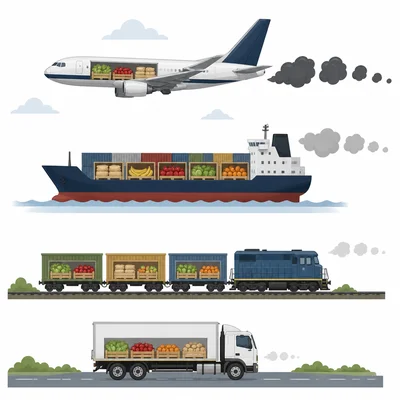
Some foods travel by airplane, ship, train, or truck. Explain why the type of transportation matters for environmental impact.
- 12
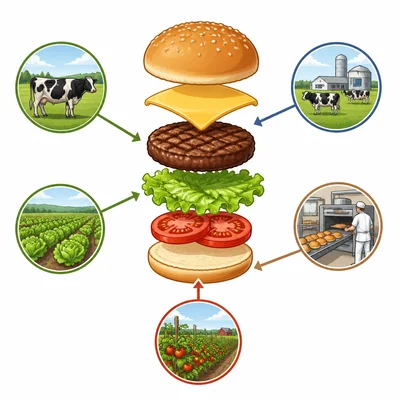
The diagram shows a hamburger with ingredients from different places: beef 600 miles, lettuce 40 miles, tomato 200 miles, bun 90 miles, and cheese 150 miles. Which ingredient has the greatest food miles, and what is the total listed distance for all ingredients?
- 13
Describe one environmental benefit and one possible challenge of buying food from a local farmers market.
- 14

A family throws away one-fourth of a bag of salad that traveled 700 miles. Explain why food waste increases the environmental impact of food miles.
- 15
Create a simple plan for one meal that lowers food miles or reduces food system impact. Name the meal and explain two choices you made.