Practice reading fitness data, identifying heart rate zones, and explaining how recovery heart rate can show changes in fitness.
Read each problem carefully. Use the formulas and data provided. Show your work in the space provided.
Use heart rate data to understand exercise intensity and recovery
Health - Grade 6-8
- 1
A common estimate for maximum heart rate is 220 minus age. Maya is 12 years old. What is her estimated maximum heart rate?
- 2
Use Maya's estimated maximum heart rate of 208 beats per minute. Her moderate zone is 50% to 70% of her maximum heart rate. What is her moderate zone range? Round to the nearest whole number.
- 3
A fitness tracker shows Jordan's heart rate during a workout: 92, 118, 135, 158, and 122 beats per minute. Which reading is the highest intensity moment?
- 4
A student's target heart rate zone for vigorous activity is 150 to 180 beats per minute. During soccer practice, their heart rate is 162 beats per minute. Is the student in the vigorous zone?
- 5
Lina checks her heart rate right after jogging and again one minute later. Right after jogging, it is 168 beats per minute. One minute later, it is 132 beats per minute. How much did her heart rate decrease?
- 6
Recovery heart rate is how much the heart rate drops after exercise. A larger drop during the first minute often shows better recovery. Student A drops from 170 to 140 beats per minute. Student B drops from 165 to 150 beats per minute. Which student had the larger one-minute recovery drop?
- 7
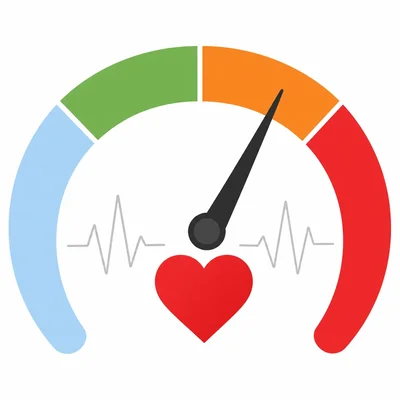
Use this zone guide: light activity is 50% to 60% of maximum heart rate, moderate activity is 60% to 70%, vigorous activity is 70% to 85%, and near maximum is 85% to 100%. A student has a maximum heart rate of 200 beats per minute and is exercising at 150 beats per minute. What percent of maximum heart rate is this, and which zone is it?
- 8
During a bike ride, Sam records these heart rates every 5 minutes: 105, 128, 142, 146, 138, and 120 beats per minute. What is the range of the heart rate data?
- 9
A student wants to stay in a moderate zone of 120 to 150 beats per minute. Their heart rate readings are 116, 124, 139, 151, and 147 beats per minute. Which readings are in the moderate zone?
- 10
A class compares average resting heart rates before and after four weeks of regular activity. The average resting heart rate was 78 beats per minute before and 74 beats per minute after. What changed, and by how much?
- 11
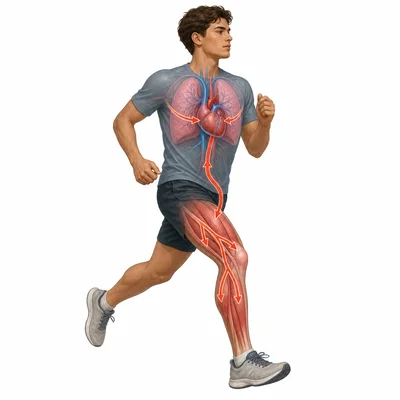
Explain why a person's heart rate usually increases during exercise.
- 12
Nico's heart rate is 176 beats per minute during a sprint. His estimated maximum heart rate is 208 beats per minute. What percent of his maximum heart rate is he using? Round to the nearest whole percent.
- 13

A cool-down walk helps heart rate return toward resting level. Kai's heart rate after exercise is 160 beats per minute. After 2 minutes of walking, it is 128 beats per minute. After 4 minutes, it is 104 beats per minute. Describe the trend in Kai's heart rate.
- 14
A student's resting heart rate is 72 beats per minute. After jumping rope, the student's heart rate is 156 beats per minute. How many beats per minute above resting is the exercise heart rate?
- 15

Write one safe choice a student should make if their heart rate feels too high, they feel dizzy, or they have chest pain during exercise.