Explore how sleep, circadian rhythms, and healthy routines affect learning, attention, memory, and well-being.
Read each problem carefully. Answer in complete sentences when possible. Show your thinking in the space provided.
How sleep timing and habits support memory, mood, and school success
Health - Grade 6-8
- 1
Define sleep in your own words. Include at least two reasons sleep is important for middle school students.
- 2

A circadian rhythm is the body's internal 24-hour clock. Name two body functions or behaviors that are affected by circadian rhythms.
- 3
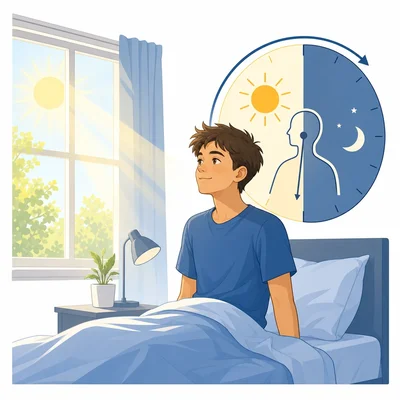
Explain how bright light in the morning can help a person's circadian rhythm.
- 4
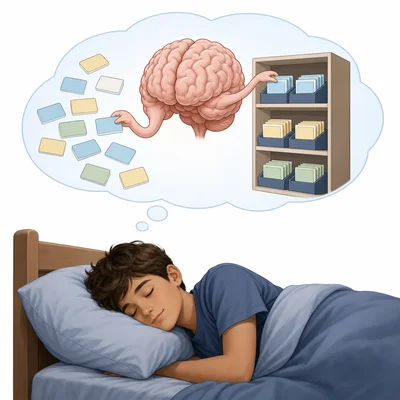
A student studies for a vocabulary quiz and then sleeps for 8.5 hours. Explain how sleep may help the student remember the words.
- 5
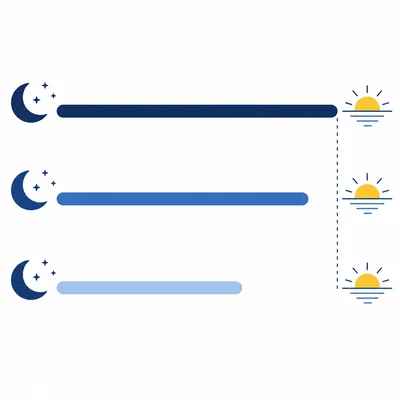
Look at this sleep schedule: Monday 10:00 p.m. to 6:30 a.m., Tuesday 10:30 p.m. to 6:30 a.m., Wednesday 11:45 p.m. to 6:30 a.m. Which night gave the student the most sleep, and how many hours was it?
- 6
The American Academy of Sleep Medicine recommends that students ages 6-12 get 9-12 hours of sleep and teens ages 13-18 get 8-10 hours. If a 13-year-old sleeps 6.5 hours on a school night, is that enough? Explain.
- 7
List three possible effects of not getting enough sleep before school.
- 8
A student says, "I can catch up on all my missed sleep by sleeping until noon every weekend." Explain why this may not fully solve the problem.
- 9
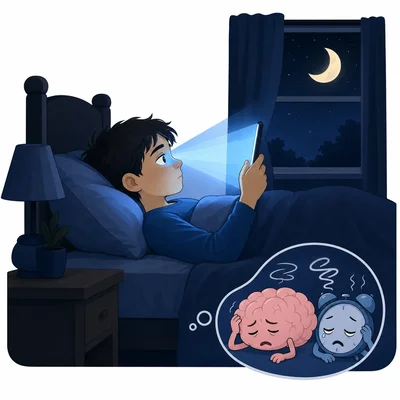
Explain how using a phone or tablet right before bed might affect sleep.
- 10
Read the habits below and circle the two that best support healthy sleep: A. Drink an energy drink at 8:00 p.m. B. Keep a consistent bedtime and wake time. C. Do a calming routine before bed. D. Play fast video games in bed.
- 11
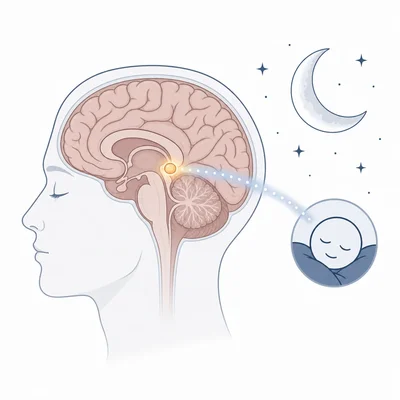
What is melatonin, and what role does it play in sleep?
- 12
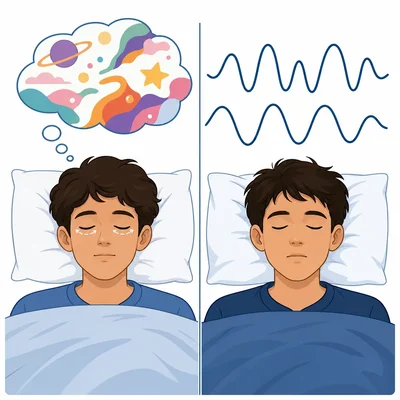
A class is learning about sleep stages. Explain the difference between REM sleep and deep sleep in simple terms.
- 13
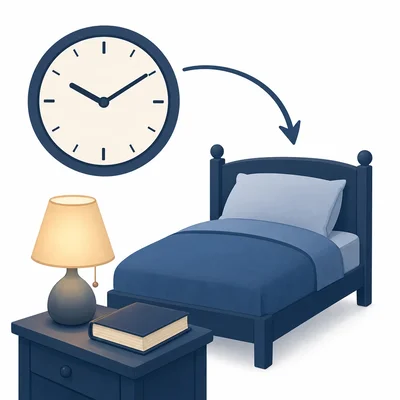
Create a one-night sleep plan for a student who needs to wake up at 6:30 a.m. and wants about 9 hours of sleep. Include a bedtime and one relaxing activity before bed.
- 14
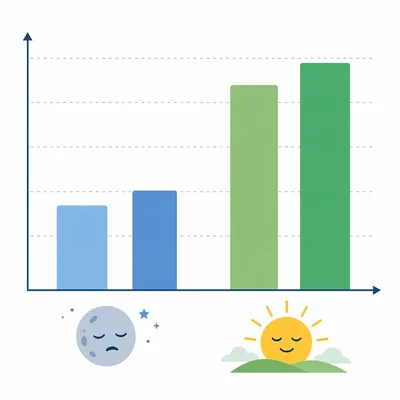
A graph shows that a student scores higher on memory quizzes after nights with 8-9 hours of sleep than after nights with 5-6 hours. Write one conclusion supported by the graph.
- 15
Write a short advice message to a friend who often stays up late before tests. Include two specific sleep habits that could help their learning.