Earth Science Grade 4-5

Science: Volcanoes: Types, Formation, and Eruptions

Learning how volcanoes form, what types exist, and how they erupt

View Answer Key
Name:
Date:
Score: / 12

Science: Volcanoes: Types, Formation, and Eruptions

Learning how volcanoes form, what types exist, and how they erupt

Earth Science - Grade 4-5

Instructions: Read each problem carefully. Use complete sentences and scientific vocabulary when you can. Show your thinking in the space provided.
  1. 1
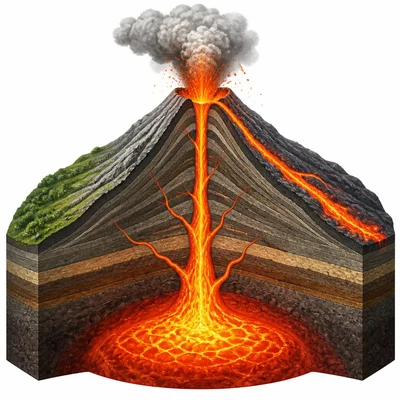
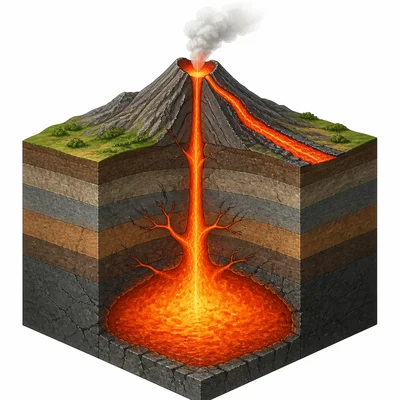
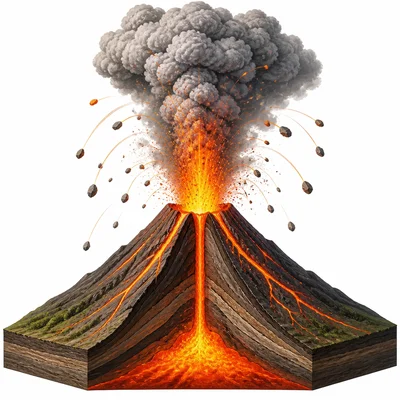
    Cutaway view of a volcano with magma below and lava flowing from the top.

    What is a volcano?

  2. 2
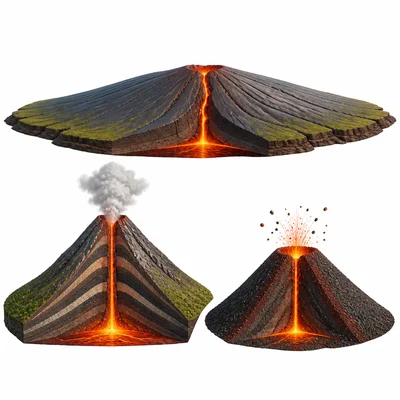
    Three different volcano shapes: shield, composite, and cinder cone.

    Name the three main types of volcanoes often studied in elementary science.

  3. 3
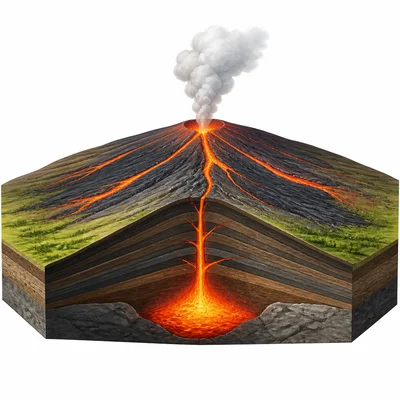
    A broad shield volcano with gentle slopes and flowing lava.

    Describe one feature of a shield volcano.

  4. 4
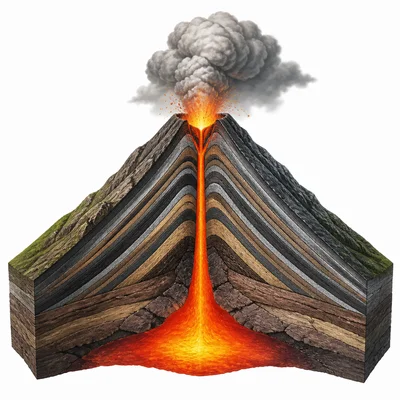
    A steep composite volcano showing layered rock and ash.

    Describe one feature of a composite volcano.

  5. 5
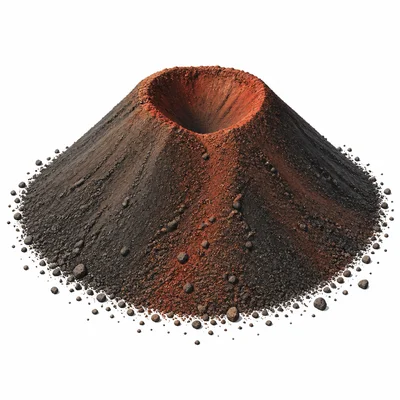
    A small steep cinder cone volcano with a crater and scattered cinders.

    Describe one feature of a cinder cone volcano.

  6. 6
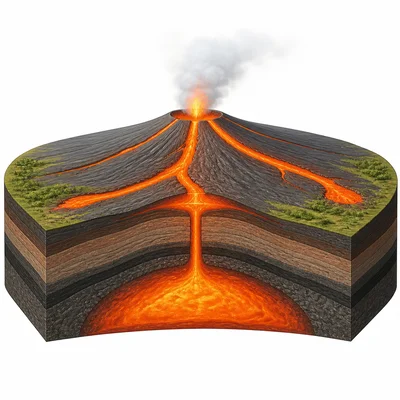
    Magma rises underground and becomes lava when it reaches the surface.

    How does magma become lava?

  7. 7
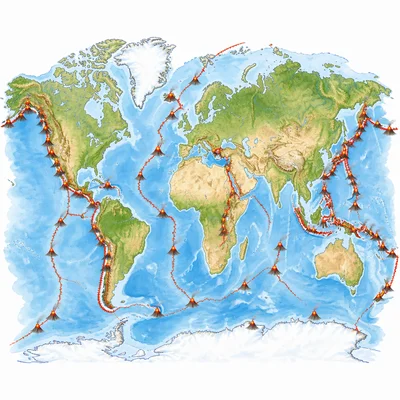
    World map showing many volcanoes along plate boundaries, especially around the Pacific.

    Where do many volcanoes form on Earth?

  8. 8
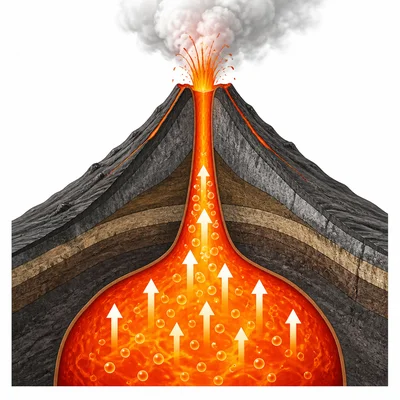
    Pressure from gas in magma pushes upward inside a volcano.

    Explain how pressure inside Earth can cause a volcano to erupt.

  9. 9
    A volcano erupting lava, ash, gas, and rock fragments.

    List two materials that can come out of a volcano during an eruption.

  10. 10
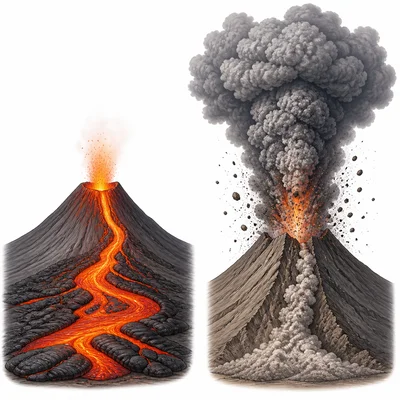
    Side-by-side quiet lava flow eruption and explosive ash eruption.

    Why are some volcanic eruptions quiet while others are explosive?

  11. 11
    A wide volcano with gentle slopes and easy-flowing lava.

    A volcano has wide, gentle slopes and lava that flows easily. What type of volcano is it most likely to be?

  12. 12
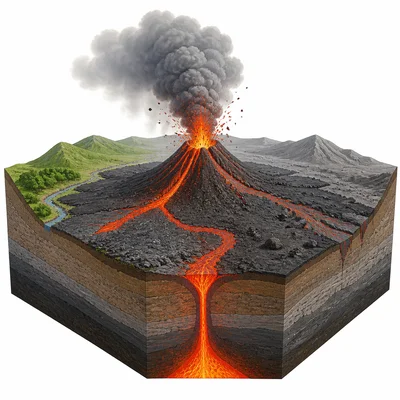
    A volcanic eruption changes the land with new rock, ash, and a small cone.

    How can volcanic eruptions change Earth's surface?

LivePhysics.com Earth Science - Grade 4-5

More Earth Science Worksheets

See all Earth Science worksheets

More Grade 4-5 Worksheets

See all Grade 4-5 worksheets