Why Does Ice Float on Water?
Water expands when it freezes
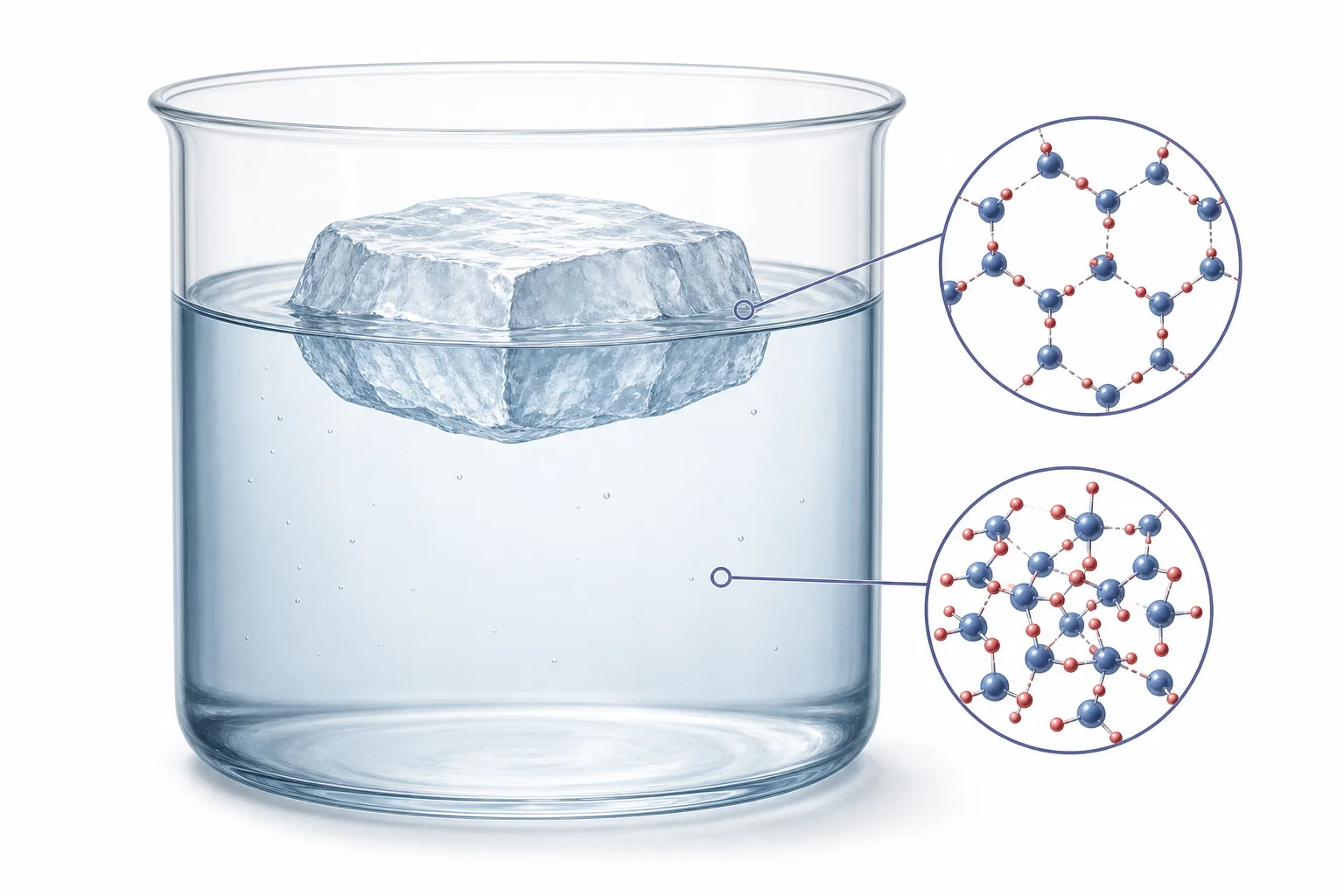
Ice floats because frozen water takes up more space than the same amount of liquid water. That extra space makes ice lighter for its size, so water can hold it up. Most solids sink in their own liquid, but water is unusual.
A glass of ice water shows a chemistry puzzle in plain sight. The ice stays at the top instead of sinking to the bottom. That happens because water changes its spacing when it freezes. In liquid water, tiny water particles move around and slide past each other. In ice, those particles lock into an open pattern with more empty space. The amount of water is the same, but its volume gets larger. Density compares how much matter is packed into a certain amount of space. A less dense material floats on a more dense liquid. Ice is less dense than liquid water, so it floats. This small fact matters beyond a drinking glass. Floating ice helps ponds and lakes freeze from the top down, which protects water below and the living things inside it during cold weather.
Density decides floating
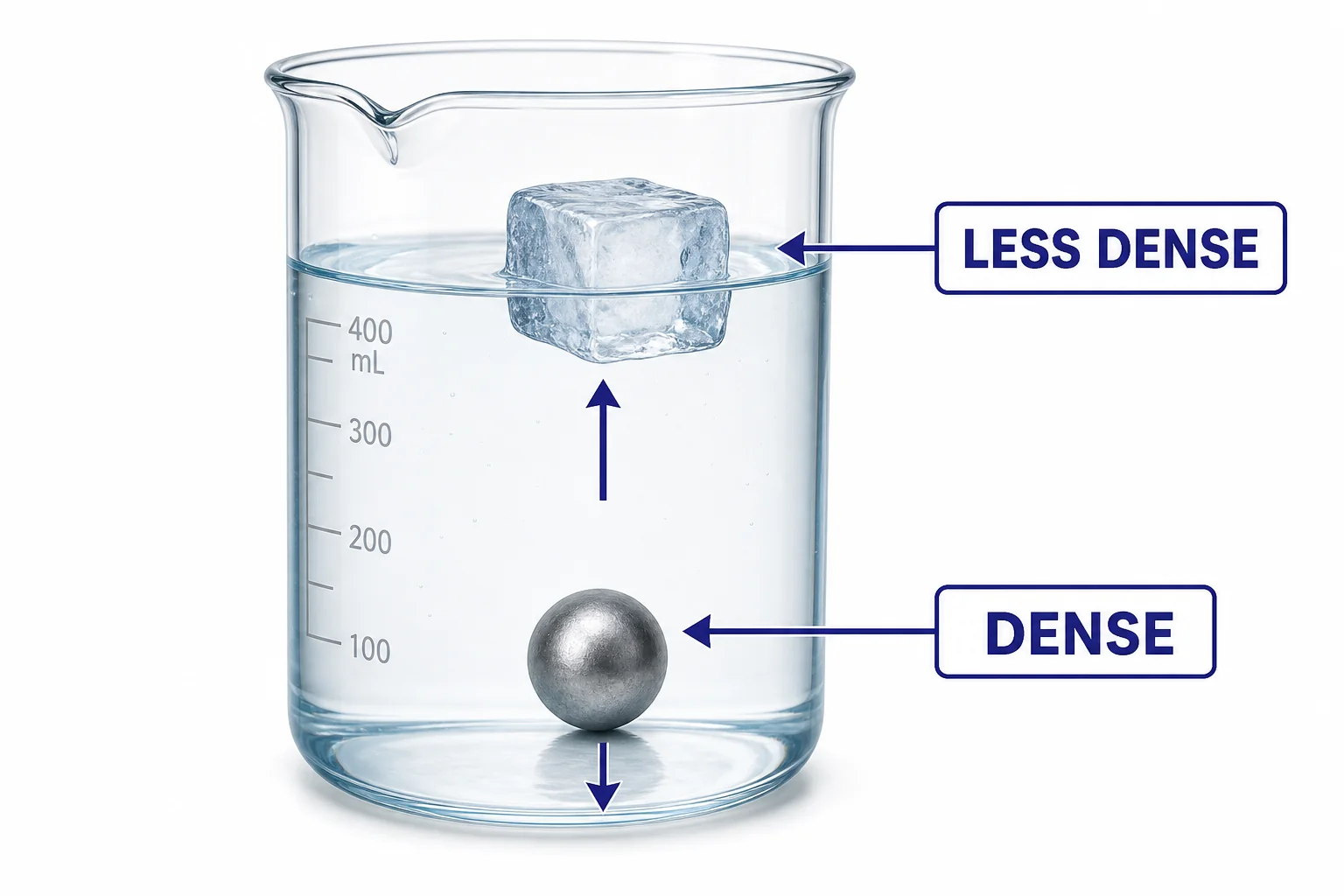
Ice floats because its density is lower than liquid water.
Water particles have a shape
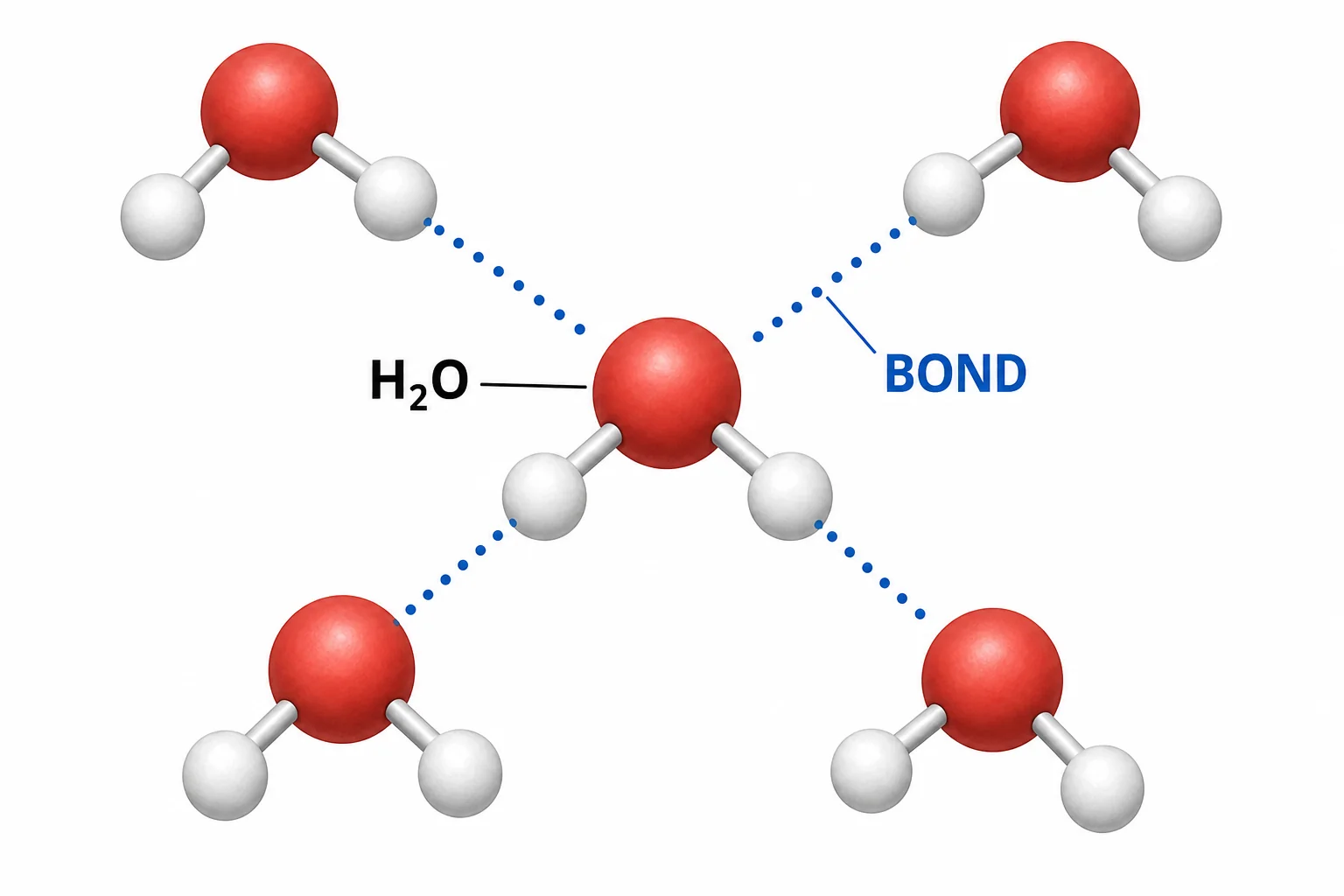
The bent shape of water molecules helps them form hydrogen bonds.
Ice makes an open crystal
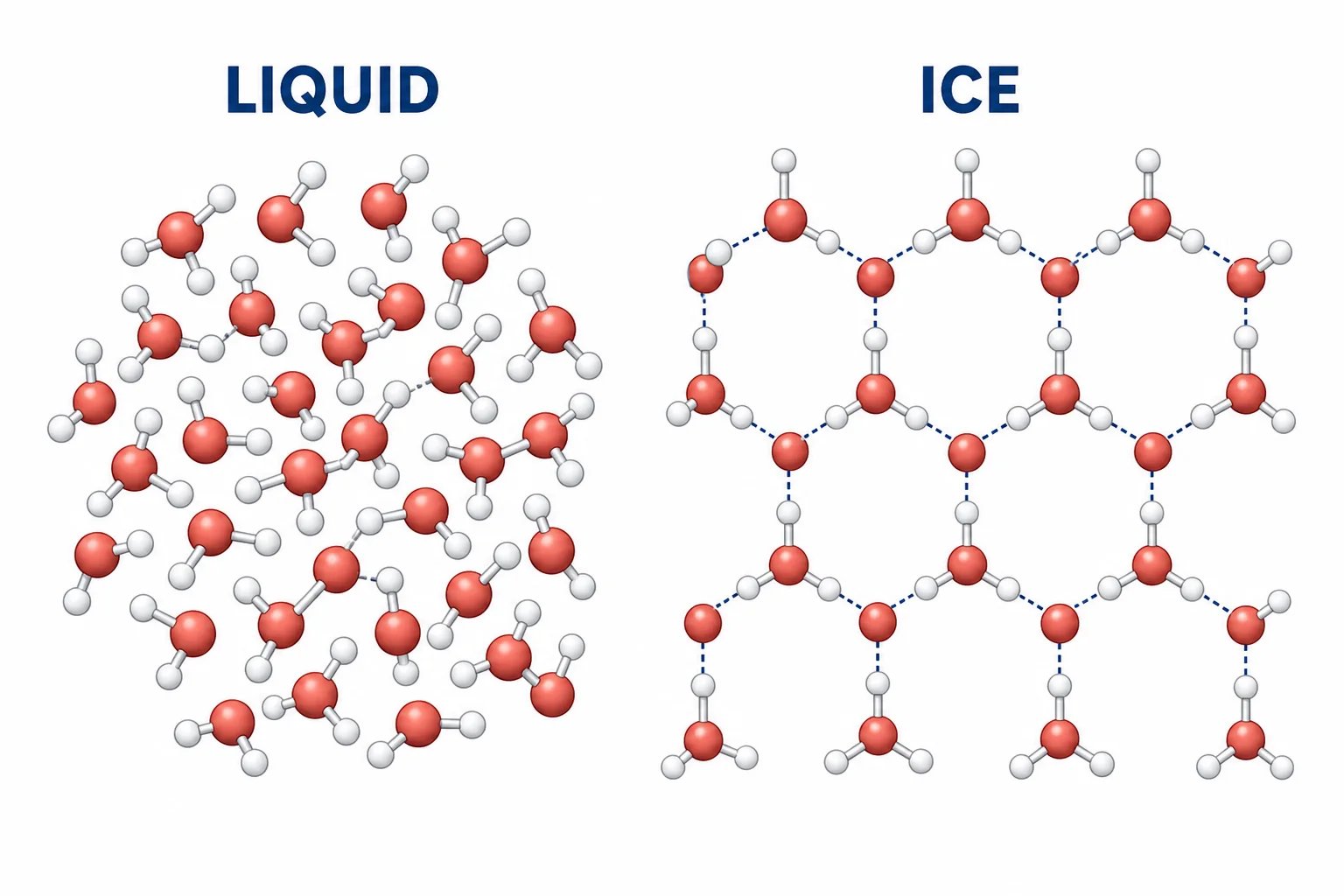
Freezing spreads water molecules into a larger space.
A floating cube is partly underwater
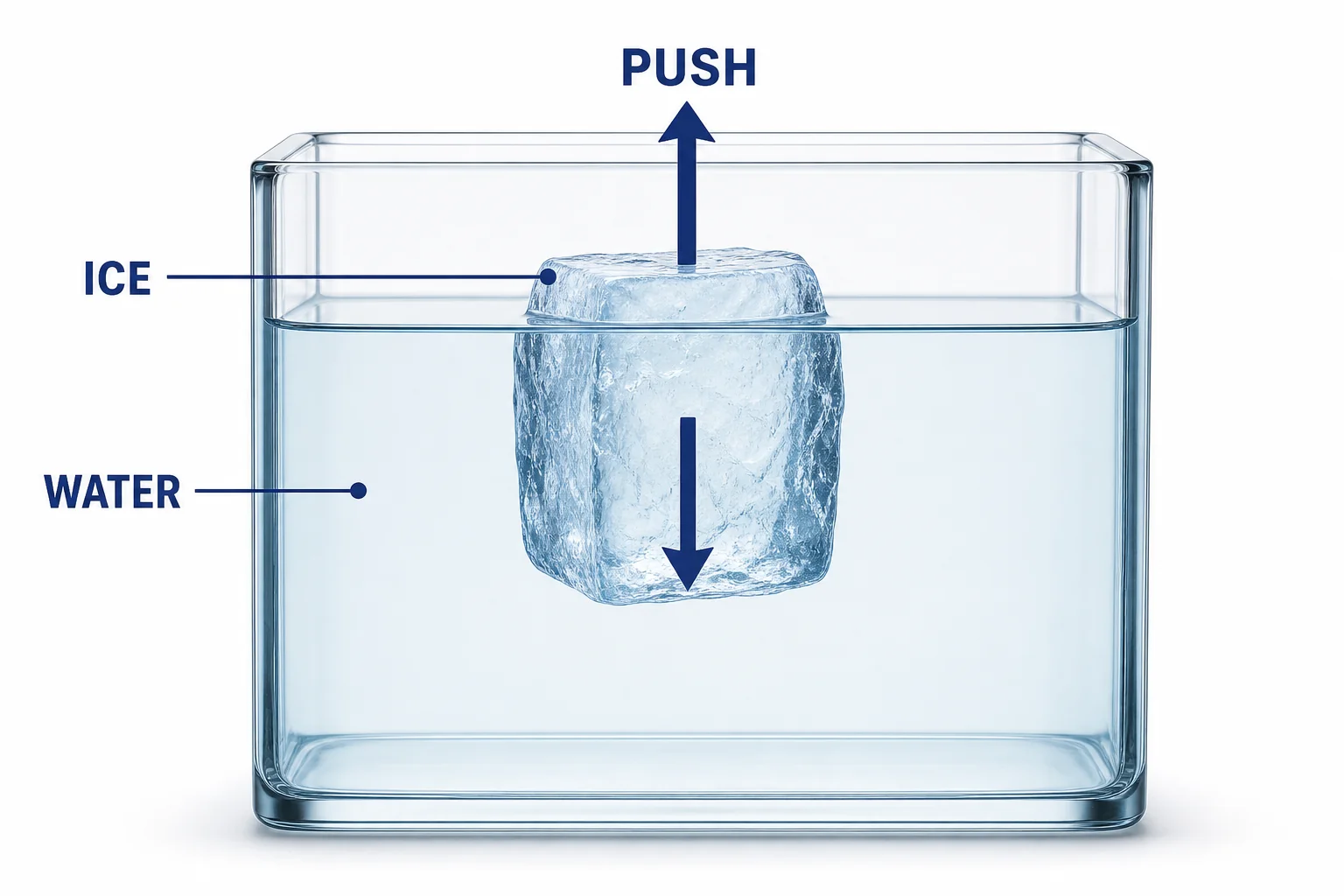
Floating means balanced forces, not being weightless.
Floating ice protects water below
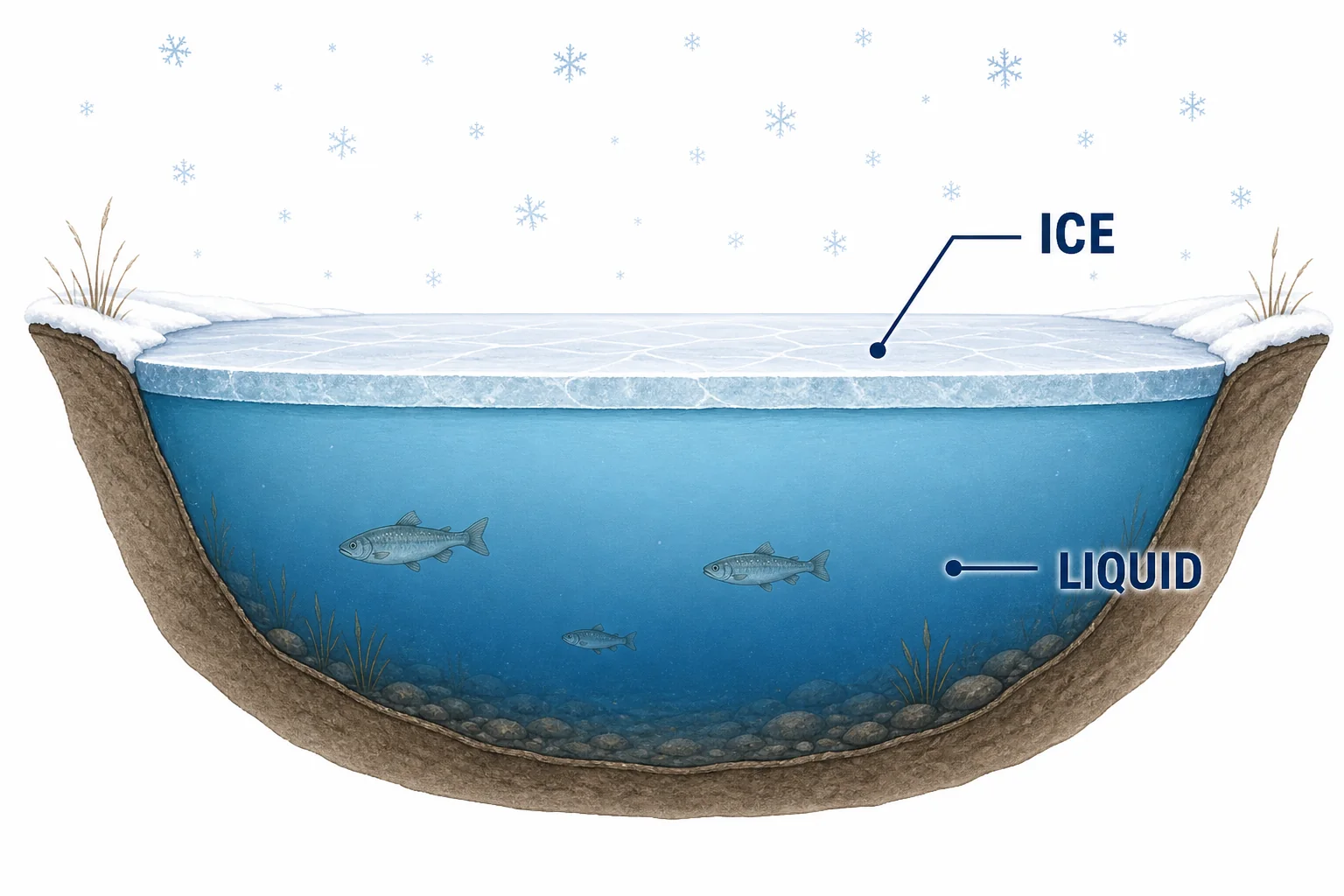
Floating ice helps keep liquid water available under frozen surfaces.
Vocabulary
- Density
- A measure of how much mass is packed into a certain volume.
- Molecule
- A group of atoms bonded together. A water molecule has two hydrogen atoms and one oxygen atom.
- Hydrogen bond
- A weak attraction between a hydrogen atom on one molecule and a nearby atom on another molecule.
- Crystal structure
- A repeating arrangement of particles in a solid.
- Buoyancy
- The upward push from a fluid on an object placed in it.
In the Classroom
Compare floating and sinking objects
20 minutes | Grades 6-8
Students test small objects in water and sort them by whether they float or sink. They connect the results to density instead of size alone.
Model liquid water and ice
25 minutes | Grades 6-8
Students use ball-and-stick pieces or paper circles to model water molecules. They arrange one set close together for liquid water and another set in an open repeating pattern for ice.
Observe ice volume change
15 minutes plus freezing time | Grades 6-8
Students mark the water level in a clear cup before freezing it, then compare the level after the water becomes ice. The class discusses how a change in volume changes density.
Key Takeaways
- • Ice floats because it is less dense than liquid water.
- • Water expands when it freezes because its molecules form an open crystal structure.
- • Hydrogen bonds help water molecules arrange into the structure of ice.
- • A floating ice cube is mostly underwater because it is only slightly less dense than liquid water.
- • Floating ice helps lakes and ponds keep liquid water below the surface in winter.