Why Does Popcorn Pop?
A tiny steam engine inside a seed
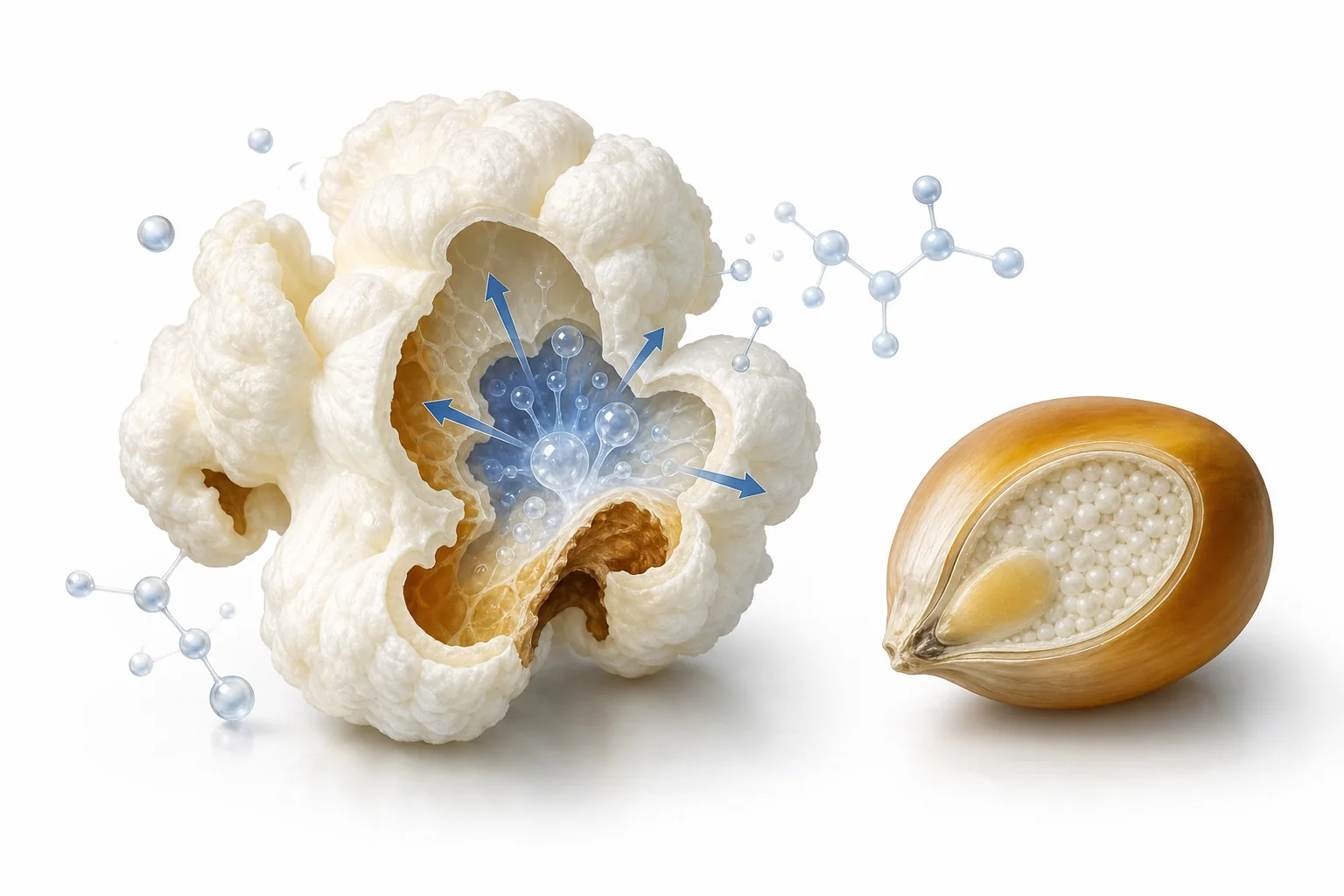
Popcorn pops because each kernel has a little water trapped inside. Heat turns that water into steam, and the steam pushes harder and harder on the shell. When the shell breaks, the soft starch inside expands into the fluffy popcorn we eat.
A popcorn kernel looks small and dry, but it is not empty. Inside the hard shell is a tiny amount of water and a packed center made mostly of starch. When the kernel is heated, the water gets hot and changes from liquid water to water vapor. That vapor takes up more space than the liquid water did. The hard shell holds the vapor in for a while, so pressure builds inside the kernel. At the same time, the starch softens and becomes stretchy. When the pressure gets too high, the shell cracks open. The starch rushes out, expands, and cools into a white puff. This is chemistry because matter changes when energy is added. The kernel starts as a hard seed. It ends as a new shape with the same main materials, but a very different structure.
A kernel is a sealed package
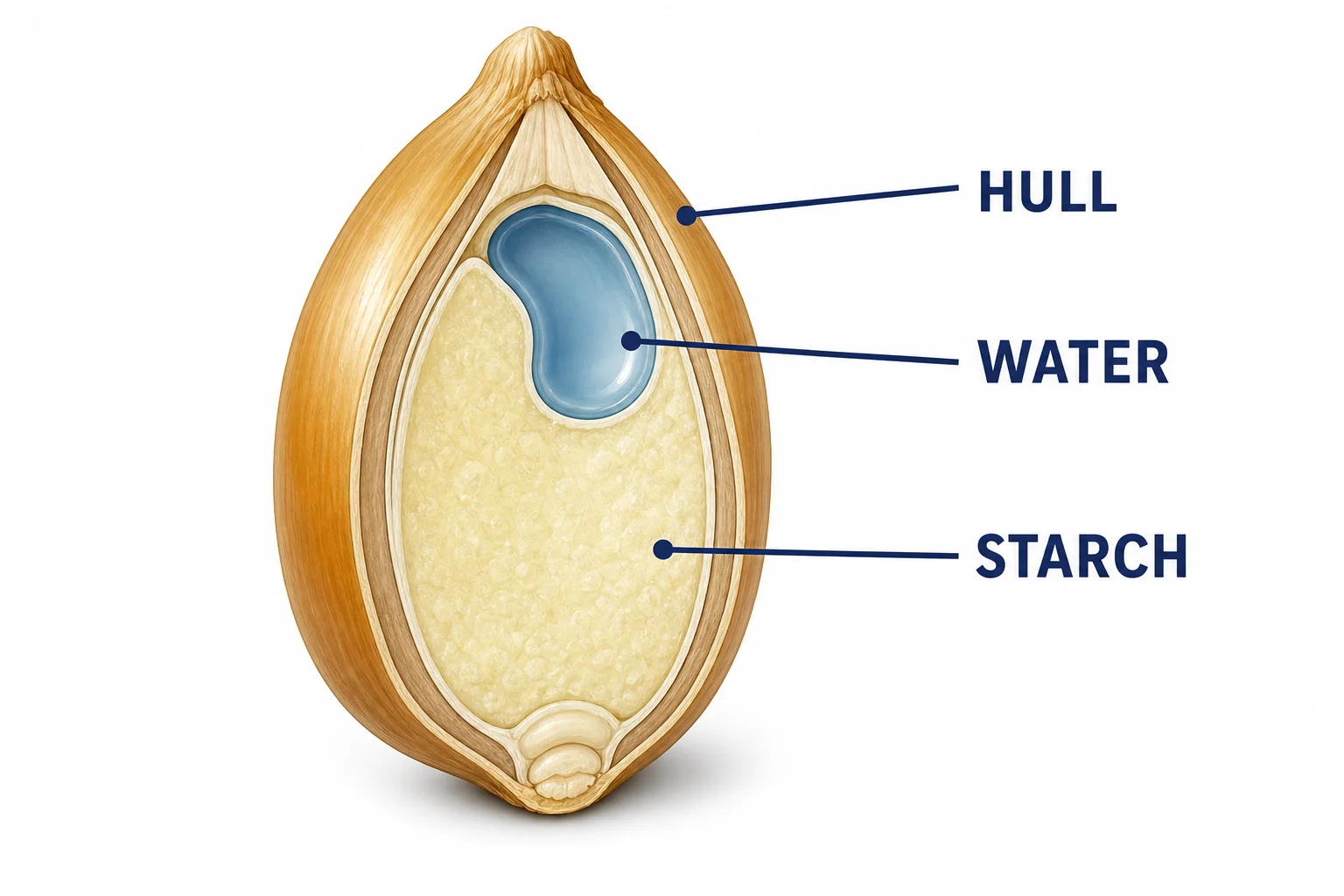
The hard hull lets pressure build before the kernel opens.
Heat changes water into vapor
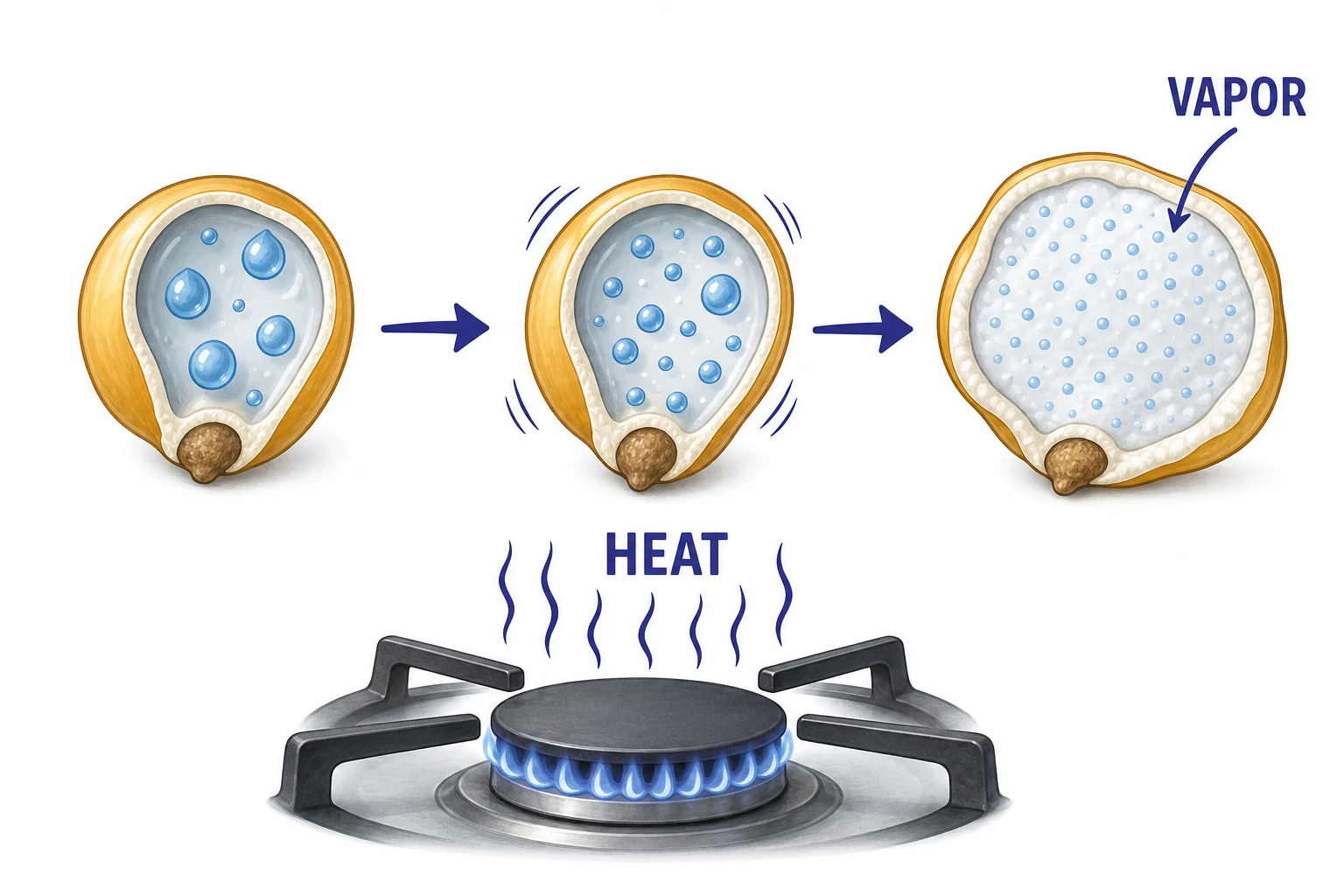
The pop begins when water inside the kernel becomes trapped vapor.
Pressure builds inside
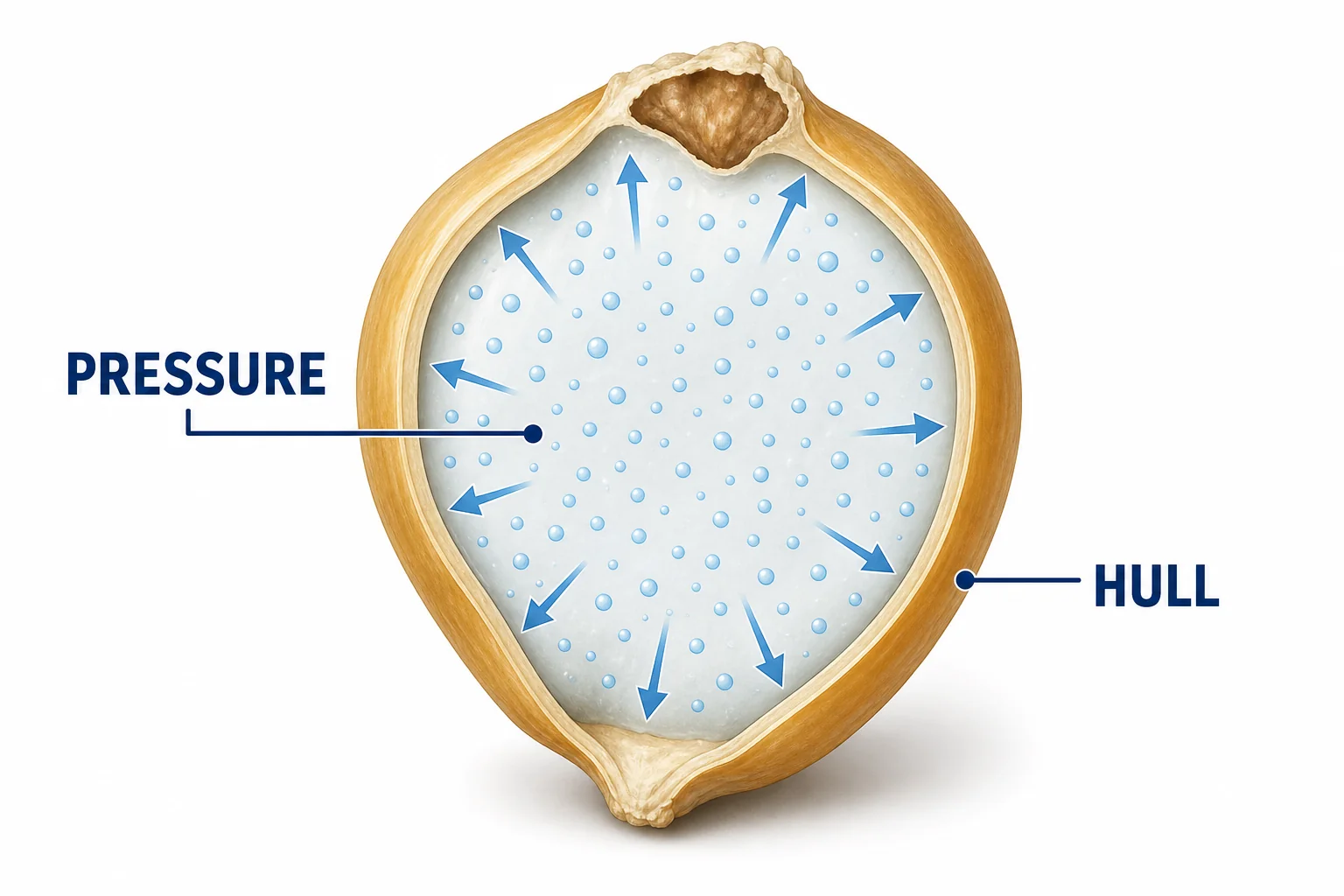
Pressure is a push, and trapped vapor makes that push stronger.
The starch expands
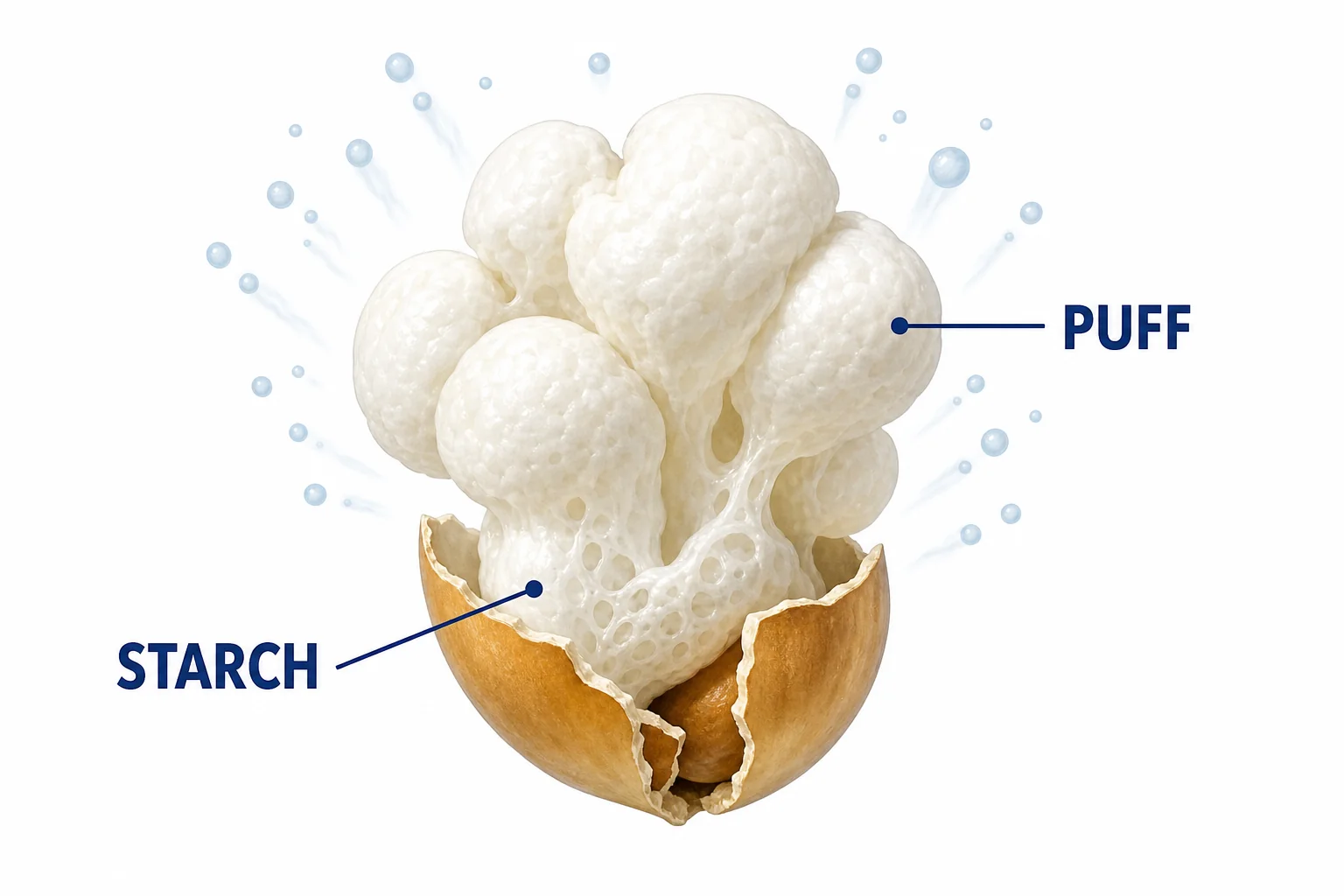
The fluffy part is starch that expanded and cooled.
Not every kernel pops
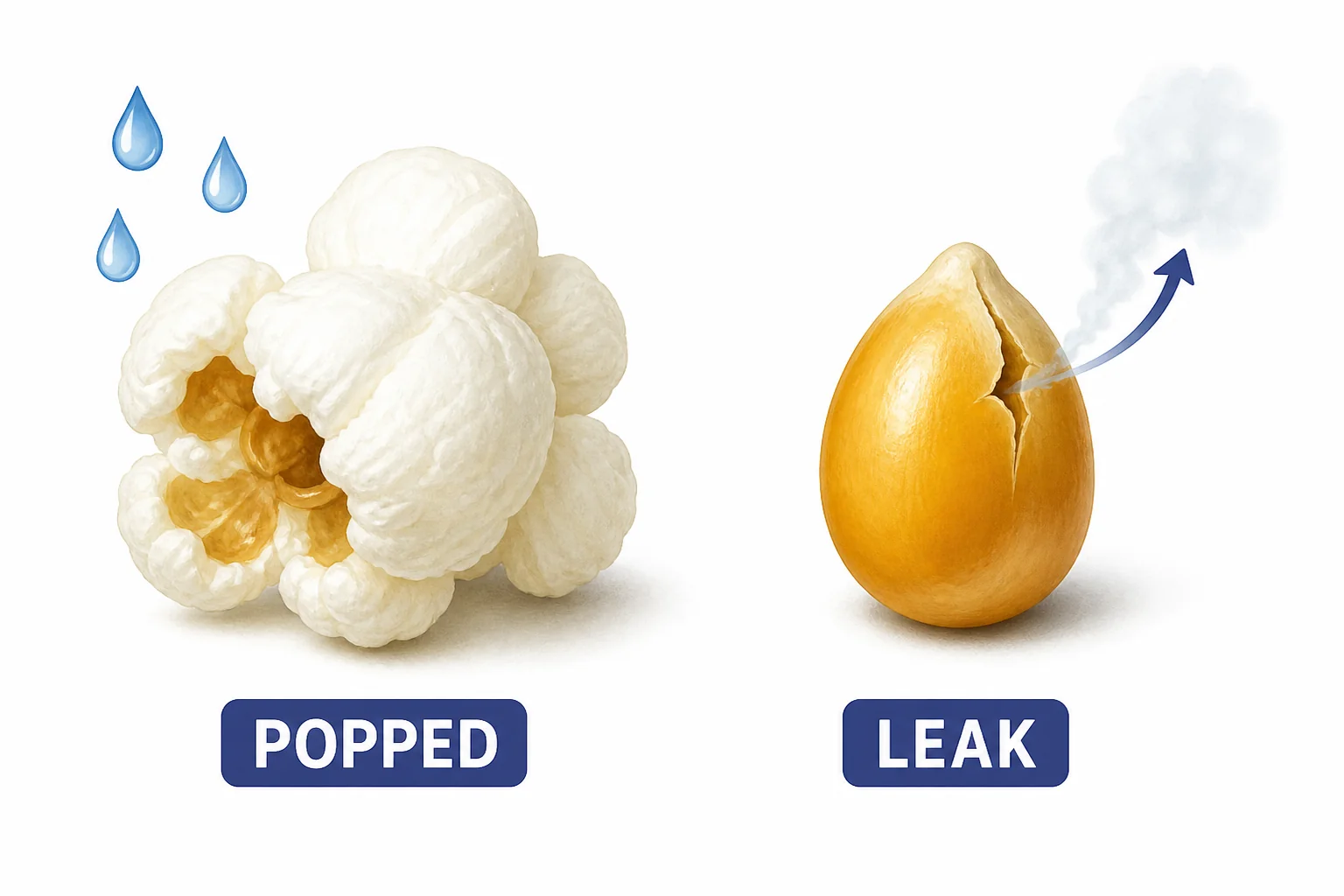
A kernel needs trapped water vapor to pop well.
Vocabulary
- Water vapor
- Water in its gas form.
- Pressure
- A push made when particles press against a surface.
- Phase change
- A change from one form of matter to another, such as liquid to gas.
- Starch
- A plant material that stores energy and forms the fluffy part of popped popcorn.
- Hull
- The hard outer shell of a popcorn kernel.
In the Classroom
Popcorn before and after
20 minutes | Grades 3-5
Students observe unpopped and popped kernels with hand lenses. They draw what changed and what stayed the same, then connect their observations to heating and matter.
Moisture test with teacher demo
30 minutes | Grades 4-5
The teacher compares fresh popcorn with popcorn that has been left open for several days. Students count how many kernels pop in each sample and discuss how water inside the kernel affects the result.
Model a trapped gas
15 minutes | Grades 3-5
Students use a sealed plastic bag with a little air inside to feel how gas can push outward. They compare the model to water vapor pushing on the inside of a popcorn hull.
Key Takeaways
- • A popcorn kernel contains a small amount of water inside a hard hull.
- • Heat changes liquid water into water vapor.
- • Trapped vapor builds pressure inside the kernel.
- • When the hull breaks, soft starch expands into a white puff.
- • Kernels may not pop if they are too dry or if the hull leaks.